I’ve been cooking pork chops long enough to remember when every church potluck table in our part of the Midwest seemed to have at least one pan of them—sometimes smothered in cream soup, sometimes breaded, and sometimes baked plain until they were, if we’re being honest, a little tougher than they deserved to be. So when I rubbed plain yellow mustard over a tray of raw pork chops before baking, I wasn’t expecting a miracle. I was expecting supper. But 45 minutes later, I pulled out a pan of chops that looked beautifully bronzed, smelled tangy and savory, and tasted far more tender and flavorful than such a simple trick had any right to produce.
If you’ve ever stared at a family pack of pork chops and wondered how to keep them juicy without hauling out a dozen ingredients, this is one of those old-fashioned kitchen habits worth keeping. I’m going to walk you through exactly what I did, why the mustard works, what the chops looked and tasted like when they came out of the oven, and a handful of practical lessons I learned along the way so you can get the same good result in your own kitchen.
1. The pork chops I started with
For this little kitchen experiment, I used 6 bone-in pork chops, each about 3/4 to 1 inch thick. Altogether, the package weighed just under 3 pounds. They were the everyday kind you find in a regular grocery store meat case, not fancy heritage pork and not those extra-thin breakfast chops that dry out if you so much as look at them too long.
I patted them dry with paper towels first, which is a step I never skip with meat headed for the oven. Moisture on the surface can steam instead of roast, and if you want good color, drying them off gives you a better start. The chops were lightly marbled, with the bone still in, which usually helps with flavor and a little insurance against drying out.
2. Exactly how much yellow mustard I used
I used ordinary yellow mustard—the bright, familiar kind that lives in a squeeze bottle in most refrigerators. Nothing fancy, no Dijon, no stone-ground, no honey mustard. For 6 chops, I used about 1/3 cup total, which worked out to roughly 1 tablespoon per chop, maybe a touch more on the larger ones.
I spread a thin, even layer over both sides with the back of a spoon, though clean hands work just as well. You do not want the chops swimming in mustard. This isn’t a sauce. Think of it more like a coating, almost the way you’d use oil before a rub. The meat should look covered but not caked.
3. What I seasoned on top of the mustard
Once the mustard was on, I seasoned the chops with 1 1/2 teaspoons kosher salt, 1 teaspoon black pepper, 1 teaspoon garlic powder, and 1 teaspoon onion powder across the whole pan. I also added 1/2 teaspoon smoked paprika for color and a little warmth. That’s a simple, pantry-friendly blend that suits pork beautifully.
The mustard helped the seasonings cling right where I wanted them. That alone is one of its handiest qualities. Dry spices don’t slide off the meat or gather in the bottom of the pan nearly as much. Every bite ends up tasting properly seasoned, not patchy.
4. Why yellow mustard works better than it sounds
If you’ve never tried this before, I know it can sound a little strange. But yellow mustard is made from mustard seed, vinegar, water, and seasonings, and each part does a useful job. The vinegar gives a little tang and can help brighten the flavor of pork, which is mild by nature. The mustard itself acts as a binder, holding the spices against the surface.
More than that, the thin coating encourages a nice outer finish in the oven. It doesn’t turn your pork chops into something that tastes like a hot dog bun condiment. Once baked, the sharpness mellows considerably. What’s left is a gentle zip underneath the savory seasoning and the browned edges.
5. How I baked them for 45 minutes
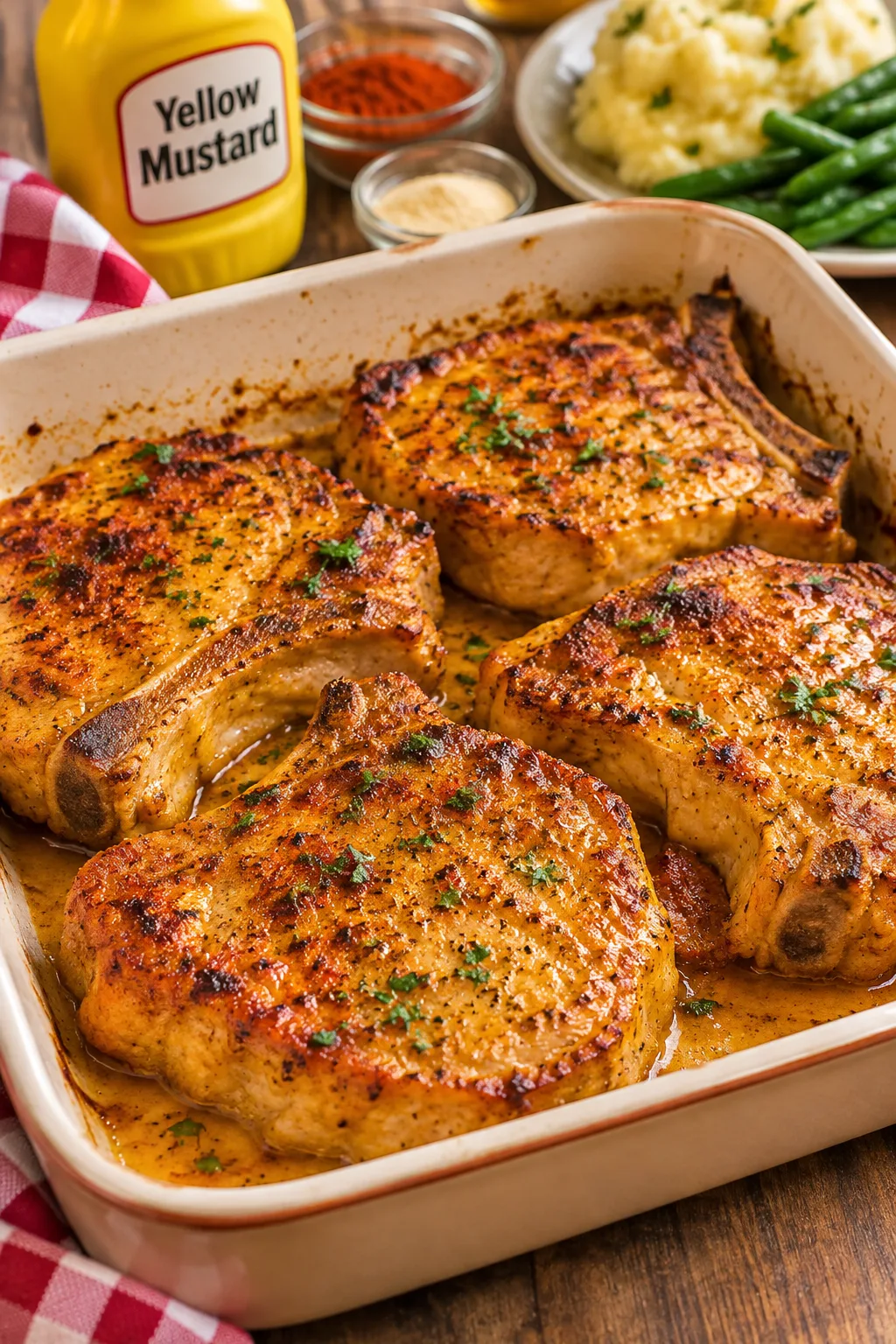
I arranged the chops in a single layer in a 9-by-13-inch baking dish with just a little room between them. The oven was preheated to 375°F. I baked them uncovered for 45 minutes, which suited these medium-thick bone-in chops well. If your chops are thinner—say 1/2 inch—you’ll want to start checking much sooner, around 25 to 30 minutes.
At the 30-minute mark, I took a quick look. The tops were beginning to deepen in color, and there was a small amount of pan juice collecting around the edges. By the full 45 minutes, the coating had settled into the meat, the spices had darkened just enough, and the kitchen smelled like Sunday supper at my mother’s house.
6. What happened when they came out of the oven
Here’s what happened 45 minutes later: the pork chops came out with a lovely golden-brown surface, lightly caramelized around the edges, and noticeably more fragrant than plain baked chops usually are. The mustard did not sit on top in a bright yellow layer. It baked into the seasoning, leaving behind color, tenderness, and just a subtle tang.
When I cut into the first chop after a 5-minute rest, the inside was juicy and pale blush-white, not gray and not dry. The juices stayed in the meat instead of flooding the plate. That’s always my test. A pork chop can look decent from across the room, but the knife tells the truth.
7. How they tasted compared with plain baked pork chops
The flavor was fuller from the first bite. Plain baked pork chops can sometimes taste flat unless they’re drowned in gravy or breading. These didn’t need either. The mustard gave them a gentle sharpness that made the pork taste more like itself, if that makes sense—more savory, more lively, less sleepy.
No, they did not taste strongly of mustard. If I served these to somebody without telling them what I’d done, they’d probably say the chops were especially well seasoned and juicy, maybe with a pleasant tang in the background. That’s the beauty of it. It’s not a gimmick flavor. It’s support work.
8. The texture change I noticed most
What surprised me most was the texture on the outside. The surface had a delicate, lightly roasted finish instead of that sometimes rubbery or chalky feel oven-baked pork can get. It wasn’t crispy like fried pork chops, of course, but it had structure and tenderness at the same time.
Inside, the meat was more forgiving. Pork chops are easy to overdo by just a few minutes, especially lean ones. The mustard coating seemed to buy a little grace. I wouldn’t call it foolproof, because any chop can dry out if you bake it to death, but these stayed noticeably moister than many plain oven chops I’ve made over the years.
9. A simple temperature guideline that matters
If you want the best result, use a meat thermometer. I’ve cooked by feel and by smell and by instinct for decades, but even I will tell you there’s no prize for guessing wrong with pork. The USDA safe temperature for pork is 145°F with a 3-minute rest. For chops baked in a dish, I usually pull them when the thickest part reads 145°F to 150°F, then let them rest 5 minutes.
If yours hit 160°F or higher, they’ll still be safe, but they’ll start losing that tenderness we’re after. Ovens vary, baking dishes vary, and chop thickness varies. That’s why one person swears pork chops need 45 minutes and another says 28. The thermometer settles the argument.
10. The best side dishes for mustard-baked pork chops
This style of pork chop begs for classic sides. I served mine with mashed potatoes made from 2 pounds of russets, plenty of butter, and a splash of warm milk, plus green beans cooked with a little onion. The potatoes were especially good with the juices spooned from the baking dish.
Other fine choices are buttered egg noodles, roasted carrots, baked apples, fried cabbage, or corn pudding. If you want to lean into that mustard tang, a simple cucumber salad with vinegar and a pinch of sugar works beautifully beside it. Around here, I’d also put a basket of warm dinner rolls on the table and call it a complete meal.
11. Mistakes to avoid if you try this yourself
The first mistake is using too much mustard. A heavy layer can stay wet and overpower the seasoning. Stick to a thin coat. The second is under-seasoning. Mustard is not a substitute for salt; it’s a helper. If you don’t season the meat properly, the final dish can still come out bland.
Another common mistake is using very thin chops and leaving them in for the full 45 minutes. That’s a recipe for disappointment. Thin chops can go dry in a hurry. And finally, don’t skip the rest time. Even 5 minutes on a plate, loosely tented with foil, helps the juices settle back into the meat.
12. Variations that still keep the same spirit
Once you’ve tried the yellow mustard version, there’s room to play. You can add 1 tablespoon brown sugar to the seasoning mix for a sweeter glaze-like finish. You can swap the smoked paprika for regular paprika if you want a milder taste. A pinch of dried thyme or rosemary is nice too, especially in colder weather.
If you prefer a stronger mustard note, Dijon works, but it changes the personality of the dish. It becomes sharper and a little more grown-up. Yellow mustard keeps things humble and familiar, and I mean that as a compliment. Some meals are meant to taste like home, not a restaurant menu.
13. My favorite way to use the leftovers
If you happen to have leftovers, slice the cold pork thin and layer it on white bread with mayonnaise and a little lettuce for a wonderful next-day sandwich. My husband always liked it that way, especially with a few bread-and-butter pickles tucked in. It also reheats nicely if you add a spoonful or two of broth to the pan, cover it, and warm it at 300°F for about 15 minutes.
I’ve also chopped leftover mustard-baked pork and stirred it into fried potatoes with onions for breakfast. Waste not, want not—that was the rule in the kitchens I grew up in, and it still serves me well now.
14. Would I do it again?
Without hesitation, yes. This is one of those wonderfully practical kitchen tricks that costs very little, takes maybe 3 extra minutes, and improves the final meal in a noticeable way. A few tablespoons of yellow mustard turned an ordinary pan of pork chops into something juicier, more flavorful, and frankly more memorable.
That’s the sort of cooking wisdom I treasure most at this age—not flashy, not fussy, just sensible and dependable. So if you’ve got pork chops in the refrigerator and a bottle of yellow mustard in the door, go ahead and rub a little on before they hit the oven. Forty-five minutes later, you may find yourself with the kind of supper that reminds you why simple food, made with care, still wins the day.