I’ll admit it: pouring white vinegar into my washing machine on purpose felt a little weird.
I mean, vinegar belongs in salad dressing, pickles, and maybe that spray bottle under the kitchen sink, right? Putting it into the same compartment where I normally pour sweet-smelling fabric softener felt like I was breaking some unwritten laundry rule.
But this July, I decided to try it anyway.
For 14 days, I filled my washing machine’s fabric softener dispenser with white vinegar instead of regular fabric softener. I used it with everyday clothes, towels, sheets, workout clothes, and the random load of laundry that somehow contained one sock, three dish towels, and a T-shirt nobody in my house remembered owning.
You know, normal laundry chaos.
By the end of the two weeks, I noticed several changes. Some surprised me. One worried me at first. And a couple made me question why I had been buying traditional fabric softener so often in the first place.
Here’s exactly what happened when I used white vinegar instead of fabric softener for 14 days.
Why I Put White Vinegar in My Fabric Softener Dispenser
My main reason was pretty simple: my towels had started feeling weird.
They were clean, technically, but they didn’t feel as fresh as I wanted. A few had that slightly coated feeling that towels can get after repeated washing. They smelled nice when they came out of the machine, yet something about them still felt… off.
I had also noticed that some workout shirts held onto odors longer than I liked.
That sent me down the usual laundry rabbit hole.
One tip kept popping up: use distilled white vinegar during the rinse cycle instead of conventional fabric softener.
Honestly, I was skeptical.
I pictured my clothes coming out smelling like a giant jar of pickles.
Still, white vinegar was already sitting in my pantry, so there wasn’t much to lose. I decided to test it for two full weeks instead of trying it once and forgetting about it.
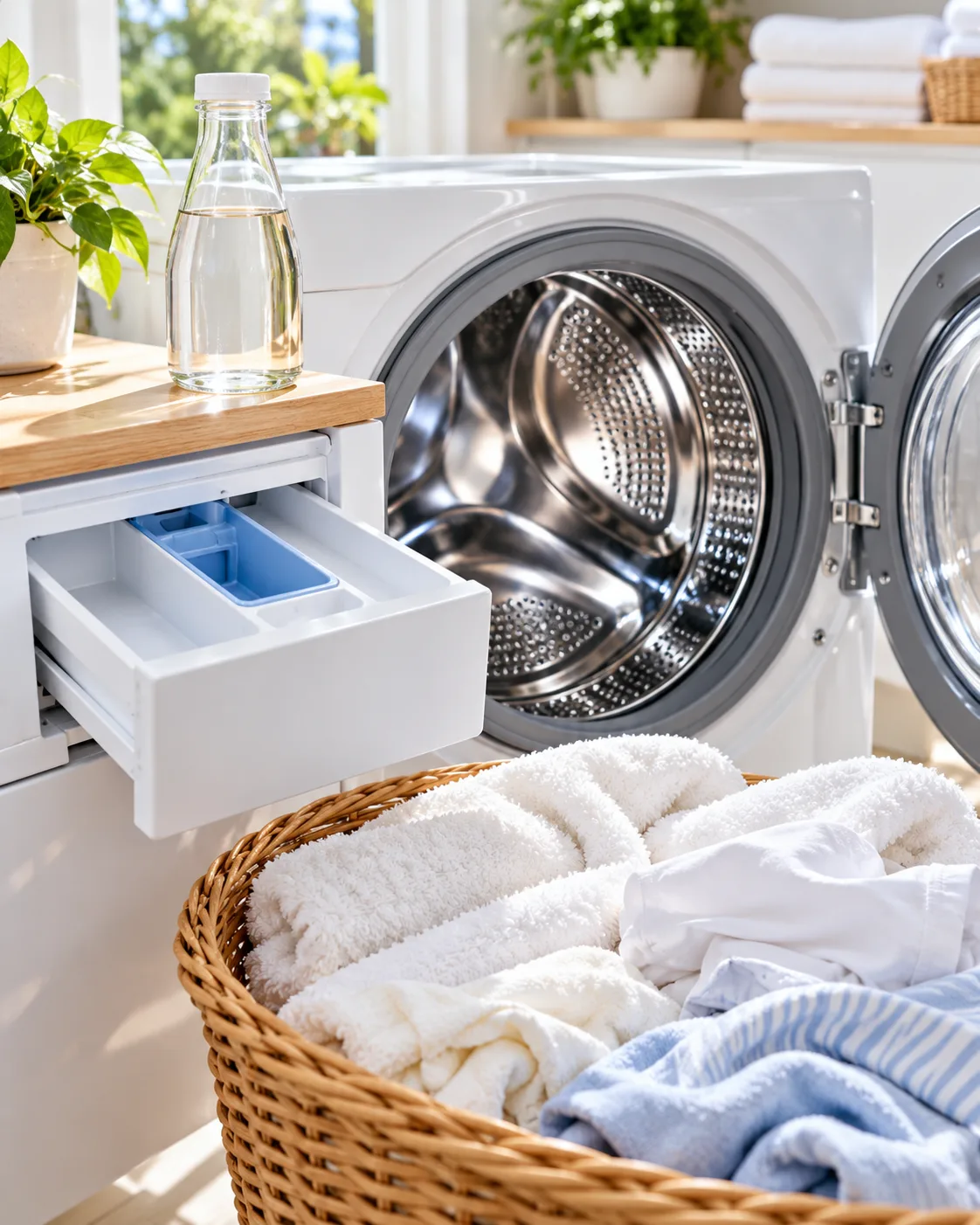
My basic routine was simple. I added my regular laundry detergent as usual, then poured a small amount of plain white vinegar into the fabric softener compartment.
The washing machine handled the rest.
One important note: washing machine brands differ. Some manufacturers warn against frequent vinegar use because prolonged exposure to acid may affect certain rubber components. I recommend checking your machine’s manual before making vinegar part of your regular laundry routine.
With that out of the way, here’s what I noticed.
Day 1: I Expected My Clothes to Smell Like Vinegar
This was my biggest concern.
When I opened the vinegar bottle, that sharp smell immediately made me wonder whether I was about to ruin an entire load of T-shirts.
I added the vinegar to the fabric softener dispenser anyway.
When the washing cycle finished, I opened the machine and immediately smelled the clothes.
Nothing.
No pickle smell. No salad dressing situation. No weird sour cloud floating through the laundry room.
The wet clothes mostly smelled like clean laundry.
After drying, I couldn’t detect a vinegar smell at all.
That first load made the whole experiment feel much less strange.
And yes, I absolutely stood there sniffing a towel for longer than any reasonable person should.
For science, obviously.
After a Few Loads, My Towels Felt Different
The biggest change showed up in my towels.
Traditional fabric softeners often leave ingredients behind that make fibers feel smooth. That soft feeling is nice, but repeated use can also leave some fabrics feeling coated.
My towels had reached that stage.
After several washes with vinegar in the rinse compartment, they began feeling less waxy and more like plain cotton again.
The difference wasn’t dramatic after one load.
After several loads, though, I could feel it.
They weren’t fluffy in that heavily scented hotel-laundry way. Instead, they felt lighter and less coated.
That was actually what I wanted.
The towels also seemed better at doing their main job: absorbing water.
You know when a towel feels soft but somehow pushes water around instead of soaking it up? That was happening less.
For me, that was one of the strongest reasons to keep using less conventional softener on towels.
My Laundry Smelled Cleaner, Not More Fragrant
This part surprised me.
Fabric softener had trained me to associate “clean” with perfume.
Fresh linen. Tropical breeze. Spring flowers. Mountain air. Apparently my laundry had been traveling more than I had.
With vinegar, that fragrance layer disappeared.
At first, I missed it.
My clothes came out smelling much more neutral. Not odorless exactly, since my detergent still had a light scent, but there was no heavy perfume sitting on top of everything.
After a few days, I started liking that.
Sheets smelled like clean fabric rather than fragrance.
Towels smelled neutral.
T-shirts didn’t carry a strong laundry scent around all day.
If you love heavily scented clothes, vinegar probably won’t give you the same experience as regular fabric softener. But if you prefer laundry that smells simply clean, the difference may be pretty appealing.
Workout Clothes Were One of the Biggest Wins
Workout clothes were where I really paid attention.
Synthetic athletic fabrics can hold onto body oils and odors, especially after repeated wear.
I have had workout shirts that smelled completely fine coming out of the dryer, then somehow brought back a faint gym smell about five minutes after putting them on.
Not cute.
During my 14-day vinegar experiment, those lingering odors seemed less noticeable.
I still used detergent, of course. Vinegar didn’t replace detergent in my routine.
But skipping the softener seemed helpful because I wasn’t adding another scented coating to already finicky synthetic fabric.
My gym clothes smelled cleaner and more neutral after washing.
For workout gear, I’d actually choose that over an intense floral fragrance any day.
The Washing Machine Itself Smelled Fresher
Here’s something I hadn’t expected.
My washing machine smelled better too.
Front-load washers in particular can sometimes develop that damp laundry-room smell around the door gasket or drum if moisture hangs around.
I’m pretty good about leaving the door cracked open after washing, but every once in a while I still notice a stale smell.
During the vinegar experiment, the inside of the washer seemed fresher after loads.
Now, I wouldn’t treat vinegar as a substitute for properly cleaning a washing machine.
The detergent drawer still needs cleaning. The filter still needs attention. The door seal still needs wiping. Your machine may also have a dedicated cleaning cycle.
Sadly, vinegar does not magically excuse us from appliance maintenance. Wouldn’t that be nice?
Still, I noticed less stale odor during those two weeks.
My Clothes Didn’t Suddenly Become Softer
This experiment taught me something important about expectations.
If you’re expecting white vinegar to make laundry feel exactly like it does after a traditional liquid fabric softener, you may be disappointed.
My clothes didn’t suddenly turn into clouds.
Vinegar and commercial fabric softener don’t create the exact same feel.
Instead, my laundry felt less coated.
Cotton shirts felt clean and normal. Towels felt lighter. Sheets felt crisp rather than slippery.
Personally, I liked that.
But somebody who loves ultra-soft, heavily scented laundry may prefer the feeling they get from a regular softener.
It really comes down to what “soft” means to you.
I Used Less Laundry Product Without Missing It
One unexpected benefit was how simple my laundry setup became.
Normally, I’d reach for detergent, softener, and sometimes another laundry product depending on what I was washing.
During this test, I basically had detergent and vinegar.
That’s it.
The routine felt simpler.
White vinegar is also inexpensive compared with many specialty laundry products, particularly if you buy a larger bottle.
After two weeks, I realized I hadn’t really missed fabric softener.
That was probably the biggest surprise.
I thought I would finish the experiment and immediately return to my regular routine.
Instead, I started wondering why I had treated fabric softener as an automatic step for so long.
What I Used in Each Load
I kept things pretty basic.
I used regular distilled white vinegar rather than cleaning vinegar or flavored vinegar.
Yes, I feel ridiculous even typing “flavored vinegar,” but somebody somewhere is absolutely staring at a bottle of apple cider vinegar right now.
Stick with plain white vinegar.
I poured roughly 1/4 to 1/2 cup into the fabric softener dispenser depending on the size of the load.
Then I added my usual detergent to the detergent compartment.
I never poured vinegar directly onto dry clothing.
I also never mixed vinegar directly with chlorine bleach.
That point matters.
Vinegar and chlorine bleach should not be combined because mixing acids with chlorine bleach can release dangerous chlorine gas.
Keep them separate.
Seriously.
What I Would Not Use Vinegar on Without Checking the Care Label
After two weeks, I became more comfortable using vinegar with normal washable laundry, but I still wouldn’t blindly pour it into every load.
Some materials and appliances need more care than others.
I would check garment labels before experimenting with delicate fabrics, specialty finishes, unusual materials, or items with manufacturer-specific cleaning directions.
I’d also check the washing machine manual.
That may sound boring, but washing machines aren’t cheap.
Some appliance manufacturers caution against repeated vinegar use because acidic liquids may damage certain seals, hoses, or rubber parts over time.
So while a short experiment may sound harmless, turning vinegar into an everyday habit without checking the appliance guidance isn’t something I’d recommend.
My rule now is simple: fabric instructions first, washing machine manual second, random internet laundry tricks third.
Probably a solid rule for most cleaning hacks, actually.
Did White Vinegar Replace Fabric Softener for Me?
Not completely.
But it changed how often I use traditional fabric softener.
I now prefer skipping softener for towels, workout clothes, and several everyday loads.
For those items, I like the clean, residue-free feeling more than the heavily scented softness I used to chase.
For certain clothing loads, I might still use a small amount of fabric softener when I specifically want that scent or feel.
So I wouldn’t say vinegar became a magical replacement for every situation.
What changed was my mindset.
Fabric softener stopped being something I automatically added to every load.
That alone cut down on the number of laundry products I was using.
What Happened After 14 Days
At the end of my two-week experiment, I noticed five main changes.
My towels felt less coated. My workout clothes seemed to hold onto fewer stale odors. My laundry smelled more neutral. My washing machine seemed fresher between loads. And I realized I didn’t miss traditional fabric softener nearly as much as I expected.
The vinegar smell I worried about?
Basically a nonissue once the laundry dried.
The huge dramatic transformation some cleaning hacks promise?
Nope.
My washing machine did not start glowing. My towels did not become luxury spa towels overnight. Angels did not descend into the laundry room carrying freshly folded sheets.
But the small differences added up.
And honestly, those small changes were enough to make the experiment worthwhile.
A Few Tips I Learned Along the Way
If you want to try white vinegar in your washing machine, start small.
You don’t need to dump half the bottle into one load. More is not always better when it comes to laundry products.
Use plain distilled white vinegar.
Put it in the fabric softener dispenser so your machine releases it during the appropriate part of the cycle, provided your appliance manufacturer allows it.
Keep using laundry detergent. Vinegar is not a direct replacement for detergent.
Never combine vinegar with chlorine bleach.
And check your washer manual before turning this into a long-term habit.
One more tip: try it first with towels.
They’re probably the easiest place to notice whether you like the result.
Wash a few towels without traditional softener and compare how they feel after several cycles.
You may notice more of a difference than you expect.
Is White Vinegar Better Than Fabric Softener?
I don’t think there’s one answer for everyone.
Traditional fabric softener gives clothing a fragrance and soft feel that many people genuinely enjoy.
White vinegar creates a different result.
My laundry felt cleaner, less coated, and more neutral after I stopped adding softener to every single wash.
That worked especially well for my towels and athletic clothes.
The biggest lesson from my little July laundry experiment wasn’t that everyone should immediately throw away their fabric softener.
It was that I didn’t need fabric softener nearly as often as I thought.
And, weirdly enough, a basic bottle of white vinegar made me rethink my entire laundry routine.
Not bad for something I normally keep next to the olive oil.
Frequently Asked Questions About Using White Vinegar in the Washing Machine
Can I put white vinegar in the fabric softener dispenser?
Many people add distilled white vinegar to the fabric softener compartment so it is released during the rinse portion of the wash. Washing machine designs differ, though, so always check your appliance manual before doing this regularly.
How much white vinegar should I use in laundry?
A small amount is usually enough for an average load. During my experiment, I used roughly 1/4 to 1/2 cup depending on the load size. More vinegar does not automatically mean cleaner laundry.
Will my clothes smell like vinegar?
Mine didn’t after drying. I occasionally noticed a faint vinegar smell when opening the washer immediately after a cycle, but it disappeared as the clothes dried.
Can vinegar replace laundry detergent?
No. I continued using regular laundry detergent throughout the experiment. I treated vinegar as an alternative to the fabric softener step, not as a replacement for detergent.
Can I mix vinegar and bleach in the washing machine?
No. Do not mix vinegar with chlorine bleach. Combining an acid such as vinegar with chlorine bleach can create dangerous chlorine gas.
Is vinegar good for towels?
I liked the result on my cotton towels because they felt less coated after several washes without regular fabric softener. Always follow the towel manufacturer’s care instructions.
Does vinegar make clothes softer?
It did not give my clothes the same silky feel as traditional fabric softener. Instead, fabrics felt cleaner and less coated to me. The result was especially noticeable with towels.
Can I use vinegar in every load?
I wouldn’t make it an automatic habit without checking the washing machine manufacturer’s instructions. Some manufacturers advise against repeated vinegar use because acidic liquids may affect certain internal or rubber components over time.
My Final Take After Two Weeks
Fourteen days of filling my fabric softener dispenser with white vinegar didn’t completely change my life.
It did change my laundry routine.
I stopped assuming every load needed fabric softener.
I started appreciating towels that felt clean instead of coated. I liked how neutral my sheets smelled. I liked having fewer laundry products sitting around.
And the whole pickle-scented-clothing fear?
Totally unnecessary in my experience.
Would I keep white vinegar around for laundry?
Yep.
Would I pour it into every single load forever without checking my washing machine’s instructions?
Nope.
For me, the sweet spot is using fewer products, skipping fabric softener when it doesn’t add much, and keeping my laundry routine simple.
Sometimes the most useful household experiments aren’t the dramatic ones.
Sometimes it’s just a cheap bottle of white vinegar, two weeks of laundry, and the realization that the product you thought you needed every wash… maybe wasn’t all that necessary after all.