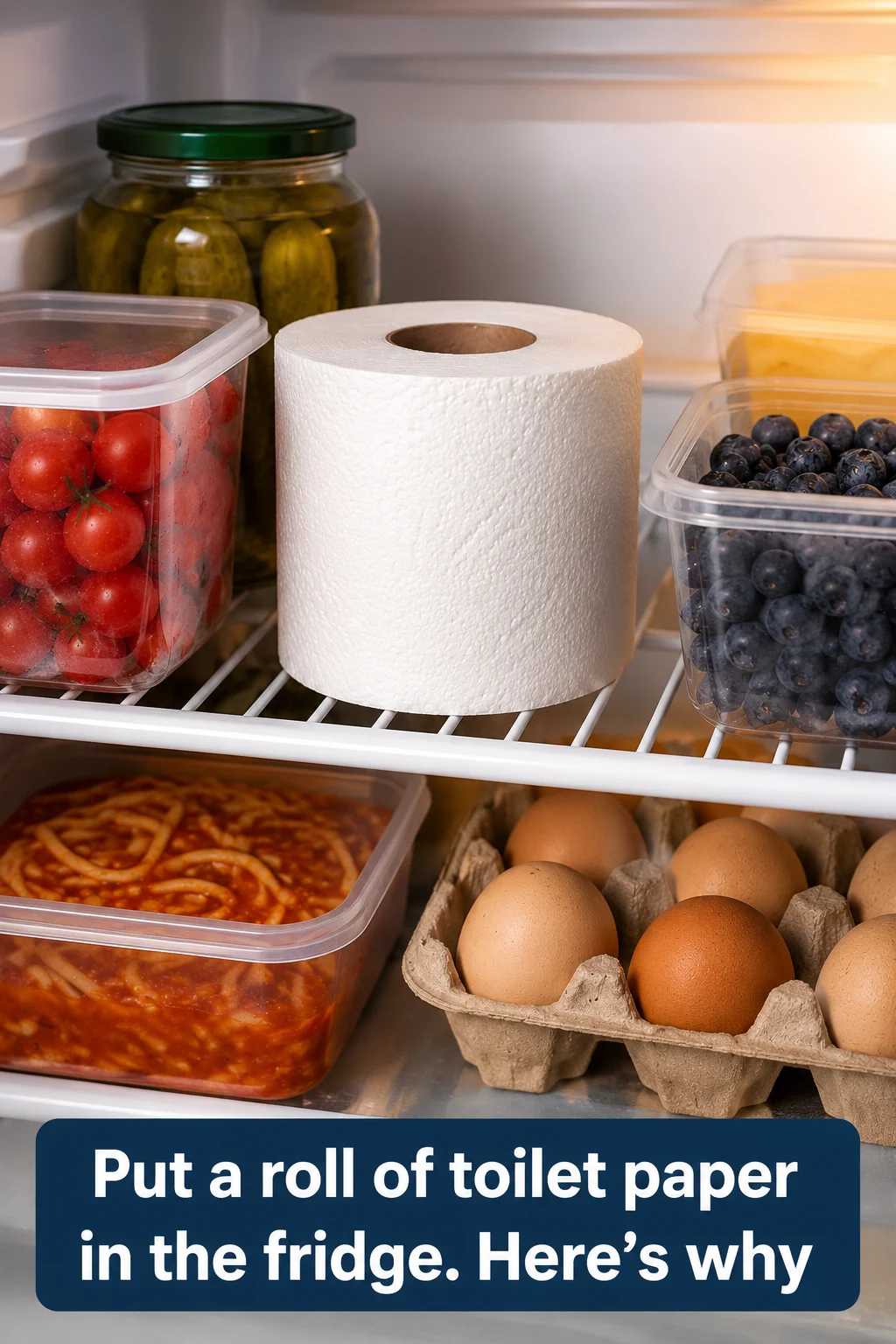
Okay, I have seen some pretty strange refrigerator tricks over the years.
A bowl of baking soda? Sure.
Coffee grounds for odors? I’ve heard that one.
A roll of toilet paper sitting next to the milk?
That one made me stop scrolling.
The idea behind the toilet paper in the fridge hack sounds almost believable. Toilet paper absorbs moisture, so the claim is that a fresh roll placed inside the refrigerator can pick up excess humidity and possibly some odors along the way.
And, technically, paper does absorb moisture.
But does that mean sacrificing a perfectly good roll of toilet paper to your refrigerator will keep lettuce crisp, eliminate funky smells, and make food last longer?
Not quite.
This is one of those household tricks where a small amount of logic gets turned into a much bigger promise. Your refrigerator’s temperature, cleanliness, airflow, food storage, and condition matter far more than a roll of paper sitting on a shelf.
Still curious?
Yeah, me too.
Here’s what this unusual refrigerator hack can and can’t do, plus some better ways to handle moisture and odors.
Why Are People Putting Toilet Paper in the Fridge?
The basic idea comes down to one property:
Toilet paper is absorbent.
That’s literally what it’s made to do.
The paper consists of lightweight cellulose fibers that readily take up water. Put a clean, dry roll into a humid environment and those fibers can absorb some moisture from their surroundings.
From there, the internet logic goes something like this:
Less moisture = fewer odors.
Less moisture = fresher food.
Less moisture = less mold.
Therefore:
Toilet paper = happier refrigerator.
If only refrigerators were that simple.
A roll of paper can become damp in a humid refrigerator, but that doesn’t mean it acts as a proper humidity-control system or replaces basic food-storage practices.
What Actually Happens to Toilet Paper Inside a Refrigerator?
Put a fresh roll in your refrigerator and, initially, probably not much.
It’ll get cold.
Very exciting stuff.
If your refrigerator has enough humidity or condensation, the paper may gradually absorb moisture.
Over time, the roll can feel softer or slightly damp.
That change is important because it tells you something about the limitations of the trick.
The moisture hasn’t disappeared.
It’s now sitting in the paper.
Once that paper becomes damp, you’ve basically got a damp paper roll occupying valuable refrigerator space.
That’s not something I’d want hanging around indefinitely beside food.
Can Toilet Paper Absorb Refrigerator Moisture?
Yes, paper can absorb moisture.
But there’s a big difference between saying paper absorbs water and saying a toilet paper roll properly controls refrigerator humidity.
Your refrigerator already manages temperature and moisture through its cooling system, drainage system, door seals, airflow, and—in many models—humidity-controlled drawers.
If you’re seeing unusually heavy condensation, puddles, or consistently wet shelves, I’d investigate the refrigerator rather than continuously replacing toilet paper.
Possible causes can include frequent door opening, warm food being added, blocked airflow, a door that isn’t closing properly, drainage trouble, or other appliance issues.
A paper roll might absorb a little moisture.
It won’t repair your fridge.
Does Toilet Paper Absorb Fridge Odors?
This claim needs even more caution.
Paper can take on smells from its environment.
Anyone who has stored cardboard boxes in a musty basement knows that one.
So a toilet paper roll may eventually smell like the refrigerator.
But that’s different from saying it works as an effective refrigerator deodorizer.
If your fridge smells bad, there’s usually a source.
Maybe half an onion escaped behind the crisper drawer.
Maybe something leaked.
Maybe leftovers have been sitting there considerably longer than anyone wants to admit.
Or perhaps there’s spoiled produce hiding in a bag.
Removing the source and cleaning the refrigerator makes much more sense than trying to absorb the evidence.
Honestly, if the fridge smells like Tuesday’s fish dinner on Saturday, I’m looking for the fish before I’m reaching for the Charmin.
Why Refrigerator Odors Happen
Refrigerator smells can come from many places.
Spoiled food is an obvious culprit.
Uncovered foods can also release strong aromas.
Spills can work their way beneath drawers and shelves.
Liquids may collect in difficult-to-see areas.
Food containers can leak.
Produce can quietly decompose at the back of a drawer.
And sometimes the problem comes from the appliance itself rather than the food.
That’s why persistent refrigerator odor deserves investigation.
Take food out.
Check expiration and storage times.
Inspect drawers.
Look underneath removable components.
Clean spills.
Check whether the refrigerator is maintaining the proper temperature.
Don’t simply perfume, cover, or absorb a smell without figuring out where it’s coming from.
Your Refrigerator Temperature Matters Much More
Here’s the refrigerator number I’d pay attention to:
40°F or below.
USDA food-safety guidance recommends keeping the refrigerator at 40°F (about 4°C) or below because refrigeration slows bacterial growth. (Ask USDA)
That matters far more to food safety than any deodorizing trick.
I like using an appliance thermometer because the refrigerator’s built-in setting doesn’t always tell you the actual temperature throughout the compartment.
Also, don’t pack the fridge so tightly that cold air can’t circulate properly. USDA guidance specifically recommends allowing cold air to circulate. (Ask USDA)
So before adding a toilet paper roll, give your fridge the basics:
Correct temperature.
Good airflow.
Clean shelves.
Properly stored food.
That’s the stuff that counts.
Could Toilet Paper Make Food Last Longer?
I wouldn’t rely on it for that.
Different foods need different storage conditions.
Some produce likes relatively high humidity.
Other fruits and vegetables do better with lower humidity.
That’s one reason many refrigerators have adjustable crisper drawers.
A toilet paper roll sitting somewhere in the refrigerator can’t intelligently control those separate environments.
It doesn’t know your strawberries from your celery.
And reducing moisture throughout the fridge isn’t automatically beneficial.
Some foods can lose moisture and become limp, shriveled, or dry when conditions aren’t right.
The goal isn’t simply “make the refrigerator as dry as possible.”
The goal is storing each food appropriately.
What About Moisture Inside Produce Drawers?
This is where the viral trick gets particularly tempting.
You open the produce drawer and see condensation.
Then you see wet lettuce.
Maybe a cucumber is getting soft.
So naturally, something absorbent sounds helpful.
But first, check how you’re using the drawer.
Many crisper drawers have humidity controls.
The settings affect how much moisture remains around the produce.
Leafy vegetables generally benefit from conditions that help prevent excessive moisture loss, while some fruits do better with more ventilation.
Your refrigerator manual may explain exactly how its drawer controls work.
And yes, I realize reading the crisper-drawer section of an appliance manual sounds like peak adulthood.
Yet here we are.
Is It Hygienic to Keep Toilet Paper in the Refrigerator?
A brand-new, clean roll isn’t automatically dirty simply because it’s toilet paper.
But I still wouldn’t allow it to touch unpackaged food.
Remember what you’re asking the roll to do.
You want it to absorb moisture.
If it gets damp from condensation or a spill, that roll becomes something you’ll need to remove.
Don’t let it sit there until it develops discoloration or a musty smell.
Don’t use a roll that has already been sitting in the bathroom.
I really hope that sentence didn’t need to be written.
But the internet is a big place.
Use a fresh roll if you’re determined to test the trick, and keep it physically separated from food.
Where Would You Put the Roll?
If you’re experimenting purely out of curiosity, keep the clean roll somewhere stable where it can’t contact unpackaged foods, raw meat juices, or spills.
Don’t block refrigerator vents.
Air needs to circulate.
Don’t wedge it against the back wall where condensation may collect.
Don’t place it underneath something that might leak.
And definitely don’t use it to absorb an active food spill and then leave it inside.
At that point, you’ve created the opposite of a cleanliness hack.
How Long Should You Leave Toilet Paper in the Fridge?
I wouldn’t follow a fixed viral schedule such as “replace it every month.”
The roll isn’t a calibrated humidity-control product.
Check it instead.
If it becomes damp, stained, contaminated, musty, or otherwise unpleasant, discard it.
Don’t wait for some arbitrary calendar date.
Personally, if a toilet paper roll became noticeably damp in my refrigerator, I’d remove it and investigate why there was enough excess moisture to make that happen.
The damp paper is a clue.
It’s not necessarily the solution.
Don’t Reuse the Roll in the Bathroom
Please don’t.
Once the paper has spent days or weeks exposed to refrigerator air, food aromas, moisture, and possible contaminants, it doesn’t need a second career.
Discard it.
Saving fifty cents isn’t worth turning refrigerator toilet paper into actual toilet paper again.
Some household hacks cross a line.
That’s mine.
What Should You Do About a Smelly Refrigerator Instead?
Start by finding the source.
Remove spoiled food.
Check containers for leaks.
Inspect produce drawers carefully.
Take out removable shelves and bins when appropriate and clean them according to the appliance manufacturer’s directions.
Wipe up spills promptly.
Keep strong-smelling foods in suitable covered containers.
And keep raw meat, poultry, and seafood properly contained so their juices can’t contaminate other foods.
USDA guidance emphasizes cleaning, separating foods to prevent cross-contamination, cooking properly, and prompt refrigeration as core food-safety habits. (Ask USDA)
That’s considerably more useful than trying to make the refrigerator smell okay while something questionable is hiding behind the yogurt.
Baking Soda vs. Toilet Paper
If you’re specifically concerned about odors, baking soda is the more familiar refrigerator option.
But even baking soda shouldn’t become an excuse to ignore spoiled food.
Think of odor control as the finishing touch.
First remove the source.
Then clean.
Then deal with lingering smells.
Toilet paper’s main advantage is simply that you probably already own some.
Its disadvantage?
You now have toilet paper sitting next to dinner.
Not exactly the kitchen aesthetic I was shooting for.
Activated Carbon Can Be Another Option
Activated carbon products designed for refrigerator odor control are another possibility.
Their highly porous structure can adsorb odor-causing compounds.
If you choose one, use a product intended for that environment and follow its directions.
Again, though, no deodorizer fixes spoiled food.
If the source stays in the refrigerator, you’re basically asking the deodorizer to fight a battle that could be solved by throwing away one forgotten container.
Don’t Use Fragrance to Hide Refrigerator Odors
This one drives me bananas.
If your refrigerator smells strange, don’t spray perfume, air freshener, or household fragrance products inside it.
You store food there.
A refrigerator should smell clean and neutral.
Not “Tropical Sunset Vanilla Explosion.”
Find the odor source.
Clean the appliance with methods appropriate for its interior surfaces.
Keep food covered.
Problem solved.
What If Your Fridge Has Lots of Condensation?
A small amount of moisture can occur during normal refrigerator operation.
Heavy or persistent condensation deserves more attention.
First, make sure the door is closing completely.
Check for food containers blocking the door.
Inspect the gasket for obvious dirt or damage.
Think about how often the door is being opened.
Don’t leave it standing open while deciding what you want for dinner.
Check that vents aren’t blocked.
And verify the actual refrigerator temperature.
If condensation remains excessive despite normal use, consult the appliance manual or a qualified service professional.
A toilet paper roll isn’t an appliance repair technician.
Cute hack.
Wrong résumé.
Food Safety Comes Before Refrigerator Hacks
This point is worth emphasizing.
A refrigerator isn’t simply a cold pantry.
Its temperature plays an important food-safety role.
Perishable foods such as meat, poultry, fish, dairy products, and cooked leftovers need proper refrigeration. USDA guidance states that perishable foods should generally be kept at 40°F or below. (Ask USDA)
Don’t judge food safety solely by smell.
And don’t assume that reducing refrigerator odor somehow makes questionable food safe.
A deodorized refrigerator can still contain unsafe food.
Fresh smell isn’t a food-safety test.
Could Toilet Paper Block Refrigerator Airflow?
It can if you put it in the wrong place.
Modern refrigerators rely on air circulation.
Placing bulky objects directly against vents can interfere with airflow.
A toilet paper roll isn’t enormous, but refrigerator space is already limited.
If you’re going to sacrifice that much shelf space, keep it away from air vents.
Personally, I’d rather use that spot for leftover cheesecake.
Priorities.
Is This Hack Worth Trying?
If your expectations are modest, it’s a harmless little experiment when done hygienically.
A clean roll of toilet paper can absorb moisture.
It may also pick up some surrounding odors.
But I wouldn’t expect dramatic results.
I wouldn’t use it as my main odor-control method.
I wouldn’t depend on it to extend food shelf life.
And I definitely wouldn’t use it as a substitute for fixing excessive refrigerator moisture.
That’s the difference between a fun household experiment and useful refrigerator maintenance.
A Simple Refrigerator Freshness Routine That Makes More Sense
Here’s what I actually prefer.
Once a week, give the refrigerator a quick scan.
Check leftovers.
Look through produce.
Remove anything spoiled.
Wipe fresh spills.
Make sure raw foods are properly contained.
Check that containers are covered.
Give the drawers a quick look.
Periodically verify the refrigerator temperature with an appliance thermometer.
USDA guidance recommends a constant refrigerator temperature of 40°F or below and advises against overstuffing the refrigerator because cold air needs room to circulate. (Ask USDA)
That five-minute routine does more for my confidence than a dozen internet hacks.
Common Mistakes to Avoid
One mistake is expecting toilet paper to solve a serious moisture problem.
Another is leaving a damp roll inside for weeks.
Don’t let toilet paper touch uncovered food.
Don’t use a roll that has previously been stored in a bathroom.
Don’t block refrigerator vents.
Don’t assume removing odors makes spoiled food safe.
Don’t ignore strong or recurring smells.
Don’t pack the refrigerator so tightly that cold air struggles to circulate.
And don’t let a cute household trick distract you from checking the temperature.
If you’re choosing between buying toilet paper for the fridge and buying an appliance thermometer?
I’m picking the thermometer every time.
Frequently Asked Questions
Why do people put toilet paper in the fridge?
The idea is that dry toilet paper can absorb some moisture from refrigerator air and possibly pick up odors. Its absorbency is real, but that doesn’t make it a proper humidity-control or food-preservation system.
Does toilet paper absorb refrigerator odors?
Paper can take on odors from its surroundings, but I wouldn’t consider a toilet paper roll a reliable solution for significant refrigerator smells. Find and remove the source of the odor first.
Can toilet paper reduce refrigerator humidity?
It can absorb some moisture, but it cannot regulate refrigerator humidity in the way an appliance system or humidity-controlled drawer can.
Will toilet paper keep vegetables fresh longer?
Don’t count on it. Produce has different humidity and storage requirements. Correct crisper settings and proper food storage matter more.
Is putting toilet paper in the refrigerator safe?
If someone wants to experiment, I’d use only a new, clean roll and keep it away from uncovered food, spills, raw meat juices, and vents. Remove it if it becomes wet, dirty, or musty.
Can I reuse refrigerated toilet paper?
I wouldn’t. Once the roll has absorbed refrigerator moisture and odors, discard it.
What temperature should my refrigerator be?
USDA guidance recommends keeping refrigerators at 40°F (4°C) or below. (Ask USDA)
Why does my refrigerator smell even after cleaning?
Check overlooked areas such as beneath drawers, food containers, seals, and spills. Persistent odors may warrant a deeper cleaning or appliance inspection.
Why is there so much moisture in my refrigerator?
Frequent door opening, improperly closed doors, warm foods, airflow problems, humidity, or appliance issues can contribute. Check your manufacturer’s guidance if excessive condensation continues.
Is baking soda better than toilet paper for refrigerator smells?
Baking soda is a more established household choice for managing mild refrigerator odors. Neither option should replace removing spoiled food and cleaning the refrigerator.
Can I put paper towels in produce drawers?
Paper towels are commonly used to absorb surface moisture around certain produce, but food-specific storage still matters. Replace damp paper promptly and keep drawers clean.
Does a fresh-smelling refrigerator mean food is safe?
No. Smell isn’t a dependable test of food safety. Proper storage temperatures and recommended storage times matter. USDA notes that refrigeration slows bacterial growth. (Ask USDA)
Final Thoughts
So, should you put toilet paper in the fridge?
You can test the idea with a fresh roll if you’re curious, but I wouldn’t expect miracles.
Yes, toilet paper absorbs moisture.
Yes, it can pick up smells.
But that doesn’t turn a bathroom staple into a sophisticated refrigerator deodorizer, humidity regulator, or food-preservation tool.
If my refrigerator smells funky, I’m finding the source and cleaning it.
If there’s excessive condensation, I’m checking the door, gasket, temperature, airflow, and appliance condition.
And if food freshness is the concern, I’m paying attention to proper storage and keeping the refrigerator at 40°F or below. (Ask USDA)
Sometimes the boring answer wins.
Although I’ll give this hack one thing:
Opening somebody’s refrigerator and finding a roll of toilet paper beside the orange juice is definitely a conversation starter.