You pull a package of deli meat from the fridge because a turkey sandwich sounds pretty good. Then you look at the slices and… nope. Something seems off.
Maybe the meat looks slimy. Maybe the color has changed. Maybe there’s a weird smell when you open the package. Then someone in the kitchen says, “Don’t throw that away! It’s still good.”
I hate wasting food too, but deli meat is one place where saving a few bucks isn’t worth gambling with food poisoning.
If deli meat shows clear signs of spoilage, throw it away. And even when it looks normal, how long it has been refrigerated matters.
Here’s how to tell when deli meat should stay on your sandwich and when it belongs in the trash.
How Long Does Deli Meat Last in the Fridge?
The answer depends partly on whether the package has been opened.
According to USDA food-storage guidance, opened packages of luncheon meat and deli-sliced meat generally keep for about 3 to 5 days in the refrigerator at 40°F (4°C) or below.
An unopened factory-sealed package can generally remain refrigerated for about 2 weeks, although you should also follow the package date and manufacturer instructions.
Once you open that package, the clock changes.
That half-empty pack of turkey that’s been hanging around since last weekend deserves a closer look at when it was opened—not just the printed date.
What If the Deli Meat Looks Slimy?
Sliminess is one of those signs I wouldn’t argue with.
Fresh deli meat can naturally feel slightly moist, but it shouldn’t develop a noticeably sticky, tacky, or slimy coating.
If your turkey, ham, chicken, roast beef, or bologna has developed an unusual slippery film, discard it.
Don’t rinse it and make a sandwich anyway.
Rinsing spoiled meat doesn’t make it safe, and cooking questionable deli meat isn’t a reliable rescue plan either.
Sometimes the trash can wins.
What Does Spoiled Deli Meat Smell Like?
Fresh deli meat should smell like the product normally smells.
A sour, rancid, fermented, sulfur-like, or otherwise unpleasant odor is a reason to discard it.
But here’s the important part: the smell test cannot prove that food is safe.
Some harmful microorganisms don’t produce an obvious bad smell, taste, or appearance.
So “it smells okay” doesn’t erase the fact that an opened package has been sitting in the refrigerator far beyond its recommended storage period.
Does Discoloration Mean Deli Meat Is Bad?
Color can be tricky.
Meat can undergo harmless color changes due to oxygen, lighting, processing, and storage conditions. Some sliced meats can even develop an iridescent or rainbow-like appearance because of the way light reflects from their muscle fibers.
So color alone doesn’t always mean spoilage.
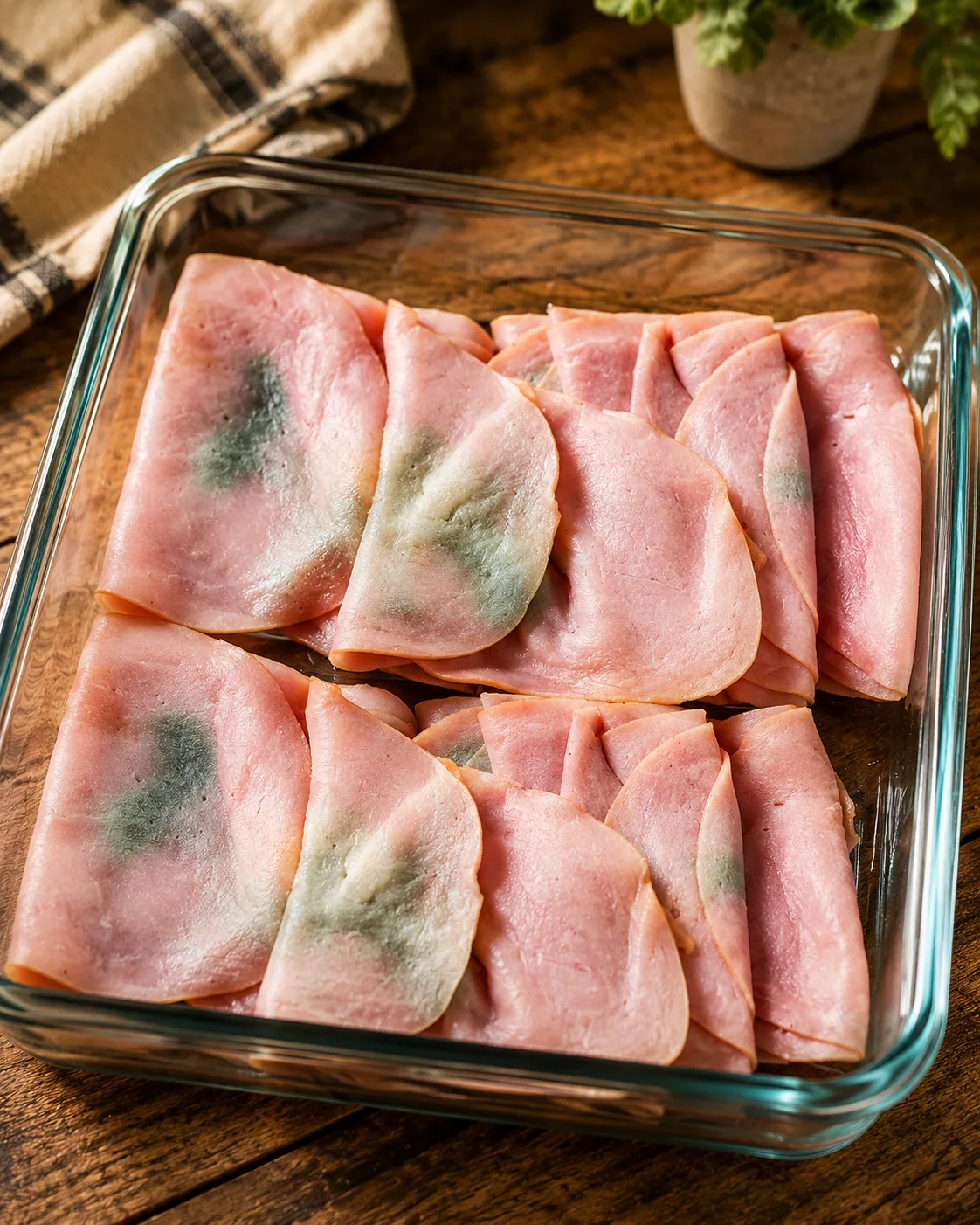
However, unusual discoloration combined with slime, an unpleasant odor, mold, or excessive storage time is another story.
When several warning signs show up together, I’m not making that sandwich.
What About Rainbow-Colored Deli Meat?
That shiny rainbow effect on sliced roast beef or ham can look seriously suspicious.
Fortunately, iridescence by itself doesn’t necessarily mean the meat has spoiled. The structure of sliced meat can reflect light and create rainbow-like colors.
Think of it as an optical effect rather than automatic evidence of bacterial spoilage.
Still, storage time and other signs matter.
Rainbow sheen plus normal texture, normal odor, and proper storage is different from rainbow sheen plus slime and a sour smell.
Context matters.
Can You Cut Off a Bad Part and Eat the Rest?
With deli meat, I wouldn’t.
If sliced meat has mold or clear spoilage, discard the affected product rather than removing one questionable slice and eating everything underneath it.
Deli meat is moist, sliced, and stored closely together. What you can see isn’t necessarily the full extent of contamination.
This isn’t a block of hard cheese where certain mold-handling guidance may be different.
When sandwich meat has obviously gone bad, the package is done.
Can Cooking Spoiled Deli Meat Make It Safe?
Don’t count on cooking as a reset button.
Food that has been stored improperly or shows clear signs of spoilage should be discarded.
Yes, sufficient heating can kill many bacteria. But that doesn’t mean every questionable food becomes safe after spending a few minutes in a skillet.
The better rule is wonderfully boring: when food has clearly spoiled, don’t try to rescue it.
Why Deli Meat Needs Extra Attention
Ready-to-eat deli meats deserve particular care because they are usually eaten without another cooking step.
There’s also concern about Listeria monocytogenes, a bacterium that can cause serious illness and can grow at refrigerator temperatures.
That doesn’t mean every package of deli turkey is dangerous.
It does mean proper refrigeration, clean handling, and sensible storage times matter.
Who Needs to Be Especially Careful With Deli Meat?
Certain people face a higher risk of severe illness from Listeria.
That includes pregnant people, adults 65 and older, and people with weakened immune systems.
CDC guidance advises people at higher risk to avoid unheated deli meats or heat them to 165°F or until steaming hot before eating.
If someone in your household belongs to a higher-risk group, this isn’t the place for the “eh, it’s probably fine” approach.
What If Deli Meat Was Left on the Counter?
Time outside the refrigerator matters too.
Perishable foods shouldn’t sit at room temperature indefinitely.
A commonly used food-safety rule is to refrigerate perishables within 2 hours, or within 1 hour when temperatures are above 90°F (32°C).
So if a platter of deli meat sat on the picnic table throughout a hot summer afternoon, putting the leftovers back into the refrigerator doesn’t magically restart the clock.
The Printed Date Isn’t the Whole Story
People sometimes treat the date printed on a package like an on/off safety switch.
Food doesn’t work quite that neatly.
Storage temperature, whether the package has been opened, how long it has been open, and how it was handled all matter.
For opened deli meat, remembering the opening date is especially useful.
My favorite low-effort trick is writing the date directly on the package when I open it.
Takes five seconds. Saves the “Wait… did I open this Tuesday or two Tuesdays ago?” conversation later.
How to Store Deli Meat Properly
Keep deli meat refrigerated at 40°F (4°C) or below.
After opening, close the original package tightly or move the slices to a clean airtight container.
Don’t leave the package sitting open while making lunch, and always use clean hands and utensils.
It’s also smart to keep ready-to-eat foods away from raw meat and poultry to reduce cross-contamination.
And please don’t let refrigerator organization become archaeological research. If deli meat keeps disappearing behind jars and containers, give it a visible spot where you’ll actually remember it.
Can You Freeze Deli Meat?
Yes.
If you bought more deli meat than your household can finish within a few days, freezing is a much better plan than waiting until it becomes questionable.
USDA storage charts generally list luncheon meat at about 1 to 2 months in the freezer for best quality.
Separate larger quantities into smaller portions before freezing so you don’t have to thaw the entire package.
The texture may change somewhat after thawing, particularly with high-moisture meats, but frozen deli meat can still work nicely in cooked dishes, breakfast sandwiches, casseroles, and toasted sandwiches.
How to Reduce Deli Meat Waste
I get why people hate throwing it away. Deli meat isn’t exactly cheap these days.
The answer, though, isn’t eating questionable meat.
Buy smaller quantities if you regularly struggle to finish a package. Freeze part of a large package early rather than waiting until day five. Mark the opening date. Plan sandwiches or wraps for the next few lunches.
You can also use fresh leftover deli meat in:
- Omelets
- Scrambled eggs
- Grilled sandwiches
- Quesadillas
- Pasta
- Breakfast casseroles
- Salads
The goal is to use it before you’re standing in front of the refrigerator wondering whether that slippery ham is worth the risk.
Spoiler: it isn’t.
Frequently Asked Questions
How long is deli meat good after opening?
Opened packages and deli-sliced luncheon meat are generally refrigerated for about 3 to 5 days at 40°F (4°C) or below.
How can you tell if deli meat has gone bad?
Watch for an unusual slimy or sticky texture, unpleasant odor, mold, or other obvious signs of spoilage. Remember that dangerous contamination isn’t always visible or detectable by smell.
Is slimy deli meat safe to eat?
If deli meat has developed an unusual slimy coating associated with spoilage, discard it.
Can deli meat smell fine and still be unsafe?
Yes. Smell alone can’t tell you whether food contains harmful microorganisms. Storage time and temperature matter too.
Can I wash slimy deli meat and eat it?
No. Washing questionable deli meat isn’t a reliable way to make spoiled food safe.
Is rainbow deli meat spoiled?
Not necessarily. Iridescence can occur because of the way light interacts with sliced meat. Check storage time, texture, odor, and other spoilage signs rather than judging solely by the rainbow appearance.
How long can deli meat sit out?
Perishable food generally shouldn’t remain at room temperature for more than 2 hours, or more than 1 hour when the temperature is above 90°F (32°C).
Should pregnant people eat deli meat?
CDC guidance says people at higher risk for listeriosis, including pregnant people, should avoid unheated deli meats or heat them to 165°F or until steaming hot before eating.
Final Thoughts
Nobody likes throwing away food, especially something you paid good money for.
But if deli meat looks clearly spoiled, feels unusually slimy, smells bad, has mold, or has been refrigerated too long, tossing it is the sensible choice.
Don’t let somebody guilt you into eating questionable food because throwing it away feels wasteful.
The better solution is to prevent the waste next time: buy less, date the package when you open it, keep it properly refrigerated, and freeze extras early.
Because saving three slices of turkey is nice.
Avoiding a miserable night because you didn’t eat suspicious turkey? Even nicer.