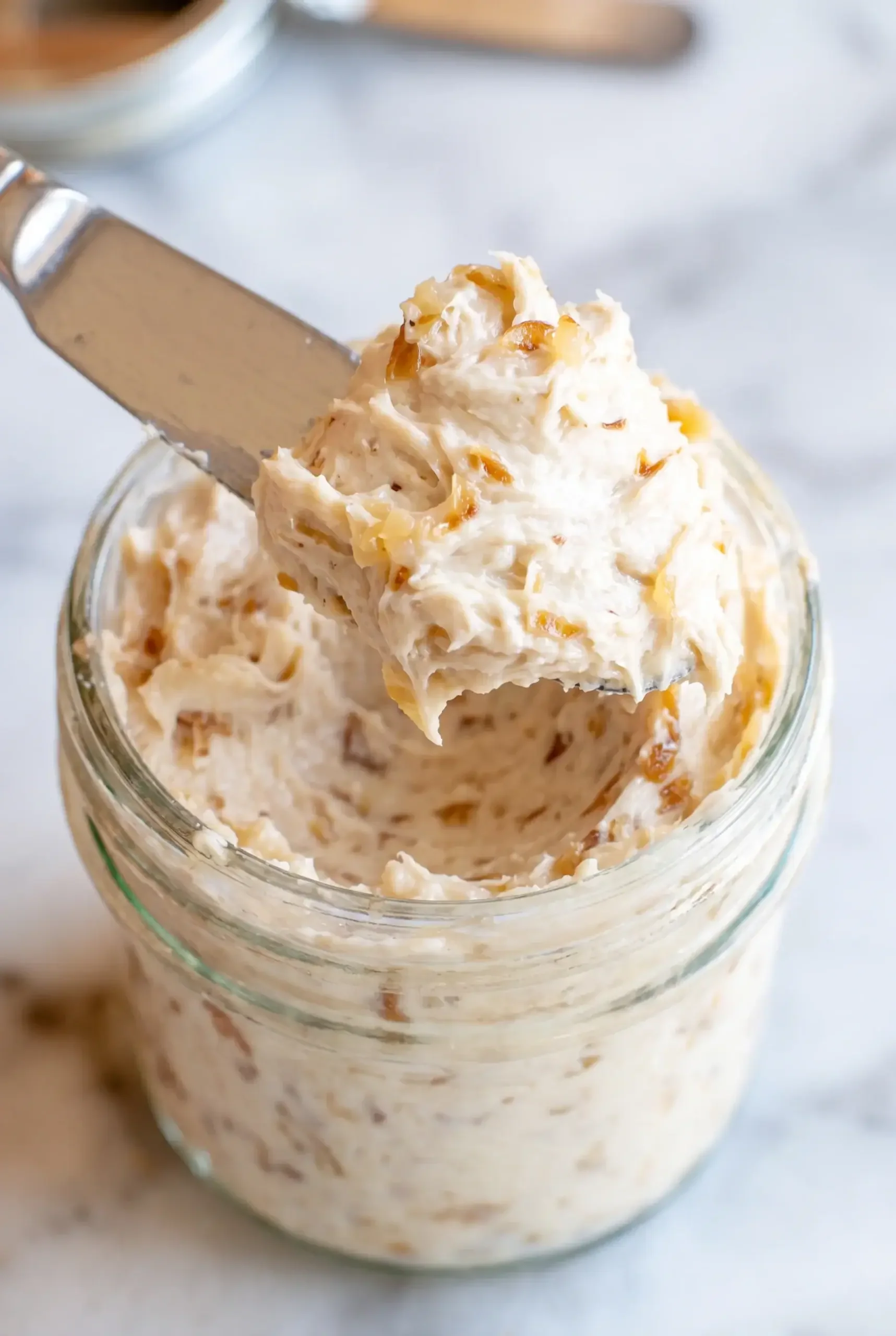
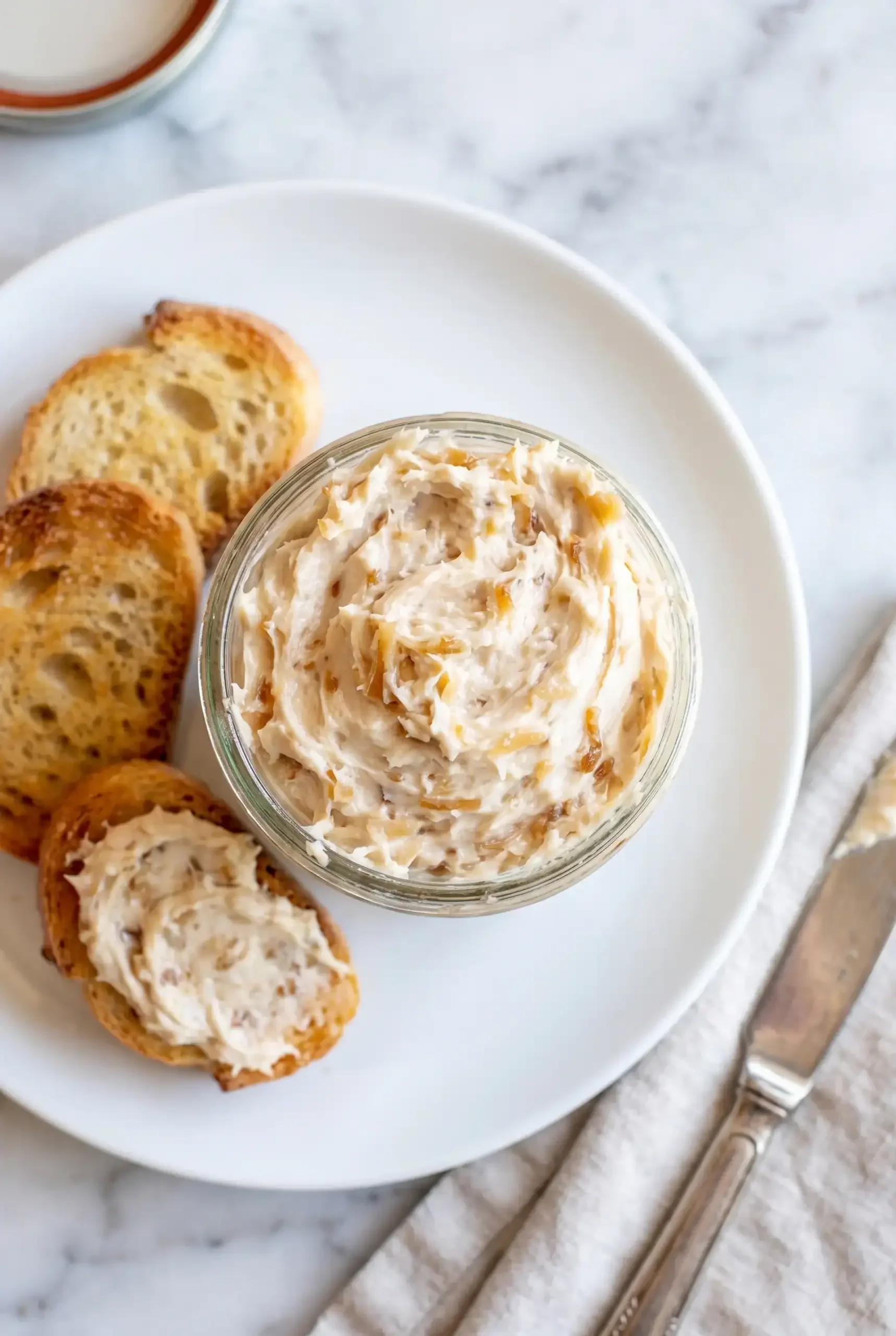
French onion butter combines slowly caramelized onions with softened butter, garlic, herbs, and a little Worcestershire sauce. The onions bring sweetness and a deep savory flavor, while the butter makes the mixture easy to spread on toast or melt over a hot meal. A small spoonful can dress up bread, potatoes, steak, or vegetables without making a separate sauce.
The main job is cooking the onion patiently. Once it has softened and turned brown, let it cool before blending it with the remaining butter. You can keep the finished spread in a small container or shape it into a log for slicing.
Recipe details
- Yield: approximately 12 small servings
- Preparation: about 10 minutes
- Onion cooking time: 30–40 minutes, or longer as needed
- Cooling: about 10 minutes, until no longer warm
- Equipment: skillet and food processor, or a knife and mixing bowl
Ingredients
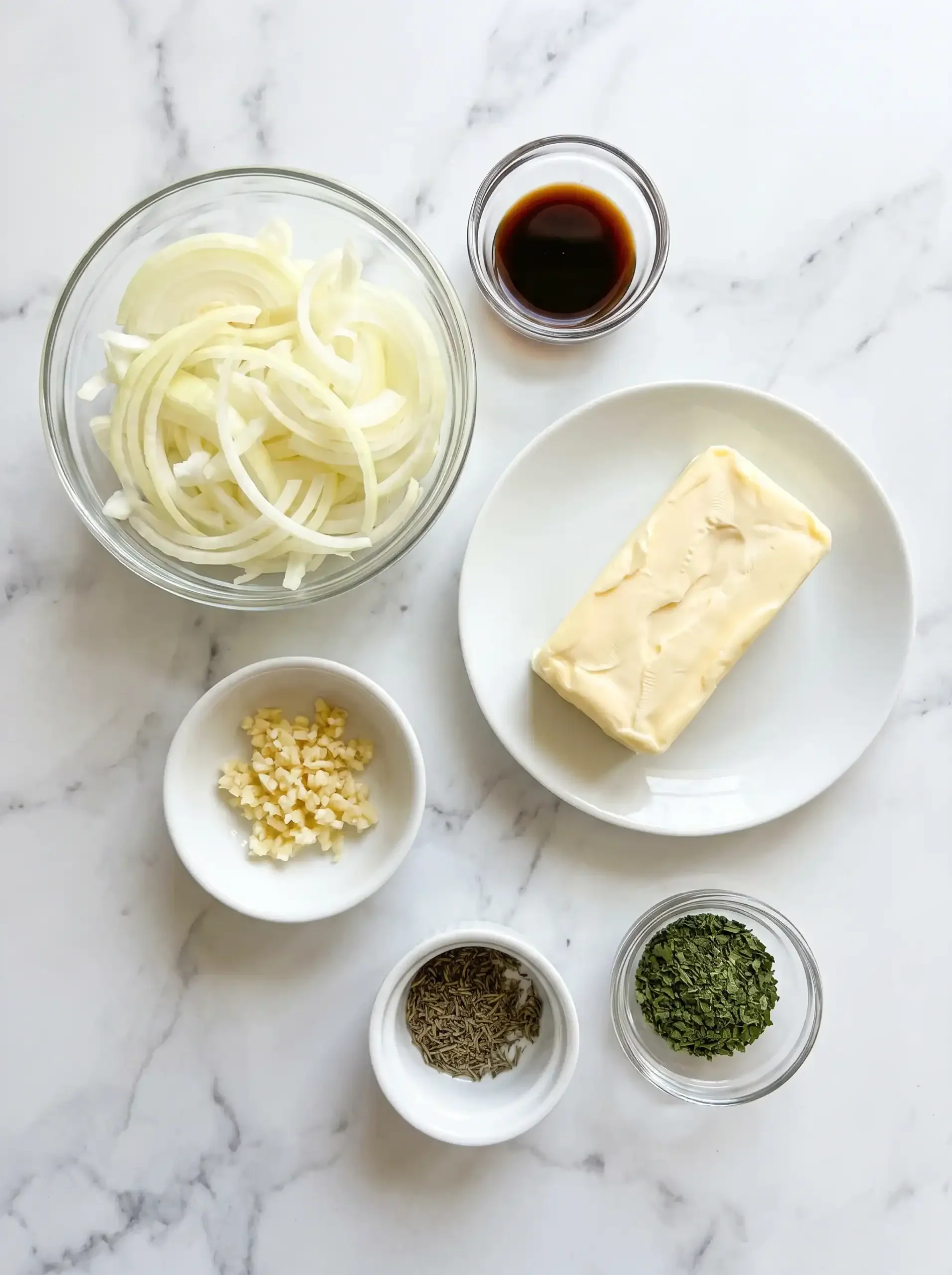
- 1 yellow onion, thinly sliced
- ¾ cup unsalted butter, softened and divided
- 2 garlic cloves, minced
- 1 dash Worcestershire sauce
- ⅛ teaspoon dried thyme
- ½ teaspoon dried parsley
- Up to ½ teaspoon kosher salt, to taste
- ¼ teaspoon freshly ground black pepper, or to taste
Use 2 tablespoons of the butter for cooking the onion. Reserve the remaining 10 tablespoons for mixing the spread. Because kosher salt brands vary in crystal size, start with less than the full amount and adjust after blending.
How to make French onion butter
- Start the onion. Melt 2 tablespoons butter in a large skillet over medium heat. Add the thinly sliced onion and a small pinch of the measured salt and pepper. Reduce the heat to medium-low.
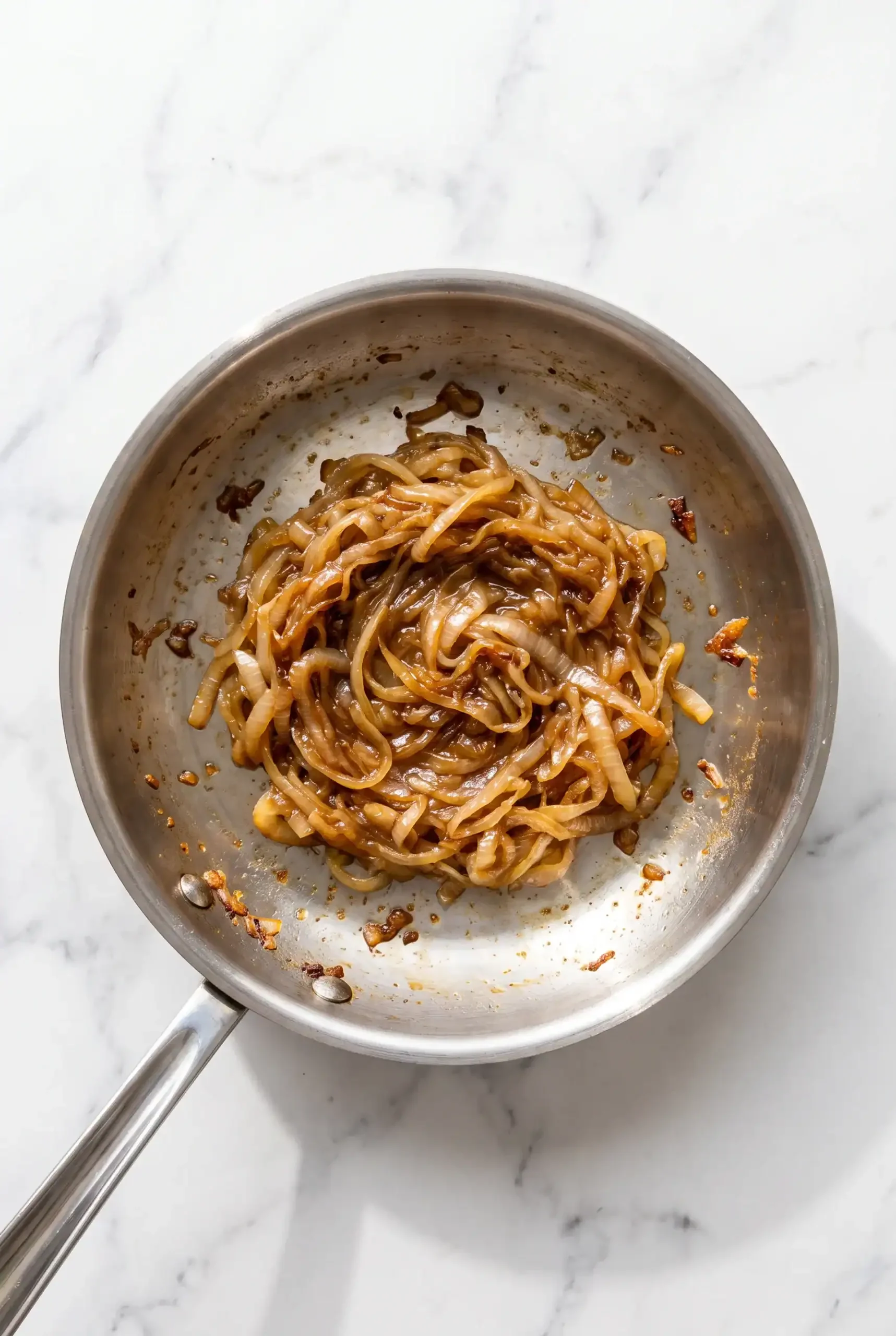
- Caramelize gently. Cook for about 30–40 minutes, stirring regularly, until the onion is soft and deeply golden brown. The timing depends on the pan, heat, and onion size. If the pan begins to dry out or browned bits threaten to burn, add a small splash of water and scrape them up. Lower the heat if necessary.
- Cool the onion. Remove the skillet from the heat. Let the onion cool for about 10 minutes, or until it is no longer warm enough to melt the softened butter. Spread it on a plate to cool faster if needed.
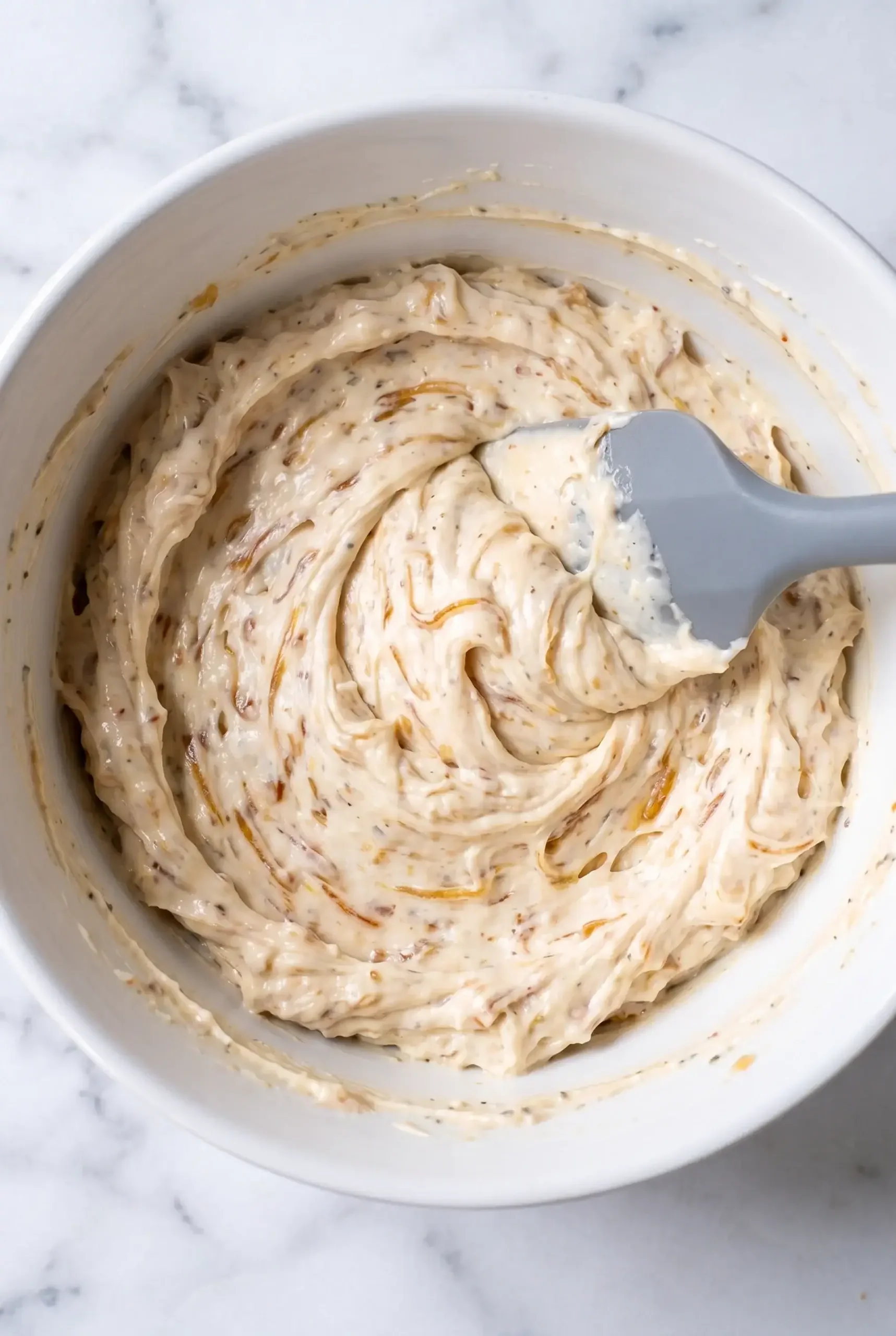
- Combine the ingredients. Put the remaining 10 tablespoons softened butter in a food processor with the cooled onion, minced garlic, Worcestershire sauce, thyme, and parsley.
- Pulse briefly. Process in short bursts until the mixture is spreadable and the onion is finely distributed. Scrape down the bowl as needed. Leave a few small onion pieces for texture rather than processing continuously.
- Adjust the seasoning. Taste a little on plain bread. Add more of the remaining salt or pepper only if needed, then pulse once or twice to mix.
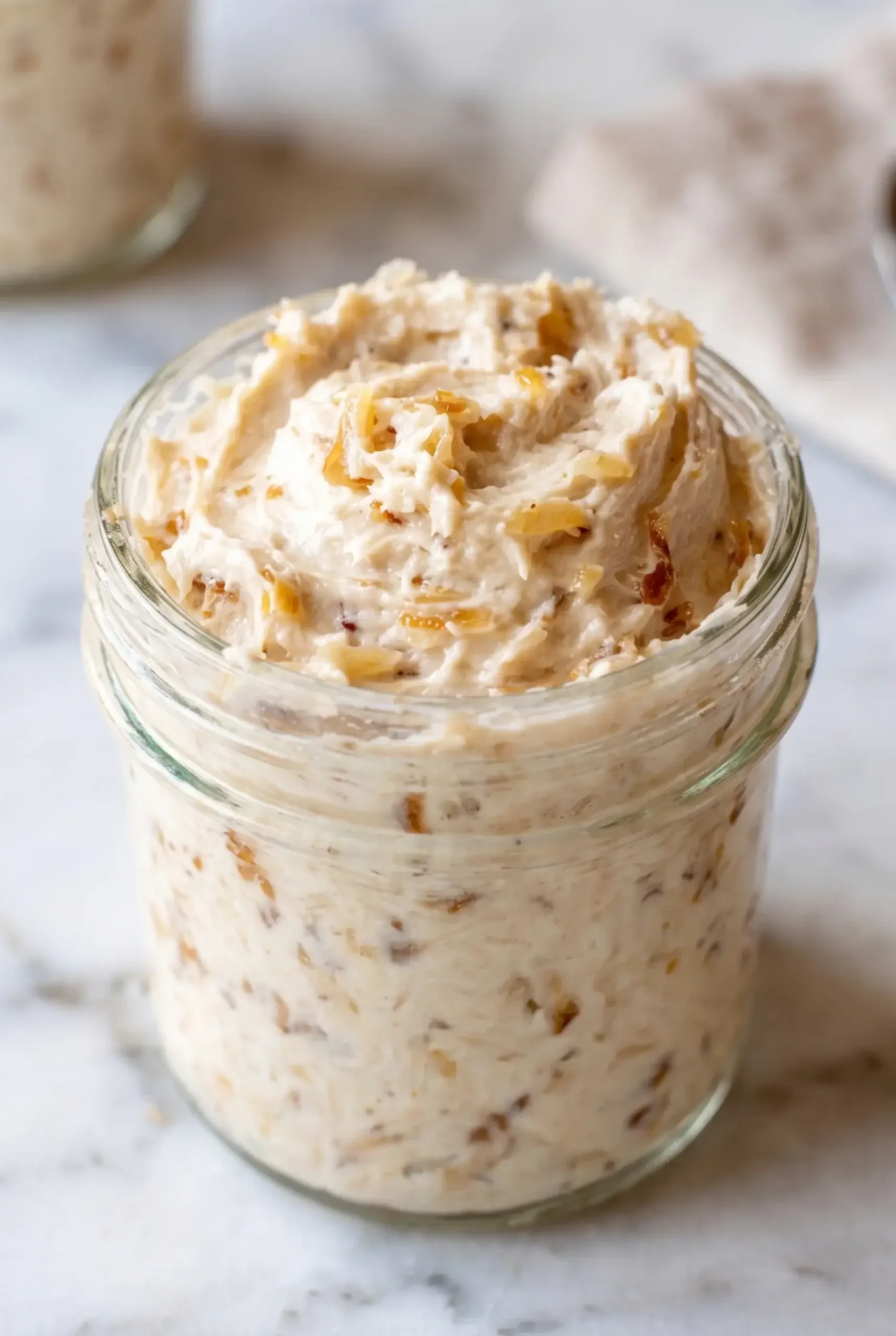
- Pack and chill. Spoon into a clean covered container. For a log, place the butter on parchment, roll it into a cylinder, and refrigerate until firm enough to slice.
Getting the onions right
Caramelized onions need steady, moderate heat. A few dark edges do not mean the whole pan is ready: look for softened strands with an even brown color and a sweet aroma. If the onion chars while the center remains firm, reduce the heat and add a little water. Water helps loosen the flavorful browned residue without adding more fat.
Thin, even slices cook more consistently than a mixture of thick chunks and fine slivers. A yellow onion is a reliable choice for a balanced flavor. A sweeter onion can also work, but its moisture content may change the cooking time. Let color and tenderness guide you more than the clock.
No food processor?
Finely chop the cooled caramelized onion with a knife. Mash the softened butter in a bowl, then stir in the chopped onion and remaining seasonings until evenly mixed. This makes a more textured spread. The butter should yield easily to a spoon but should not be liquid; melted butter will not give the same fluffy consistency.
Ways to serve it
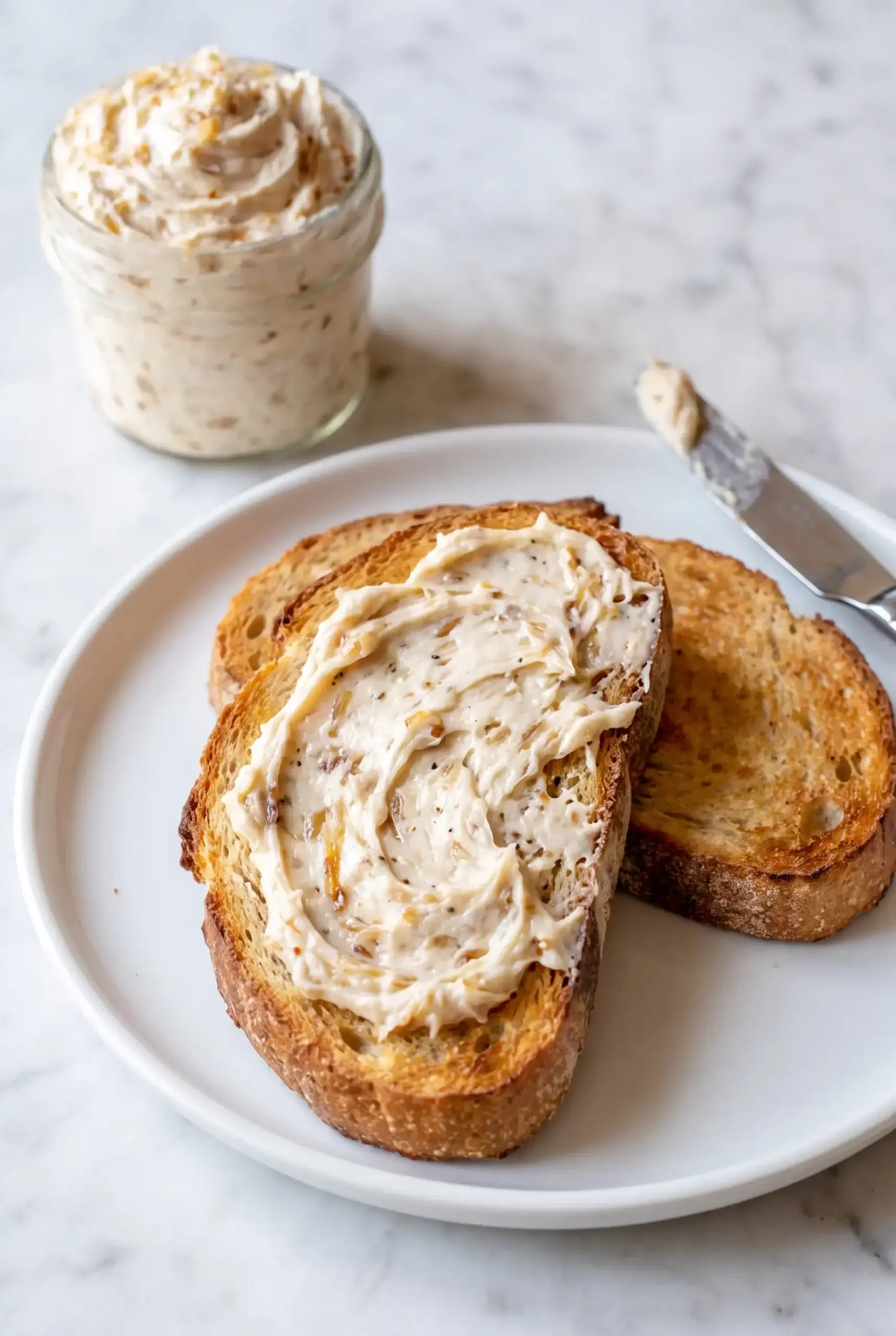
Spread a thin layer on warm baguette slices, sourdough toast, or dinner rolls. Melt a small pat over cooked steak, chicken, or a baked potato. It also works stirred into hot mashed potatoes or tossed with steamed green beans. Add it near the end of cooking so the already-caramelized onion does not scorch.
For a gentler garlic flavor, briefly cook the minced garlic with the onions during the final minute, then cool everything before blending. To keep the spread vegetarian, choose a vegetarian Worcestershire sauce. The standard sauce often contains anchovies. Any cheese or extra herbs are optional additions, separate from the base recipe.
Storage and make-ahead tips
Keep this butter refrigerated in a clean, tightly covered container and use within 3–4 days. It contains fresh garlic and cooked onion, so handle it as a perishable prepared food rather than plain butter. Take out only the portion you need and soften it briefly before serving.
For longer storage, freeze small portions or a tightly wrapped log. Label the package and thaw the amount needed in the refrigerator. Small pats are convenient for melting directly over hot food. Avoid leaving the full batch on the table for extended periods, and use a clean utensil each time you serve it.