You know that sad moment when you open the crisper drawer with big salad plans and find limp lettuce, soggy spinach, and cilantro that looks like it gave up three days ago?
Yep. Been there.
That’s why the idea of closing crisper drawer vents and lining the bottom with paper towels sounds so tempting. It costs almost nothing, takes about two minutes, and promises something every grocery shopper wants: produce that stays crisp longer.
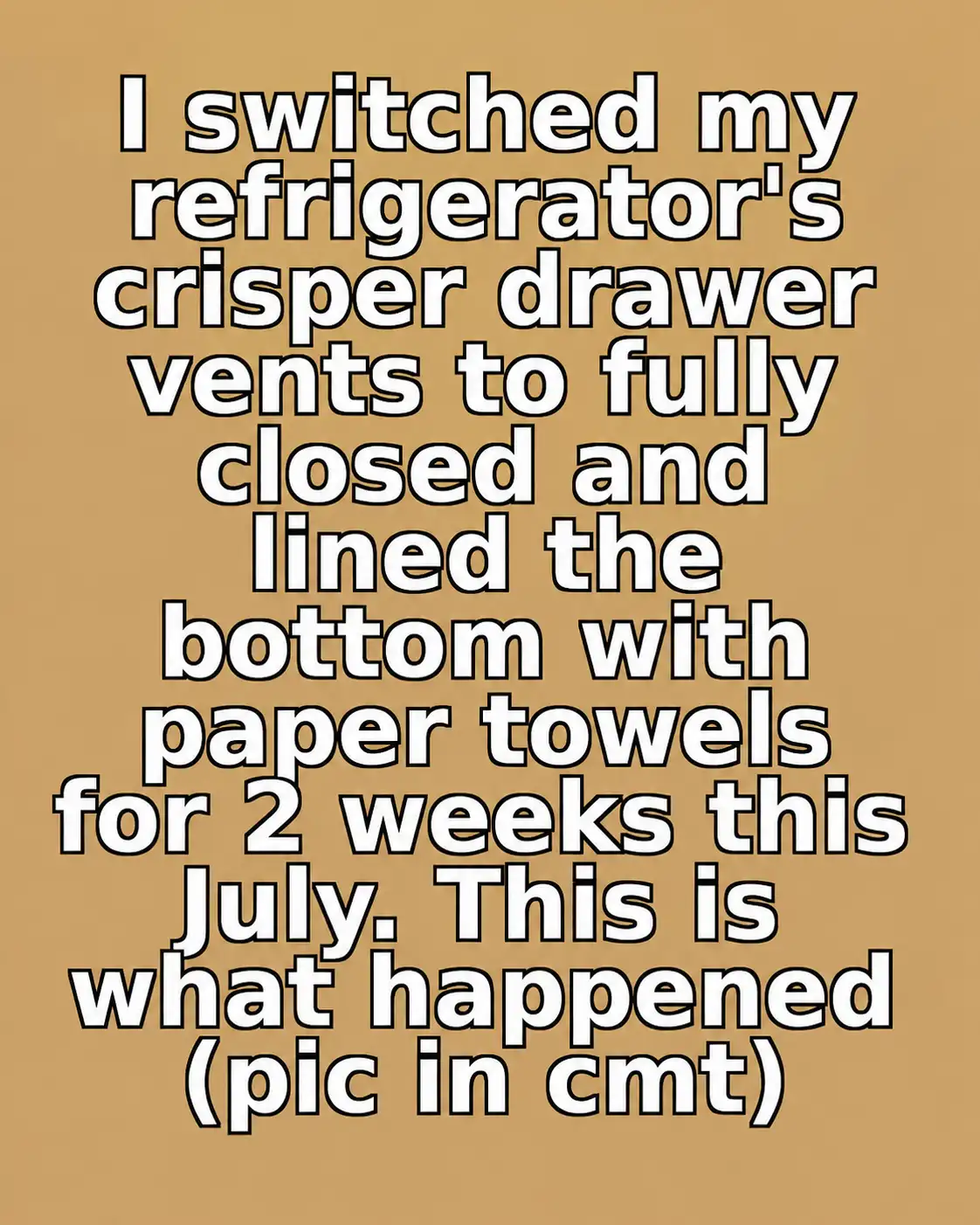
A recent 14-day Cooktop Cove experiment tried exactly that during hot July weather. The drawer vent was fully closed, two sheets of plain paper towel covered the bottom, and vegetables were monitored for moisture, texture, odor, and spoilage. Leafy greens were among the biggest winners, while some other vegetables needed a little more airflow.
The basic idea also matches how humidity-controlled crisper drawers are designed to work. A closed vent keeps more moisture inside, while an open vent lets moisture escape. But—and this is important—fully closed isn’t the right setting for every fruit and vegetable.
Here’s how to use this simple refrigerator trick without accidentally creating a tiny vegetable swamp.
What Does the Crisper Drawer Vent Actually Do?
That little slider on your refrigerator drawer isn’t decoration.
It controls how much moisture stays inside the crisper.
On many refrigerators, a HIGH or closed setting traps moisture, while a LOW or open setting allows moist air to escape. Manufacturer guidance generally recommends higher humidity for fresh leafy vegetables and lower humidity for many fruits and vegetables with skins.
So if lettuce keeps wilting in your refrigerator, closing the vent may help.
If apples are sitting in that same drawer?
Different story.
Understanding what belongs in each humidity setting is the real secret.
Why High Humidity Helps Leafy Greens
Leafy vegetables lose water pretty easily.
That’s why lettuce can go from crisp and gorgeous to sad and floppy faster than we’d like.
A higher-humidity crisper slows moisture loss.
Think about lettuce, spinach, kale, and other tender greens. Keeping more moisture in the surrounding air can help them retain their crisp texture.
Whirlpool specifically recommends the HIGH or closed setting for fresh leafy vegetables.
So closing the vent isn’t some random internet hack.
That’s basically what the control was designed to do.
What Do Paper Towels Do in a Crisper Drawer?
Here’s where the trick gets interesting.
A closed drawer keeps moisture inside.
Great.
But too much surface moisture can become a problem.
If condensation collects underneath produce, delicate vegetables may end up sitting against a wet drawer bottom.
A layer of plain paper towel can absorb some of that excess moisture.
You’re basically trying to create a balance:
Enough humidity to slow wilting, but not so much free water that everything becomes soggy.
And honestly, that’s the whole game.
What Happened During the 14-Day Test?
The Cooktop Cove experiment used a drawer lined with two sheets of unscented paper towel and set the humidity vent fully closed.
The test included romaine, baby spinach, cilantro, parsley, cucumbers, green beans, zucchini, broccoli, and bell peppers. Fruits such as apples, pears, peaches, and avocados were intentionally kept elsewhere.
Results varied by vegetable.
Leafy greens performed especially well. Romaine reportedly stayed crisp for about nine days, while baby spinach lasted around seven days before some leaves began breaking down.
That’s promising.
But it doesn’t mean every refrigerator, vegetable, or household will get exactly those numbers.
The Paper Towels Got Damp—and That’s the Point
During the test, the paper towels became noticeably damp underneath moisture-heavy produce.
They were replaced around day six.
Importantly, the drawer didn’t develop a puddle of standing water during the experiment. The paper towels acted as a simple moisture buffer between the vegetables and the drawer floor.
That’s also why you can’t line the drawer once and forget about it for a month.
Check the paper.
If it’s saturated, dirty, or starting to smell, replace it.
This trick needs about 15 seconds of maintenance.
I think we can handle that.
Lettuce and Spinach Were the Big Winners
If you’re going to try this method with anything, leafy greens make the most sense.
They benefit from higher humidity because they’re prone to losing moisture and wilting.
The experiment found better-than-usual results with both romaine and spinach, particularly when excess water wasn’t sitting directly against the leaves.
That’s the important part.
Humidity around vegetables is different from liquid water sitting on vegetables.
You want crisp lettuce.
You don’t want lettuce taking a bath.
Dry Produce Before Storing It
This may be the most important practical tip in the whole article.
Don’t put soaking-wet vegetables into a fully closed crisper and expect miracles.
In the Cooktop Cove test, spinach that entered the drawer with residual rinse water broke down faster than the drier batch. Herbs also performed better when excess surface water was removed first.
If you wash produce before refrigeration, dry it thoroughly.
Use a salad spinner for greens.
Pat herbs dry.
Remove obvious water droplets from vegetables.
Then let the crisper provide humidity without adding unnecessary standing moisture.
Herbs Need a Little Extra Attention
Cilantro and parsley can be dramatic.
One day they’re gorgeous.
The next day they look like somebody left them emotionally devastated in the refrigerator.
During the experiment, herbs stored while still somewhat wet developed soft areas faster. A later batch performed better after being dried thoroughly and stored more carefully.
So don’t assume “more moisture equals better.”
Herbs need protection from drying out, but wet leaves can still deteriorate.
Balance matters.
Cucumbers Can Benefit From Higher Humidity Too
The test reported surprisingly good results with cucumbers.
Four cucumbers reportedly remained firm for roughly 10 to 12 days, while the writer normally noticed softening sooner. Zucchini also maintained good firmness for several days.
Again, that’s one household experiment rather than a universal shelf-life guarantee.
Still, it shows why experimenting with your crisper setting can be worthwhile.
If cucumbers routinely shrivel in your refrigerator, your drawer may simply be losing too much moisture.
Broccoli and Green Beans Were More Complicated
Not every vegetable loved the fully closed setup.
Green beans performed reasonably well at first but began losing their snap later in the test. Broccoli stayed in decent condition for about a week before stronger odors and extra moisture became noticeable.
For produce like this, you may prefer a slightly more open vent.
That’s why I wouldn’t treat HIGH and LOW like two rigid teams.
If your refrigerator allows intermediate settings, experiment.
Your actual drawer conditions matter.
Bell Peppers Didn’t Need Quite as Much Humidity
Bell peppers were another mixed result.
One pepper developed a soft spot after sitting against the side of the drawer, and the peppers didn’t show the same dramatic benefit seen with leafy greens.
That makes sense.
Different produce loses moisture and responds to humidity differently.
The best drawer for lettuce isn’t automatically the best drawer for every vegetable in your grocery cart.
Don’t Put Every Fruit in the High-Humidity Drawer
Here’s where people accidentally misuse their crispers.
Many fruits produce ethylene, a natural plant hormone involved in ripening.
Apples, pears, avocados, and several other fruits can release ethylene as they ripen. An open, lower-humidity drawer allows more air and ethylene to escape, which can be useful for these foods. Whirlpool recommends lower humidity for many ethylene-producing fruits and higher humidity for vegetables prone to wilting.
So if you have two crisper drawers, here’s an easy rule:
High humidity = many leafy vegetables.
Low humidity = many ripening fruits.
Not perfect for every single item, but it’s a much better starting point than randomly moving the little slider.
Keep Ethylene-Sensitive Produce Away From Heavy Producers
Ethylene doesn’t stay politely inside the apple.
Some produce is particularly sensitive to it, meaning nearby ethylene-producing fruit can speed aging.
Whirlpool identifies leafy greens, berries, broccoli, cucumbers, and peppers among ethylene-sensitive foods.
If your refrigerator has two drawers, separation can help.
Put ethylene-producing fruit in the lower-humidity drawer.
Keep moisture-loving, ethylene-sensitive vegetables in the higher-humidity drawer.
Your lettuce doesn’t need to live beside a bunch of ripening pears.
They aren’t good roommates.
Don’t Overfill the Crisper Drawer
I know the temptation.
You come home from the grocery store feeling unusually responsible and stuff every vegetable you bought into one drawer.
Then you have to body-slam it closed.
Not ideal.
Overpacking reduces airflow around produce and can create pockets where moisture accumulates. Whirlpool also advises against overfilling crisper storage because airflow around produce matters.
Give vegetables some breathing room.
You don’t need each cucumber to have its own private suite, but the drawer shouldn’t look like produce rush hour either.
How to Set Up the Paper Towel Crisper Trick
Start with an empty drawer.
Wash it according to your refrigerator manufacturer’s cleaning instructions and dry it completely.
Place one or two sheets of plain, unscented paper towel across the bottom.
For leafy greens and vegetables prone to wilting, move the humidity control toward HIGH or closed.
Then add dry produce without packing everything tightly together.
Check the drawer every few days.
If the paper towel becomes very damp, replace it.
If you see heavy condensation or vegetables becoming soft and wet, open the vent slightly.
That’s it.
No special gadget required.
Don’t Use Scented Paper Towels
Keep things simple.
Use plain, clean, unscented paper towels.
You don’t need fragrance, cleaning chemicals, or decorative printed napkins touching your vegetables.
And don’t reuse paper towels that have already been used for cleaning kitchen surfaces.
Yes, that sounds obvious.
But somewhere out there, somebody was about to do it.
What If Water Collects in the Drawer?
A little condensation can happen.
A puddle is telling you something.
First, remove the produce and wet paper towels.
Dry the drawer.
Check whether the produce itself was wet when stored.
Make sure the drawer isn’t excessively packed.
Then consider opening the humidity vent slightly.
If unusual water buildup continues, check your refrigerator manual or investigate whether the appliance has a drainage or temperature issue.
The goal is controlled humidity—not an indoor koi pond for celery.
Refrigerator Temperature Still Matters
A fancy crisper setup can’t compensate for a refrigerator that’s too warm.
The FDA recommends keeping the refrigerator at 40°F (4°C) or below.
A small appliance thermometer can help you check the actual temperature rather than trusting the control dial.
If your refrigerator is running too warm, fix that first.
Paper towels aren’t going to save spinach sitting in an improperly chilled refrigerator.
A Closed Vent Isn’t Always Better
This is the mistake I want people to avoid.
If HIGH is good, HIGHER must be better, right?
Nope.
The correct humidity depends on what’s inside.
Manufacturer guidance makes the distinction pretty clear: LOW/open allows moist air to escape and suits many fruits and vegetables with skins, while HIGH/closed keeps moisture inside and suits leafy vegetables.
Use the vent strategically.
Don’t permanently close it and forget it exists.
A Simple Two-Drawer System
If your refrigerator has two humidity-controlled drawers, organizing produce gets much easier.
Use one as your high-humidity vegetable drawer.
Good candidates may include leafy greens and other vegetables prone to wilting.
Use the second as your lower-humidity fruit drawer.
Good candidates include many fruits that release ethylene as they ripen.
Then add paper towel lining to the high-humidity drawer if excess condensation has been causing trouble.
Suddenly those mysterious refrigerator sliders actually have jobs.
Who knew?
Will Paper Towels Make Produce Last Twice as Long?
Probably not.
Be skeptical of dramatic claims.
The Cooktop Cove experiment reported less produce waste over two weeks, but it was one household test under particular conditions. The writer estimated a 25% to 35% reduction in waste from that drawer during the experiment.
That’s interesting, not scientific proof that everyone will save exactly 35%.
Your results depend on produce freshness, refrigerator temperature, humidity, storage containers, washing habits, and how often you open the refrigerator.
Think of paper towels as a simple moisture-management tool.
Not vegetable immortality.
The Quickest Version of This Fridge Trick
Don’t want to turn produce storage into a science project?
Here’s the easy version:
- Keep the refrigerator at 40°F or below.
- Put leafy greens in the high-humidity drawer.
- Put many ethylene-producing fruits in the low-humidity drawer.
- Store produce reasonably dry.
- Line the high-humidity drawer with plain paper towels if condensation is a problem.
- Replace damp towels.
- Remove spoiled produce promptly.
That’s about as complicated as it needs to get.
Frequently Asked Questions
Should crisper drawer vents be open or closed?
It depends on the produce. A closed or HIGH setting retains humidity and is generally better for leafy vegetables. An open or LOW setting releases moisture and works better for many fruits and vegetables with skins.
Does putting paper towels in a crisper drawer work?
Paper towels can absorb excess surface moisture and condensation. They won’t stop spoilage, but they may help prevent produce from sitting directly in accumulated moisture.
Should lettuce go in a high-humidity drawer?
Yes. Leafy vegetables generally benefit from a high-humidity or closed crisper setting.
Should fruit go in a high-humidity drawer?
Many fruits do better in a lower-humidity drawer where moisture and ethylene can escape. Exact storage needs vary by fruit.
Should I wash vegetables before putting them in the crisper?
Follow storage guidance for the specific produce. If you wash vegetables before storage, remove excess surface water thoroughly because trapped liquid can encourage deterioration.
How often should I replace paper towels in the crisper drawer?
Replace them whenever they become noticeably damp, dirty, or unpleasant smelling. The Cooktop Cove experiment replaced the first lining around day six, but your drawer may need changes sooner or later.
Why does my crisper drawer collect water?
Wet produce, trapped condensation, overpacking, humidity settings, and refrigerator conditions can contribute. Dry the drawer, remove excess moisture, check the vent setting, and avoid packing produce too tightly.
Can I close both crisper drawer vents?
You can physically do so on many refrigerators, but it may not suit everything you’re storing. Follow the instructions for your refrigerator model and adjust humidity based on the produce inside.
Final Thoughts
Closing the crisper vent and adding paper towels isn’t magic—but there’s solid logic behind the idea.
A closed vent helps retain humidity, which can benefit leafy vegetables that tend to wilt. Paper towels can deal with some of the excess moisture that collects at the bottom.
The trick is getting the balance right.
High humidity doesn’t mean wet produce.
Dry your vegetables before storing them. Don’t cram the drawer full. Replace damp paper towels. Keep ethylene-producing fruits in a more suitable location. And adjust the vent when the contents of the drawer change.
The 14-day Cooktop Cove experiment found particularly good results with leafy greens and cucumbers, while peppers, broccoli, and beans were more mixed.
So, yes, this tiny refrigerator change may be worth trying.
Just don’t close every vent, throw every fruit and vegetable into the same drawer, add two paper towels, and expect grocery-store lettuce to live forever.
If only it were that easy.