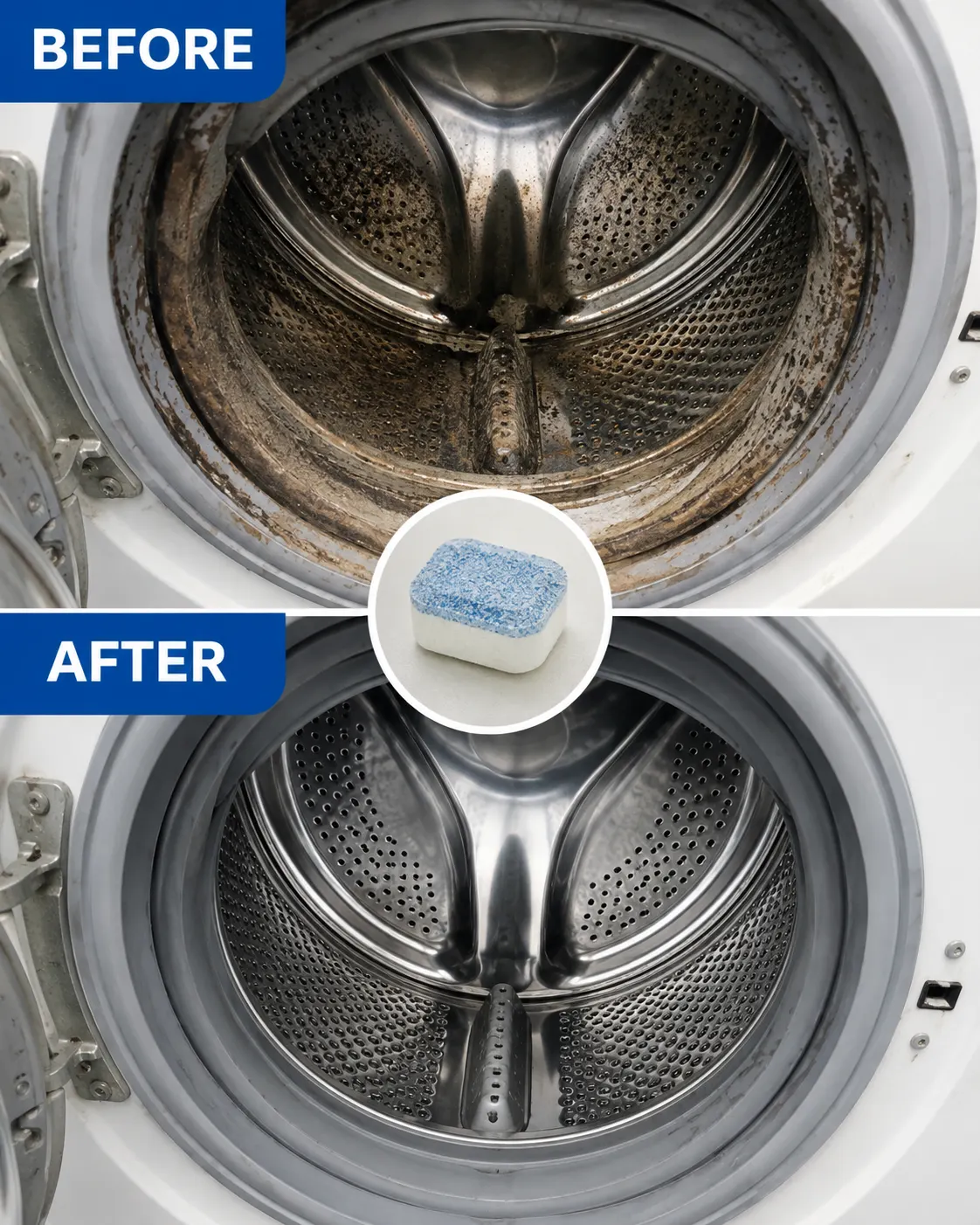
You know that moment when you open the washing machine and think, “Why does the machine that cleans my clothes smell like that?”
Yeah. Not exactly the fresh-laundry experience we signed up for.
Washing machines can collect detergent residue, fabric softener, lint, minerals, dirt, and moisture in places we rarely see. Then somebody shares a surprisingly simple cleaning trick: put a dishwasher tablet in an empty washing machine and run a hot cycle.
It sounds almost too easy.
Drop in a tablet. Press start. Walk away.
But before sacrificing a dishwasher pod to your washer, there’s something important to know: dishwasher detergent is made for dishwashers, not washing machines. Washing-machine manufacturers may recommend completely different cleaning methods, and using an unapproved product could create problems.
So, what could happen if you try it? Why does the water sometimes look shockingly dirty? And what’s the safer way to clean a washing machine that hasn’t had a proper cleaning in years?
Here’s the full story.
Why Washing Machines Get Dirty in the First Place
It feels strange, right?
A washing machine spends its entire life surrounded by detergent and water. You’d think the inside would stay spotless.
Unfortunately, washing clothes also introduces plenty of unwanted material.
Body oils, lint, hair, dirt, detergent, fabric softener, minerals, and other residues can remain inside the machine after a load finishes.
Moisture can linger too.
Over time, residue may collect around the drum, detergent dispenser, door gasket, filter, drain system, and other hidden areas.
That’s when you might notice unpleasant odors.
Why Front-Load Washers Can Develop Odors
Front-loading machines have a rubber door gasket that creates a watertight seal.
That gasket has folds where water, lint, hair, and detergent residue can collect.
Then the door gets closed.
Moisture remains trapped.
And, well… you can probably guess what happens next.
A musty smell can develop.
Using too much detergent can make matters worse because extra detergent doesn’t necessarily mean cleaner clothes. It can leave additional residue behind.
Why People Put Dishwasher Tablets in Washing Machines
Dishwasher tablets contain concentrated cleaning ingredients designed to break down grease and food residue inside dishwashers.
That’s probably where this washing-machine hack came from.
People see a powerful cleaning tablet and think:
“If it can clean greasy dishes, imagine what it’ll do inside my washer.”
The method commonly shared online involves placing one or more tablets into an empty washer and running a hot cycle.
Sometimes the water becomes cloudy, gray, or brown.
And that’s when the dramatic before-and-after photos appear.
But dirty-looking water doesn’t automatically prove that this is the best cleaning method.
What Can Happen During the Cycle
Suppose a washing machine hasn’t received a proper cleaning in years.
You place a dishwasher tablet inside.
Then you run an empty hot cycle.
As the tablet dissolves, cleaning agents circulate through the drum.
Old residue may loosen from accessible surfaces.
The water might become cloudy.
Small pieces of buildup may appear.
You may even notice the washer smells different afterward.
At first glance, it can feel like you’ve discovered the ultimate cleaning shortcut.
But there’s more going on than meets the eye.
Why the Water Can Look So Dirty
Cloudy or discolored water can contain loosened detergent residue, fabric softener buildup, dirt, lint, minerals, and other material inside the washer.
Some discoloration may also come from the cleaning product itself.
So don’t automatically assume every dark swirl is ten years of horrifying hidden grime.
Still, visible residue can be a good reminder that washing machines need regular care.
Yes, even the appliance whose entire personality is “washing things.”
The Big Problem With the Dishwasher Tablet Trick
Dishwasher detergent isn’t formulated specifically for washing-machine maintenance.
That’s the part social media cleaning hacks tend to skip.
A washing machine contains components, seals, hoses, coatings, and internal systems designed around laundry products approved for that appliance.
Using a cleaner intended for another machine may not match the washer manufacturer’s instructions.
That matters for performance, materials, residue, and potentially warranty coverage.
Before putting any cleaning product into your washer, check the appliance manual.
It’s boring advice.
I know.
But replacing a washing machine is considerably more boring—and much more expensive.
Dishwasher Detergent and Laundry Detergent Aren’t the Same Thing
These products perform different jobs.
Dishwasher detergent is designed around dishes, food residue, dishwasher temperatures, and dishwasher operating conditions.
Laundry detergent is formulated around fabrics, body oils, soils, dyes, and washing-machine conditions.
The fact that both products clean things doesn’t make them interchangeable.
Shampoo cleans.
Toothpaste cleans.
I’m still not putting toothpaste in my washing machine.
Same basic idea.
Could a Dishwasher Tablet Damage a Washing Machine?
The answer depends on the appliance, product, concentration, frequency of use, and materials involved.
That’s exactly why it’s risky to give one universal “Yep, totally safe!” answer.
Some washer manufacturers specifically recommend certain cleaning products or a dedicated self-cleaning cycle.
Using products outside those instructions can expose components to chemicals they weren’t intended to handle.
One experiment might appear perfectly fine.
Repeated use is another question.
I’d follow the washing-machine manufacturer’s care instructions rather than turn an expensive appliance into a chemistry experiment.
What About Dishwasher Pods?
Pods create the same basic concern.
A dishwasher pod is still dishwasher detergent.
Its convenient little wrapper doesn’t transform it into washing-machine cleaner.
Don’t assume that because a pod dissolves in water it’s appropriate for every water-using appliance in your home.
Use products for their labeled purpose unless the appliance manufacturer says otherwise.
What About Regular Dish Soap?
No.
Seriously, this one can become messy fast.
Hand dishwashing liquid is designed to create suds.
Washing machines—especially high-efficiency models—are designed to work with low-sudsing laundry products.
Putting ordinary dish soap into a washer can create excessive foam.
And suddenly your easy cleaning hack looks like a foam party nobody asked for.
Keep the dish soap by the sink.
The Safer First Step: Check the Washer Manual
Before cleaning anything, find the manufacturer’s instructions for your exact model.
Many modern washing machines include a cycle called something like:
Tub Clean
Drum Clean
Self Clean
Clean Washer
The name varies.
Manufacturers may recommend running this cycle at specific intervals with an approved washing-machine cleaner or another stated product.
Follow those instructions.
The manufacturer knows what the seals, drum, pumps, and internal components were designed to handle.
How to Clean a Washing Machine Properly
Start with an empty machine.
Remove all clothing, towels, and forgotten socks.
Check the drum.
Then inspect the detergent dispenser and door area.
If your washer has a manufacturer-recommended cleaning cycle, follow the directions for that cycle.
Use only the type and amount of cleaner recommended for your machine.
Afterward, wipe accessible surfaces and let the interior dry.
Simple?
Yep.
But simple works.
Clean the Detergent Dispenser
This little drawer can get surprisingly gross.
Laundry detergent and fabric softener can leave sticky residue inside the dispenser and surrounding channels.
If your dispenser is removable, check the manual for instructions on taking it out.
Clean it using the manufacturer’s recommended method.
Pay attention to corners and small channels where residue collects.
Then dry or reinstall it as directed.
A clean drum paired with a filthy dispenser isn’t exactly mission accomplished.
Clean the Rubber Door Gasket
If you have a front-load washer, inspect the rubber gasket carefully.
Gently pull back the folds.
You may find:
Lint.
Hair.
Coins.
Buttons.
A mystery object from 2019.
Wipe the gasket according to your washer manufacturer’s cleaning instructions.
Check for trapped debris and standing moisture.
Don’t use sharp tools that could puncture or damage the rubber.
That gasket is responsible for keeping a whole lot of water on the correct side of your laundry-room floor.
Treat it kindly.
Check the Washer Filter
Some washing machines have an accessible pump or debris filter.
It can collect lint, coins, hair, and small objects.
Check your owner’s manual before opening anything.
Water may drain when the filter is removed, so follow the manufacturer’s procedure and prepare the area as directed.
If your machine doesn’t have a user-serviceable filter, don’t start unscrewing random panels.
That’s how an afternoon cleaning project becomes a repair appointment.
Don’t Forget the Exterior
While the cleaning cycle runs, wipe the exterior.
Clean the control panel using an appropriate method.
Wipe the lid or door.
Clean around knobs and handles.
Dust the top.
Check the space around the appliance too.
Laundry detergent drips and dryer lint have a strange ability to migrate everywhere.
Ten minutes can make the entire laundry area feel cleaner.
Why Using Too Much Laundry Detergent Can Backfire
More detergent doesn’t always mean cleaner laundry.
High-efficiency washers typically use less water than older machines.
If you add excessive detergent, the machine may have difficulty rinsing all of it away.
Residue can remain on clothing and inside the washer.
Over time, that buildup can contribute to unpleasant smells and grime.
Follow the detergent directions and your washer manufacturer’s recommendations.
Don’t eyeball half a cup because the towels “look extra dirty.”
Your washer isn’t impressed by generosity.
Fabric Softener Can Leave Residue Too
Liquid fabric softener is another possible contributor to buildup.
It’s designed to leave conditioning ingredients on fabric.
Residue can also collect inside dispensers and parts of the washing system.
If you use fabric softener, measure it correctly and follow both the product and appliance directions.
Pouring extra into the dispenser because you want your sheets to smell stronger can create the exact buildup you’re trying to clean later.
Funny how laundry works like that.
Leave the Washer Door Open After Loads—When Safe
Moisture encourages musty smells.
After finishing laundry, allowing the washer interior to dry can help reduce lingering dampness.
For many front-load machines, leaving the door slightly open between loads can improve airflow.
However, follow your manufacturer’s guidance and consider household safety.
An open washer can pose a risk around small children or pets.
If leaving it open isn’t appropriate for your home, follow the manufacturer’s recommended drying and ventilation practices instead.
Remove Wet Laundry Promptly
We’ve all done it.
You start laundry.
You get distracted.
Six hours later you suddenly remember the clothes sitting in the washer.
Oops.
Leaving wet laundry inside keeps the drum damp longer and can create unpleasant odors in both the clothes and machine.
Move finished loads promptly whenever possible.
If the laundry develops a musty smell, rewashing may be necessary.
And yes, setting a phone timer totally counts as being organized.
How Often Should You Clean a Washing Machine?
There’s no single schedule for every household.
Cleaning frequency depends on the machine, water conditions, detergent use, laundry habits, and manufacturer’s recommendations.
Some machines provide cleaning reminders after a certain number of cycles.
Others give a recommended interval in the manual.
If your washer starts smelling musty, shows visible residue, or leaves laundry smelling less than fresh, don’t ignore it.
Check the manual and give the machine some attention.
Hard Water Can Add to the Problem
Hard water contains higher levels of dissolved minerals.
Those minerals can contribute to deposits in appliances over time.
If you live in a hard-water area, you may notice mineral buildup around faucets, showerheads, kettles, and washing equipment.
Use cleaning methods suitable for your machine and local water conditions.
Again, avoid randomly combining acidic cleaners, bleach, dishwasher tablets, and whatever else happens to be under the sink.
Your laundry room doesn’t need a science fair.
Never Mix Cleaning Chemicals
This deserves a giant imaginary warning sign.
Never mix bleach with vinegar.
Never mix bleach with ammonia.
Never casually combine different household cleaners.
Dangerous gases or chemical reactions can result.
If your washing-machine instructions call for a specific cleaning product, use it alone and exactly as directed.
Adding a second cleaner doesn’t make the first one “extra powerful.”
It can make the situation extra dangerous.
Why Vinegar Isn’t Automatically Safe for Every Washer
White vinegar is one of the internet’s favorite cleaning ingredients.
And yes, it’s useful for plenty of household jobs.
But that doesn’t mean every washing-machine manufacturer recommends routinely pouring vinegar into the appliance.
Acidic products may affect certain materials over repeated exposure.
Check your owner’s manual before making vinegar part of your washer-cleaning routine.
“Natural” and “safe for every appliance” aren’t the same statement.
What About Baking Soda?
Baking soda gets the same social-media treatment.
It’s inexpensive.
It’s familiar.
And it’s constantly paired with vinegar in dramatic fizzy cleaning videos.
That fizz looks impressive, but impressive-looking bubbles aren’t proof that the mixture is the best product for your washing machine.
Follow appliance-specific guidance rather than adding random pantry ingredients.
Save the baking soda experiments for situations where it’s actually recommended.
What If Your Washing Machine Still Smells After Cleaning?
One cleaning cycle may not solve every odor problem.
If the machine still smells, inspect accessible problem areas such as the gasket, dispenser, and filter according to the manual.
Also consider the drain system.
Persistent sewer-like odors may indicate a plumbing or drainage issue rather than a dirty drum.
If the smell continues despite proper cleaning, contact the appliance manufacturer, a qualified repair technician, or a plumber depending on the suspected source.
Don’t keep adding stronger chemicals hoping something eventually works.
Signs Your Washer Needs More Than a Cleaning Cycle
Pay attention if you notice:
- Water remaining in the drum
- Persistent foul odors
- Leaks
- Drainage problems
- Unusual noises
- Error codes
- Visible mold-like growth that keeps returning
- Laundry remaining unusually wet
- Repeated residue on clothes
These problems may point to maintenance or mechanical issues.
A cleaning tablet won’t repair a failing drain pump.
Wouldn’t it be nice if it did?
What I’d Do Instead of the Dishwasher Tablet Trick
If I inherited a washer that hadn’t been cleaned in ten years, I wouldn’t start with a dishwasher tablet.
I’d find the model number.
Then I’d check the manufacturer’s cleaning instructions.
I’d clean the dispenser.
I’d inspect the gasket.
I’d check any user-accessible filter.
Then I’d run the recommended cleaning cycle with the approved product.
Afterward, I’d leave the machine clean and dry according to its instructions.
It isn’t quite as dramatic as dropping in a mystery tablet and watching brown water swirl around.
But I’d rather protect the appliance.
A Simple Monthly Washer-Care Routine
Regular care can keep the giant once-a-decade cleaning session from becoming necessary.
Check the gasket and drum for debris.
Wipe spills around the detergent dispenser.
Remove finished laundry promptly.
Use the proper amount of detergent.
Allow the machine to dry safely between loads.
Run the manufacturer’s recommended cleaning cycle when required.
Check accessible filters according to the manual.
That’s about it.
No viral cleaning hack required.
Why Regular Maintenance Matters
A washing machine is one of those appliances we don’t appreciate until it stops working.
Then suddenly the laundry basket is overflowing and everybody needs clean socks immediately.
Keeping the washer reasonably clean can help prevent residue and odors from becoming major annoyances.
It can also make problems easier to notice.
A leaking gasket or drainage issue is easier to spot when it isn’t hidden under years of buildup.
A little routine care beats a laundry-room emergency.
Every time.
So, Does the Dishwasher Tablet Washing Machine Hack Work?
It may loosen visible residue in some situations.
That doesn’t make it the right cleaning method for your washer.
Those are two different questions.
A product can appear to clean something while still being outside the appliance manufacturer’s recommended care instructions.
That’s why I wouldn’t call dishwasher tablets a universal washing-machine cleaning solution.
Check your washer’s manual first.
If the manufacturer recommends a dedicated washing-machine cleaner or specific self-cleaning process, that’s the route I’d choose.
Your washing machine costs a lot more than a tablet.
Frequently Asked Questions
Can you put a dishwasher tablet in a washing machine?
Dishwasher tablets are formulated for dishwashers, not washing machines. Some online cleaning tricks recommend them, but you should follow your washing-machine manufacturer’s care instructions instead.
Will a dishwasher tablet clean a washing machine?
A dishwasher tablet may loosen some residue, but that doesn’t mean it’s suitable or recommended for your appliance. Use a washing-machine cleaning method approved by the manufacturer.
Can dishwasher tablets damage washing machines?
Suitability depends on the machine and product. Because dishwasher detergent isn’t designed specifically for washing-machine maintenance, it’s safer to follow the appliance manufacturer’s cleaning directions.
Can I put dish soap in my washing machine?
Regular hand dishwashing liquid can create excessive suds and generally shouldn’t be substituted for laundry detergent or washer cleaner.
Why does my washing machine smell bad?
Odors can come from trapped moisture, detergent residue, fabric softener buildup, debris, a dirty gasket, dispenser buildup, drainage problems, or other maintenance issues.
How do I clean a front-load washing machine?
Follow the manufacturer’s cleaning instructions. Common maintenance areas include the drum, rubber gasket, detergent dispenser, and any user-accessible filter.
Should I leave my washing-machine door open?
Allowing airflow can help the interior dry, but follow your appliance manufacturer’s instructions and consider child and pet safety before leaving the door open.
How often should I clean my washing machine?
Follow the schedule recommended for your specific model. Usage, detergent habits, water hardness, and household laundry volume can affect how often cleaning is needed.
Can I use vinegar to clean my washing machine?
Check your appliance manual first. Vinegar isn’t automatically recommended for every washer, particularly for repeated use around certain materials and seals.
What should I do if my washer still smells after cleaning?
Inspect manufacturer-approved maintenance areas such as the gasket, dispenser, and filter. Persistent odors can also indicate drainage or plumbing problems that may need professional attention.
Final Thoughts
I’ll admit it: the dishwasher tablet washing machine hack has everything a viral cleaning trick needs.
It’s cheap.
It’s easy.
It’s unexpected.
And watching dirty-looking water appear during the cycle makes the whole thing feel incredibly satisfying.
But there’s one little problem.
Dishwasher tablets were made for dishwashers.
Your washing machine may have its own cleaning cycle, approved cleaner, and specific maintenance instructions.
So before dropping a tablet into the drum, check the manual.
Clean the gasket.
Wash the dispenser.
Inspect the filter if your model has one.
Use the proper amount of laundry detergent.
Let the machine dry appropriately between loads.
And run the cleaning cycle recommended for your washer.
Maybe that’s less exciting than discovering ten years of mystery sludge swirling around the drum.
But when an appliance costs hundreds of dollars, boring and manufacturer-approved sounds pretty darn good to me.