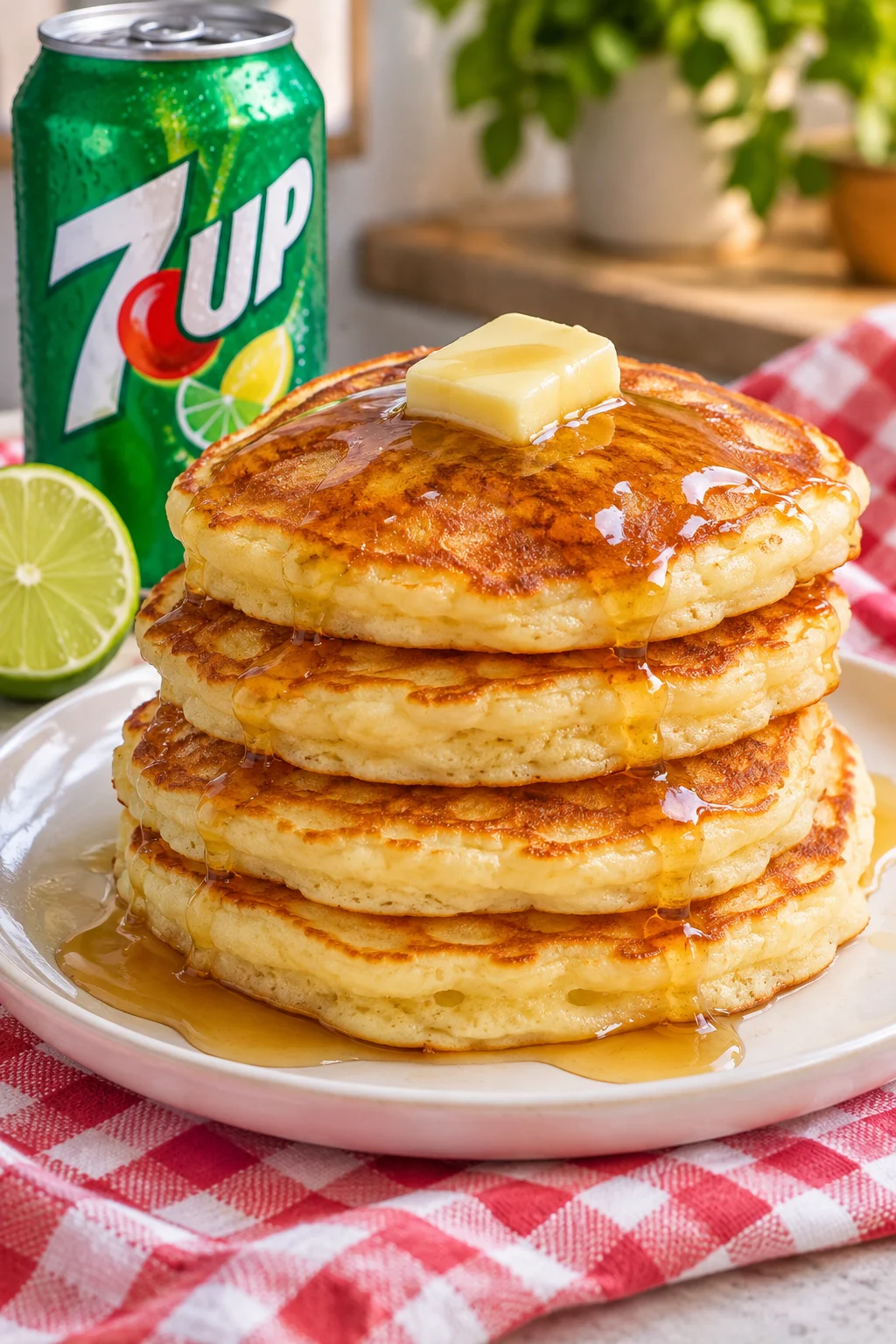
I did not set out to reinvent pancakes on a Tuesday morning in my Midwestern kitchen. I was making a routine batch for breakfast, reached for what I thought was milk, and poured in 7Up instead. By the time I realized what I had done, the batter was already whisked, the griddle was heating, and my curiosity had completely overruled my common sense. So I kept going.
Ten minutes later, I had a plate of pancakes that looked different, smelled faintly citrusy, and taught me more about leavening than plenty of recipe notes ever have. If you have ever wondered what happens when a carbonated lemon-lime soda stands in for milk, here is the full play-by-play: how the batter changed, how the pancakes cooked, what they tasted like, why the science actually makes some sense, and whether I would do it again on purpose.
1. The exact batter I was making
I was using a very standard pancake formula, the kind I could measure half-awake: 1 1/2 cups all-purpose flour, 2 tablespoons granulated sugar, 1 tablespoon baking powder, 1/2 teaspoon kosher salt, 1 large egg, 3 tablespoons melted unsalted butter, 1 teaspoon vanilla, and 1 1/4 cups milk. Instead of the milk, I accidentally poured in 1 1/4 cups of cold 7Up straight from the refrigerator.
That matters, because this was not a yeasted batter or a buttermilk batter with baking soda. It was a classic baking-powder pancake recipe, so the soda changed both the liquid composition and the way the leavening behaved. The sugar level also jumped immediately, because 7Up contributes roughly 38 grams of sugar per 12-ounce serving. With 1 1/4 cups, I added close to 40 grams of extra sugar to the bowl.
2. What the batter looked like in the first 30 seconds
The moment the 7Up hit the dry ingredients, I noticed more bubbling than usual. Not violent fizzing, but a soft, active foam around the edges of the bowl. The batter looked lighter and slightly frothier than a milk-based version. It was also thinner at first, almost deceptively so, because carbonated beverages tend to move quickly through flour before the starches have time to fully hydrate.
After about 30 seconds of whisking, the bubbles began to settle. The batter was smooth, pale, and just a little more aerated than usual. If you have ever made tempura batter with sparkling water, it had some of that same early liveliness.
3. The smell gave away the swap immediately
Before the pancakes even hit the pan, the aroma told the story. Instead of the clean dairy-and-vanilla scent I expect from pancake batter, there was a light lemon-lime note. Not strong enough to smell like soda pop, but enough to suggest something bright and citrusy was happening.
Once cooking started, the fragrance mellowed. The griddle brought out more sweetness than citrus, and the kitchen smelled closer to a vanilla breakfast cake than a traditional flapjack. It was pleasant, just unusual.
4. How the batter behaved on the griddle
I cooked the pancakes on an electric griddle set to 375°F, using about 1/4 cup batter per pancake. The batter spread faster than my usual mix, likely because it was a touch thinner and less protein-rich without milk. Milk contributes proteins and solids that slightly strengthen structure; soda is mostly water, sugar, carbonation, and flavoring.
The first bubbles on the surface appeared quickly, in about 45 to 60 seconds. That is a little sooner than my usual pancakes, which often take 75 seconds or so before the tops show a good pattern of popped bubbles and drying edges. The carbonation gave them an early head start, but it was not the whole story. The baking powder was still doing the heavy lifting.
5. What happened 10 minutes later
Ten minutes later, I had cooked a full first batch and sampled one plain. The pancakes were visibly puffier in the center, with a fine, even crumb and slightly crisp edges. They browned faster than expected, which I attribute to the extra sugar in the 7Up. Sugar accelerates caramelization and surface browning, so these needed a slightly shorter cook time on the second side.
The biggest surprise was the texture. They were tender and fluffy, but also a little more delicate. When I cut one with the side of a fork, it compressed softly and sprang back. A milk pancake tends to have a little more richness and body. These were airier, almost halfway between a standard pancake and a sweet breakfast griddle cake.
6. The flavor was not what I expected
I assumed the lemon-lime flavor would be obvious. It really was not. The citrus note was subtle once cooked, especially with vanilla and melted butter already in the batter. What came through more clearly was sweetness. Even before syrup, the pancakes tasted sweeter than a normal stack.
That sweetness changed the balance. With butter alone, they were enjoyable. With maple syrup, they bordered on dessert. If I were making them intentionally, I would reduce the sugar in the dry mix from 2 tablespoons to 1 teaspoon, or omit it entirely. That one adjustment would make the final flavor far more balanced.
7. Why 7Up can make pancakes fluffier
The science is fairly straightforward. Carbonated soda contains dissolved carbon dioxide. When you whisk it into batter and then heat that batter, some of those gas bubbles expand and help create lift. It is not unlike what happens when club soda is used in waffles, fritters, or beer batter.
There is also acidity to consider. Lemon-lime sodas are mildly acidic, often from citric acid. In a batter that contains chemical leaveners, acidity can influence how quickly gases are released. In my recipe, baking powder already contains both acid and base, so the effect was modest rather than dramatic. But the batter did seem to activate quickly.
That said, 7Up is not a miracle ingredient. Carbonation dissipates fast, especially if you overmix. If you stir vigorously for 2 full minutes and let the bowl sit around, much of the fizz is gone before the batter ever reaches the griddle.
8. What milk normally contributes that soda does not
Milk is not just “liquid” in a pancake recipe. It brings fat, protein, milk sugars, and minerals. Even 2% milk contributes enough protein to help with structure and enough milk solids to add flavor and browning. Whole milk adds a noticeable richness that you simply do not get from soda.
By swapping in 7Up, I lost that creamy backbone. The pancakes were lighter, yes, but also less rounded in flavor. Butter helped compensate, and the egg provided some structure, but the result was still less substantial than a traditional diner-style pancake. I would describe them as fluffy but not hearty.
9. The biggest cooking adjustment I had to make
The key adjustment was lowering the heat slightly after the first round. At 375°F, the first batch browned quickly on the bottom in about 90 seconds per side. For batch two, I dropped the griddle to 360°F. That extra 15 degrees made a difference: the centers had a bit more time to set before the outsides darkened.
If you try this in a skillet, I would suggest medium rather than medium-high heat, and I would test one pancake first. Because of the soda’s sugar content, these can go from pale gold to overly brown faster than a milk batter can.
10. Best toppings for this kind of pancake
Since the pancakes already leaned sweet, I found that restrained toppings worked best. Salted butter was excellent. Fresh berries, especially blueberries or sliced strawberries, gave the stack some tartness. A spoonful of plain Greek yogurt on the side also helped cut the sweetness.
Maple syrup was fine in a very light drizzle, about 1 tablespoon per pancake rather than the usual generous pour. What did not work for me was sweetened whipped cream or banana syrup; those tipped the whole breakfast too far into cupcake territory. If I made these for brunch guests, I would serve them with fruit, toasted pecans, and butter rather than an all-out syrup bath.
11. Would sparkling water do a better job?
In my opinion, yes, if your goal is fluff without extra sweetness. Sparkling water or club soda can provide the same carbonation effect while keeping the batter’s sugar level under control. You get lift and lightness without adding lemon-lime flavor or 40 extra grams of sugar.
In fact, if I wanted to recreate the best part of this accident on purpose, I would replace only part of the milk. A good starting point would be 3/4 cup milk plus 1/2 cup club soda for a recipe that normally uses 1 1/4 cups liquid. That way you keep some richness while gaining a more delicate crumb.
12. If you want to use 7Up on purpose, here is how I would tweak the recipe
After the accidental batch, I wrote down the version I would make intentionally: 1 1/2 cups all-purpose flour, 1 tablespoon baking powder, 1/2 teaspoon salt, 0 to 1 teaspoon sugar, 1 large egg, 3 tablespoons melted butter, 1/2 teaspoon vanilla, and 1 1/4 cups 7Up. I would whisk the dry ingredients separately, stir the wet ingredients together gently, combine with minimal mixing, and cook right away.
I would also consider adding 1/4 teaspoon baking soda only if the recipe included a tangy component such as 1/2 cup sour cream or yogurt. On their own, most pancake recipes do not need both a sweet soda and extra soda-based leavening unless you are deliberately building a thicker batter.
13. The mistakes to avoid if you experiment with it
First, do not overmix. Ten to twelve strokes with a whisk or a few folds with a spatula are enough. Small lumps are fine. Overmixing develops gluten and knocks out carbonation, which means tougher, flatter pancakes.
Second, do not let the batter sit for 20 minutes. Regular pancake batter can sometimes rest briefly with good results, but a soda-based batter loses its fizz quickly. Mix it and cook it immediately.
Third, watch the sugar everywhere else in the recipe. If you add chocolate chips, sweetened fruit compote, and lots of syrup, the final plate can become cloying. These pancakes need a lighter hand.
14. Was it worth eating, or just a funny kitchen story?
Honestly, it was both. I would not replace my go-to buttermilk pancakes with this version, and I still think milk gives a better all-around flavor. But the 7Up batch was far from a disaster. They were fluffy, pleasantly tender, and interesting enough that everyone at the table kept talking about them between bites.
As someone who has cooked long enough to know that many “accidents” are really just unplanned experiments, I came away appreciating how forgiving pancake batter can be. This one taught me that carbonation can improve texture, that sugar changes browning much faster than most people expect, and that even a mistaken pour can deliver breakfast.
15. My final verdict
What happened 10 minutes later was this: the pancakes puffed beautifully, browned quickly, tasted sweeter than normal, and turned out surprisingly good. They were not classic pancakes, but they were absolutely edible and, in the right mood, genuinely enjoyable.
Would I do it again? By accident, hopefully not. On purpose, maybe once in a while, especially if I wanted a lighter, playful brunch pancake and planned the rest of the recipe around it. If you try it yourself, cut back the sugar, lower the heat a touch, and get the batter onto the griddle while the fizz is still working in your favor.