
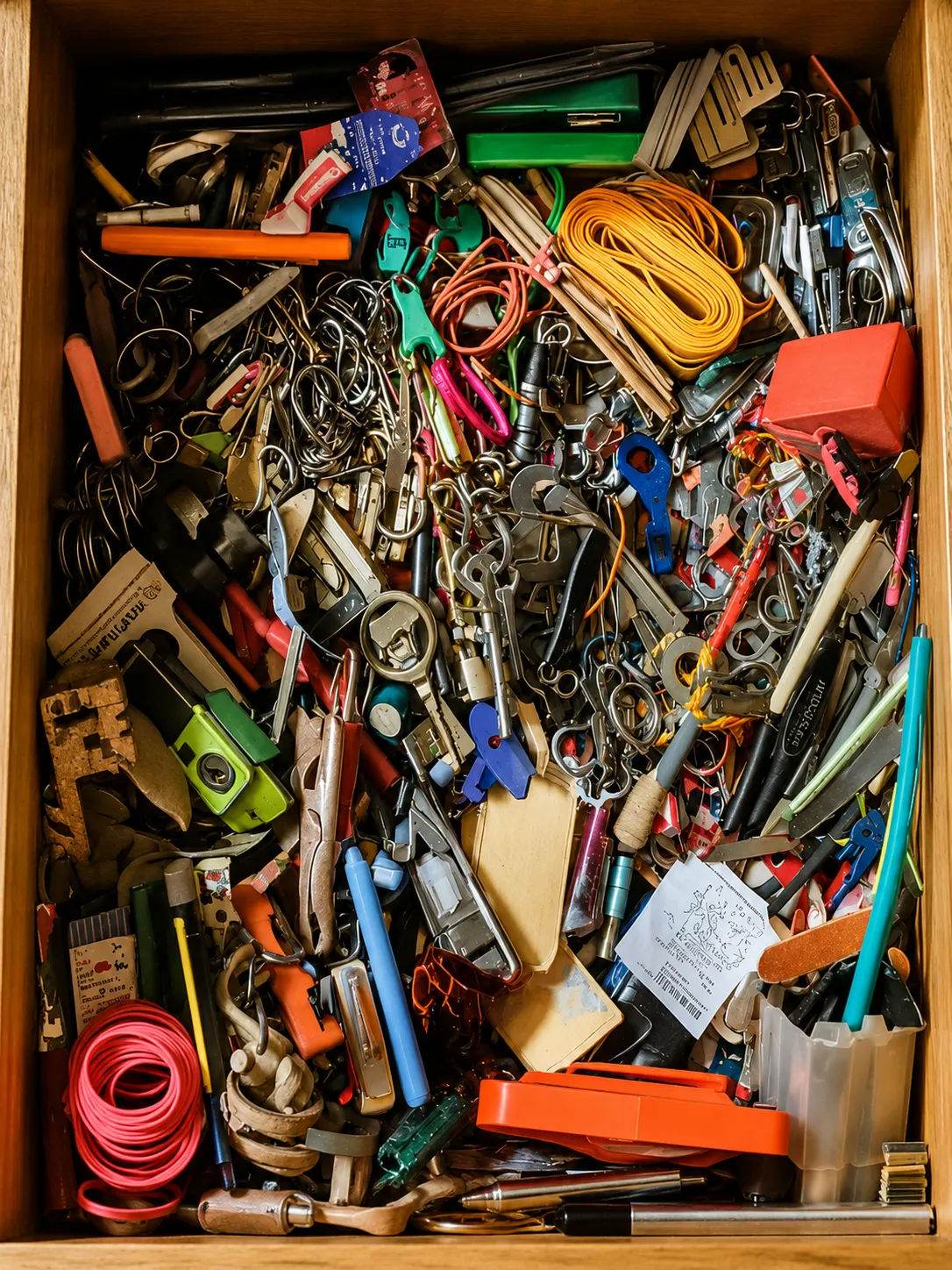
Every home seems to have one. You know the drawer—the one that’s packed with random odds and ends that don’t really belong anywhere else. It starts out organized, but before long it’s filled with mystery keys, rubber bands, old batteries, and a collection of items you forgot you even owned.
While a junk drawer may never be perfectly neat, it often holds everyday essentials you’ll be glad to have when you need them.
Here are 10 common items that tend to end up in almost every junk drawer.
1. Spare Batteries
AA, AAA, and button-cell batteries are among the most common junk drawer residents.
Whether they’re for a remote control, flashlight, or toy, having a few extras on hand can save a last-minute trip to the store.
Tip: Store new and used batteries separately to avoid confusion.
2. Rubber Bands
Rubber bands always seem to multiply.
They’re handy for bundling papers, sealing snack bags, organizing cords, or keeping small items together.
A small container inside the drawer helps keep them from becoming tangled.
3. Pens and Permanent Markers
Even people with home offices somehow end up storing extra pens in the junk drawer.
Permanent markers are useful for labeling containers, freezer bags, and moving boxes, while pens are always needed for writing quick notes or grocery lists.
4. Takeout Menus and Coupons
Although many restaurants have moved online, paper menus, coupons, and local advertisements still find their way into junk drawers.
Every few months, it’s worth recycling expired coupons and outdated menus to free up space.
5. Scissors
One good pair of household scissors is worth keeping close by.
They’re useful for opening packages, cutting string, trimming tape, and countless other everyday tasks.
Keeping them in the junk drawer means you’re less likely to spend time searching the entire house.
6. Twist Ties and Bread Clips
These tiny items seem insignificant until you suddenly need one.
Twist ties can organize charging cables, secure bags of snacks, or bundle holiday lights.
Bread clips are often saved for labeling cords, closing food bags, or simple craft projects.
7. Tape and Small Office Supplies
Clear tape, sticky notes, paper clips, binder clips, and push pins often end up together in the junk drawer.
They don’t take up much room but come in handy for school projects, paperwork, and quick household fixes.
8. Mystery Keys
Almost every junk drawer contains at least one key that nobody recognizes anymore.
It might belong to an old padlock, a filing cabinet, a bicycle, or a house you no longer own.
If a key has gone unidentified for years, it may be time to let it go.
9. Flashlight
A compact flashlight is one of the most practical items to keep in a junk drawer.
It’s useful during power outages, nighttime repairs, or finding something that rolled under the furniture.
Just remember to check the batteries occasionally.
10. Chargers and Random Cables
Old phone chargers, USB cables, earbuds, and charging adapters have a way of collecting over time.
Every few months, sort through them and recycle any cables that no longer work or belong to devices you no longer own.
How to Keep a Junk Drawer Organized
A junk drawer doesn’t have to be messy.
Try these simple ideas:
- Use small organizers or divided trays.
- Throw away broken or expired items regularly.
- Group similar items together.
- Label small containers if needed.
- Limit the drawer to everyday essentials.
Spending just 10 minutes organizing every few months can make finding things much easier.
Frequently Asked Questions
Is it okay to have a junk drawer?
Absolutely. A junk drawer can be a practical place to store small household items that don’t fit neatly anywhere else.
How often should I clean out a junk drawer?
Sorting through it every three to six months helps prevent unnecessary clutter.
What shouldn’t go in a junk drawer?
Important documents, prescription medications, large amounts of cash, and valuables are better stored in safer, more organized locations.
What’s the best way to organize a junk drawer?
Drawer organizers, small bins, and regular decluttering are the easiest ways to keep everything easy to find.
Final Thoughts
A junk drawer may never win an organization award, but it’s often one of the most useful drawers in the house. From batteries and scissors to chargers and rubber bands, these everyday items are exactly what you need when life throws you a small inconvenience.
With a little organization and the occasional cleanout, your junk drawer can stay practical without becoming a catch-all for everything you don’t know where else to put.