You pull a load of white laundry from the washing machine, expecting crisp white T-shirts, bright socks, and fresh towels. Instead, everything looks a little gray. Maybe there is a yellowish tint around the collars, too.
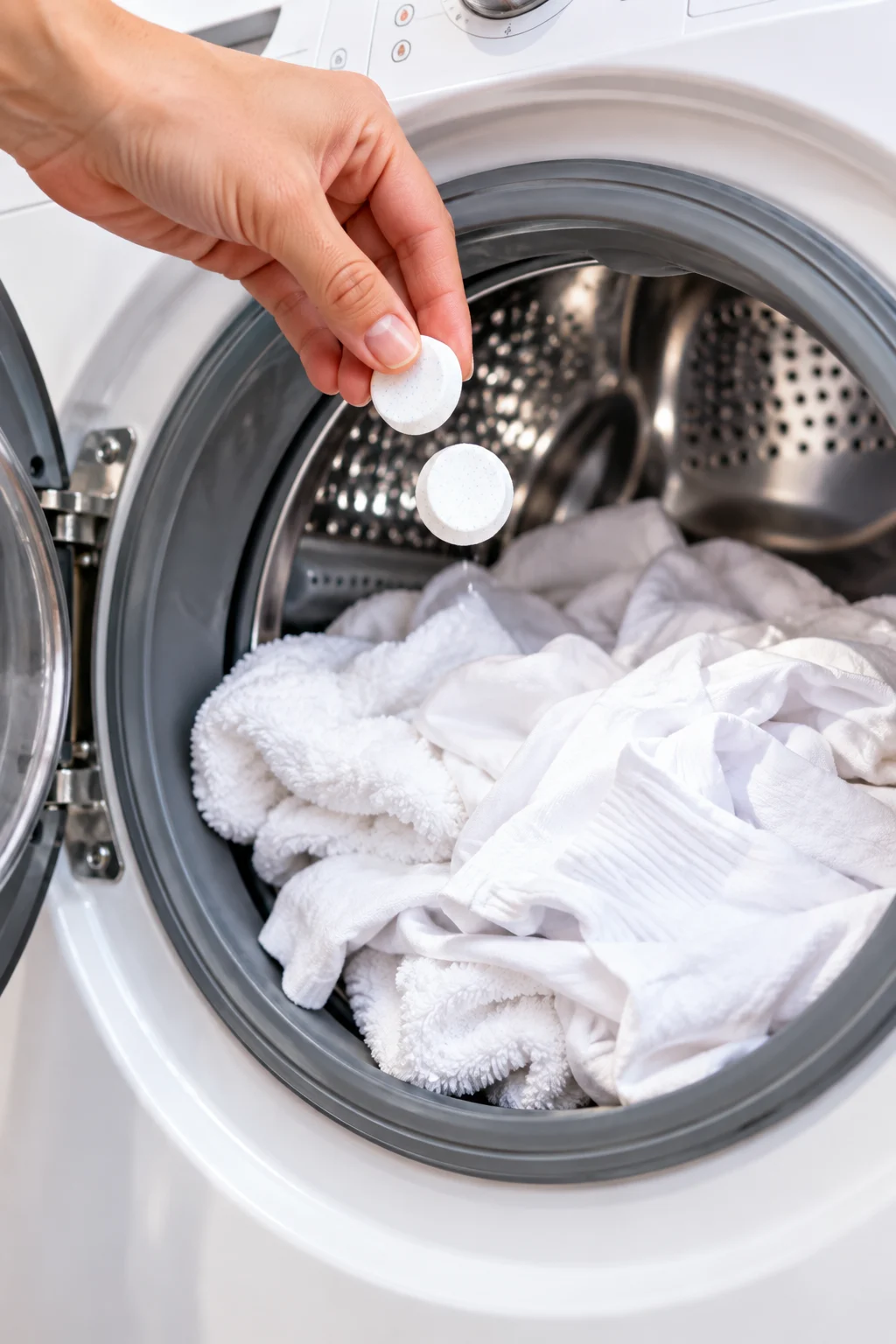
Then comes the viral laundry tip: drop 2 tablets into the wash and white clothes come out snow-white without bleach.
Sounds almost too easy, right?
The tablets people usually mean in this particular household hack are aspirin tablets. The idea has circulated online for years, with claims that aspirin can bring dull white clothing back to life.
There is just one important catch: aspirin is not a proven laundry whitener.
Tests published by McGill University’s Office for Science and Society found that aspirin did not perform well as a stain remover or whitening treatment. The chemistry behind aspirin also does not support the dramatic bleaching effect often promised online. McGill University
So why do some people swear that two tablets made their white laundry look better?
There are a few possible reasons, and some much better ways to get dull whites looking fresh again without reaching for chlorine bleach.
Let’s get into what actually works.
What Are the 2 Tablets People Put in White Laundry?
The viral trick usually calls for aspirin, also known as acetylsalicylic acid.
Depending on the version of the hack, people may:
- Drop two aspirin tablets directly into the washer
- Crush aspirin before adding it
- Dissolve tablets in warm water first
- Soak white clothes in aspirin water before washing
The claim is pretty dramatic: aspirin supposedly removes yellow stains, fights dinginess, and makes old white clothes look bright again.
It has the perfect recipe for a viral cleaning trick. Aspirin is cheap, familiar, and probably already sitting in somebody’s bathroom cabinet.
Unfortunately, familiar does not always mean effective.
McGill University tested aspirin on common stains, including coffee and tomato. The aspirin treatment did not perform as well as regular stain-removal methods, and researchers found little chemical reason to expect aspirin to work like a true bleaching agent. McGill University
Basically, your headache medicine has another job already.
Laundry isn’t really it.
Does Aspirin Actually Make White Clothes Snow-White?
Not reliably.
That might disappoint anyone hoping for a two-pill laundry miracle, but it saves you from wasting aspirin on your socks.
Aspirin contains acetylsalicylic acid. When it reacts with water, it can break down into other compounds, but none of this gives aspirin the strong stain-removing action associated with common laundry whitening agents.
A practical test reported by McGill found that aspirin-treated fabric still showed visible coffee and tomato stains afterward. McGill University
So when someone says two tablets turned a load of grayish shirts “snow-white,” several other factors may be responsible.
Maybe the clothes got a longer wash.
Maybe warm water helped dissolve old detergent residue.
Maybe the washer was less crowded.
Maybe the person changed detergent at the same time.
Or maybe freshly washed fabric simply looked brighter once it was clean and dry.
You know how laundry hacks go. One good load and suddenly the internet has a miracle cure.
Why White Clothes Turn Gray or Yellow
Before fixing dull white clothing, it helps to know why it happens.
White fabric does not usually lose brightness overnight. The change builds slowly.
Body oils can collect around necklines, cuffs, and underarms. Sweat residue may create yellow areas. Too much laundry detergent can leave a coating behind. Minerals from hard water may also settle onto fabric.
Then there is the washing machine itself.
A packed washer cannot move clothes around properly. Detergent and water need space to pass through the fabric.
I learned this one the annoying way. Stuffing “just one more towel” into a full washer sounds efficient until half the load comes out looking like it barely attended bath time.
White clothing also shows residue much more easily than dark fabric.
That slightly dingy T-shirt may not actually need stronger chemicals. It may simply need a better washing routine.
What to Use Instead of Aspirin for White Clothes
If you want brighter whites without chlorine bleach, start with products made specifically for laundry.
Look for a laundry whitening product, oxygen-based laundry booster, or color-safe whitening product that your clothing care labels allow.
Follow the package directions instead of guessing the amount.
That last part matters.
More cleaner does not automatically mean whiter clothes. Too much product can leave additional residue, which puts you right back where you started.
Laundry detergent manufacturers design their products for washing machines. Aspirin manufacturers, well… not so much.
The Best Way to Wash White Clothes Without Chlorine Bleach
You do not need a complicated 12-step laundry ritual.
A few simple habits make a surprisingly big difference.
Sort White Clothes Properly
Wash whites separately from dark and brightly colored clothes whenever possible.
Even fabrics labeled colorfast can release tiny amounts of dye over repeated washing.
One red sock may not turn your whole load pink like a sitcom episode, but repeated mixed washing can gradually make bright whites look less crisp.
Separate heavily soiled clothes from lightly worn white clothing, too.
A muddy pair of white gardening pants probably should not share bath time with your favorite white blouse.
Check the Care Label
Before using hot water, whitening boosters, stain treatments, or soaking methods, check the garment label.
Cotton towels may tolerate conditions that would wreck delicate fabric.
White does not automatically mean “wash it as hot as humanly possible.”
Some fabrics shrink, weaken, or lose shape at high temperatures.
Pretreat Yellow Areas
Yellow collars and underarm marks usually need targeted treatment.
Apply a laundry stain remover made for the fabric and let it sit for the time listed on the package.
Do not leave stain products on clothes indefinitely.
For stubborn marks, pretreating usually makes more sense than throwing random tablets into the entire wash.
You’re treating the actual problem instead of hoping the whole machine somehow figures it out.
Use the Right Amount of Detergent
This one is huge.
People often add extra detergent when clothes look dirty.
Sounds logical.
But excess detergent may not rinse completely from the fabric. That leftover film can hold dirt and make white clothes look dull.
Measure detergent based on:
- Load size
- Soil level
- Water hardness
- Product directions
If you’re casually pouring detergent until your heart says “that’s probably enough,” yeah… the measuring cap deserves another chance.
Give Clothes Room to Move
Do not cram the washing machine drum.
Your clothes need room to tumble or move through the wash water.
A full laundry basket does not always equal one washer load.
Splitting one giant load into two smaller washes can produce noticeably cleaner results.
Sure, nobody dreams of doing extra laundry.
But rewashing an overloaded load is even more annoying.
Can You Use Dishwasher Tablets Instead?
This is where another viral hack enters the chat.
Some social media posts recommend throwing one or two dishwasher tablets into a washing machine to brighten clothes.
Don’t treat dishwasher tablets as laundry tablets.
Bosch specifically advises against using dishwasher tablets or dishwasher detergent in washing machines or on laundry. The company recommends products designed for washing machines instead. Bosch Home
Dishwasher detergent is formulated for dishes and dishwashing machines.
Laundry detergent is formulated for fabric and washing machines.
Similar-looking tablet, completely different job.
So if you saw a video telling you to drop two dishwasher pods into your favorite white sheets, skip that experiment.
Your washer manual deserves the final word here.
A Better “Two-Tablet” Laundry Trick
If you really like the convenience of tablets, choose laundry tablets or laundry whitening tablets specifically labeled for use with clothing and your type of washing machine.
Read the label carefully.
The package should clearly state that the product is intended for laundry.
Do not assume that every cleaning tablet is interchangeable.
There are tablets made for:
- Dishwashers
- Washing-machine cleaning
- Dentures
- Toilets
- Laundry
- Appliance descaling
They may all be tablets.
They are definitely not all meant to party together in your washing machine.
What About Washing Machine Cleaning Tablets?
These deserve a separate mention.
Washing-machine cleaning tablets are designed to clean the machine, not necessarily the clothing inside it.
For example, Whirlpool sells washing-machine cleaning tablets intended to remove residue and odor from internal washer components. They are meant for washer maintenance rather than as a white-clothing treatment. Whirlpool
That difference matters.
If your whites smell weird or seem less fresh after washing, cleaning the machine may help with the root problem.
But follow your washer manufacturer’s maintenance instructions.
Do not simply throw a machine-cleaning tablet into a load of clothing unless the product explicitly says you can.
How to Bring Dingy White Clothes Back to Life
Have a pile of once-white T-shirts that have entered their sad gray era?
Try this routine.
Step 1: Separate the Whites
Pull out white towels, shirts, socks, sheets, and other washable whites.
Check care labels before grouping everything together.
Delicate fabrics may need their own cycle.
Step 2: Treat Visible Stains
Look closely at collars, cuffs, underarms, food stains, and makeup marks.
Apply an appropriate laundry stain treatment.
Give it time to work according to the label.
Do not scrub delicate fabric aggressively. That can damage fibers without actually removing the stain.
Step 3: Add Laundry Detergent
Use the recommended dose.
High-efficiency machines usually require HE detergent.
This is not the moment for the “little extra can’t hurt” philosophy.
Step 4: Add a Laundry-Safe Whitening Product if Needed
Choose a non-chlorine whitening product labeled for your fabric and washing machine.
Follow the product directions and garment care instructions.
Some products work best when dissolved first. Others go directly into the drum or dispenser.
Read before pouring.
Future-you standing beside a ruined shirt will appreciate the extra 20 seconds.
Step 5: Choose the Correct Temperature
Use the warmest water permitted by the garment’s care label when appropriate for the soil you are treating.
Do not automatically choose scorching-hot water.
Heat can set certain stains and damage some fabrics.
Step 6: Avoid Overloading
Leave space for clothes to move freely.
This one costs nothing and can make a major difference.
Step 7: Check Before Drying
Before putting stained white clothing into the dryer, check whether the stain is gone.
Dryer heat can make some stains harder to remove later.
If you can still see the mark, treat and wash the garment again before drying.
Sunlight Can Help White Laundry Look Fresher
Old-school laundry lines did have something going for them.
Sunlight can have a mild bleaching effect on certain fabrics and stains.
Drying appropriate white cotton items outdoors may help them appear brighter over time.
But use some common sense here.
Strong sunlight can also affect fabric fibers and colors with repeated exposure.
Check fabric-care guidance, particularly for delicate items.
And please don’t leave your best white shirt clipped outside during an incoming thunderstorm because someone online promised “natural whitening.”
Weather wins that argument every time.
How to Keep White Clothes White Longer
Restoring dull whites is nice.
Keeping them from getting dull in the first place is easier.
Wash white garments before body oils and dirt become deeply embedded.
Treat stains early.
Use the correct detergent dose.
Keep colored clothes separate.
Do not overload the washer.
Clean your washing machine according to its manufacturer’s instructions.
Those habits sound boring compared with a viral two-tablet hack, I know.
But boring laundry habits tend to beat mystery chemistry.
Every. Single. Time.
Why Your White Clothes Still Look Dingy After Washing
Sometimes the washing method is not the whole problem.
Hard Water
Hard water contains minerals that may affect laundry performance.
If you live in a hard-water area, follow your detergent manufacturer’s dosing instructions for hard water.
A water softening product designed for laundry may also be appropriate, depending on your machine and local water conditions.
Too Much Fabric Softener
Fabric softener can leave coatings on fibers.
That coating may make towels less absorbent and can contribute to a less-fresh appearance over time.
Use only the recommended amount.
Too Much Detergent
Yep, we’re talking about this again because it is that common.
Excess detergent can be surprisingly stubborn.
If white clothes feel stiff, smell heavily perfumed after rinsing, or seem coated, you may be using more detergent than necessary.
A Dirty Washing Machine
Residue can build up inside washing machines.
Follow your machine’s maintenance cycle and cleaning instructions.
Manufacturers may recommend a dedicated machine cleaner rather than household cleaning experiments. Bosch, for example, advises using washing-machine products made for that purpose rather than dishwasher tablets. Bosch Home
Old Fabric
Sometimes white clothing simply ages.
Fibers wear down. Stains become permanent. Fabric finishes change.
Your 12-year-old white bath towel may never look like it just came out of the package again.
And that’s okay.
At some point, that towel gets promoted to cleaning-rag management.
Should You Soak Whites Before Washing?
A pre-soak can help with heavily soiled washable whites.
Use water at a temperature appropriate for the fabric and add a laundry product specifically intended for soaking if needed.
Follow the product instructions.
A soak gives detergent more time to work on soil before the main wash.
But longer is not always better.
Some fabrics should not stay submerged for hours, and certain stain products have strict contact-time recommendations.
Check the label first.
I know, reading laundry labels is about as exciting as watching socks dry.
Still cheaper than replacing your favorite shirt.
What About Vinegar and Baking Soda?
These two show up in practically every household-cleaning discussion.
Vinegar can affect mineral residue and odors in some cleaning situations, while baking soda can help with certain odors.
But mixing random household products inside a washing machine is not automatically better than using a laundry product designed for the job.
Vinegar’s acidity may also be unsuitable for repeated use in some machine components.
Check your washer’s manual before adding household acids or other non-laundry products.
And never casually combine different cleaners.
Cleaning chemistry is not a “more ingredients equals more power” situation.
Can White Clothes Become Bright Again Without Chlorine Bleach?
Yes, many white garments can look much brighter without chlorine bleach.
The result depends on why the fabric looks dull.
If the problem is surface soil, body oils, detergent buildup, or removable stains, better washing habits and a laundry-safe whitening product can make a visible difference.
If the fabric itself has permanently yellowed or the fibers have changed with age, no household trick can promise a brand-new snow-white finish.
That’s the part viral headlines tend to leave out.
“Maybe noticeably brighter depending on fabric condition” doesn’t exactly crush it on social media.
But it’s a lot closer to reality.
Does the Aspirin Laundry Hack Hurt Your Washing Machine?
Two aspirin tablets are unlikely to possess magical whitening power, but that does not make medication an ideal laundry additive.
Tablets can contain coatings, binders, fillers, and other ingredients that were developed for medication use rather than washing machines.
There is little reason to choose aspirin when laundry products already exist for this exact purpose.
Save the aspirin for its labeled use.
Save your washer for laundry products.
Everybody stays in their lane.
The Real Secret to Snow-White Laundry
Here it is.
There is no single tablet trick that guarantees snow-white laundry.
Bright whites usually come from several small things working together:
good detergent + correct dosage + stain pretreatment + proper sorting + enough washer space + suitable water temperature + regular washer care.
Not as catchy as “drop two tablets and watch the magic happen.”
Definitely more useful.
And once you get the routine right, you probably won’t need to rescue your white laundry nearly as often.
Drop 2 Tablets Into the Wash: Final Thoughts
The claim that you can drop 2 aspirin tablets into the wash and white clothes come out snow-white without bleach makes a great viral headline.
The evidence is much less exciting.
Aspirin has not shown convincing whitening power in practical testing, and its chemistry does not make it a strong substitute for standard laundry whitening products. McGill University
Dishwasher tablets are not a good substitute either. Bosch specifically advises against using dishwasher tablets in washing machines or on laundry. Bosch Home
Want brighter whites without chlorine bleach?
Use a product clearly labeled for laundry, follow the garment care label, pretreat visible stains, measure your detergent, and stop stuffing the washer like you’re trying to close an overpacked suitcase.
Not magic.
Just clean, bright laundry without sacrificing your shirts—or your washing machine—to another internet hack.
Frequently Asked Questions
What are the two tablets used to whiten clothes?
The viral laundry hack usually refers to aspirin tablets. However, controlled testing has not shown aspirin to be an effective laundry whitener. McGill University
Can aspirin make white clothes whiter?
There is not good evidence that aspirin can reliably whiten clothing. Tests conducted by McGill University’s Office for Science and Society found that aspirin performed poorly against common stains. McGill University
Can I put two dishwasher tablets in my washing machine?
It is better not to. Bosch advises against using dishwasher tablets or dishwasher detergent in washing machines or on laundry. Bosch Home
What can I use instead of chlorine bleach for white clothes?
A laundry-safe non-chlorine whitening product may be suitable. Check the garment care label and follow the product instructions before use.
Why are my white clothes turning gray?
Common causes include detergent residue, washing whites with colored clothing, overloading the washer, body oils, hard-water minerals, and poor rinsing.
How can I make yellowed white clothes brighter?
Pretreat stained areas, wash whites separately, use the correct detergent amount, select an appropriate washing temperature, and consider a laundry whitening product suitable for the fabric.
Does using more detergent make white clothes cleaner?
Not necessarily. Excess detergent can remain in fabric and leave whites looking dull. Measure the detergent according to the product instructions, load size, soil level, and water conditions.
Can I use washing-machine cleaning tablets with clothes?
Machine-cleaning tablets are generally made to clean the appliance rather than clothing. Follow the instructions printed on the tablet package and your washing-machine manual.
Should I wash white clothes in hot water?
Use the warmest temperature allowed by the garment care label and appropriate for the stain. Some white fabrics can tolerate hot water, while others cannot.
What is the safest way to keep white clothes bright?
Sort whites from dark clothing, treat stains early, avoid overloading the washer, measure detergent correctly, follow fabric care labels, and keep the washing machine clean.