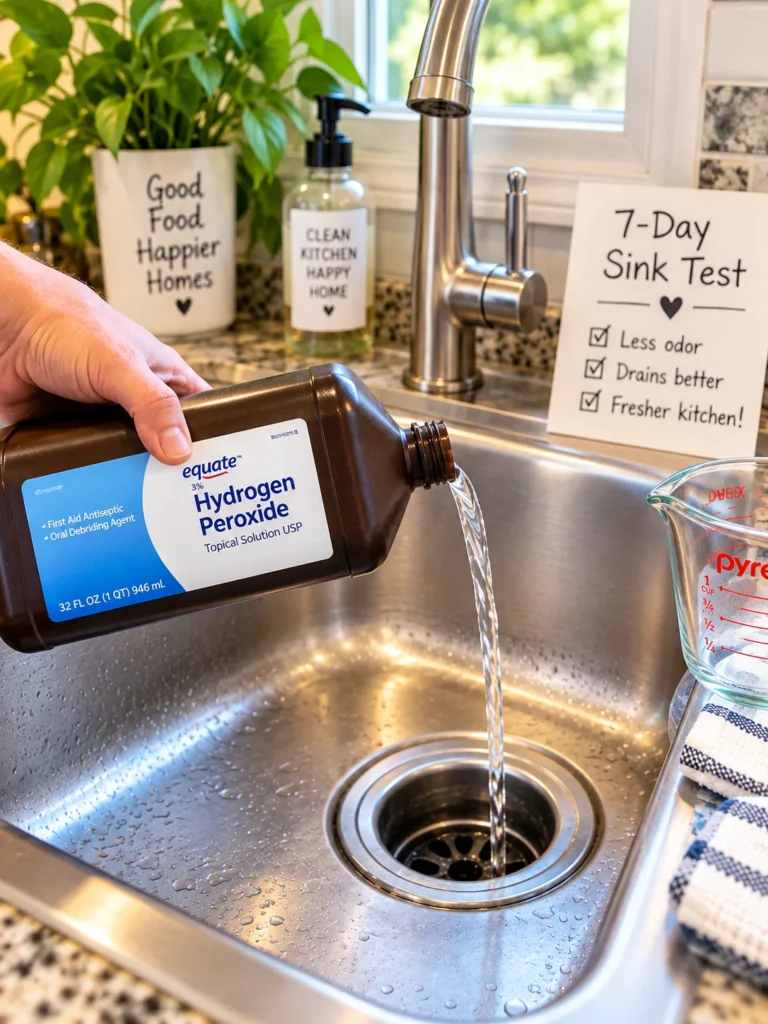
You clean the counters. You wipe down the stove. You rinse the sink after dinner. Then, somehow, your kitchen still has that weird little smell hanging around.
Yep. The garbage disposal might be the culprit.
Here’s one old-school kitchen trick that gets passed around for a reason: put a handful of salt in your garbage disposal tonight and watch what happens.
No fancy cleaner. No complicated routine. Just plain salt, cold water, and a minute or two at the sink.
Now, salt is not some magical fix for every garbage disposal problem. It will not repair a broken motor or clear a serious plumbing clog. But it can help loosen greasy residue, scrub away food buildup, and cut down on odors inside the disposal.
And honestly, if your sink smells like last Tuesday’s dinner, that alone makes this trick worth knowing.
Why Put Salt in Your Garbage Disposal?
A garbage disposal handles a lot more mess than most of us think about.
Bits of onion, sauces, crumbs, vegetable scraps, grease, and tiny food particles can collect inside the grinding chamber. Even when the sink looks perfectly clean, residue may still cling to the interior surfaces.
That residue can eventually smell pretty funky.
Salt can help because its crystals provide a mild scrubbing action. When salt moves through the disposal with cold water, it can help knock loose soft buildup that has collected inside.
Coarse salt works especially well because the larger crystals have more texture.
Kosher salt, rock salt, or coarse sea salt are popular choices. Regular table salt can still be used, though it does not provide quite the same scrubbing effect.
Think of it like giving the inside of your disposal a quick kitchen scrub without sticking anything down there—which, by the way, you should never do with your hands.
What Happens When You Put Salt Down a Garbage Disposal?
So, what actually happens when salt goes into the disposal?
Nothing dramatic. Your sink is not going to sparkle like a cleaning commercial.
The benefit happens inside.
As the disposal runs, the salt crystals move around the grinding chamber. They can help scrape away some soft food residue and greasy film sitting on interior surfaces.
Cold running water carries loosened debris farther through the drain.
Afterward, you may notice:
- Less odor coming from the sink
- A fresher-smelling disposal
- Less greasy residue inside the grinding chamber
- Fewer small food particles hanging around
- A cleaner-feeling kitchen sink area
The biggest difference is usually the smell.
You know that mysterious “something died near the sink” situation? Sometimes it is simply old food residue inside the disposal.
Salt can help with that.
How to Clean a Garbage Disposal With Salt
This method takes only a few minutes.
First, make sure there are no utensils, bottle caps, pieces of glass, or other objects sitting inside the disposal opening.
Next, pour about 1/2 cup of coarse salt into the garbage disposal.
Turn on the cold water.
Then run the garbage disposal for about 15 to 30 seconds.
Keep the cold water running for another 15 to 30 seconds after switching off the disposal. This helps move loosened food particles through the drain.
That’s it.
Simple, right?
For a disposal that has not been cleaned in a while, adding ice can make this trick more useful.
The Salt and Ice Garbage Disposal Trick
Salt works better as a cleaning helper when you pair it with ice cubes.
I know—it sounds a little strange the first time you hear it. Tossing ice into a machine under your sink feels like something your mom would yell at you for.
But ice can help clean the inside of many garbage disposals.
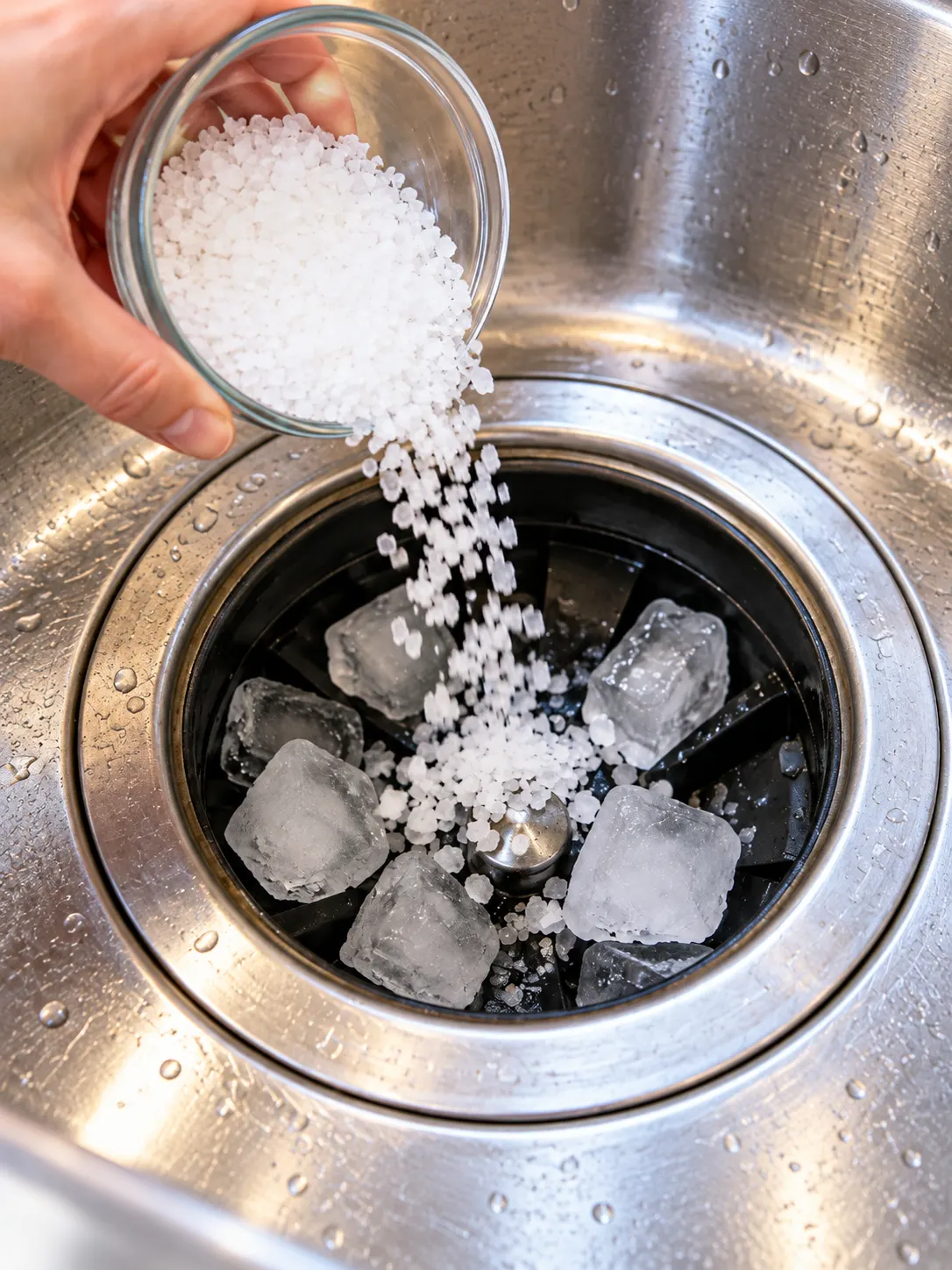
Place a handful of ice cubes into the disposal, followed by roughly 1/2 cup of coarse salt.
Turn on cold water and run the disposal.
The ice gets broken into smaller pieces as the disposal operates. Those pieces move around the chamber while the salt adds extra scrubbing texture.
You might hear some loud crunching.
Totally normal.
Let the disposal run until the ice has mostly cleared, then leave the cold water running briefly afterward.
This combination can help remove grime without pouring harsh chemicals down the drain.
Why Cold Water Matters
Here’s a garbage disposal habit that is easy to forget: use cold water while the disposal is running.
Hot water may soften fats and grease.
That sounds helpful at first, but softened grease can travel farther into your plumbing before cooling and sticking to the inside of pipes.
Cold water helps keep greasy material more solid while the disposal and flowing water move it along.
So when you try the salt trick, stick with cold water.
Save the hot water for washing the skillet.
Does Salt Get Rid of Garbage Disposal Odors?
Salt can help with mild garbage disposal odors, especially when the smell comes from food residue inside the disposal.
But salt does not actually cover odors with perfume.
That is kind of the point.
Instead of making your sink smell like artificial lemon for ten minutes, the salt helps remove some of the material creating the odor in the first place.
If the smell returns quickly, there may be buildup in places the salt cannot fully reach.
One often-forgotten spot is the rubber splash guard around the disposal opening.
Flip up the rubber flaps and you might be surprised by what is hiding underneath.
Actually… maybe “surprised” is too polite.
It can get gross.
Don’t Forget the Rubber Splash Guard
The rubber guard at the top of your garbage disposal catches a lot of splatter.
Sauce, grease, food particles, and grime can stick underneath the flaps. Because that area stays damp, odors can develop pretty quickly.
Before cleaning it, switch off power to the disposal at the wall switch. For extra safety, disconnect power according to your disposal manufacturer’s instructions.
Then wipe underneath the rubber flaps with a soapy sponge, cloth, or small cleaning brush.
Do not put your hand into the disposal chamber.
Seriously. Not even “just for a second.”
Cleaning the splash guard may make a bigger difference than any deodorizing trick if that area has not been wiped down recently.
Can You Use Baking Soda With Salt?
Yes, baking soda is another popular household cleaner for garbage disposals.
You do not need to use everything at once, though.
A simple routine might look like this:
Start with salt and ice for physical scrubbing.
Rinse with cold water.
On another cleaning day, sprinkle baking soda into the disposal and let it sit briefly before rinsing.
Baking soda can help with mild odors.
Some people also combine baking soda and vinegar because the mixture creates a satisfying fizz. It looks impressive, sure, but the bubbling reaction is not a magic plumbing treatment.
For basic weekly cleaning, simpler usually works just fine.
What About Lemon Peels?
Ah, the classic lemon peel trick.
It sounds perfect. Your disposal smells bad, lemons smell amazing, problem solved.
Well… sort of.
Small pieces of citrus peel may leave a temporary fresh scent. However, dumping large quantities of thick citrus peel into a garbage disposal is not a great habit.
Too much fibrous material can cause trouble for some disposal systems or plumbing setups.
If you like the citrus smell, use a very small piece and plenty of cold water.
Better yet, clean the disposal first.
Fresh lemon scent on top of old food gunk is basically kitchen perfume covering yesterday’s leftovers.
Not exactly the goal.
How Often Should You Put Salt in Your Garbage Disposal?
For most kitchens, you do not need to use salt every night.
Once every week or two is usually plenty for routine cleaning, depending on how often you use your disposal.
A household that cooks every night may need more frequent cleaning than someone who mostly uses the kitchen for coffee, toast, and the occasional frozen pizza.
Pay attention to smell and buildup.
If the disposal starts getting funky, give it a quick cleaning.
If everything smells fine and drains normally, there is no need to keep dumping salt down there just because TikTok told you to.
Foods You Should Avoid Putting in a Garbage Disposal
Cleaning your disposal is helpful, but what you put into it matters even more.
Some kitchen scraps are famous for creating plumbing headaches.
Grease and Cooking Oil
Grease should not go down the garbage disposal.
It may move through the disposal itself, but once it cools inside your pipes, it can stick to plumbing walls.
Over time, more material can cling to that greasy layer.
Hello, slow drain.
Let cooking grease cool and dispose of it in the trash according to your local waste rules.
Coffee Grounds
Coffee grounds look harmless because they are tiny.
Unfortunately, those tiny grounds can collect into dense sludge inside drain pipes.
I love coffee as much as the next caffeine-dependent human, but the grounds belong somewhere other than the garbage disposal.
Eggshells
There is an old kitchen myth that eggshells sharpen garbage disposal blades.
Garbage disposals typically do not work like blenders with traditional spinning blades.
The shell fragments and membrane can also add unnecessary material to your plumbing.
Toss eggshells in the trash or compost when appropriate.
Pasta and Rice
Pasta and rice absorb water.
That means they can swell after they enter your plumbing.
A few leftover grains are not usually a disaster, but dumping a bowl of rice or pasta into the disposal is asking your drain to work overtime.
Scrape those leftovers into the trash first.
Fibrous Vegetables
Celery, corn husks, onion skins, asparagus, and similar fibrous scraps can cause problems in some garbage disposals.
Long fibers may wrap around internal moving parts or contribute to drain trouble.
Cut scraps small when appropriate, or better yet, compost them.
Bones
Small, soft scraps may pass through certain powerful disposals, but large bones are another story.
Your garbage disposal is not a wood chipper.
Chicken bones, steak bones, and other hard scraps are better placed in the trash.
Signs Your Garbage Disposal Needs More Than Salt
Salt is a cleaning trick, not a plumbing repair.
That distinction matters.
If your disposal has a serious problem, pouring extra salt into it is not going to save the day.
Watch for these warning signs:
- Water backs up into the sink
- The disposal hums but does not grind
- The unit repeatedly shuts off
- You hear metal scraping or unusual banging
- Water leaks underneath the sink
- Strong odors return immediately after cleaning
- The sink drains very slowly
- The disposal does not turn on at all
At that point, stop treating the problem like a cleaning issue.
You may have a jam, clog, electrical problem, damaged component, or plumbing blockage.
Follow the manufacturer’s troubleshooting guidance or contact a plumber or appliance professional when needed.
A Quick Garbage Disposal Cleaning Routine
If you want the easiest possible routine, keep it simple.
Once a week, run cold water and the garbage disposal after your final kitchen cleanup.
Every week or two, add ice and coarse salt.
Clean underneath the rubber splash guard regularly.
Keep grease, large scraps, coffee grounds, fibrous vegetables, and expanding foods out of the disposal whenever possible.
That little routine takes hardly any time.
And believe me, cleaning your disposal for two minutes beats standing over a backed-up sink while dinner dishes pile up behind you.
Been there. Zero stars.
Why Your Garbage Disposal Smells Even After Cleaning
If you cleaned your disposal and the smell is still hanging around, the disposal may not be the actual source.
The odor could come from the drainpipe, dishwasher connection, sink overflow area, or trapped food elsewhere in the plumbing.
There may also be buildup farther down the drain.
Try cleaning the visible parts of the sink and splash guard first.
If the smell persists or smells like sewage rather than old food, contact a plumbing professional. A persistent sewage-like odor can point to a plumbing or drain issue that basic kitchen cleaning will not fix.
Is Salt Safe for Garbage Disposals?
A modest amount of ordinary salt is generally used as a household cleaning method for garbage disposals.
Still, more is not better.
You do not need to pour half a container of salt into the sink.
About 1/2 cup is plenty for this cleaning trick.
Also check your garbage disposal manufacturer’s care instructions. Disposal designs vary, and manufacturer guidance should take priority over internet cleaning hacks.
If your home has unusual plumbing, an older waste system, or specific maintenance requirements, follow the recommendations that apply to your setup.
The Real Trick Is Preventing Buildup
Here’s the part nobody wants to hear because it is less exciting than a viral kitchen trick.
The easiest garbage disposal to clean is the one that does not collect tons of food in the first place.
A garbage disposal is better suited for small food remnants than full plates of leftovers.
Scrape plates into the trash or compost bin first.
Then rinse off the smaller bits.
Run plenty of cold water during disposal use and let the water continue for a short time afterward.
Those boring little habits can prevent a whole lot of stink.
Not glamorous. Definitely useful.
Put a Handful of Salt in Your Garbage Disposal Tonight: Final Thoughts
So, should you put a handful of salt in your garbage disposal tonight and watch what happens?
If your disposal smells a little funky or has light food buildup, it is a simple cleaning trick worth trying.
Add about 1/2 cup of coarse salt, pair it with a handful of ice cubes, run cold water, and switch on the disposal briefly.
The salt and ice can help loosen soft residue and remove some of the grime responsible for everyday kitchen odors.
Just keep expectations realistic.
Salt will not fix a broken garbage disposal, remove a major clog, or replace proper maintenance.
But for a quick kitchen cleanup?
Yep, I’ll keep this one in my back pocket.
Because if a handful of pantry salt can make the sink smell less like forgotten leftovers, that is a pretty solid win in my kitchen.
Frequently Asked Questions
Can I pour regular table salt into my garbage disposal?
Yes. Regular table salt can be used, but coarse salt has larger crystals that may provide more scrubbing action. Kosher salt and coarse sea salt are common choices.
How much salt should I put in my garbage disposal?
About 1/2 cup is enough for routine cleaning. There is no need to pour large amounts of salt into the drain.
Should I use hot or cold water with salt?
Use cold running water while operating your garbage disposal. Cold water is generally preferred when food scraps and grease may be present.
Can salt unclog a garbage disposal?
Salt may help remove minor residue, but it is not a reliable treatment for a blocked drain or jammed disposal. A serious clog requires proper troubleshooting.
Does salt sharpen garbage disposal blades?
No. Garbage disposals generally use grinding components rather than traditional blender-style blades. Salt can provide mild scrubbing action, but it does not sharpen the disposal.
Can I put salt and ice in the garbage disposal together?
Yes. A small amount of coarse salt paired with ice cubes is a common cleaning method. Run cold water while the disposal operates.
Will salt remove a bad garbage disposal smell?
It may help when the odor comes from mild food residue inside the disposal. Persistent smells may come from the splash guard, drainpipe, dishwasher connection, or another plumbing issue.
How often should I clean my garbage disposal?
A light cleaning every week or two works well for many households. Kitchens that use the disposal frequently may need cleaning more often.
Can I leave salt in the garbage disposal overnight?
There is usually no benefit to leaving salt sitting in the disposal overnight. You can add the salt, run cold water, operate the disposal briefly, and rinse immediately.
What is the fastest way to freshen a smelly garbage disposal?
Clean the rubber splash guard, then run cold water with a handful of ice and about 1/2 cup of coarse salt. If the smell quickly returns, check for a deeper drain or plumbing problem.