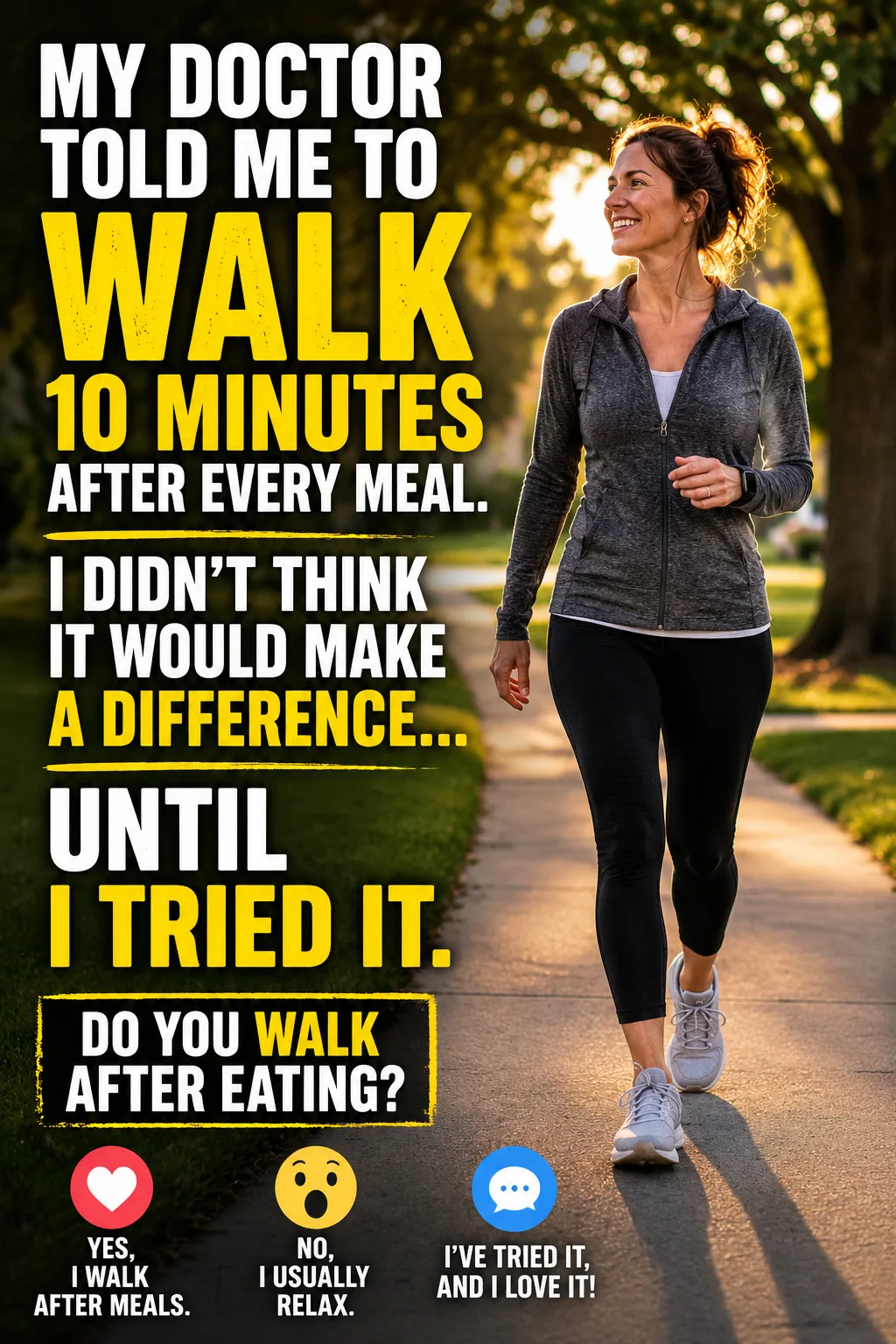
A friend recently told me their doctor recommended taking a 10-minute walk after every meal. At first, it sounded almost too simple to make a difference. Could a short stroll really have any health benefits?
As it turns out, even a brief walk after eating may support digestion, help manage blood sugar, and make it easier to stay active throughout the day. Here’s what you should know.
Why Walk After Eating?
Walking is one of the easiest forms of exercise, and you don’t need to walk for an hour to see benefits.
A gentle walk after meals gets your body moving, which may help with digestion and encourage your muscles to use some of the glucose from your meal for energy.
The key is to keep the pace comfortable rather than turning it into an intense workout.
Can Walking After Meals Help Blood Sugar?
Research suggests it can.
A 10- to 15-minute walk after eating may help reduce the rise in blood sugar that naturally occurs after meals. This can be especially helpful for people with prediabetes or type 2 diabetes, although anyone may benefit from regular movement after eating.
Walking doesn’t replace medical treatment, but it can be a healthy addition to an overall wellness routine.
May Support Digestion
Many people find that light activity after eating helps food move through the digestive system more comfortably.
A relaxed walk may help reduce feelings of:
- Bloating
- Mild stomach discomfort
- Sluggishness after large meals
If you’ve eaten a particularly heavy meal, keeping the pace slow and comfortable is usually best.
A Simple Way to Stay Active
Finding time to exercise isn’t always easy.
Breaking movement into 10-minute walks after breakfast, lunch, and dinner can help you accumulate about 30 minutes of daily physical activity without setting aside a large block of time.
For many people, this approach feels easier to maintain than longer workouts.
Other Benefits of Walking
Walking regularly may also help:
- Support heart health
- Improve mood
- Increase daily energy
- Help maintain a healthy weight when combined with balanced eating
- Reduce time spent sitting
Even short walks can contribute to a more active lifestyle.
Tips for Walking After Meals
To make the habit enjoyable:
- Wait a few minutes after finishing your meal if you feel too full.
- Wear comfortable walking shoes.
- Choose a safe, familiar route.
- Stay hydrated throughout the day.
- Walk at a pace where you can still carry on a conversation.
Consistency matters more than speed.
Frequently Asked Questions
How long should you walk after eating?
Many health experts recommend about 10 to 15 minutes of light walking after meals.
Should you walk immediately after eating?
A gentle walk is fine for most people. If you feel overly full, waiting 10 to 15 minutes before heading out may feel more comfortable.
Is walking after dinner good for weight loss?
Walking alone isn’t a guarantee of weight loss, but regular physical activity combined with healthy eating can support weight management.
Can everyone walk after meals?
Most healthy adults can safely enjoy a short walk after eating. If you have a medical condition or concerns about exercise, talk with your healthcare provider for personalized advice.
Final Thoughts
Walking for 10 minutes after every meal is a simple habit that may offer meaningful health benefits. From supporting digestion to helping manage blood sugar and making it easier to stay active, those short walks can add up over time.
The best part is that you don’t need special equipment or a gym membership. Just a comfortable pair of shoes and a few minutes after each meal may be enough to help you build a healthier daily routine.