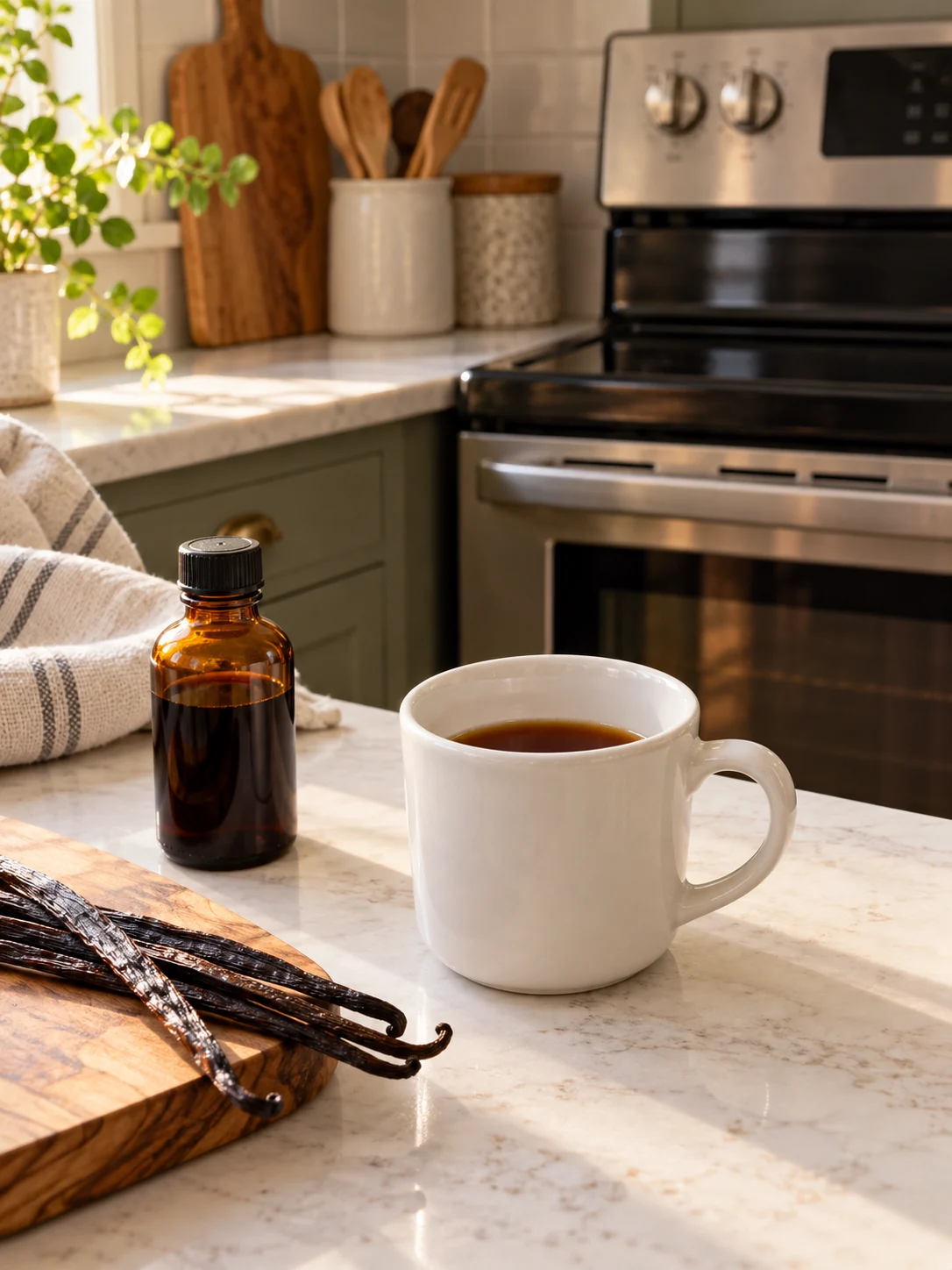
A kitchen can hold onto the smell of dinner long after the dishes are done. That is why the idea of putting an oven-safe coffee mug full of vanilla extract into a 300°F oven sounds tempting: one hour later, surely the room would smell like a bakery. But the ingredient in that mug matters more than the mug itself. Standard vanilla extract contains substantial alcohol, and heating a large quantity just to perfume a room is a poor trade for a pleasant scent.
What the Viral Vanilla-in-the-Oven Trick Promises
The claim is simple. Warm vanilla extract in the oven, let its aroma drift through the kitchen, and replace lingering smells from fish, onions or fried food with something sweet. A mug labeled oven-safe might seem to make the idea harmless. Yet “oven-safe” describes the vessel, not the liquid inside it. It also does not mean that a full mug of extract is a sensible way to freshen the air.
What Might Happen After an Hour?
The vanilla aroma could briefly compete with the cooking smell, but adding fragrance does not remove grease, food particles or other sources of odor. As the liquid heats, it can evaporate and leave a concentrated residue. The exact result would depend on the extract, the amount used, the mug and the oven. This article does not claim to have tested the hack; it explains why the promised “one-hour transformation” is unreliable and why the method is not worth trying.
Why Heating a Mug of Vanilla Extract Is a Bad Idea
Under the U.S. standard of identity, vanilla extract contains at least 35% ethyl alcohol by volume. That is far more than a trace of alcohol in a finished cake. Heating a mugful can produce alcohol vapor, which creates an avoidable fire risk around a hot appliance. The FDA’s vanilla extract standard explains the alcohol content. The U.S. Fire Administration’s cooking guidance also warns against leaving cooking equipment unattended. A kitchen deodorizing trick should not require running an oven for an hour with a large quantity of alcohol inside it.
An oven-safe mug does not solve those concerns. The mug may tolerate heat while the extract evaporates, splashes or leaves a sticky deposit. And if the oven is gas-fired or contains exposed heating elements, an unnecessary source of alcohol vapor is especially unappealing. Keep vanilla extract for baking and flavoring, where it is used in small measured amounts as part of food.
What Actually Helps Clear Cooking Smells
Start with the source of the odor. Wash the skillet, empty food scraps and wipe the stovetop and nearby backsplash. If grease is on a hood filter, clean it according to the appliance instructions. Open a window when outdoor conditions allow and run the range hood so the air has a path out of the kitchen. This removes or dilutes the smell instead of covering it with another one.
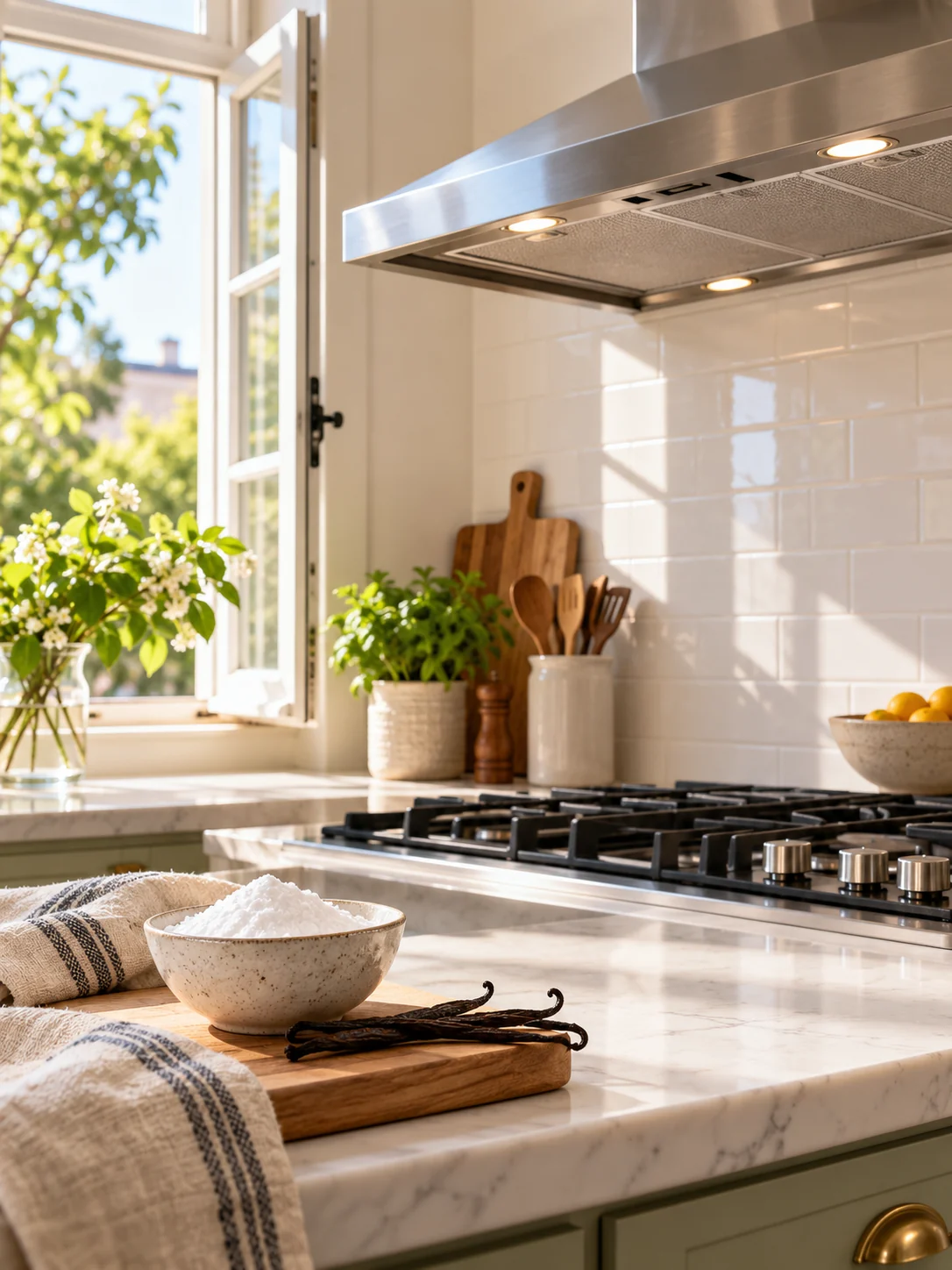
If a mild fragrance still sounds nice afterward, keep it separate from high heat. A bowl of baking soda can sit on a counter away from food preparation. A small dish of vanilla beans can add a subtle scent without heating a mug of extract. Neither replaces cleaning or ventilation, but both avoid turning the oven into an air freshener.
A Better One-Hour Kitchen Reset
- First 10 minutes: Remove scraps, wash the smelly pan and wipe up splatters.
- Next 20 minutes: Run the range hood and open a window if it is safe and practical.
- Remaining time: Let the room air out. Check the sink, trash and hood filter if the smell persists.
That routine is less dramatic than a viral trick, but it targets the things that keep odors around. It also avoids wasting a costly baking ingredient.
Frequently Asked Questions
Does vanilla extract neutralize cooking odors?
Its scent may mask an odor for a while, but it does not remove the source. Cleaning and ventilation are more useful first steps.
Does an oven-safe mug make the trick safe?
No. Oven-safe ceramic only addresses whether the container can tolerate oven temperatures; it does not address the alcohol in a mugful of vanilla extract.
What if the smell is still there after cleaning?
Check the trash, sink drain, nearby fabrics and range-hood filter. A persistent smell may come from a source outside the pan that cooked dinner.
The Takeaway
A mug of vanilla extract in a 300°F oven is a catchy idea, but a full mug of alcohol-containing extract is not a sensible odor remedy. Clear the source, move fresh air through the room and save the vanilla for a recipe.