Cooking is an art that often involves a bit of science and experimentation. Many home cooks and professional chefs alike constantly explore new techniques to improve the flavor, texture, and overall quality of their dishes. One such unconventional method involves placing an upside-down ceramic saucer at the bottom of a pot of simmering stew. Intrigued by the potential benefits, I decided to try this technique myself.
My kitchen experiment aimed to tackle common cooking challenges, such as uneven heat distribution and the risk of burning the food at the bottom of the pot. I was curious to see if the saucer could act as a heat diffuser, providing a more consistent cooking environment. Here’s a detailed account of what happened over the four-hour cooking period and whether this trick is worth adding to your culinary repertoire.
1. Why I Put an Upside-Down Ceramic Saucer in My Stew Pot
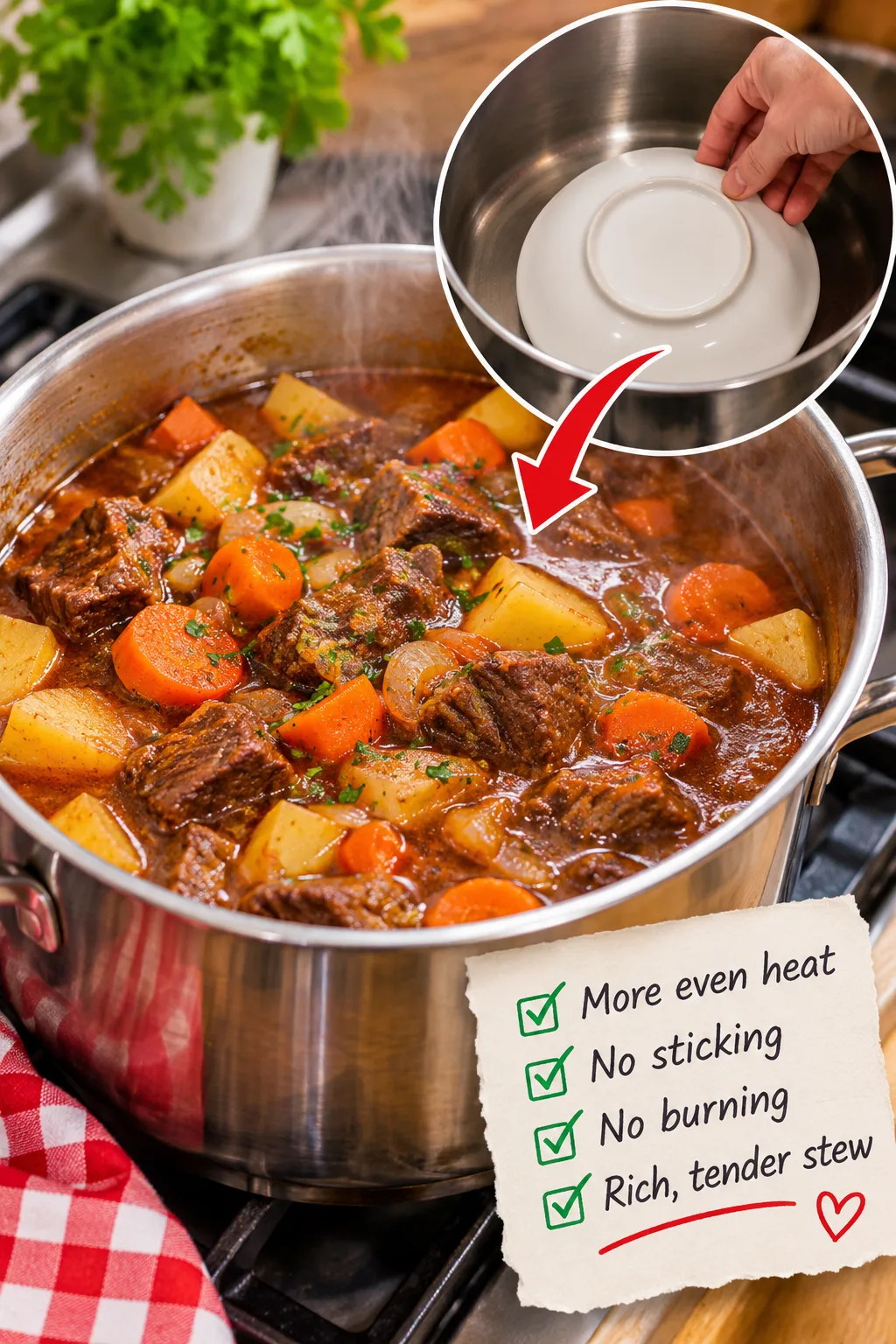
The idea behind placing an upside-down ceramic saucer in the stew pot is to create a barrier between the direct heat source and the food. Ceramic is known for its heat retention properties, which can help distribute heat more evenly across the pot. The saucer acts as a buffer, preventing the ingredients at the bottom from sticking or scorching while allowing the stew to simmer gently. This method is particularly useful for stews that require long cooking times, as it minimizes the risk of burning and enhances the overall flavor.
2. Setting Up the Experiment: Pot Size, Heat Level, and Saucer Placement
For the experiment, I used a large, 8-quart stainless steel pot filled with my favorite beef stew recipe. The pot was placed on a medium-sized burner, set to medium-low heat to maintain a gentle simmer. I carefully placed a standard-sized ceramic saucer, approximately 6 inches in diameter, upside-down at the bottom of the pot before adding the stew ingredients. This setup ensured that the saucer covered a significant portion of the pot’s base while allowing room for the stew to circulate.
3. What Happened in the First Hour: Bubbling, Steam, and Early Clues
During the first hour, I observed the usual bubbling and steaming associated with simmering stews. However, I noticed that the bubbles were smaller and more evenly distributed across the surface of the stew. This indicated that the heat was being diffused more uniformly, reducing the risk of hot spots. The aroma of the stew began to fill the kitchen, promising rich, savory flavors to come.
4. How the Saucer Changed Heat Distribution at the Bottom of the Pot
As the stew continued to simmer, the saucer appeared to facilitate even heat distribution across the bottom of the pot. By acting as a thermal barrier, it helped prevent the stew from sticking to the pot’s base, which is a common issue when simmering thick mixtures for extended periods. The ceramic material of the saucer absorbed and radiated heat effectively, maintaining a consistent temperature throughout the pot.
5. The Surprising Impact on Sticking, Scorching, and Burnt Bits
One of the most noticeable effects of using the saucer was the reduction in sticking and scorching. Typically, when simmering a stew for hours, the ingredients at the bottom tend to stick and form burnt bits, which can affect the overall flavor. However, in this experiment, the saucer prevented direct contact with the pot’s base, resulting in a cleaner cooking process with no burnt residue. This was a significant improvement in both taste and ease of cleaning.
6. Did It Affect Flavor? Taste, Aroma, and Texture After 4 Hours
After four hours of simmering, the stew had developed a deep, rich flavor profile with tender, well-cooked ingredients. The aroma was inviting, and the texture was velvety smooth, with no signs of overcooked or mushy elements. The use of the saucer seemed to enhance the melding of flavors, as the gentle simmer allowed the ingredients to infuse harmoniously without the risk of burning.
7. What the Saucer Did to the Ingredients at the Very Bottom
Upon serving the stew, I carefully examined the ingredients at the very bottom of the pot. Thanks to the saucer, none of the vegetables or meat pieces were stuck or burnt. Instead, they were perfectly cooked, retaining their shape and contributing to the overall consistency of the dish. This outcome demonstrated the saucer’s effectiveness in protecting the most vulnerable parts of the stew from excessive heat exposure.
8. Safety Check: Can Ceramic Saucers Really Go in a Stew for Hours?
Using a ceramic saucer in a stew pot for an extended period raised questions about safety and suitability. Fortunately, most ceramic dishes are designed to withstand high temperatures and can be safely used in cooking applications. It’s essential to ensure that the saucer is made of food-safe materials and has no cracks or glaze that could leach into the food. In this experiment, the saucer remained intact and posed no safety concerns.
9. When This Trick Works Brilliantly—and When It Totally Fails
This technique works brilliantly for stews and soups that benefit from even heat distribution and require long cooking times. It prevents sticking and scorching, enhancing both flavor and texture. However, it may not be suitable for dishes that require rapid boiling or direct heat application, such as caramelizing or reducing sauces. In such cases, the saucer may impede the desired cooking process.
10. How This Hack Compares to Diffusers, Slow Cookers, and Other Methods
When compared to traditional heat diffusers, the ceramic saucer offers a similar benefit of even heat distribution but at a fraction of the cost. Slow cookers also provide consistent heat but lack the ability to quickly adjust temperature settings. The saucer method is a convenient alternative for stovetop cooking, especially for those who prefer hands-on control over their cooking process. It bridges the gap between conventional stovetop methods and more specialized cooking equipment.
11. My Final Take: Will I Keep Dropping a Saucer Into My Stew Pot?
After witnessing the positive impact of using an upside-down ceramic saucer in my stew pot, I am inclined to incorporate this technique into my regular cooking routine. It offers a simple yet effective solution to common cooking challenges, enhancing both the quality and ease of preparing long-simmering dishes. While it may not be suitable for every recipe, it certainly has earned a place in my culinary toolkit for those hearty, slow-cooked meals that demand careful attention to detail.