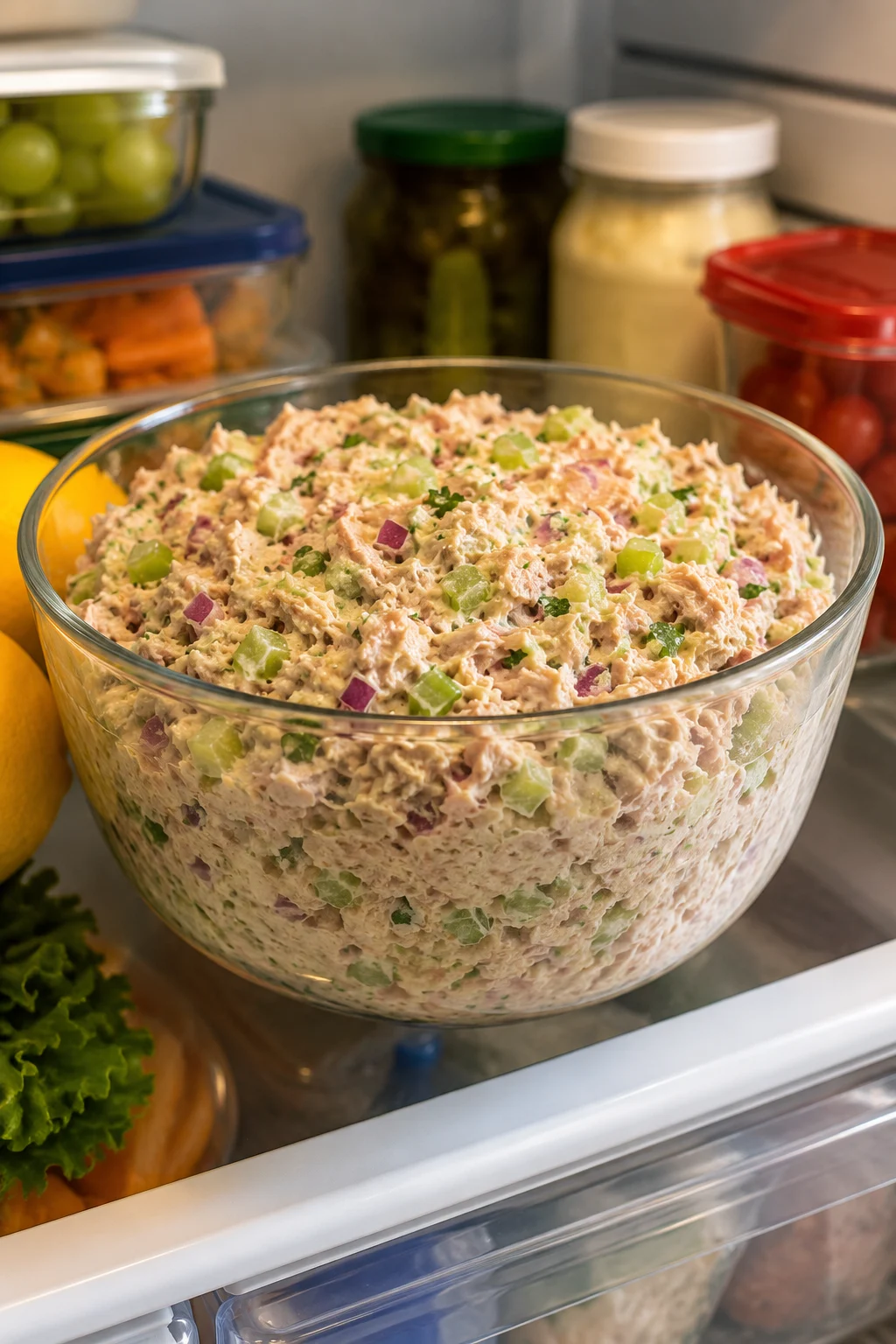
You make a big bowl of tuna salad on Sunday with the best intentions. Lunch is handled, meal prep is done, and for once the refrigerator looks organized.
Then Friday rolls around.
That container is still sitting there, and somebody says, “It smells fine. I’m eating it.”
Yeah… this is where I stop being sentimental about leftovers.
Properly refrigerated tuna salad generally belongs in the 3-to-4-day category, not the one-week category. If a homemade batch has been sitting in the refrigerator for seven days, the safer choice is to throw it away.
And no, giving it a sniff isn’t enough to prove it’s safe.
Here’s what you need to know about tuna salad storage, spoilage, meal prep, and that giant Sunday batch.
How Long Does Tuna Salad Last in the Fridge?
Homemade tuna salad should generally be eaten within 3 to 4 days when continuously refrigerated at 40°F (4°C) or below.
That means a bowl prepared on Sunday should ideally be finished within the next few days rather than saved for the following weekend.
This storage window applies to typical tuna salads made with ingredients such as:
- Canned tuna
- Mayonnaise
- Celery
- Onion
- Pickles or relish
- Mustard
- Hard-boiled eggs
Adding more mayonnaise, lemon juice, or mustard doesn’t turn the salad into a week-long refrigerator food.
Is Tuna Salad Safe After 7 Days?
I wouldn’t eat it.
Seven days is beyond the usual recommended refrigerated storage period for this type of prepared salad.
Here’s the tricky part: day-seven tuna salad might still look perfectly normal.
It might smell normal too.
That doesn’t mean it’s safe.
Foodborne pathogens aren’t required to send you a warning by making food smell terrible. That’s why refrigerator storage time matters even when your senses aren’t detecting anything unusual.
If you’re trying to decide between wasting a scoop of tuna salad and risking foodborne illness, the tuna salad can take one for the team.
Is Day 3 Tuna Salad Still Okay?
If it was prepared safely, refrigerated promptly, and continuously held at 40°F (4°C) or below, day three generally falls within the usual recommended storage period.
Still, storage conditions matter.
A bowl that sat on the kitchen counter for hours before refrigeration isn’t equivalent to one that went straight into the fridge.
Likewise, repeatedly leaving the entire container on the counter while everybody makes sandwiches can reduce your margin for safe storage.
The calendar matters, but so does what happened during those days.
Why Doesn’t Tuna Salad Last Longer?
Tuna salad is a perishable prepared food.
Once you combine tuna with other ingredients and start handling, mixing, serving, and storing it, you have a ready-to-eat dish that requires refrigeration.
Cold temperatures slow bacterial growth, but they don’t stop it completely.
That’s an important distinction.
Your refrigerator buys you time. It doesn’t preserve tuna salad indefinitely.
Is Mayonnaise the Main Problem?
Mayonnaise gets blamed for pretty much every questionable picnic salad, but the situation is more complicated.
Commercial mayonnaise is acidic, and it isn’t automatically the ingredient that makes tuna salad dangerous.
The completed dish still contains other perishable ingredients and is exposed to handling during preparation.
So switching mayonnaise brands—or replacing it with another creamy ingredient—doesn’t mean you can suddenly keep homemade tuna salad for a week.
Treat the finished salad as a refrigerated perishable food.
How Can You Tell If Tuna Salad Has Gone Bad?
Obvious spoilage signs mean the salad belongs in the trash.
Watch for:
- Sour or clearly unusual odor
- Mold
- Strange discoloration
- Significant changes in texture
- An unusual fermented smell
- A container that looks suspicious or has leaked
However, here’s the food-safety rule I really want to emphasize:
Don’t wait for visible spoilage before respecting the storage limit.
Food can contain harmful bacteria without looking dramatically different.
Don’t Taste It to Find Out
Please don’t take a spoonful of week-old tuna salad as a safety test.
Taste cannot reliably tell you whether harmful bacteria are present.
The same applies to smell.
If you know the salad has been refrigerated too long, you already have the information you need.
No detective work required.
How Long Can Tuna Salad Sit at Room Temperature?
Tuna salad shouldn’t spend the afternoon hanging out on the counter.
Perishable foods generally shouldn’t remain at room temperature for more than 2 hours.
When the temperature is above 90°F (32°C), that window drops to about 1 hour.
This matters especially during:
- Picnics
- Cookouts
- Potlucks
- Beach trips
- Summer parties
- Packed lunches without adequate cooling
If tuna salad has been sitting outside in summer heat for several hours, putting it back in the refrigerator doesn’t undo that time.
What About Tuna Salad Sandwiches?
The same basic food-safety principles apply.
If you prepare tuna sandwiches for lunch, keep them cold until you’re ready to eat.
An insulated lunch bag with adequate ice packs can help keep perishable foods cold.
This is especially important when lunches sit for hours before they’re eaten.
Nobody wants their noon tuna sandwich quietly spending the entire morning warming up beside a bag of chips.
The Best Way to Store Tuna Salad
Transfer freshly prepared tuna salad to a clean, covered container and refrigerate it promptly.
Keep your refrigerator at 40°F (4°C) or colder.
I also recommend writing the preparation date on the container.
Seriously, masking tape and a marker can end half of these leftover arguments.
Instead of:
“Didn’t we make this Tuesday?”
“No, I think it was Sunday.”
“You sure?”
You can simply look at the label.
Mystery solved.
Don’t Keep Serving From the Same Giant Bowl
If you’re meal prepping, dividing tuna salad into smaller containers can be useful.
You won’t need to pull the entire week’s batch out every time you want lunch, and individual portions make grab-and-go meals easier.
Just remember that portioning the salad doesn’t extend its refrigerator life.
If all those containers were prepared Sunday, they don’t suddenly get different expiration clocks because they’re cute little meal-prep boxes.
Make Smaller Batches Instead
This is probably the easiest solution for anyone who regularly makes too much tuna salad.
Prepare enough for two or three lunches.
Then make another fresh batch later in the week.
Tuna salad isn’t exactly beef Wellington. Opening a can and mixing a few ingredients takes only a few minutes.
I’d rather spend five minutes making another batch on Thursday than stare suspiciously at Sunday’s leftovers.
Can You Freeze Tuna Salad?
Technically, some tuna salad mixtures can be frozen, but the results aren’t always great.
Mayonnaise-based salads can separate after freezing and thawing. Celery, onions, and other crisp vegetables may also lose their appealing texture.
So while freezing may be possible from a food-storage standpoint, quality can suffer significantly.
A better strategy is often to freeze ingredients separately when appropriate and make fresh tuna salad when needed.
Or simply make a smaller batch.
Can You Make Tuna Salad Last Longer With Lemon Juice?
Adding lemon juice can make tuna salad taste brighter, but don’t treat it as a home preservation method.
A squeeze of lemon doesn’t give you permission to keep the salad for seven, eight, or nine days.
The same goes for vinegar, mustard, relish, or pickles.
They’re flavor ingredients, not a replacement for safe refrigeration and sensible storage times.
What About Store-Bought Tuna Salad?
Commercially prepared tuna salad may come with specific storage and use-by instructions.
Follow the package label before opening.
Once opened, follow the manufacturer’s directions and keep it properly refrigerated.
Don’t assume a factory-sealed product and a bowl of homemade tuna salad have identical storage rules.
A Simple Tuna Salad Meal-Prep Plan
If you love meal prepping, you don’t have to give up tuna salad.
Just change the strategy.
Make a smaller amount early in the week and plan to eat it within three to four days.
For later lunches, keep unopened cans or pouches of tuna in the pantry and prepare another fresh batch.
You can even pre-chop some ingredients separately if you want lunch assembly to go faster.
That’s still meal prep—just without the questionable Friday tuna.
Frequently Asked Questions
How long is homemade tuna salad good in the refrigerator?
Homemade tuna salad should generally be eaten within 3 to 4 days when refrigerated at 40°F (4°C) or below.
Can I eat tuna salad after 5 days?
Five days falls beyond the usual 3-to-4-day refrigerator recommendation. The safer choice is to discard it.
Is tuna salad safe after a week?
A week is too long for typical homemade tuna salad stored in the refrigerator. Throw it away rather than relying on appearance or smell.
How do I know if tuna salad is spoiled?
Mold, an unusual odor, discoloration, or major texture changes are reasons to discard it. However, unsafe food doesn’t always show obvious spoilage signs.
Can I eat tuna salad if it smells fine?
Smell alone can’t confirm food safety. If the salad has exceeded the recommended storage time, a normal smell doesn’t make it safe.
How long can tuna salad sit out?
Generally, no more than 2 hours at room temperature, or about 1 hour when temperatures exceed 90°F (32°C).
Does mayonnaise make tuna salad spoil faster?
The finished tuna salad is perishable regardless. Commercial mayonnaise is acidic, but tuna salad still requires prompt refrigeration and limited refrigerator storage.
Can tuna salad be frozen?
It can be frozen in some cases, but mayonnaise and vegetables may separate or develop an unpleasant texture after thawing. Smaller fresh batches are usually better.
Final Thoughts
If your sister makes a giant bowl of tuna salad and keeps eating it for an entire week, I’d skip the day-seven sandwich.
Properly refrigerated tuna salad generally has a 3-to-4-day refrigerator window.
Day three? Usually within that window when the salad has been handled and refrigerated correctly.
Day seven? Toss it.
The easiest fix isn’t trying to make tuna salad last forever. Make smaller batches, date the container, keep it properly chilled, and prepare another bowl later in the week.
Because saving lunch is great.
Spending the night wondering whether that week-old tuna salad was a terrible decision? Not so great.