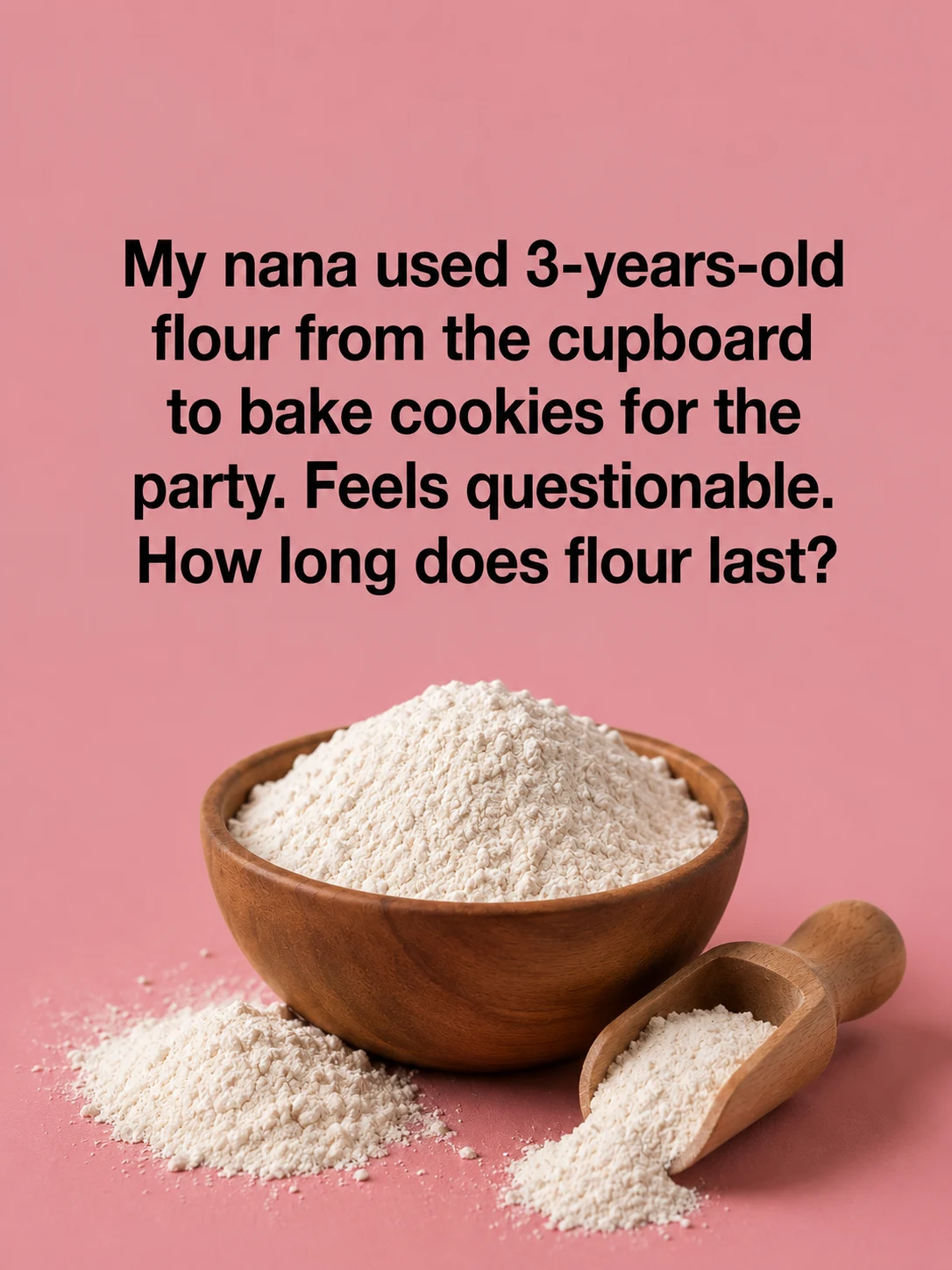
I have to admit, I laughed when my nana proudly pulled out a bag of flour from the back of her pantry and announced she was using it to bake cookies for a family party. Then she casually mentioned she’d had it for about three years.
That got everyone asking the same question: Can flour really last that long, or should it be tossed?
The answer isn’t as simple as checking the calendar. Flour doesn’t spoil the same way milk or fresh produce does, but it doesn’t stay at its best forever either. The type of flour, how it’s stored, and even your kitchen environment all play a part.
Let’s look at how long flour lasts and how to tell when it’s time to replace it.
Does Flour Go Bad?
Yes, flour can go bad.
Although it’s considered a shelf-stable pantry staple, flour slowly loses freshness over time. Oils found in some types of flour can become rancid, while moisture or pests may contaminate improperly stored flour.
In many cases, flour is still safe after its printed date if it has been stored correctly, but you’ll want to inspect it before baking.
How Long Does Flour Last?
Different types of flour have different shelf lives.
All-Purpose White Flour
- Pantry: 8 to 12 months
- Refrigerator: Up to 2 years
- Freezer: Up to 2 years or longer when sealed properly
Whole Wheat Flour
- Pantry: About 3 to 6 months
- Refrigerator: Up to 1 year
- Freezer: Up to 2 years
Whole wheat flour contains more natural oils, so it doesn’t stay fresh as long as white flour.
Specialty Flours
Almond, oat, coconut, rye, and other specialty flours usually have shorter shelf lives because of their higher oil content. Many benefit from refrigeration after opening.
Can You Use Three-Year-Old Flour?
Maybe—but don’t assume it’s still good.
Before using older flour, check for these signs:
- A sour or stale smell
- Musty or moldy odors
- Clumps caused by moisture
- Tiny insects or webbing
- Discoloration
- Visible mold
If you notice any of these, throw the flour away.
If it looks clean, smells neutral, and has been stored in a cool, dry place inside an airtight container, it may still be usable. However, its quality and baking performance may not be as good as fresh flour.
Does Expired Flour Make You Sick?
Not always.
Old flour is more likely to lose flavor and baking quality than to become dangerous. However, flour contaminated with mold, insects, or moisture should never be used.
Raw flour can also naturally contain harmful bacteria, which is one reason it’s important not to taste raw cookie dough or raw flour mixtures.
What’s the Best Way to Store Flour?
Good storage can make a big difference.
Follow these simple tips:
- Keep flour in an airtight container.
- Store it in a cool, dry pantry.
- Keep it away from direct sunlight.
- Label containers with the purchase date.
- Refrigerate or freeze whole wheat and specialty flours for longer freshness.
These habits help protect flour from moisture, pests, and heat.
Can Freezing Flour Help?
Yes.
Freezing flour is one of the easiest ways to extend its freshness. It also helps prevent pantry pests from becoming a problem.
Allow frozen flour to come to room temperature before opening the container to prevent condensation from forming inside.
Frequently Asked Questions
Can I bake with expired flour?
If the flour smells fresh, looks normal, and has been stored properly, it may still be suitable for baking. Always inspect it before using it.
How do I know if flour has gone bad?
A sour smell, insects, mold, moisture, or unusual discoloration are signs that flour should be discarded.
Is white flour better for long-term storage?
Yes. White all-purpose flour generally lasts much longer than whole wheat flour because it contains fewer natural oils.
Can bugs get into unopened flour?
It’s uncommon but possible. Pantry pests may already be present in tiny eggs before packaging. Freezing newly purchased flour for a couple of days can help reduce this risk.
Final Thoughts
Finding a bag of flour that’s been sitting in the pantry for several years can be surprising, but age alone doesn’t always mean it’s unsafe.
The best approach is to trust your senses. Check the smell, texture, and appearance before baking. If anything seems unusual, replace it with a fresh bag.
When flour is stored properly in a cool, dry place, it can stay usable much longer than many people expect. Still, for the best flavor, texture, and baking results, using fresher flour is always the better choice.