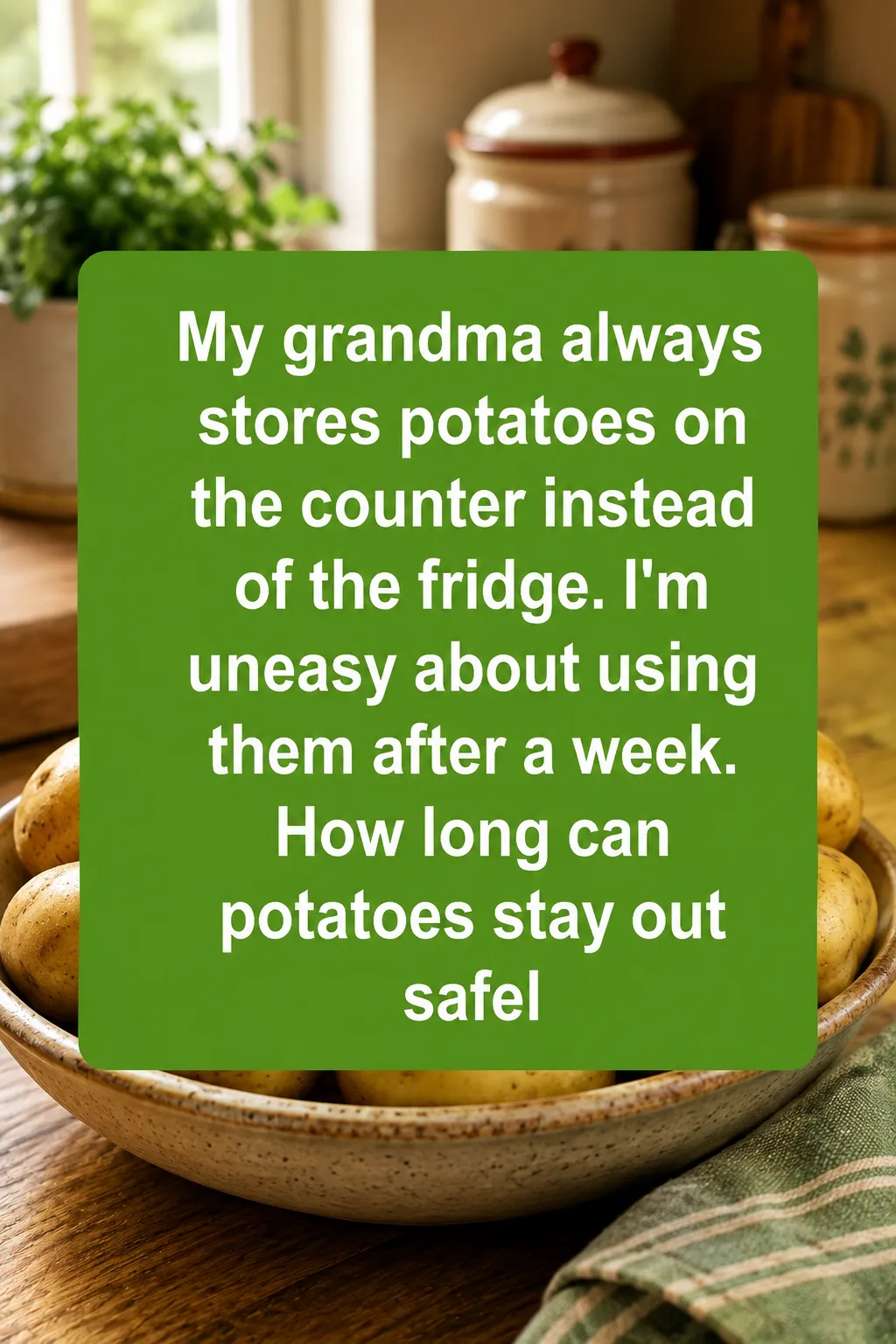
You walk into Grandma’s kitchen and there they are—a bag of potatoes sitting on the counter like they’ve signed a long-term lease.
A week passes.
They’re still there.
Meanwhile, you’re thinking, “Are we seriously going to eat these?”
Here’s the good news: raw whole potatoes do not need to be refrigerated just because they have been sitting out for a week. Unlike cooked potatoes, whole raw potatoes can last for weeks when kept under suitable conditions.
But the kitchen counter isn’t always the best storage spot either.
Light, warmth, moisture, and poor airflow can lead to sprouting, softening, rot, and green skin. So instead of watching the calendar alone, you need to look at where the potatoes are stored and what condition they’re in.
Here’s how long potatoes can stay out, the best way to store them, and when that old potato needs to hit the trash.
Can Raw Potatoes Stay on the Counter?
Yes, whole raw potatoes can be stored outside the refrigerator.
A week at room temperature doesn’t automatically make a potato unsafe.
In fact, potatoes traditionally do well in a cool, dark, dry, well-ventilated location.
The problem with a kitchen counter is usually not the lack of refrigeration.
It’s the environment.
A bright counter near a sunny window, oven, dishwasher, or other heat source can shorten storage life and encourage sprouting or greening.
So Grandma has the general idea right—but I might move that potato basket somewhere darker.
How Long Do Raw Potatoes Last at Room Temperature?
Under ordinary household conditions, whole potatoes can often remain usable for several weeks, although their actual storage life varies considerably.
A warm kitchen can shorten that period.
A cooler, dark pantry with good airflow can keep them in better condition for longer.
Potato variety, age at purchase, bruising, humidity, temperature, and light exposure all matter.
That’s why I wouldn’t tell someone, “Every potato is good for exactly X days.”
Potatoes aren’t yogurt cups with a countdown clock.
Check their condition.
Is a Potato Still Good After One Week?
Very possibly.
If a whole raw potato has spent one week in a reasonably cool, dry location and remains firm with normal-looking skin, one week alone isn’t a reason to discard it.
Check it before cooking.
A good potato should generally feel firm rather than wet, mushy, or severely shriveled.
You should also look for mold, decay, extensive green coloring, and major sprouting.
If everything looks normal, Grandma’s week-old counter potato may be perfectly usable.
The Best Place to Store Potatoes
Potatoes like conditions that are almost the opposite of a sunny kitchen counter.
Think:
cool + dark + dry + ventilated.
A pantry, cellar, or appropriate cupboard may work well depending on the temperature.
Avoid placing potatoes beside the stove or another appliance that gives off heat.
And don’t seal them inside an airtight plastic container.
They need airflow.
A paper bag, mesh bag, basket, or ventilated container can work better than tightly sealed plastic.
Why Light Is Bad for Potatoes
Light can cause potatoes to turn green.
That green color comes from chlorophyll, which isn’t itself the main safety concern. However, greening can occur alongside increased concentrations of naturally occurring glycoalkaloids such as solanine.
These compounds can produce a bitter taste and, at high enough amounts, cause illness.
That’s why potatoes belong somewhere dark rather than displayed in a pretty bowl beside the window.
Tomatoes can have the sunny countertop.
Potatoes prefer their little cave.
Can You Eat Green Potatoes?
This is where I’d be cautious.
If you see a small green area, some guidance allows cutting away the green portion generously before cooking, along with removing sprouts and eyes.
But a potato that is extensively green, strongly bitter, damaged, or heavily sprouted should be discarded.
And don’t taste a suspicious raw potato to decide whether it’s okay.
When in doubt about significant greening, tossing one potato is a pretty inexpensive decision.
What About Sprouted Potatoes?
A tiny sprout doesn’t automatically mean the whole potato belongs in the trash.
If the potato is still firm and otherwise in good condition, small sprouts can generally be removed before cooking.
However, a potato covered with long sprouts and looking wrinkled, green, or soft has moved well beyond its prime.
That’s when I stop trying to save 42 cents.
Sprouting is also a sign that your storage conditions may be too warm or bright.
Are Soft Potatoes Bad?
There’s a difference between slightly less firm and downright mushy.
An older potato may lose moisture and become somewhat wrinkled.
But a potato that is extremely soft, wet, leaking, moldy, or rotting should be discarded.
Use your eyes and hands here.
If picking it up feels like handling a water balloon that’s having a bad day, no mashed potatoes tonight.
What Does a Bad Potato Smell Like?
Fresh potatoes have a mild earthy smell.
Rotting potatoes can develop a strong, unpleasant odor.
If you open the pantry and immediately wonder what died in there, check the potato bag.
One rotten potato can also affect the potatoes around it, so remove spoiled ones promptly and inspect the rest.
This is another good reason not to forget about a giant bag for two months.
Should You Refrigerate Raw Potatoes?
This question gets interesting because storage advice has changed over time.
Historically, consumers were often told to avoid refrigerating raw potatoes because cold storage can increase certain sugars, which may contribute to higher acrylamide formation during high-temperature cooking.
More recent guidance from the UK’s Food Standards Agency states that storing potatoes in the refrigerator is considered safe and can help extend shelf life, based on newer evidence regarding acrylamide risk.
Still, a cool, dark storage location remains a practical choice for many households.
If you refrigerate them, keep them dry and follow sensible storage practices.
Don’t Wash Potatoes Before Storing Them
I know washing everything immediately after grocery shopping feels wonderfully productive.
With potatoes, wait.
Extra surface moisture can encourage spoilage during storage.
Store whole potatoes dry and wash them shortly before preparing them.
If they’re covered in soil, that’s okay.
A little dirt looks less concerning to me than a damp potato slowly turning fuzzy in a plastic bag.
Should Potatoes Stay in Their Plastic Grocery Bag?
Not if the bag traps moisture and has poor ventilation.
Many store bags have ventilation holes, but potatoes still benefit from good airflow.
If condensation starts forming inside the package, move the potatoes to a more breathable storage setup.
Try a basket, paper bag, mesh sack, or ventilated container.
And keep them in the dark.
A fancy wire basket sitting directly in sunlight isn’t doing you many favors.
Should You Store Potatoes With Onions?
I’d separate them.
Potatoes and onions may look adorable sitting together in a rustic pantry basket, but they’re not ideal storage roommates.
Produce releases moisture and gases during storage, and keeping certain vegetables packed closely together can shorten quality.
Give onions their own ventilated space.
Give potatoes theirs.
They can reunite later in the skillet.
How to Make Potatoes Last Longer
Start at the grocery store.
Choose potatoes that are firm and free from major cuts, wet spots, decay, and extensive greening.
Once home, store them somewhere dark with airflow.
Then check the batch occasionally.
Remove potatoes that begin rotting so one bad potato doesn’t sit against the others.
And use damaged potatoes first.
Basically, potato storage requires less effort than keeping a houseplant alive—which is probably why I’m better at potatoes.
Raw Potatoes and Cooked Potatoes Have Different Rules
This distinction matters.
A whole raw potato can stay outside refrigeration far longer than a cooked potato dish.
Once potatoes are cooked, treat them as perishable food.
Baked potatoes, mashed potatoes, roasted potatoes, potato casseroles, and similar leftovers should be refrigerated promptly.
Don’t apply Grandma’s raw-potato counter rule to Sunday’s mashed potatoes.
Those are two very different situations.
How Long Can Cooked Potatoes Sit Out?
Perishable cooked foods generally shouldn’t remain at room temperature for more than 2 hours.
If the surrounding temperature is above 90°F (32°C), that period drops to about 1 hour.
So a raw potato sitting in the pantry for a week can be normal.
A baked potato sitting on the counter all night?
Different answer.
Toss it.
Be Careful With Foil-Wrapped Baked Potatoes
Baked potatoes wrapped in aluminum foil deserve extra attention.
Improperly stored foil-wrapped baked potatoes can create conditions associated with Clostridium botulinum, the bacterium responsible for botulism.
Serve foil-wrapped potatoes promptly and handle leftovers according to reliable food-safety guidance.
Don’t leave them wrapped in foil at room temperature for hours.
Again, the rules for a raw potato don’t transfer to a cooked one.
Can You Freeze Raw Potatoes?
Raw potatoes aren’t usually at their best when tossed directly into the freezer.
Their texture can suffer.
If you have more potatoes than you’ll use, blanching or partially cooking them before freezing usually gives better results.
You can also turn them into freezer-friendly foods such as:
- Mashed potatoes
- French fries
- Hash browns
- Roasted potato portions
Honestly, I’d rather freeze tomorrow’s hash browns than discover next month’s science experiment in the pantry.
What Can You Do With Potatoes That Need Using Soon?
If several potatoes are beginning to soften or sprout slightly but remain otherwise suitable to eat, make them tonight.
Try:
- Mashed potatoes
- Potato soup
- Home fries
- Hash browns
- Roasted potatoes
- Potato pancakes
- Shepherd’s pie topping
- Breakfast potatoes
A big pot of potato soup can use several pounds surprisingly fast.
Problem solved—and dinner handled.
A Simple Potato Storage Routine
When I bring potatoes home, I wouldn’t obsess over an exact expiration date.
I’d do this instead:
Keep them dry.
Put them somewhere dark.
Give them airflow.
Keep them away from unnecessary heat.
Check them occasionally.
Use damaged or older potatoes first.
That’s pretty much it.
No complicated storage system required.
Frequently Asked Questions
How long can raw potatoes sit out?
Whole raw potatoes can often remain usable for several weeks under suitable storage conditions. A cool, dark, dry, ventilated location generally gives better results than a warm, bright countertop.
Are potatoes safe after sitting on the counter for a week?
A week alone doesn’t mean whole raw potatoes are bad. Inspect them for rot, mold, major greening, severe softening, and heavy sprouting before use.
How can you tell if a potato has gone bad?
Discard potatoes that are rotten, moldy, leaking, extremely soft, badly damaged, or have an unpleasant odor. Extensive greening and heavy sprouting are also reasons for caution.
Can you eat potatoes that have sprouted?
A firm potato with small sprouts may still be usable after the sprouts are completely removed. Potatoes that are heavily sprouted, green, very soft, or shriveled should be discarded.
Are green potatoes safe?
Significant greening is a warning sign because glycoalkaloid levels may be higher. Discard potatoes that are extensively green or taste bitter rather than trying to salvage them.
Should potatoes be stored in the refrigerator?
Current UK Food Standards Agency guidance says refrigeration is safe and may extend shelf life. A cool, dark, dry location with airflow also works well for household storage.
Should potatoes be washed before storage?
No. Store them dry and wash them shortly before cooking to reduce unnecessary moisture during storage.
Can potatoes and onions be stored together?
Keeping them separately is generally a better storage habit. Both benefit from dry conditions and good airflow.
How long can cooked potatoes stay at room temperature?
Cooked potatoes are perishable and generally shouldn’t remain at room temperature for more than 2 hours, or 1 hour in temperatures above 90°F (32°C).
Final Thoughts
Grandma isn’t necessarily doing anything wrong by keeping whole raw potatoes outside the refrigerator.
One week on the counter does not automatically make a raw potato unsafe.
The bigger question is what that counter is like.
If it’s warm, sunny, and right beside the oven, I’d move the potatoes. A cool, dark, dry, ventilated location will generally help them stay in better condition.
Check for heavy sprouting, extensive greening, mold, rot, unpleasant smells, and major softening before cooking.
And remember the most important distinction: raw whole potatoes and cooked potatoes don’t follow the same storage rules.
So Grandma’s basket of raw potatoes?
Probably not nearly as scary as it looks.
That foil-wrapped baked potato somebody forgot on the counter overnight?
Yeah, that one isn’t getting invited to breakfast.