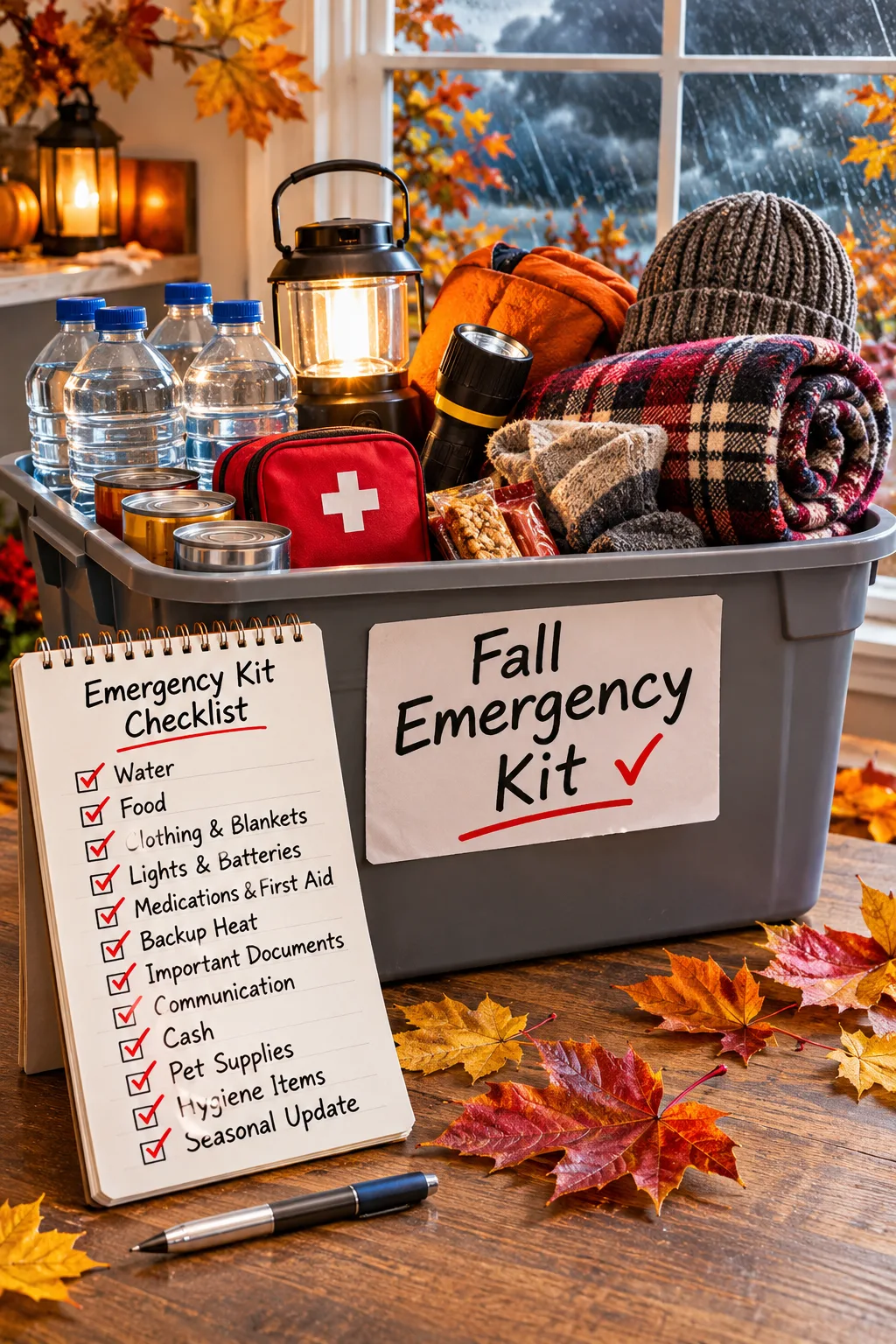
If there’s one pattern I’ve seen over and over as storms shift from late-summer nuisance to full-on fall disruption, it’s this: most households think they have an emergency kit, but what they really have is a half-finished tote with dead batteries, three granola bars, and a flashlight no one can find when the lights go out. Before October brings wind, cold rain, early freezes, and the kind of outages that turn an ordinary weeknight into a scramble, this is the moment to update what you already own—not just admire the bin in the closet and call it done.
FEMA’s guidance is practical for a reason: emergencies are easier to manage when the basics are current, reachable, and matched to the season ahead. Fall storms create a different set of problems than summer heat or spring flooding, so I’d treat this as a seasonal reset. Here are 10 smart updates every American household should make now, with the first one being the one I’d do tonight if your kit hasn’t been touched since last year.
1. Replace and rotate all water first
If I had to pick the single most important fall emergency-kit update, it’s water. FEMA consistently emphasizes having enough safe drinking water on hand, and this is where many households quietly fall short. The baseline is 1 gallon of water per person per day for at least 3 days. For a family of 4, that’s 12 gallons minimum. If you have pets, add their needs too: a medium dog can easily need 1/2 to 1 gallon a day depending on size and temperature.
Check expiration dates on commercially bottled water, inspect containers for leaks or cloudiness, and replace anything stored in a hot garage or shed through summer. I prefer keeping water in a cool interior closet, under a bed, or in a basement that stays above freezing but below about 75°F. If you use larger 5- to 7-gallon containers, sanitize and refill them according to manufacturer directions. In fall, when storm-related boil advisories and power losses become more likely, fresh water buys you time and removes a lot of stress fast.
2. Swap expired food for shelf-stable, no-cook meals
The second thing I’d update is food, especially items that can be eaten cold if the power is out for 24 to 72 hours. FEMA’s basic advice is to keep nonperishable food, but the useful version of that advice is this: store food you’ll actually eat, in portions that make sense, with minimal prep. Think canned soup, tuna or chicken pouches, peanut butter, crackers, shelf-stable milk, applesauce cups, protein bars, dried fruit, and ready-to-eat cereal.
Check every date. Replace dented cans, stale crackers, melted bars, and anything your kids won’t touch. Aim for at least a 3-day supply per person, though 5 to 7 days is even better if you live in a rural area or somewhere with frequent tree damage and long restoration times. Don’t forget a manual can opener. I’ve seen more than one perfectly stocked kit become useless because all the food inside required electricity or a gadget no one packed.
3. Put cold-weather clothing and blankets into the kit now
Fall storms are tricky because they can knock out power before people mentally switch into cold-weather mode. Add one complete change of clothes per person, plus warm layers: long sleeves, socks, underwear, a fleece or sweatshirt, and sturdy shoes. If you have infants, include two extra sleepers and a warm hat. If anyone in the house tends to get chilled easily, pack thermal layers now rather than hunting for them in the dark later.
Blankets matter more than many people realize. FEMA guidance often includes bedding or warm items, and that’s especially important before October storms. Store at least one blanket or sleeping bag per person. My preference is a mix: one heavier fleece blanket for quick access and one compact sleeping bag rated for cool temperatures, around 30°F to 50°F if you live in a colder region. If your home loses heat overnight, these are not comfort items—they are core safety gear.
4. Test every flashlight, lantern, and battery pack
Don’t assume lighting still works because it worked last winter. Pull everything out and test it. Check flashlights, headlamps, LED lanterns, battery-powered night lights, and power banks. Replace alkaline batteries that are corroded or near expiration, and recharge every USB power bank to 100%. Label each one with the date using a piece of masking tape so you know when it was last topped off.
I strongly recommend having at least 3 layers of backup lighting: one flashlight by each bedroom, one lantern for the main living space, and one headlamp for hands-free tasks like shutting off breakers or cleaning up a leak. A decent power bank should hold at least 10,000 mAh, enough to recharge many phones 2 times. Also include the actual charging cables your household uses—USB-C, Lightning, or Micro-USB—because a charged battery pack without the right cord is just clutter.
5. Update medications, prescriptions, and first-aid supplies
Fall is a good checkpoint for medications because many people are heading into allergy season, cold season, and storm season all at once. FEMA encourages keeping medications and medical supplies in your emergency kit, and this area deserves detail. Check expiration dates on prescription medicines, inhalers, epinephrine auto-injectors, insulin supplies, pain relievers, antihistamines, and children’s fever reducers. Refill what’s running low before a storm watch is issued.
Your first-aid kit should go beyond a few adhesive bandages. Make sure you have gauze, medical tape, antiseptic wipes, tweezers, antibiotic ointment, gloves, instant cold packs, a thermometer, and a printed list of medications and doses for each family member. If anyone uses glasses, hearing aids, or mobility devices, add backup batteries, cases, and basic repair items. In an outage, the people most affected first are often those who rely on routines and medical support tools.
6. Add backup heat and weather-specific shelter items
This is one of the most overlooked fall updates. Your emergency kit for October should reflect dropping temperatures and wind-driven rain. If you have a safe, approved backup heat source—such as a vented fireplace or a properly used generator kept outdoors only—make sure fuel, instructions, and carbon monoxide precautions are part of your storm prep. FEMA and local emergency agencies repeatedly warn against using charcoal grills, camp stoves, or generators indoors, in garages, or near windows.
Inside the kit itself, add hand warmers, rain ponchos, waterproof gloves, knit caps, and plastic sheeting or contractor bags. Heavy-duty 3-mil or 4-mil plastic sheeting, duct tape, and towels can help manage broken windows, roof drips, or drafts until repairs are possible. A couple of 5-gallon buckets, old towels, and work gloves have saved more homes from minor water damage than fancy gear ever has.
7. Refresh your phone plan for outages: charging, alerts, and paper backups
An emergency kit in 2026 should absolutely include both digital and non-digital communication tools. Start by making sure every adult in the household has Wireless Emergency Alerts enabled on their phone and knows how to silence everything except critical notifications if needed. Charge all phones fully when severe weather is forecast, and keep at least one charged power bank per 1 to 2 people.
Then make paper backups. Write down emergency contacts, doctors’ numbers, insurance claim numbers, school contacts, utility outage lines, and one out-of-state check-in contact. Print local maps if you live where cell coverage drops during storms. FEMA guidance has long stressed communication planning, and I’m a big believer in not leaving that plan trapped inside a phone that may be at 8% battery when the power fails.
8. Protect important documents in a waterproof grab-and-go pouch
If a storm causes roof leaks, flash flooding, or a rushed evacuation, document protection becomes urgent. Gather copies of IDs, insurance policies, home and auto information, medical cards, prescription lists, vaccination records, bank contacts, and pet vaccination paperwork. Put them in a waterproof, resealable pouch or a small fire-resistant document bag.
I’d also include a small amount of cash in mixed bills—at least $50 to $200 if your budget allows—because card readers and ATMs often fail during extended outages. Add a house key, car key copy, and a written inventory of expensive items for insurance purposes. This is one of those updates that feels tedious until the moment it becomes the most useful part of the whole kit.
9. Restock sanitation supplies for water outages and messy cleanup
When people picture emergency kits, they often think food and flashlights first. But after a storm, sanitation becomes a real quality-of-life issue within hours. FEMA includes sanitation and personal hygiene items for good reason. Restock toilet paper, moist towelettes, hand sanitizer, trash bags, paper towels, soap, feminine hygiene products, diapers if needed, and disinfecting wipes.
For fall storms, I’d also add bleach or another disinfectant, rubber gloves, and extra trash bags for wet debris. If your water service is interrupted or under a boil advisory, having basic cleaning and hygiene supplies keeps a difficult situation from turning miserable. Store everything in sealed bins so moisture, bugs, and basement dampness don’t ruin it before you need it.
10. Don’t forget pets, babies, and anyone with specialized needs
The best emergency kits are built around the actual household, not an imaginary one. If you have a baby, stock formula, bottles, ready-to-feed options, diapers, wipes, diaper cream, and a warm blanket. If you care for an older adult, think through mobility aids, continence supplies, backup medications, and easy-to-open foods. If someone is sensitive to noise, stress, or routine disruption, pack comfort items, headphones, or familiar snacks.
For pets, include a 3-day to 7-day supply of food, bottled water, bowls, leash, carrier, waste bags, litter if needed, and vaccine records. I always tell people: if your pet depends on it on an ordinary Tuesday, it belongs in your emergency planning. Storm shelters, hotels, and relatives’ homes all go more smoothly when your animal’s essentials are packed ahead of time.
11. Add simple tools for shutoffs, repairs, and safe cleanup
Even if your main emergency kit is focused on survival basics, fall is the right time to add a small tools pouch. Include a multipurpose tool, work gloves, duct tape, a wrench or pliers for utility shutoffs if appropriate for your home, a whistle, zip ties, and a small roll of electrical tape. If you know where your home’s water shutoff is, this is the season to make sure the correct tool is actually on-site.
In many October storms, the first household problem isn’t dramatic—it’s a loose gutter dumping water by the foundation, a branch blocking a walkway, or a minor leak under a window. A compact set of practical tools can keep a small issue from becoming a costly one. Store them where adults can reach them quickly, not buried under holiday decorations.
12. Set a real storage location and do a 15-minute family drill
The final update is less about supplies and more about whether the kit can actually be used under pressure. Put everything in a clearly labeled, easy-to-carry bin or backpack and store it in a location everyone knows—hall closet, mudroom shelf, or under the stairs are common good choices. Avoid attic storage if access is awkward and avoid garages if summer heat or winter cold damages contents.
Then do a 15-minute run-through. Show everyone where the flashlights are, where the water is stored, who grabs the documents, who checks on pets, and how you’ll respond if power goes out at 2 a.m. versus 2 p.m. I’ve found that a short, calm practice session does more to reduce panic than buying one more gadget ever will. Before October storms hit, the goal isn’t a perfect kit. It’s a current, usable one that fits your home, your weather, and the people who count on it.