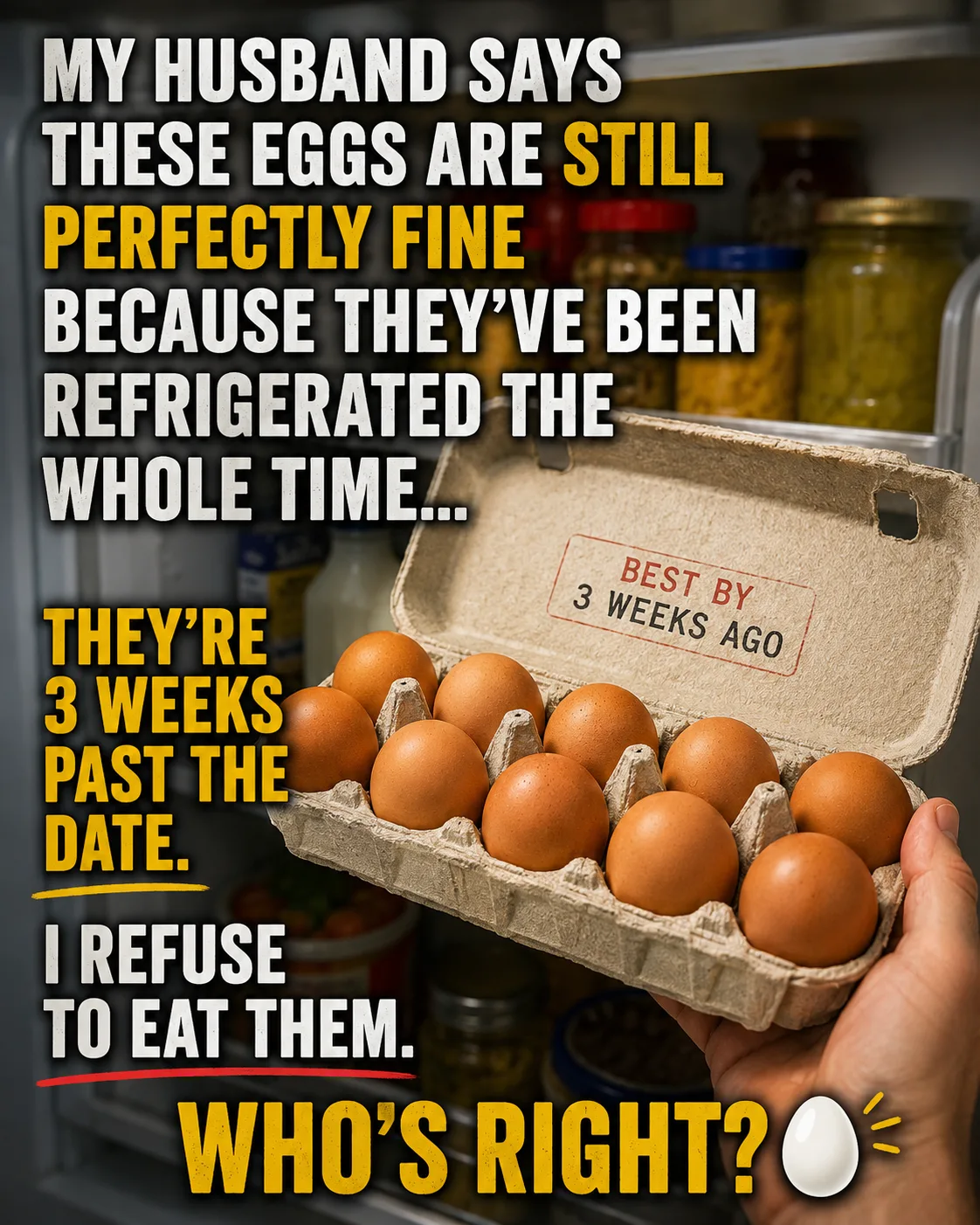
I recently opened the refrigerator and found a carton of eggs with a best-by date from three weeks ago. One person in my house said they were perfectly fine because they’d been refrigerated the whole time. The other refused to touch them.
So, who’s right?
The answer may surprise you. A best-by date doesn’t always mean eggs are no longer safe to eat. Here’s what you should know before deciding whether to keep or toss them.
Does the Best-By Date Mean Eggs Have Gone Bad?
Not necessarily.
The best-by date is mainly a quality guideline, not a food safety deadline. It tells you when the eggs are likely to be at their best flavor and texture.
If eggs have been refrigerated continuously, they can often remain safe beyond the printed date.
How Long Do Eggs Last in the Refrigerator?
According to food safety recommendations, fresh shell eggs can generally be stored in the refrigerator for 3 to 5 weeks from the day they’re packed.
Because cartons display a best-by or sell-by date rather than the packing date, many eggs are still safe for a period after the printed date if they’ve been stored properly.
The Float Test: Does It Really Work?
You’ve probably heard about placing an egg in a bowl of water.
Here’s what the results usually mean:
- Sinks and lies flat: Very fresh.
- Stands upright but stays on the bottom: Older but often still safe.
- Floats to the top: Best to throw it away.
The float test measures the amount of air inside the egg, not whether harmful bacteria are present. It’s a helpful clue but shouldn’t be your only test.
Check for Signs of Spoilage
Before using older eggs, inspect them carefully.
Throw them away if you notice:
- Cracked shells
- Slimy or powdery shells
- A sour or sulfur-like odor
- Pink, green, or black discoloration after cracking
- An unusual appearance or texture
If an egg smells bad after cracking, discard it immediately.
How to Store Eggs Properly
Good storage helps eggs stay fresh longer.
For best results:
- Keep eggs refrigerated at 40°F (4°C) or below.
- Store them in their original carton.
- Place them on an inside refrigerator shelf rather than the door.
- Avoid frequent temperature changes.
The carton also helps protect eggs from absorbing odors from other foods.
Can You Eat Eggs Three Weeks Past the Best-By Date?
In many cases, yes, provided the eggs have remained continuously refrigerated, the shells are intact, and there are no signs of spoilage.
If you’re uncertain about how the eggs were stored or if they show any signs of damage or an off odor, it’s safest to throw them away.
Frequently Asked Questions
Are best-by dates the same as expiration dates?
No. A best-by date is intended to indicate peak quality rather than the exact date food becomes unsafe.
Should you wash eggs before storing them?
No. Store-bought eggs should remain in their original carton and should only be washed if necessary just before use.
Can refrigerated eggs still go bad?
Yes. While refrigeration slows bacterial growth, eggs eventually spoil and should not be kept indefinitely.
What’s the safest approach?
When in doubt, crack each egg into a separate bowl before adding it to your recipe. If anything looks or smells unusual, discard it.
Final Thoughts
Finding eggs that are three weeks past the best-by date doesn’t automatically mean they belong in the trash. If they’ve been refrigerated the entire time and show no signs of spoilage, they may still be safe to use.
The best approach is to rely on proper storage, inspect each egg carefully, and use common food safety practices. When there’s any doubt about freshness or storage history, throwing the eggs away is always the safer choice.