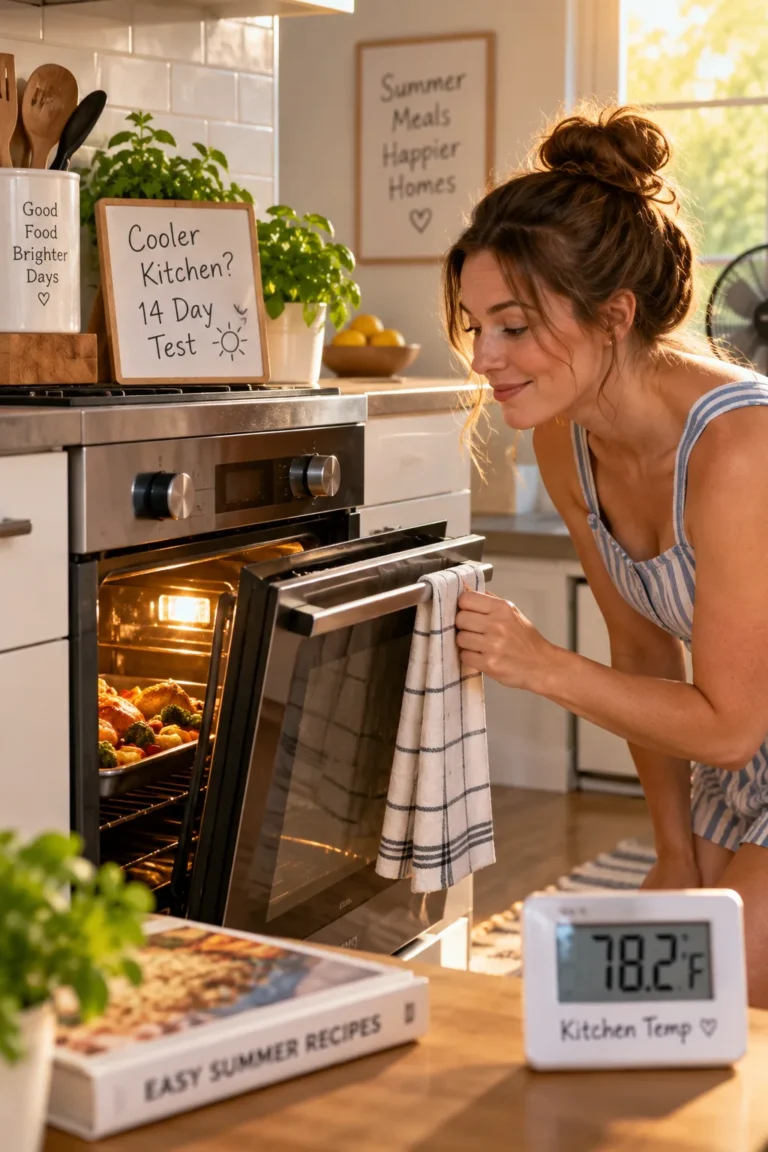
In the middle of a sticky July heat wave, I decided to run a very unglamorous kitchen experiment on one of the hardest-working parts of my fridge: the crisper drawer. I closed the crisper vents all the way, lined the bottom with plain white paper towels, and used the drawer that way for 14 days to see whether my vegetables would actually stay fresher or whether this was just one more tidy little fridge tip that sounds clever online and does very little in real life.
I tracked what went in, what came out, what got slimy, and what genuinely lasted longer. Over those two weeks, I paid attention to moisture, texture, smell, condensation, and waste, and I learned that this setup can work surprisingly well for some produce and not nearly as well for others. If you’ve ever opened a crisper drawer to find limp herbs, wet spinach, or a mysterious puddle under your cucumbers, here’s exactly what happened in my fridge and what I’d do differently now.
1. Why I tried this in the first place
My refrigerator was fighting an uphill battle in July. The kitchen was warmer than usual, the fridge door was opening constantly, and produce was spoiling faster than I liked. I’d been noticing the usual summer problems: greens going slick in 4 to 5 days, cucumbers softening before I got to them, and herbs collapsing in their bag long before the weekend.
The crisper drawer in my fridge has a small humidity control vent that opens or closes airflow. Closing the vent is meant to trap humidity, which is generally better for leafy vegetables and anything that wilts quickly. The paper towel trick, meanwhile, is supposed to absorb excess moisture so produce doesn’t sit against condensation. In theory, those two things together create a more humid but less soggy environment. I wanted to see whether that balance actually held up over a full 2 weeks.
2. Exactly how I set up the drawer
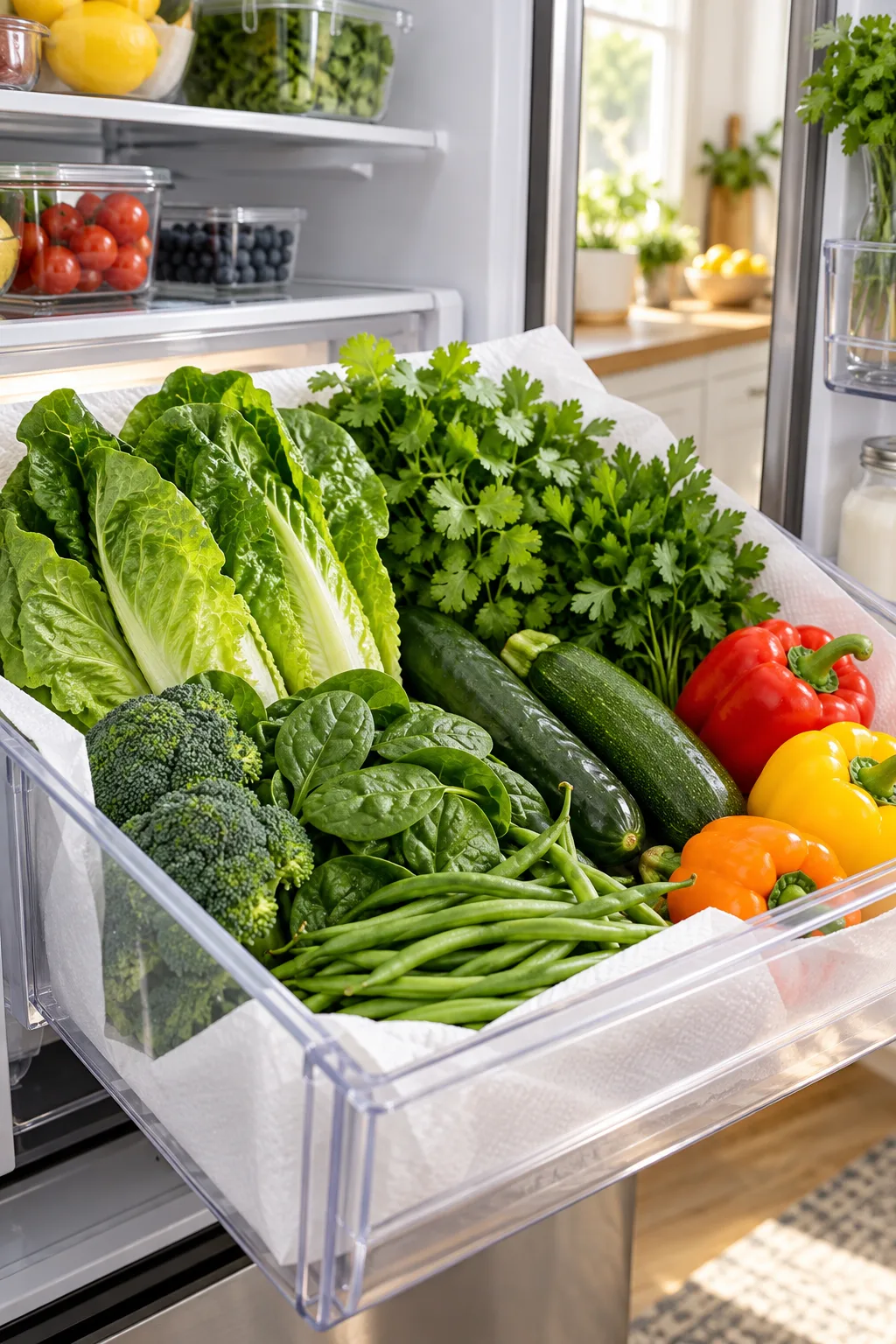
I used one standard bottom crisper drawer, about 15 inches wide and 12 inches deep. I emptied it completely, washed it with warm soapy water, dried it fully, and then set the humidity vent to fully closed. After that, I lined the bottom with 2 full sheets of basic, unscented paper towel, overlapping them slightly so the plastic base was covered edge to edge.
I did not wrap every vegetable individually. I wanted the test to be realistic for a busy week, not a laboratory exercise. Most of the produce went in loose or in the thin produce bags I brought home from the market. I checked the drawer once per day, usually in the evening, and replaced the paper towels only when they felt noticeably damp.
3. What I stored inside during the 14 days
I stocked the drawer with produce I regularly buy and often lose to early spoilage: 1 head of romaine, 1 clamshell of baby spinach, 1 bunch of cilantro, 1 bunch of parsley, 4 cucumbers, 1 bag of green beans, 2 zucchini, 1 head of broccoli, and 3 bell peppers. Over the course of the 2 weeks, I added a second round of greens and herbs after using some of the first batch.
I deliberately left fruit like apples, pears, peaches, and avocados out of this test. Many fruits release ethylene gas, which can speed the aging of nearby vegetables. Since I wanted to isolate how the closed vent and paper towel setup affected high-moisture vegetables, I kept the drawer mostly to produce that tends to wilt, soften, or get slimy.
4. The first 48 hours: the drawer felt noticeably different
Within the first 2 days, the drawer had a different feel from my usual setup. When I opened it, the air inside felt cooler and slightly more humid, almost like opening a sealed salad box. I did not see standing water, which was what I’d worried about most. Instead, the paper towels felt faintly damp underneath the spinach and herbs, especially near the back of the drawer where my fridge tends to run colder.
The vegetables themselves looked very good early on. The romaine stayed crisp, the cilantro didn’t droop overnight the way it often does, and the cucumbers remained firm. Nothing dramatic happened in those first 48 hours, but that was already a good sign because summer wilt often starts almost immediately in my kitchen after grocery day.
5. What happened to leafy greens
Leafy greens were the clearest winners. The romaine stayed crisp for about 9 days, which is roughly 2 to 3 days longer than I usually get when I toss it into the drawer without any lining. The baby spinach lasted 7 days before I saw the first signs of breakdown, and even then, the leaves were not uniformly slimy. A handful at the bottom had softened, but the top and middle layers were still usable.
The paper towels made the biggest difference here. They seemed to catch the moisture that usually collects under greens and turns into that slick, unpleasant layer nobody wants to sort through. On day 6, I swapped the bottom towels for fresh ones, and they were definitely damp but not dripping. That simple replacement seemed to buy me another day or two of good texture.
6. Herbs improved, but only with one extra step
Cilantro and parsley lasted better than usual, though not perfectly. When I put them in loose, still slightly damp from rinsing, the stems stayed hydrated but the leaves got patchy and soft by day 5. On my second round, I dried the herbs thoroughly, wrapped the stems loosely in a barely damp paper towel, and then laid the bunches in the drawer. That worked much better.
With that second method, parsley stayed usable for about 8 days and cilantro for about 6 to 7 days, which is solid in July. In my experience, herbs hate two extremes: bone-dry cold air and trapped surface moisture. The closed vent helped prevent shriveling, but only if I didn’t also trap water on the leaves themselves.
7. Cucumbers and zucchini did well in the closed drawer
Cucumbers were another success. I stored 4 medium cucumbers, each about 7 to 8 inches long, and they stayed firm for 10 to 12 days. Usually, by day 7, I start noticing soft spots near the ends. This time, they remained plump longer, and the skins did not wrinkle as quickly.
Zucchini behaved similarly. The 2 zucchini kept their firmness and glossy skin for about 9 days before one developed a soft patch. I suspect the higher humidity helped prevent dehydration, which is a common issue with summer squash. The key was making sure they were dry when they went in. Any lingering water on the skin seemed more likely to cause trouble than the humid drawer air itself.
8. Green beans and broccoli were more mixed
Green beans stayed snappy for about 6 days, then started losing their crisp snap around day 8. They were still edible, but not at their best. Broccoli held up reasonably well for the first week, with the florets staying tight and the cut stem not drying out too fast. By day 9, though, I noticed a stronger brassica smell and a little moisture collecting around the stem end.
These two vegetables did not perform badly, but they didn’t improve as dramatically as the greens and cucumbers. If I were optimizing just for broccoli and beans, I’d still use the paper towel lining, but I might leave the vent slightly open instead of fully shut to allow a touch more airflow.
9. The paper towels absorbed more moisture than I expected
This was probably the most useful thing I learned. By day 4, the paper towels had a cool, damp feel, especially beneath the spinach, romaine, and herb stems. By day 6, they were damp enough that I replaced them. The second set lasted through the rest of the experiment, though by day 14 they also felt moist and slightly crinkled from repeated humidity exposure.
There was no visible puddle in the drawer at any point, and for me that counts as a real win. Normally, I occasionally find condensation beading under bags or produce containers. The paper towels acted like a simple buffer: they soaked up excess moisture before it could pool against the vegetables. It cost very little, took less than 30 seconds to set up, and made cleanup easier too.
10. Condensation was not the disaster I feared
I half expected a fully closed vent in July to create a mini swamp. That didn’t happen. I did see a little light condensation on the drawer walls on the warmest day of the test, when the kitchen hit about 82°F and the fridge was being opened repeatedly. But because the bottom was lined, the moisture never turned into a wet layer under the produce.
That said, the setup only worked because I didn’t overcrowd the drawer. I kept the produce in a single loose layer wherever possible, with enough room for air to circulate around larger items. If I had packed in twice as much, I suspect I would have seen more trapped moisture and faster spoilage.
11. A few things actually got worse
Not every item benefited. One bell pepper developed a soft spot by day 8 in a place where it had been pressed against the side of the drawer. Peppers in general stayed acceptable, but they didn’t seem to need the higher humidity the way greens did. They weren’t dramatically better than usual.
I also learned that putting in produce while it’s still wet is a mistake. A handful of spinach leaves that went in with residual rinse water broke down faster than the dry batch beside them. Closed vent plus wet leaves is simply too much moisture in one place. The system works best when the drawer air is humid but the produce surface is dry.
12. The smell test mattered more than the visual test
One thing I noticed over the 2 weeks is that produce can still look decent right up to the point when the drawer starts smelling overripe or vegetal in a stale way. Around day 9, the broccoli and herbs together created a stronger fridge smell even though most of the vegetables still looked serviceable. That was my cue to sort, wipe down, and rotate what I had left.
In practical terms, this means a successful crisper setup still needs maintenance. The closed vent and paper towels bought me time, but they didn’t eliminate the need to check the drawer every few days. A 60-second scan for moisture, soft spots, and odor made a big difference.
13. What I saved and what I still threw away
Compared with a typical midsummer 2-week stretch, I threw away less. Normally, I’d expect to lose at least half a bunch of herbs, a layer of spinach, and one or two soft cucumbers. This time, my waste was closer to a small handful of spinach, a few cilantro leaves, and one soft section of a zucchini that I trimmed off.
If I had to put rough numbers on it, I’d say I reduced my produce waste in that drawer by about 25% to 35% over the 14 days. That may not sound huge, but if your weekly produce shop costs $20 to $40 for drawer items alone, that’s meaningful. Over a month, it’s enough to notice in both your grocery budget and your annoyance level.
14. Who should try this and who probably shouldn’t
If you buy a lot of leafy greens, herbs, cucumbers, or zucchini, this is absolutely worth trying. It’s especially helpful in summer, in households where the fridge gets opened often, or when your refrigerator tends to dry out produce before you can use it. If your main issue is wilt rather than rot, a closed vent plus paper towels is a smart place to start.
If, however, your fridge already runs very damp, your crisper drawer often collects water, or you tend to wash produce and store it still wet, I’d be more cautious. In that case, fully closing the vent may push things too far. Start with the vent halfway closed and check after 2 or 3 days rather than committing blindly for 2 weeks.
15. What I’ll keep doing from now on
After this experiment, I’m keeping the paper towel lining in place for my high-humidity drawer. That part was unquestionably useful. It made moisture visible, protected the produce from sitting directly on a cold plastic surface, and made the drawer easier to clean. I’ll also continue using the fully closed vent for greens, herbs, cucumbers, and summer squash.
What I won’t do is treat the whole drawer the same way all the time. Peppers, broccoli, and beans may do better with a slightly more open setting, and I’ll keep fruit elsewhere. My best version of this method is simple: dry produce thoroughly, avoid overpacking, line the drawer with 2 sheets of paper towel, replace them when damp, and use the closed vent strategically rather than universally.
16. My honest verdict after 2 weeks
So, what happened? In plain terms, my vegetables stayed fresher longer, especially the leafy and delicate ones that usually collapse first in July. The closed vents helped preserve humidity, and the paper towels prevented that humidity from turning into a swampy mess. The result was not magic, but it was definitely practical.
If you want a low-effort fridge tweak with a decent payoff, this is one I’d recommend. It took me less than 5 minutes to set up, cost essentially pennies, and gave me more crisp salads, better herbs, and less compost-bound regret. For such a small change, that’s a result I’m happy to keep.