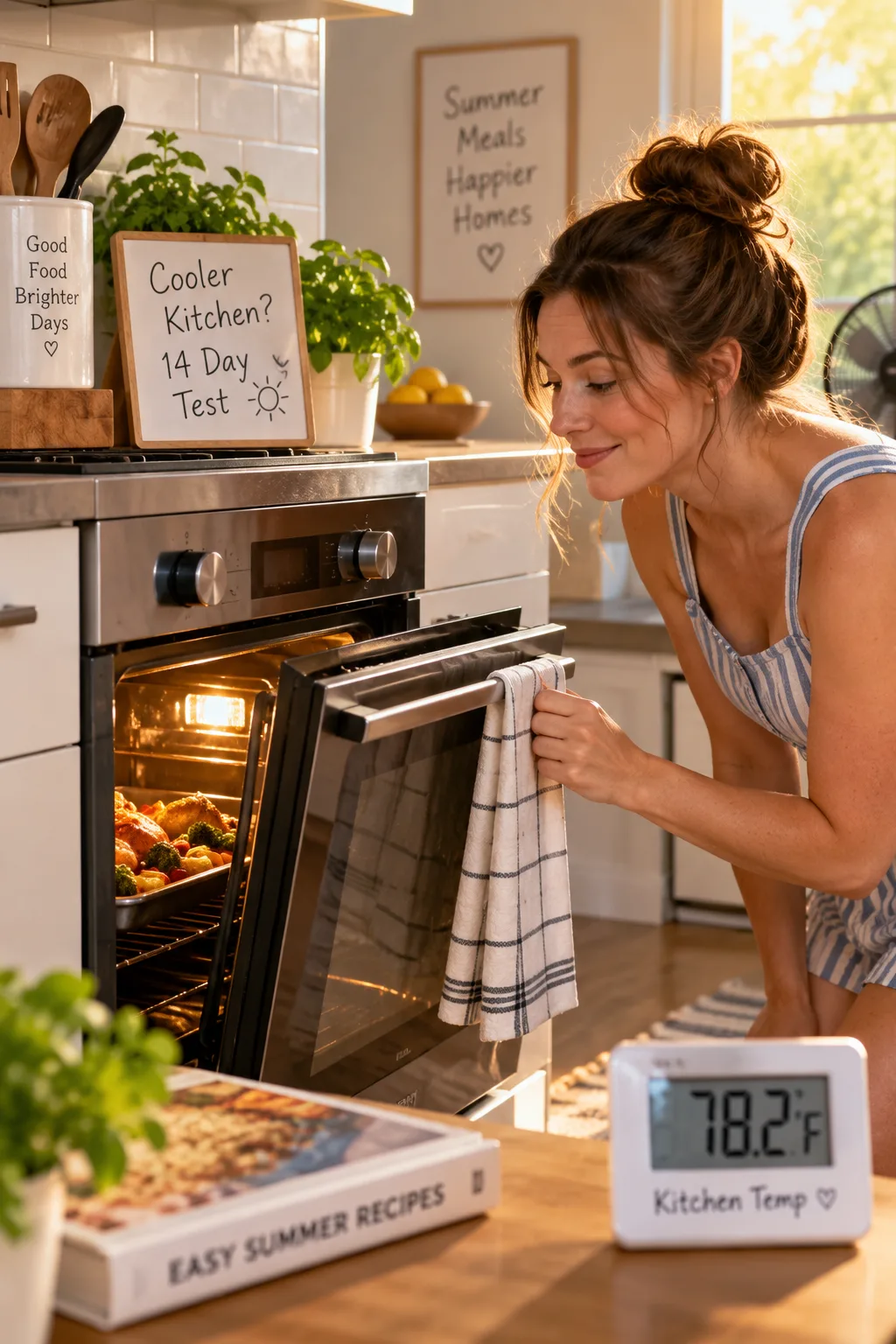
Every July, my kitchen turns into the warmest room in the house by about 6:30 p.m., right when I’m trying to finish dinner and convince myself I’m not too hot to eat it. This year, after one especially sticky evening of baking roasted vegetables and a tray of salmon, I started wondering whether one tiny habit might make a real difference: leaving the oven door cracked open for 10 minutes after baking instead of shutting it straight away. I tried it for 14 days in a row this July, partly out of curiosity and partly because I’m the sort of person who will absolutely turn a household annoyance into a two-week experiment.
What follows is exactly what happened in my kitchen: how much warmer or cooler the room felt, what I noticed about heat moving through the house, whether it saved me from running a fan or extractor longer, and the safety and practicality trade-offs that showed up almost immediately. Some of the results surprised me, and one conclusion became very clear by the end of the fortnight.
1. Why I tried it in the first place
I bake a lot, even in summer. Not elaborate Sunday roasts, necessarily, but practical things: sheet-pan dinners at 200°C, flatbreads at 220°C, fruit crumbles, traybakes, and the occasional batch of scones if the weather has briefly tricked me into optimism. The problem is that once the oven has been on for 30 to 50 minutes, my kitchen can feel heavy with stored heat long after the food comes out.
The logic behind cracking the oven door seemed simple enough. If the oven is already full of heat, maybe releasing it in a short, controlled burst right after cooking would stop the appliance radiating warmth into the room more slowly over the next hour. In my head, it sounded like “get it over with now, and maybe the kitchen recovers faster.”
2. How I set up the 14-day test
I kept the routine as consistent as I reasonably could. For 14 consecutive days, I used my electric built-in oven once each day, usually between 5:45 p.m. and 7:15 p.m. Cooking times ranged from 22 minutes for smaller dishes to 55 minutes for bakes and roasted meals. Oven temperatures ranged from 180°C to 220°C, with most sessions landing around 200°C.
I used a simple digital room thermometer placed on my kitchen worktop about 1.5 metres from the oven, away from direct steam. I noted the kitchen temperature just before opening the oven, again at 10 minutes, and then at 30 minutes. I also kept track of whether the back door was shut or open, whether the extractor fan was on, and whether I needed a pedestal fan afterwards. It wasn’t a laboratory setup, but it was consistent enough to show a pattern.
3. What “cracked open” actually meant
I didn’t fling the oven wide open. I left the door open by roughly 8 to 10 centimetres, enough to let a clear wave of heat escape without turning the whole kitchen into a blast furnace. I set a timer for exactly 10 minutes each time because I know myself, and if I hadn’t, “ten minutes” would have become “oh, has it been half an hour?” by day three.
That small detail mattered. A slightly open door created a steady release of hot air at knee level and waist level. It was noticeable if I was standing at the hob or sink, less noticeable on the other side of the room, and completely impossible to ignore if I forgot and walked too close in shorts.
4. The kitchen did not feel cooler in the first 10 minutes
This was the biggest surprise only because, in retrospect, it shouldn’t have been surprising at all. Releasing oven heat into the room makes the room feel warmer before it feels better. On all 14 days, the kitchen felt hotter during those 10 minutes with the door ajar than it did on similar evenings when I would normally close it.
On average, the thermometer near the worktop rose by about 0.7°C in the first 10 minutes. On the hottest day of the test, with an outdoor temperature of 28°C, the kitchen reading went from 25.9°C before opening the door to 27.1°C at the 10-minute mark. That doesn’t sound dramatic on paper, but in a July kitchen, even a 1°C bump can feel annoyingly tangible.
5. After 30 minutes, the results were mixed rather than magical
By the 30-minute mark, I’d expected the kitchen to have cooled more quickly than usual. In reality, it depended heavily on ventilation. On days when I also opened the back door or had a cross-breeze through the utility room, the kitchen did seem to recover a bit faster after the initial heat dump. On still, muggy evenings with the windows barely helping, there was no meaningful cooling benefit at all.
Across the 14 days, the 30-minute temperature was usually within 0.2°C to 0.4°C of what I’d expect from simply closing the oven and letting the room settle. In other words, the heat was still ending up in the kitchen either way. Cracking the door mostly changed when I felt it, not whether I felt it.
6. The airflow in the room mattered more than the oven door
By day five, I realised the more important variable wasn’t the oven door; it was air movement. If I cracked the oven door but kept the kitchen sealed up, the heat pooled around the cooking area and lingered. If I paired the cracked door with even modest ventilation, such as the back door open by 20 centimetres and the extractor fan on low, the room felt less oppressive because the hot air had somewhere to go.
One evening, I tested this quite deliberately after baking chicken thighs at 200°C for 40 minutes. With the oven door ajar and no additional ventilation, the kitchen still felt stuffy 25 minutes later. Two nights after that, under nearly identical cooking conditions, I opened the back door and got a light through-draft; the room felt more comfortable within 12 to 15 minutes. The difference was obvious enough that I stopped giving all the credit or blame to the oven.
7. It made the area right in front of the oven distinctly uncomfortable
I know this sounds obvious, but practical experiments in real homes always hinge on small annoyances. The hot air pouring from the oven door settled exactly where I most needed to stand to plate food, wipe counters, and get on with the washing up. So while I was theoretically “cooling the oven,” I was making the most-used square metre of my kitchen less comfortable.
Twice I found myself stepping back and waiting because the heat on my legs was too much. If you’ve got a compact kitchen, galley layout, or anything with tight turning space, that matters. In a larger kitchen, you can simply move away; in a smaller one, the cracked-door method is much more intrusive than it sounds.
8. It did help the oven itself cool faster
One thing that unquestionably improved was how quickly the oven cavity shed heat. With the door cracked for 10 minutes, the appliance was noticeably less hot afterwards than when I left it shut. That made a difference when I wanted to wipe splatters later in the evening or use residual heat for something very gentle, like drying breadcrumbs or crisping a few leftover potato skins for a couple of minutes.
Subjectively, the outer door glass also stopped feeling fiercely hot a bit sooner. I don’t have instrument-grade surface readings to give you there, but from a household-use perspective, the oven itself felt like it moved out of its hottest phase more quickly. So if your goal is cooling the appliance, yes, it helps. If your goal is cooling the room, that’s a different story.
9. My energy use didn’t appear to change in any meaningful way
I know some people like this habit because it feels efficient, as though stored heat is being “used” somehow. But in summer, that heat is not free comfort; it’s just extra warmth in a room you may already be trying to keep tolerable. I didn’t notice any reduction in fan usage significant enough to matter on a bill. Over the 14 days, I still used my pedestal fan on 9 evenings, which is roughly normal for a warm July stretch.
If anything, on two of the hottest nights I ended up running the fan sooner because the initial burst of released heat made the kitchen feel stuffier right away. Any energy savings here would be tiny and highly dependent on your home’s layout, insulation, and whether that heat can be vented outdoors quickly.
10. Cooking type changed the outcome more than I expected
Dry, high-heat baking produced the sharpest rush of heat. A tray of roasted vegetables at 220°C or a pizza-style bake made the first few minutes after opening the door feel much warmer than, say, a covered pasta bake at 190°C. Dishes with moisture also added steam to the equation, especially when I opened the oven after something like baked tomatoes or a fruit crumble.
Steam changes comfort fast. Even if the thermometer number only rose slightly, humid heat made the room feel heavier. That’s worth noting because “cooling the kitchen naturally” is not just about temperature; it’s about how the air feels on your skin. On steamier meals, cracking the oven door made the kitchen feel more oppressive, not less.
11. Safety became the deciding factor for me
I don’t think this habit is reckless in every household, but it does introduce a hazard. A hot oven door left ajar is easier to bump, especially when you’re carrying pans, moving around children, or navigating with a pet underfoot. Even in my child-free kitchen, I found it mildly annoying to work around. The heat plume also sits low enough to be unpleasant on bare legs and easy to forget if you’re distracted.
If you have toddlers, dogs, or a narrow kitchen walkway, I would be very cautious about this. Ten minutes is not long, but in a busy evening routine, it’s long enough for someone to brush past it. That alone made me less enthusiastic about continuing the experiment beyond two weeks.
12. What worked better than cracking the oven door
The best results came from changing the room, not the oven. Opening two points for airflow beat the cracked-door method every time. Even a modest cross-breeze moved heat out faster than simply releasing it into a closed kitchen. Running the extractor fan for 10 to 15 minutes after cooking also helped more consistently, particularly after steam-heavy dishes.
I also had much better luck shifting when I cooked. Baking after 8 p.m. on the hottest days, using the air fryer for smaller portions, and batch-cooking two trays at once instead of heating the oven twice all reduced the total heat burden. Those changes were more noticeable than anything I achieved with the oven door alone.
13. The numbers from my 14 days, in plain English
If I had to summarise my notes simply, I’d say this: in the first 10 minutes, cracking the oven door reliably made the kitchen feel hotter. By 30 minutes, the room was sometimes slightly more comfortable, but only when that heat had a clear path out through an open door, window, or active extraction.
Without ventilation, I saw no convincing evidence that the practice cooled my kitchen in any useful way. With ventilation, it wasn’t harmful, but it also wasn’t the hero. The airflow was the hero. The oven door was just a supporting character with a tendency to get in the way.
14. So, will I keep doing it?
Probably not as a routine summer habit. I may still crack the oven door briefly now and then if I want the oven itself to cool faster before cleaning, but I won’t be doing it under the belief that it naturally cools the kitchen in a meaningful standalone way. For my home, in July, over 14 days, it mostly concentrated the heat where I least wanted it.
If you’re tempted to try it, I’d say this: only do it if you can pair it with good ventilation and only if your kitchen layout makes it safe and unobtrusive. Otherwise, shut the oven, move the hot dish away, open a route for air to escape, and let the room recover that way. After two weeks of notes, timers, and one very sweaty traybake evening, that’s the method I trust more.