I’ll admit it: I’m the kind of person who remembers to wash towels on hot, wipe down the detergent drawer now and then, and then completely forgets that the washing machine itself needs cleaning. So I decided to test one of the simplest maintenance tricks I’d heard over and over—run the washer empty on the hottest cycle with 1 cup of baking soda—and do it once a week for 30 days to see whether it actually made a visible, useful difference.
What happened wasn’t dramatic in the before-and-after-ad sense, but it was noticeable in all the practical ways that matter: less odor, less residue, a cleaner drum, and a machine that simply smelled fresher when I opened the door. Over four weekly cleaning cycles, I paid attention to smell, visible buildup, how my laundry came out, and whether this easy routine felt worth repeating. Here’s exactly how I did it, what changed week by week, and where baking soda helped—and where it didn’t.
1. Why I tried the baking soda method in the first place
My machine had not reached crisis level. It wasn’t leaving clothes dirty, and it wasn’t making alarming noises. But it did have that faint “damp laundry room” smell when I opened the door after it had been closed overnight. Not overwhelming—just a little stale and slightly musty. If you own a front-loader, you probably know the scent I mean.
I’d also started noticing a light film around the rubber door gasket and a bit of detergent residue in the dispenser drawer. That usually tells me two things: I’m probably using a little too much detergent in some loads, and the machine could use more regular maintenance. Baking soda seemed like a low-cost, low-effort experiment. A standard 1-cup measure cost me only pennies per wash, especially compared with commercial machine cleaners that often run $5 to $12 for a small pack.
2. Exactly how I ran the test
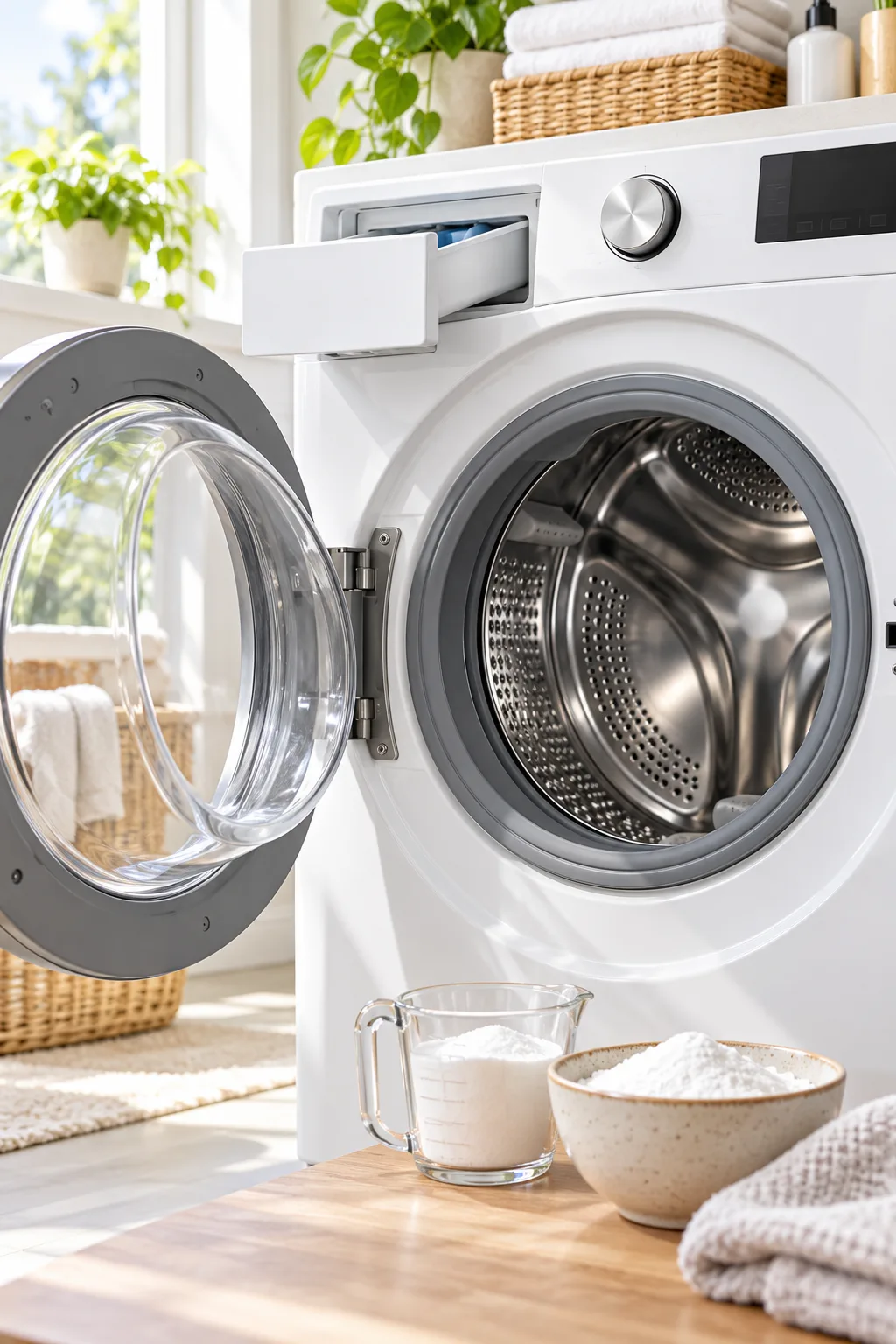
Once a week for 4 weeks, I measured out 1 level cup of baking soda—about 220 to 230 grams, depending on the brand—and added it directly into the empty drum. Then I ran the machine on its hottest, longest cycle. On my washer, that was a hot cotton cycle lasting just over 2 hours. If your machine has a dedicated “tub clean” cycle, that would be the obvious choice.
I didn’t add vinegar, bleach, detergent, essential oils, or any other cleaner during the test because I wanted to isolate the effect of baking soda alone. Before each weekly run, I checked the drum, gasket, door glass, and detergent drawer. After each run, I checked again, smelled the machine, and noted whether there was any visible loosening of residue or lingering odor.
3. What I noticed after the very first hot cycle
After week one, the biggest difference was the smell. The inside of the drum no longer had that faint stale note. Instead, it smelled neutral—like warm metal and clean water, which is exactly what I wanted. This was the quickest and clearest improvement.
Visually, I didn’t see a miracle transformation. The rubber gasket still had a little grime tucked into its folds, especially along the bottom edge where water tends to sit. But some residue looked softened, and it wiped away more easily with a cloth afterward. That told me the baking soda cycle helped loosen surface buildup, even if it didn’t completely remove it on its own.
4. Week two: less residue than I expected
By the second weekly clean, I started seeing a pattern. The detergent drawer had less slick buildup, and the inside of the door glass looked clearer after regular laundry loads. I suspect the hot wash helped flush away some of the soap film that had been hanging around in the machine’s interior parts.
One small surprise was that my everyday laundry also seemed to come out smelling cleaner between washes. Not more perfumed—just fresher. That matters if you use unscented detergent or prefer your laundry to smell like fabric rather than fragrance. When the machine itself smells cleaner, your clothes don’t pick up that subtle “washed but not truly fresh” scent.
5. Week three: the machine stayed fresher for longer
By the third week, I noticed the “clean machine” effect lasted longer after each maintenance cycle. Early on, the washer smelled good immediately after the hot run, but by a few days later the stale note would creep back slightly. In week three, that didn’t really happen. Even several days and multiple normal loads later, the drum still smelled fairly neutral.
This is where I started thinking less about baking soda as a one-time fix and more as a consistency tool. A single cleaning cycle can freshen a machine, but a repeated weekly rhythm seems to make it easier to keep buildup from re-establishing itself. In other words, the biggest benefit wasn’t dramatic removal—it was gradual control.
6. Week four: what had actually improved by day 30
At the end of 30 days, I had four clear results. First, the drum smelled better. Second, visible film on easy-to-reach surfaces was reduced. Third, the washer door area felt cleaner to the touch. Fourth, my laundry came out of the machine smelling more consistently fresh.
What hadn’t changed? Deep grime trapped in the folds of the gasket did not disappear just because I ran hot baking soda cycles. I still needed to wipe that area manually. The detergent drawer also benefited from being removed and scrubbed under warm water. The baking soda routine helped maintenance, but it didn’t replace hands-on cleaning in problem spots.
7. What baking soda seems to do well in a washer
Baking soda is a mild alkali, which means it can help neutralize odors and loosen certain kinds of residue. In practical terms, that makes it useful for reducing musty smells and cutting through some soap-related buildup. It’s also gentle, inexpensive, and easy to store in the laundry room.
For my machine, its strongest performance was deodorizing. That was the most immediate and consistent result across all four weeks. It also seemed to improve the overall cleanliness of the drum environment enough that later laundry loads smelled better. If your machine’s main problem is mild odor or routine freshness, baking soda pulls its weight.
8. Where baking soda fell short
Baking soda was not a complete answer for mold-prone areas, especially the gasket on a front-loading washer. If there’s black spotting, stubborn slime, or heavy grime, an empty hot cycle alone probably won’t solve it. Those areas often need targeted cleaning with a cloth, soft brush, and an appropriate cleaner.
It also didn’t remove all residue hidden in corners and creases. A washing machine has seals, hoses, a dispenser, and drainage areas that aren’t fully addressed by simply running hot water with one ingredient. So while I’d absolutely call the method helpful, I would not call it a full deep-clean strategy.
9. The exact routine I’d use again
If I were repeating this now as a long-term habit, I’d keep it simple: 1 cup of baking soda in the empty drum, hottest cycle available, once a week for a month if the machine has gotten a bit stale, then once every 2 to 4 weeks for maintenance. For a lightly used machine, once a month would probably be enough. For a busy household washing daily loads, every 1 to 2 weeks makes more sense.
After the cycle finishes, I’d leave the door and detergent drawer open for at least 2 to 4 hours, ideally until the interior is fully dry. That step matters almost as much as the cleaning cycle itself. Moisture is what allows odors and grime to come right back.
10. The mistakes that can cancel out the benefits
The biggest mistake is using too much detergent in regular washes. Modern high-efficiency machines usually need far less than people think—often 2 tablespoons to 4 tablespoons of liquid detergent, not a full cap. Excess soap creates residue, and residue holds odor. If you keep overdosing detergent, no weekly baking soda cycle is going to keep the machine fresh for long.
The second mistake is shutting the door immediately after every load. Even 6 to 8 hours of trapped moisture can create a stale-smelling environment, especially in a warm laundry area. The third mistake is ignoring the filter, if your machine has an accessible drain pump filter. Mine wasn’t part of this baking soda test, but checking it every couple of months is one of those unglamorous tasks that pays off fast.
11. What I’d pair with this method for better results
If I wanted a more thorough clean, I’d combine this weekly routine with a few manual steps. First, wipe the rubber gasket with a microfiber cloth, paying special attention to the lower fold where water and lint collect. Second, remove the detergent drawer and soak it in warm water for 10 to 15 minutes before scrubbing it with an old toothbrush. Third, wipe the door glass and the frame with a damp cloth.
Those three extra steps take about 15 minutes total and do more for visible cleanliness than the baking soda cycle alone. In my experience, the empty hot wash works best as the “inside-system refresher,” while manual wiping handles the grime you can actually see.
12. Is it safe to do every week?
For most standard household washers, a weekly empty hot cycle with 1 cup of baking soda is a mild approach. I’d still recommend checking the care and maintenance guidance in your machine’s manual, especially if the manufacturer suggests a specific tub-clean product or frequency. Appliances vary, and following the manual is always the safest route.
I would also avoid treating baking soda as a more-is-better ingredient. There’s no reason to dump in 2 or 3 cups. One measured cup was enough to make a difference in my test, and using excessive powder can create unnecessary residue if it doesn’t fully dissolve and rinse away.
13. Who will see the best results from this trick
This method is probably most useful for people with mildly smelly washers, light soap buildup, or machines that haven’t been cleaned regularly but aren’t in terrible shape. It’s also a good maintenance option if you do lots of cold washes, quick cycles, or high-efficiency loads, all of which can leave residue behind over time.
If your machine already has serious mold, heavy buildup, standing water, or a strong sewage-like odor, I wouldn’t rely on baking soda alone. That points to a bigger cleaning job—or possibly a drainage or plumbing issue that needs proper attention.
14. My honest verdict after 30 days
Did running my washing machine empty on hot with a cup of baking soda once a week for 30 days transform it? No. Did it noticeably improve it? Absolutely. The machine smelled cleaner, looked fresher, and seemed to stay in better shape between loads. For a maintenance habit that cost very little and required almost no effort, that’s a solid result.
I’d do it again, but with realistic expectations. Baking soda is a good maintenance helper, not a magic reset button. If you want a washer that smells clean and stays easier to manage, this routine is worth adding to your laundry schedule. If you want to erase months or years of buildup, you’ll need this method plus a cloth, a scrub brush, and a bit of follow-through.