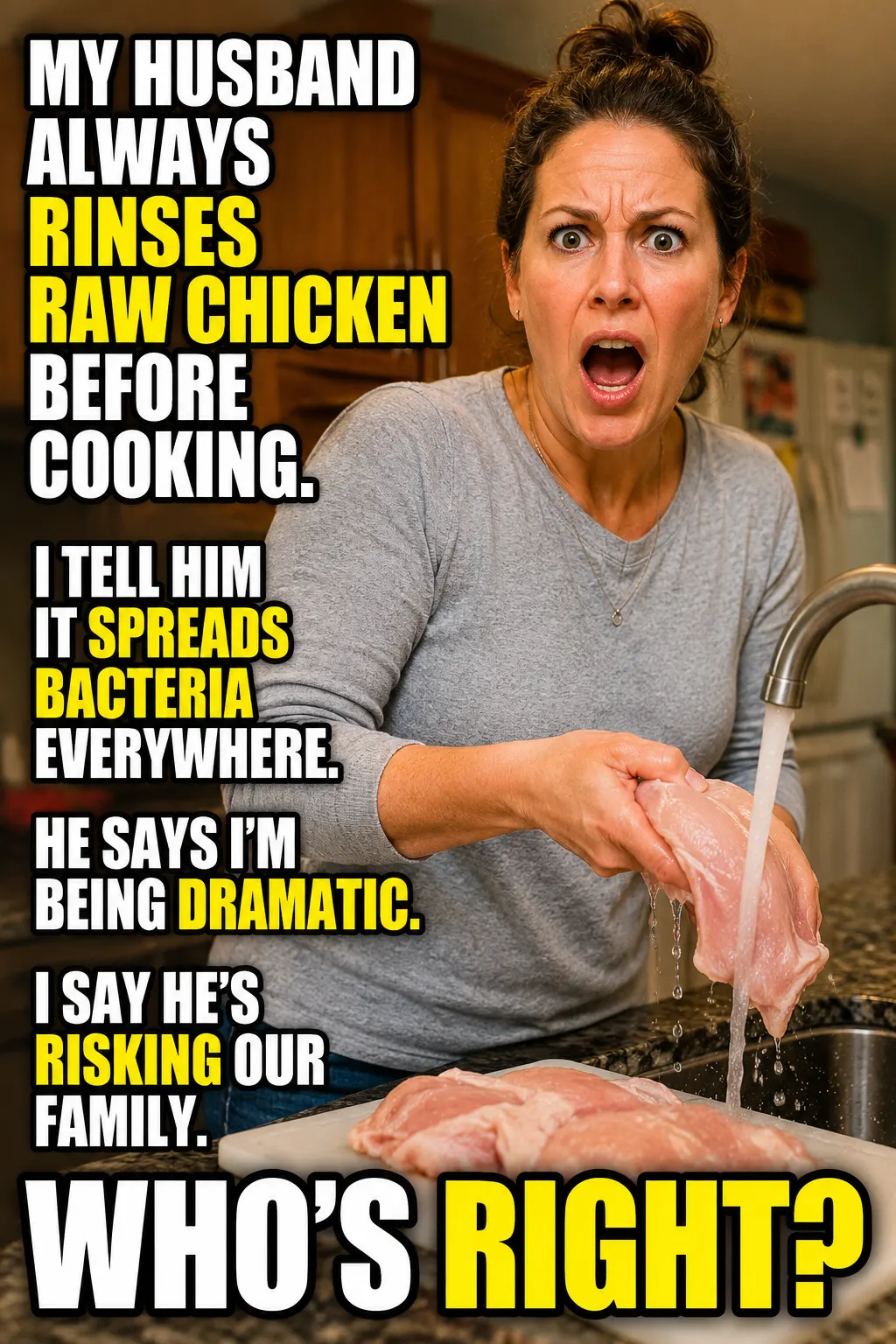
I’ll admit it—I grew up watching people rinse raw chicken under the kitchen faucet before cooking it. For years, it seemed like the normal thing to do. Then I learned that this common habit may actually increase the risk of spreading harmful bacteria around the kitchen.
So, should you rinse raw chicken before cooking? Here’s what food safety experts recommend.
Is It Safe to Wash Raw Chicken?
The short answer is no.
Food safety experts, including the U.S. Department of Agriculture (USDA) and the Centers for Disease Control and Prevention (CDC), advise not washing raw chicken before cooking.
While rinsing may seem like it removes bacteria, it can actually splash contaminated water onto nearby surfaces, utensils, dishes, and even other foods.
Why Washing Chicken Can Spread Bacteria
Raw chicken may contain bacteria such as:
- Salmonella
- Campylobacter
When water hits the chicken, tiny droplets can spread these bacteria around your sink and kitchen. This process, known as cross-contamination, increases the chance that harmful germs end up on food that’s eaten without further cooking.
Does Cooking Kill the Bacteria?
Yes.
Cooking chicken to an internal temperature of 165°F (74°C) kills harmful bacteria that may be present.
Using a food thermometer is the most reliable way to know your chicken has reached a safe temperature.
What If the Chicken Looks Slimy?
Many people mistake the natural moisture on packaged chicken for something that needs to be rinsed away.
Instead of washing it:
- Pat the chicken dry with paper towels if needed.
- Throw the paper towels away immediately.
- Wash your hands thoroughly with soap and water.
- Clean and sanitize any surfaces that touched the raw chicken.
This helps reduce the risk of spreading bacteria.
Safe Ways to Handle Raw Chicken
Good kitchen habits make a big difference.
Here are a few simple food safety tips:
- Keep raw chicken separate from ready-to-eat foods.
- Use a separate cutting board for raw poultry when possible.
- Wash your hands for at least 20 seconds after handling raw chicken.
- Clean knives, cutting boards, and countertops with hot, soapy water.
- Refrigerate chicken promptly and thaw it safely in the refrigerator.
These practices are much more effective than rinsing the chicken.
Are There Any Exceptions?
Some traditional recipes in different cultures call for rinsing meat with water, vinegar, or citrus juice.
While these methods may be part of family traditions, they do not remove harmful bacteria or make chicken safer. Proper cooking remains the most important food safety step.
Frequently Asked Questions
Why did people wash chicken in the past?
Many families believed rinsing removed dirt, blood, or bacteria before cooking. Today, food safety research shows that washing chicken can increase the risk of cross-contamination.
Does vinegar or lemon juice kill bacteria on chicken?
No. Vinegar and lemon juice do not reliably eliminate harmful bacteria found on raw poultry.
Should you wash packaged chicken?
No. Chicken sold in grocery stores is ready to cook and should not be washed before preparing it.
What’s the safest way to prepare chicken?
Handle it carefully, avoid cross-contamination, and cook it to an internal temperature of 165°F (74°C).
Final Thoughts
Although rinsing raw chicken has been a common kitchen habit for generations, food safety experts now recommend skipping this step. Washing poultry under running water can spread bacteria around your kitchen instead of removing it.
The safest approach is simple: handle raw chicken carefully, keep it separate from other foods, clean your hands and work surfaces thoroughly, and cook the chicken to the proper internal temperature. Those steps do far more to protect your family than rinsing the meat ever could.