
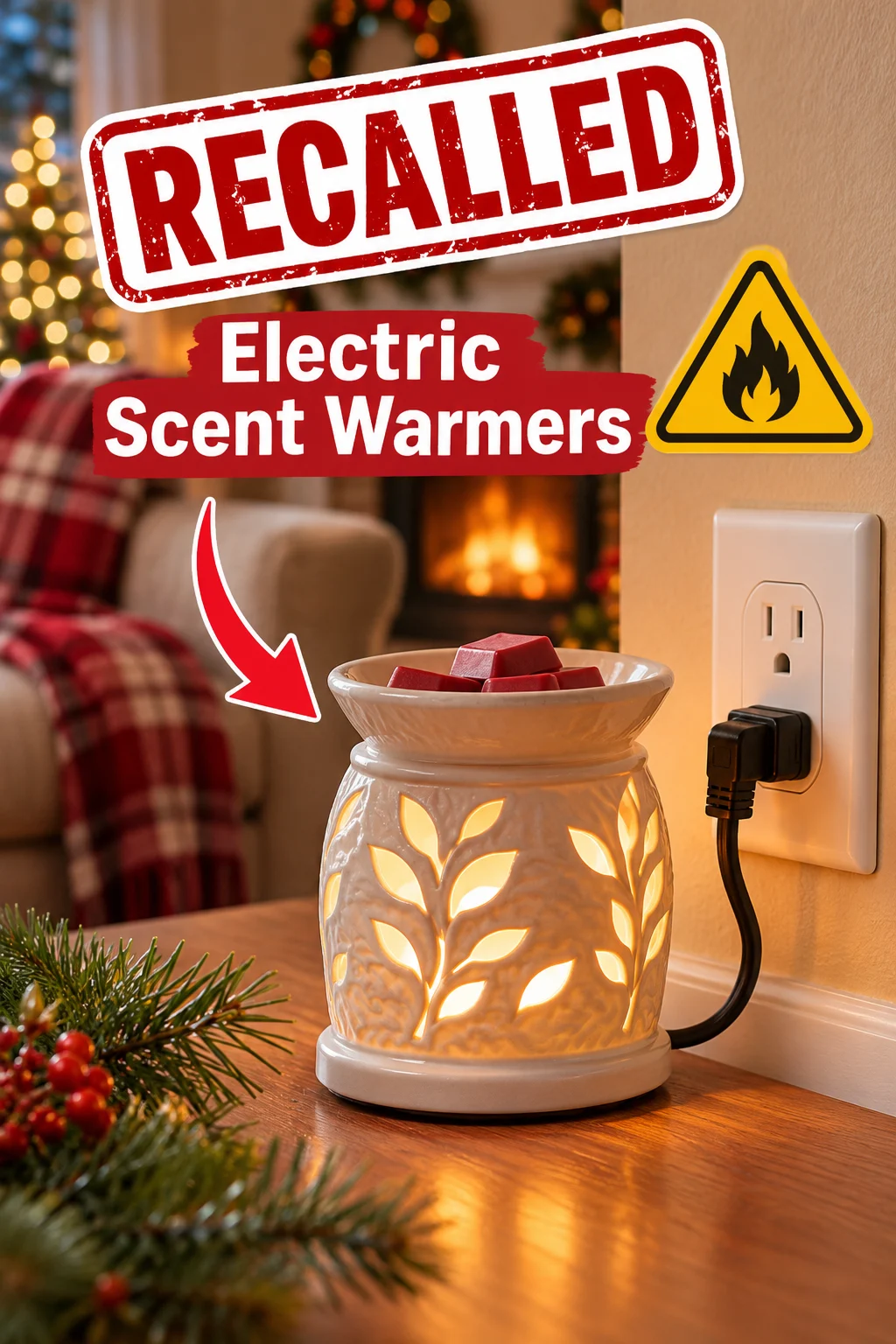
There is something about the weeks before company comes that makes a person look at her home with new eyes. I know I do. I wipe down baseboards I ignored in July, check the guest towels, and start noticing all the little things that quietly hum, glow, heat, or plug into the wall without much thought. One of those little things, in a great many American living rooms, is the electric scent warmer: a tidy-looking gadget meant to make a house smell like cinnamon, pine, vanilla, or apple pie. But some recalled models have stayed in use far longer than they should have, and fire officials have been warning that before holiday guests arrive, now is the time to unplug them for good.
I grew up in a Midwestern house where fragrance came from a simmer pot on the stove, orange peels drying near the radiator, or a pan of bars cooling on the counter. So I understand the appeal of a cozy smell. But I also know that convenience can make us careless, especially with devices that run hot by design. Below, I’m walking through the recalled indoor electric potpourri and scent warmer types fire marshals and consumer safety notices have flagged over the years, what tends to go wrong with them, where they’re often still found, and what to do tonight if you have one plugged in.
1. Plug-in oil warmers with night-light style heating bases
These are the little units many people mistake for harmless air fresheners: a compact plastic body, a small warming bulb or heating element, and a bottle or dish holding scented oil. They often sit low in the room, plugged straight into a wall outlet behind an end table or beside a sofa. Several recalled versions were pulled because the housing could overheat, melt, crack, or in some cases ignite nearby material.
The danger is easy to underestimate because these units are small, often under 5 inches tall and weighing less than 1 pound. But they run for hours, sometimes 24 hours a day, in outlets that may already be handling lamps, chargers, or holiday string lights through a power strip. Firefighters worry about these especially when curtains, gift bags, throw blankets, and paper decorations end up within 6 to 12 inches of the outlet.
2. Tabletop electric potpourri crocks with exposed hot bowls
These were especially popular in the 1990s and early 2000s: small crock-style warmers, usually ceramic, with a heated base and a shallow bowl for water, oil, wax, or dried potpourri. Some recalled models had internal wiring defects or thermostats that failed to regulate heat correctly. That meant the bowl could become far hotter than intended, enough to scorch surfaces or damage the cord insulation over time.
I still see these in older homes because they look decorative even when not in use. A friend of mine had one on a lace runner atop an oak sideboard, and she hadn’t thought much about it in years. That’s part of the problem. These warmers often sit on wood, veneer, cloth, or stacked magazines. If a recalled unit reaches temperatures beyond its normal range, or if liquid spills into the base, a quiet little decoration can become a genuine ignition risk.
3. Scent warmers sold with replacement bulbs that exceeded safe wattage
Not every recall centered only on the warmer body itself. In some cases, the problem came from replacement bulbs or design choices that allowed consumers to install a hotter bulb than the unit was safely designed to handle. A warmer meant for a 15-watt bulb might end up with a 25-watt bulb from a drawer full of leftovers, and that extra heat can push plastic, wiring, and fragrance reservoirs beyond their safe limits.
By the time holiday guests arrive, homes tend to have more burnable material around than usual: tissue paper, cardboard shipping boxes, artificial greenery, bows, ribbons, and extra upholstery from pullout chairs or floor cushions. An overheated warmer bulb inches away from these combustibles can create exactly the kind of preventable fire scenario marshals try to stop before the season gets fully underway.
4. Ceramic wax melt warmers recalled for cracked glazing and electrical faults
Many people think ceramic means sturdier and safer, and sometimes it is. But recalled ceramic wax warmers have had problems with internal connectors, faulty switches, loose sockets, and body cracking from uneven heat. Once ceramic glaze develops hairline fractures, melted wax can seep into openings where it was never meant to go. Add a heating element and an electrical current, and you have a messy, risky combination.
One practical warning sign is discoloration: a browning ring near the dish, darkening near the switch, or a smell of hot dust or singed sugar when the unit is on. Another is wobble. If the top dish no longer sits level, or if wax leaks down the sides into the housing, I would stop using it immediately. A recalled unit should not be “watched carefully” and kept in service. It should be unplugged and removed.
5. Rotating plug-base warmers that loosen in older wall outlets
Some warmers were built with a rotating plug so they could sit upright in either horizontal or vertical outlets. Handy idea, yes, but certain recalled versions developed poor electrical contact or became unstable in worn outlets. In older houses like many we have across the Midwest, outlet tension can weaken after decades of use. A loose warmer can sag, arc, or partially disconnect while still drawing power.
That partial connection is one of those hazards people don’t notice right away. You may see a faint brown mark on the receptacle, hear an occasional tiny buzz, or feel unusual warmth around the plate cover. If the outlet face feels warm to the touch after 15 to 20 minutes of use, that is reason enough to unplug the device and stop. Add a recalled product into that situation and the risk rises sharply.
6. Combination warmer and decorative lantern models with undersized cords
Some indoor scent warmers were made to look like lanterns, little fireplaces, or holiday cottages. Charming, certainly. But appearance can distract from construction quality. Recalled decorative warmers in this category have included units with cords too thin for sustained heat load, poor strain relief where the cord enters the base, or sockets that loosened after repeated heating and cooling cycles.
These often end up displayed seasonally, which means they may spend 10 or 11 months in storage and then get plugged in every day from November through January. Storage in attics, basements, or garages can worsen brittleness in cord jackets, especially when temperatures swing from below freezing to over 90 degrees. Before guests come over, inspect any seasonal warmer cord inch by inch. If you see flattening, cracks, stiffness, or copper peeking through, it is done.
7. Oil reservoir warmers recalled because the bottle could leak onto live electrical parts
This is one of the nastier design flaws. In some recalled units, fragrance oil could drip or wick downward from the reservoir into the warmer body itself. Oil and electricity are a poor pairing, and once fluid reaches internal contacts, it can lead to shorting, smoking, or small flame events. Even without ignition, leaking oil can degrade plastic parts and attract dust, which adds another combustible layer over time.
If you’ve ever found a sticky amber film on the outlet cover or wall below a warmer, pay attention. That isn’t merely a housekeeping issue. It may signal a reservoir seal failure, a bottle threading mismatch, or a heat problem that is thinning the oil too much. Fire investigators often note how many warning signs households normalized before an incident: “It leaked a little,” “it smelled hot,” “the light flickered,” “I meant to replace it after the holidays.”
8. Multi-function warmers with timers, colored lights, or fans that failed internally
The more features a small appliance has, the more possible failure points it carries. Timer circuits, fan motors, decorative LEDs, touch controls, and dimmers can all add convenience, but they also add heat, wiring complexity, and cheap electronic components in some lower-cost imports. Certain recalled units in this category were removed from sale after reports of smoking, melting, or electrical shorting.
I’m not against modern conveniences, but I am wary of inexpensive devices that promise five functions in one housing smaller than a soup mug. If you cannot clearly read the model label, wattage, certification mark, and manufacturer name on the underside, that alone should make you cautious. A product with no legible identification is hard to verify against recall notices and nearly impossible to track if there’s a problem.
9. Older recalled units kept in service because they “still work fine”
This may be the biggest category of all. A warmer can still heat, still smell nice, still light up, and still be unsafe. Many recalled products remained in homes simply because owners never heard about the recall, moved with the item, inherited it, or bought it secondhand at a thrift store, rummage sale, or online marketplace. “Still works” is not the same as “still safe.”
In my own family, we pass down everything from roasting pans to afghans to pie birds, and I love that habit. But electric fragrance products are not cast-iron skillets. They have insulation, connectors, switches, and plastics that age. Once a unit is 8, 10, or 15 years old, especially if used regularly, the odds of unseen wear increase. If it has ever been dropped, cleaned with liquid while plugged in, stored in a damp area, or run for days at a time, it deserves extra scrutiny.
10. Warmers used in risky locations during holiday hosting season
Sometimes the recall is only half the story. Placement turns a problem into an emergency. Fire marshals often focus on where these devices are used: under drapes, near upholstered furniture, beside stacks of cards and mail, on crowded console tables by the front door, or in bathrooms where towels hang within arm’s reach. Holiday hosting makes clutter worse. Coats pile up. Extra chairs move in. Wrapping supplies spread out. Guest traffic bumps cords and tabletops.
A scent warmer should never be treated like a candle substitute that can go anywhere. Recalled or not, it should have at least a clear 12-inch perimeter free of fabric, paper, greenery, and décor. If that sounds hard to manage in the real world, that may be your answer. In a house full of grandchildren, guests, pets, and extension cords, the safest warmer may be no warmer at all.
11. What firefighters want homeowners to do tonight
The first step is plain and immediate: unplug any indoor electric scent warmer you cannot positively identify as current, undamaged, and not subject to recall. Don’t wait until the weekend. Don’t leave it in service “just one more day” for the party. Once unplugged, let it cool completely for 30 to 60 minutes before handling melted wax, hot oil, or the dish.
Then turn the unit over and look for a manufacturer name, model number, date code, lot number, and wattage. Write that information down exactly as shown. Check official recall databases from the U.S. Consumer Product Safety Commission and the manufacturer’s own site. If the label is rubbed off, if the device was bought secondhand, or if you cannot verify its status, I would retire it rather than gamble on it during the busiest entertaining season of the year.
12. Warning signs that a warmer needs to leave your house even without a recall notice in hand
There are several signs I would treat as a hard stop: a melted plug blade; scorch marks on the outlet or warmer body; a cord that feels hot; flickering light; visible smoke; popping sounds; unusual buzzing; oil leaking down the side; a switch that sticks; a dish that rocks or no longer seats properly; or any smell resembling burning plastic, hot wiring, or singed fabric.
Another practical test is duration. If a warmer has been run for more than 8 continuous hours a day for years, it has seen substantial thermal cycling. Components expand and contract with heat, and over time connections loosen. You may never see the inside deterioration until failure happens. Small appliances do not earn our loyalty simply because they were once useful.
13. How to dispose of a recalled warmer safely
Do not donate it. Do not set it aside for a yard sale. Do not pass it to a niece for her first apartment. A recalled warmer should be disabled according to the manufacturer’s instructions if those are provided, and then disposed of in line with local electronic waste or small appliance disposal guidance. Some recall programs offer refunds, store credits, or replacement units, and many ask for a photo of the cut cord or the serial label.
If there is wax or oil inside, let everything fully cool and solidify first. Wear gloves, empty the contents into a disposable container, and clean the exterior before packaging it for return or disposal. Keep the cord wrapped so no one is tempted to plug it in “just to test it.” In a busy household, that temptation is stronger than people admit.
14. Safer ways to make the house smell welcoming for guests
This is where the old ways shine. Simmer a pot with orange slices, cloves, a cinnamon stick, and a few apple peels for 30 to 45 minutes while you’re awake and in the kitchen. Bake a sheet of ginger cookies. Warm a pan of cider on low before supper. Tuck dried lavender into a bowl near the entry. Put fresh pine or cedar clippings in water on the porch instead of trying to perfume every room from an outlet.
I have found that guests remember real kitchen smells better than manufactured fragrance anyway. A clean house with a pot of soup on the stove and bread in the oven beats “winter spice plug-in” every time. And unlike a mystery warmer hidden behind the couch, you can see, monitor, and turn off what you’re using.
15. A simple holiday safety sweep for the living room
Before guests arrive, take 10 minutes and do one honest lap around the living room. Unplug unidentified scent devices. Check every outlet for warmth, looseness, and discoloration. Move extension cords out from under rugs. Keep space heaters at least 3 feet from upholstery. Replace any lamp cord with cracked insulation. Make sure candles, if you use them at all, are in stable holders and attended every minute they burn.
I do this same sweep before Thanksgiving and again before Christmas, usually with a dish towel over my shoulder and a pie in the oven. It is not glamorous, but it is loving. The point of a welcoming home is not just that it smells nice when people walk in. It is that everyone inside is safe enough to stay, linger, laugh, and ask for one more slice before they head back out into the cold.