A teaspoon of baking soda in the cooking water is a popular trick for hard-boiled eggs. The promise is appealing: shells that slide off cleanly, with less egg white torn away. But does it reliably work? The chemistry offers a plausible reason to try it, while the evidence suggests that egg age and the cooking method matter more than any one ingredient added to the pot.
Why baking soda might affect peeling
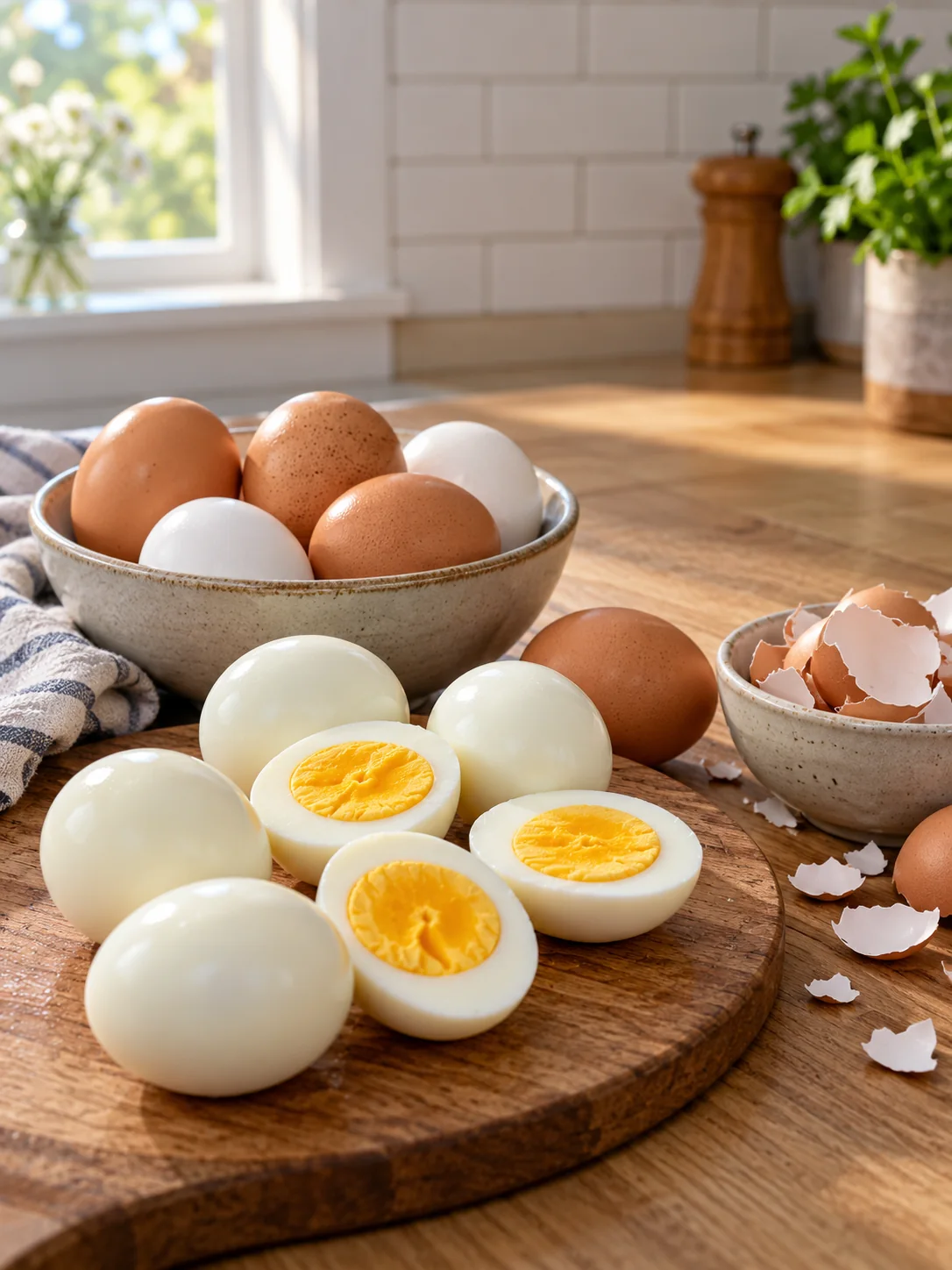
Baking soda makes water more alkaline. Egg whites also become more alkaline as eggs age, and that change helps the cooked white separate from the inner shell membrane. The USDA explains that older eggs are usually easier to peel for this reason. Adding baking soda to the water may influence the shell and membrane, but it does not recreate the changes that have already happened inside an older egg.
What a one-dozen-egg test can show
A fair home comparison would use twelve eggs from the same carton. Cook six in plain water and six in water containing one teaspoon of baking soda. Keep the pot size, water level, cooking time, cooling time, and peeling method as similar as possible. Record how many eggs peel cleanly in each group, along with any difference in smell or flavor.
Even a careful twelve-egg test is small. Individual eggs vary, and one attractive batch cannot establish that the trick works every time. A food scientist at the University of Southern Queensland describes baking soda as a plausible option, while noting that several factors affect peelability.
How to try it without changing everything else
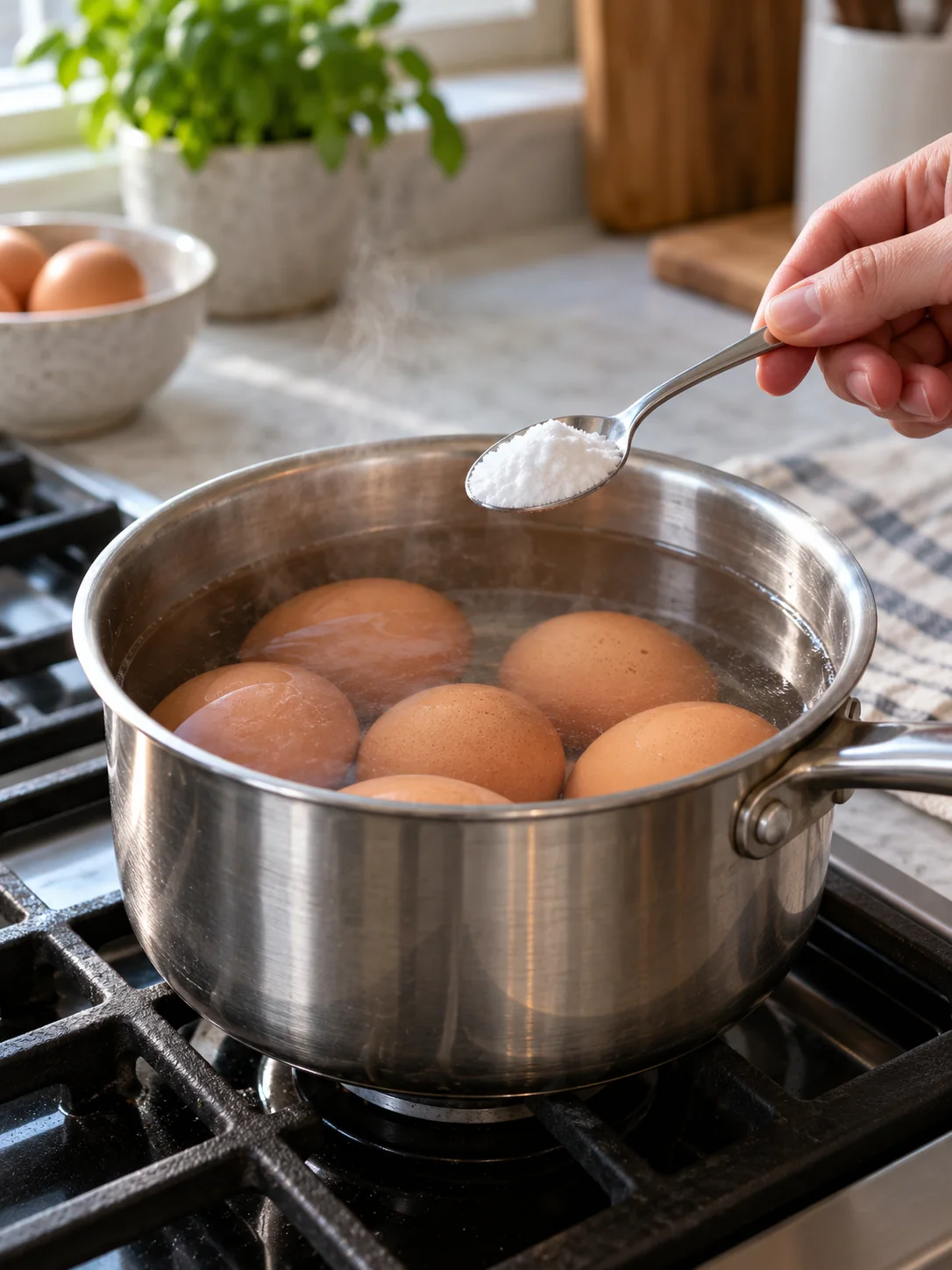
- Place large eggs in a single layer in a saucepan and add cold water to cover them by at least one inch.
- For the baking soda batch, stir one teaspoon into the water. Leave the comparison pot as plain water.
- Bring each covered pot just to a boil. Turn off the heat and let large eggs stand, covered, for about 15 minutes.
- Cool the eggs promptly under cold water. Tap the shells gently all over and peel under running water.
These cooking and cooling steps follow the USDA hard-cooked egg method. If you are comparing two batches, start with eggs of the same size and age. Keep the water quantity similar too: a teaspoon in a small saucepan produces a different concentration than a teaspoon in a very large pot.
What matters more for easy peeling
Egg age. Very fresh eggs can cling stubbornly to their membranes. Eggs that have spent some time refrigerated are often easier to peel. The USDA specifically notes that extremely fresh eggs are difficult to peel.
Consistent cooking. Eggs started in cold water, brought just to a boil, and left covered off heat cook gently and predictably. Avoid an aggressive rolling boil that can crack shells.
Cooling and peeling. Cool the eggs promptly, crack the shell all over, and peel under running water. These practical steps may help even when you use plain water.
Will baking soda change the taste or texture?
Do not count on softer whites or an improved flavor. A change in texture would be difficult to separate from differences in egg size, cooking time, and freshness. Excess baking soda may also produce an alkaline or sulfurous note. If you want to try the method, use a modest amount and judge both peelability and taste.
Variations & Tips
- For deviled eggs, choose eggs that are not extremely fresh and cool them promptly after cooking.
- If an egg is hard to peel, crack the broad end first, then work under the membrane with gentle pressure.
- A small crack during cooking does not prove the baking soda worked or failed; compare several intact eggs.
- Avoid poking holes in raw shells as a peeling shortcut. A North Carolina Cooperative Extension article notes that piercing can create hairline cracks.
- Refrigerate hard-cooked eggs within two hours and use them within seven days, as advised by the USDA.
The verdict
Baking soda is reasonable to try, but it is not a guaranteed fix for difficult shells. The more dependable approach is to use eggs that are not extremely fresh, cook them consistently, cool them promptly, and peel carefully. If you compare two small batches, treat the result as a kitchen observation rather than proof that every future carton will behave the same way.
Quick reference: hard-cooked eggs
For 12 large eggs: Arrange in one layer, cover with cold water by at least one inch, add one teaspoon of baking soda only if you want to test the trick, bring just to a boil, cover and turn off the heat, stand about 15 minutes, then cool promptly and peel under running water. Refrigerate within two hours.