Easter is a time of vibrant colors, joyful celebrations, and, of course, beautifully dyed eggs. The tradition of dyeing Easter eggs has been a staple in many households, with people experimenting with various methods to achieve the perfect hue. While traditional dyes and vinegar baths are common, this year, I decided to take a walk on the wild side and try something unconventional—using grape juice.
Intrigued by the rich, deep purple color of grape juice, I wondered if it could impart its striking shade onto the plain eggshells. Armed with curiosity and a sense of adventure, I embarked on this colorful experiment to see what would happen when raw eggs are boiled directly in a pot of this vivid liquid. Would they emerge in a majestic purple hue, or would it be a futile attempt? Here’s how my grape juice egg-dyeing experiment unfolded.
1. Why I Decided To Boil Raw Eggs In Grape Juice
The idea to use grape juice as an egg dye came to me while I was browsing through the juice aisle at my local grocery store. There it was, a bottle of pure grape juice, boasting a vibrant purple color that seemed perfect for Easter eggs. I was drawn to the natural, food-safe dye potential of grape juice, free from artificial colors or additives that are often present in commercial egg dyes.
Given that grape juice is a natural source of anthocyanins, pigments responsible for the rich purple color, I hypothesized that these same pigments could transfer to the eggshells during boiling. My plan was simple: immerse the eggs completely in the juice, boil them, and observe the transformation. To ensure a fair test, I selected six raw white eggs, hoping the contrast would be more pronounced.
2. Setting Up The Pot: Juice, Eggs, And A Bold Experiment
To begin the experiment, I poured an entire 32-ounce bottle of grape juice into a medium-sized pot, ensuring there was enough liquid to submerge the eggs completely. I then carefully placed the six raw eggs into the pot, making sure they were evenly spaced and not touching each other to prevent any uneven dyeing or cracking.
With the stove set to medium-high heat, I eagerly anticipated the boiling process. The kitchen was filled with the sweet aroma of grape juice, which added an unexpected layer of pleasure to the experiment. As the liquid began to bubble, I kept a close watch to avoid any potential spillage or mishaps. This was a bold and somewhat messy endeavor, but the potential outcome promised to be worth it.
3. The First 10 Minutes: Color, Smell, And Surprising Reactions
As the pot reached a rolling boil, the kitchen was enveloped in the fruity scent of grape juice. I noticed that the color of the eggshells began to change almost immediately. Within the first five minutes, the eggs took on a pale purple tint, a promising sign that the grape juice was indeed transferring its color.
However, I also observed that the boiling juice was beginning to stain the pot’s edges and my stirring spoon. This was a reminder that grape juice is a powerful natural dye. Despite the potential for a kitchen mess, I was excited by the visible progress and continued to monitor the eggs closely.
4. Hitting The 30-Minute Mark: What The Eggs Actually Looked Like
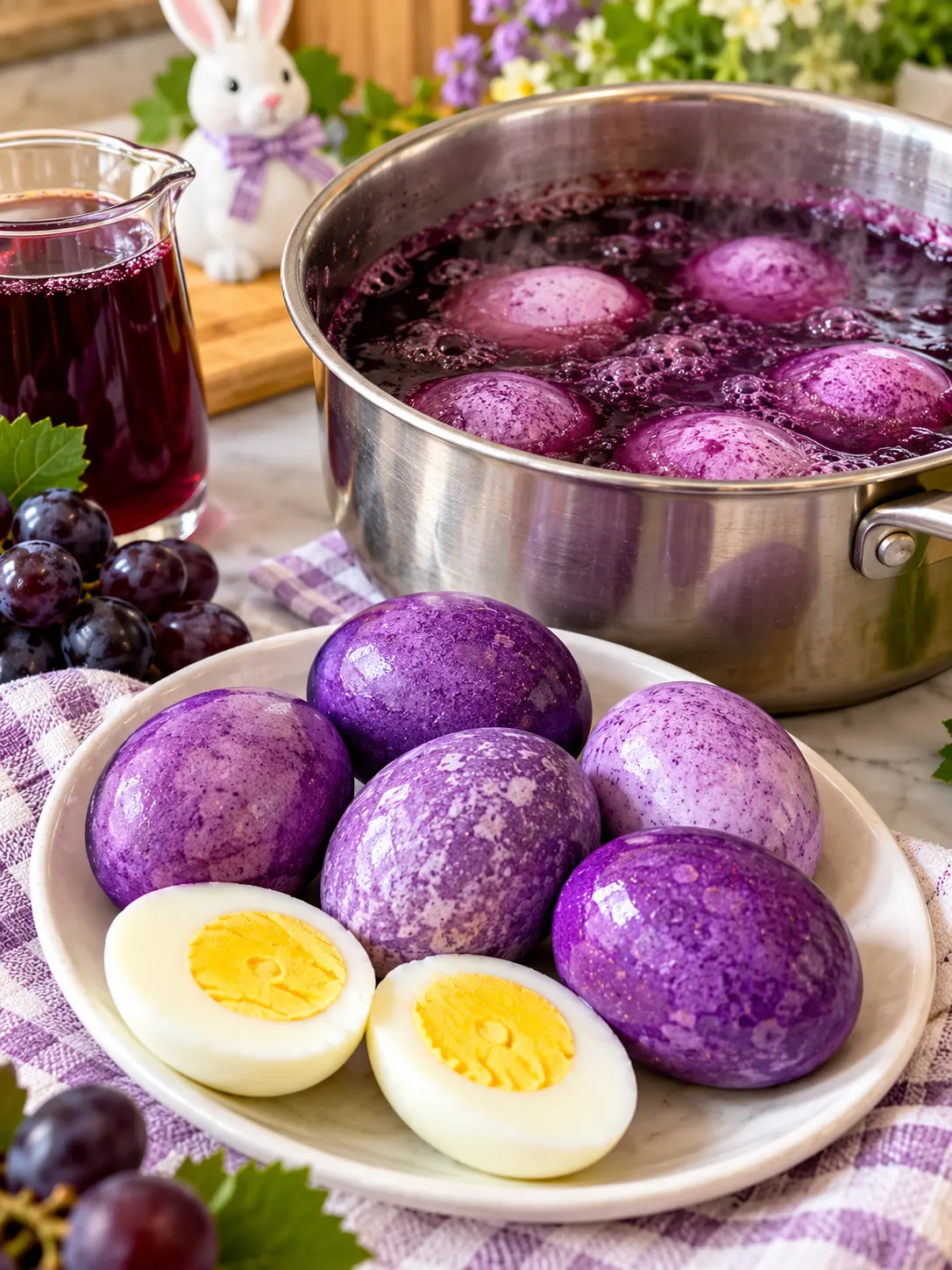
After 30 minutes of boiling, it was time to retrieve the eggs and see the results of my experiment. Using a slotted spoon, I carefully lifted each egg out of the pot and placed them on a cooling rack. The eggshells had transformed from white to a stunning deep purple, much to my delight.
While the color was not entirely even—some areas were darker than others—the overall effect was striking. The eggs were a unique shade of purple, different from anything I had achieved with traditional dyes. I was thrilled with the visual outcome and eager to explore the eggs further.
5. Did The Shells Turn Bright Purple Or Just… Weird?
Upon closer inspection, I noticed that the eggshells had absorbed the dye unevenly. While some parts of the shell were a rich, vibrant purple, other areas remained a lighter lavender or even retained some of their original white color. The texture of the shells was also slightly altered, appearing somewhat porous or chalky in places.
Despite these inconsistencies, the overall color was undeniably purple, and the experiment had succeeded in transforming plain eggs into something visually unusual. Whether this was the bright purple I had envisioned was debatable, but the result was certainly eye-catching.
6. What Happened Inside The Shells When I Cracked Them Open
Curiosity piqued, I decided to crack open one of the eggs to see if the grape juice had impacted the interior. To my surprise, the inside of the eggs remained unchanged. The egg white and yolk appeared completely normal, with no hint of purple dye having penetrated the shell.
This was a relief, as it indicated that while the grape juice was effective at dyeing the shell, it had not compromised the integrity or safety of the egg itself. The inside was as pristine as any traditionally boiled egg, ready for consumption or further culinary use.
7. Taste Test: Do Grape Juice Eggs Actually Taste Like Grapes?
The next logical step was to conduct a taste test. I boiled one of the dyed eggs for a few more minutes to ensure it was fully cooked, then peeled it carefully. The shell came off easily, revealing the familiar white and yellow interior.
As I took a bite, I was relieved to find that the flavor of the egg was unaltered. There was no trace of grape flavor, which meant that while the dye was effective on the shell, it didn’t permeate the egg itself. This was an important finding for those considering this method for edible Easter eggs.
8. The Science Behind Grape Juice, Pigments, And Eggshells
The success of this experiment lies in the natural pigments found in grape juice, known as anthocyanins. These water-soluble pigments are responsible for the purple color and have the ability to adhere to porous surfaces like eggshells.
Eggshells are primarily composed of calcium carbonate, which, while solid, is slightly porous. This allows the pigments in the boiling grape juice to seep into the surface of the shell, resulting in the dyeing effect. Understanding this scientific interaction can open the door to experimenting with other natural dyes and surfaces.
9. Kitchen Mess Factor: Stains, Cleanup, And Practical Tips
As with any kitchen experiment involving strong pigments, the potential for mess was significant. The grape juice left noticeable stains on the pot, spoon, and any surface it touched. Cleanup required some extra effort, with a focus on immediate rinsing and scrubbing to prevent permanent staining.
For those attempting this at home, I recommend using older kitchenware or utensils that you wouldn’t mind getting a bit stained. Having a dedicated workspace with plenty of paper towels or cloths on hand will also make the process more manageable.
10. Would This Work As A Real Easter Egg Dye Hack?
In terms of creating a unique and natural dye for Easter eggs, using grape juice proved to be a successful experiment. The color achieved was both striking and distinctive, offering an alternative to commercial dyes that is free from synthetic chemicals.
However, the uneven dyeing and potential for a messy kitchen setup might deter some from trying this method. For those willing to embrace a bit of chaos for the sake of creativity, grape juice-dyed eggs could be a fun addition to the Easter tradition.
11. What I’d Do Differently Next Time With Grape Juice Eggs
Reflecting on the experiment, there are a few adjustments I would consider for future attempts. First, experimenting with different durations of boiling or perhaps a pre-soak in grape juice could lead to a more even dyeing.
Additionally, incorporating a vinegar pre-wash or adding a tablespoon of vinegar to the grape juice might improve color adherence, as acidity is known to enhance dye uptake in eggs. Finally, exploring a combination of juices could yield interesting color variations and expand the palette of naturally dyed Easter eggs.