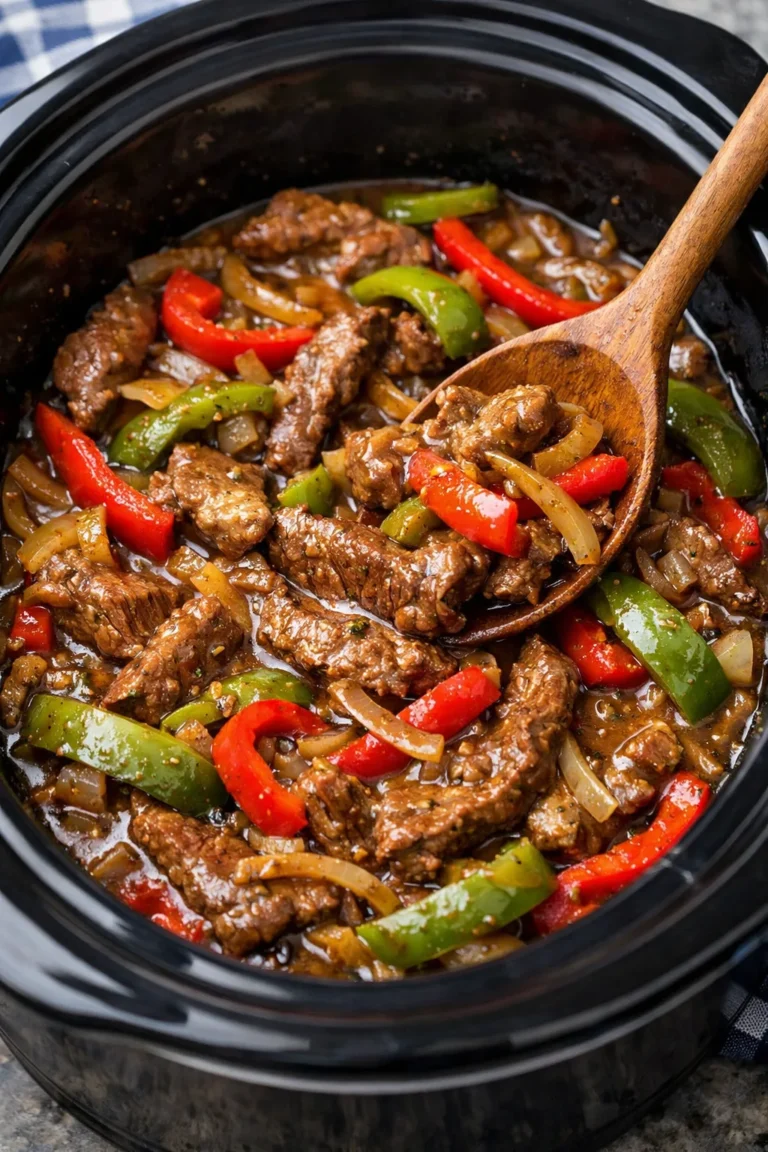
I use my slow cooker a lot, especially when I want dinner cooking without standing over the stove for an hour.
But there’s one thing that’s easy to forget about a slow cooker on the counter: that little appliance stays hot for a long time.
We’re talking four, six, eight hours—or sometimes longer.
One day, after moving my slow cooker, I noticed how warm the counter underneath felt. That got me thinking about a ridiculously simple kitchen idea: putting a slow cooker on a wire cooling rack.
You know, the same kind of sturdy metal rack you’d normally use for cookies.
At first, it sounds unnecessary. The slow cooker already has little feet, right?
Still, creating extra space between a hot appliance and the countertop has some practical appeal. It may allow more air to move underneath the appliance and can provide another layer between the cooker and the work surface.
There’s an important catch, though.
The rack needs to be extremely stable, and your slow cooker’s own instruction manual always comes first. Manufacturer directions vary by model. For example, Hamilton Beach warns that slow-cooker components can become very hot and says hot crocks and lids shouldn’t be placed directly on an unprotected countertop. (Hamilton Beach)
So, is a cooling rack under a slow cooker actually a good idea?
Here’s what I’d consider before trying it.
Why Put a Slow Cooker on a Wire Cooling Rack?
The idea is wonderfully basic.
Instead of placing the slow cooker directly on your work surface, you place a sturdy, flat metal cooling rack underneath it.
That creates a small air gap.
A typical raised cooling rack might lift the appliance roughly half an inch or so above the counter.
The theory is that this gap gives heat more room to disperse rather than allowing warmth to remain concentrated directly beneath the appliance.
It can also keep the appliance slightly separated from minor spills or condensation on the counter.
No fancy equipment.
No complicated installation.
Just a rack.
Still, simple doesn’t automatically mean appropriate for every slow cooker or every kitchen.
Slow Cookers Really Do Get Hot
Let’s clear up something first.
A slow cooker may cook at relatively gentle temperatures compared with an oven, but that doesn’t mean the outside stays cool.
The heating element surrounds the cooking vessel, and exterior surfaces can become quite hot during a long cooking session.
Hamilton Beach specifically notes that the sides of a slow-cooker base can get very warm because the heating elements are located there. The company also advises using oven mitts when handling hot components. (Hamilton Beach)
So I treat my slow cooker like what it is:
A hot cooking appliance.
I don’t crowd towels around it.
I don’t pile mail beside it.
And I don’t assume the surrounding area stays cool simply because I’m cooking on LOW.
LOW still means cooking.
Why Countertop Material Matters
Not every kitchen counter is the same.
You might have:
- Laminate
- Quartz
- Granite
- Marble
- Solid surface
- Butcher block
- Tile
- Concrete
- Wood
Each material has different characteristics, and installation materials beneath the visible surface can differ too.
That’s one reason I wouldn’t make a universal statement like, “Every slow cooker needs a cooling rack.”
Instead, check the instructions for both your appliance and countertop when possible.
Some slow-cooker manufacturers explicitly caution against putting hot removable crocks directly onto unprotected countertops. (Hamilton Beach)
That’s another good reason to keep a proper heat-safe trivet handy when you remove the crock from the heating base.
What the Wire Rack Actually Changes
A raised cooling rack changes one simple thing:
It introduces an air gap beneath the appliance.
That’s it.
It doesn’t make the slow cooker more powerful.
It doesn’t magically make dinner cook faster.
It doesn’t change a LOW setting into HIGH.
And it shouldn’t be treated as a modification to the appliance itself.
Instead, the idea is to reduce direct contact between the appliance’s feet or underside and the work surface while allowing some airflow underneath.
Think about a cookie rack.
Cookies cool more efficiently because air can move beneath them instead of the entire bottom sitting against a solid baking sheet.
A slow cooker isn’t a cookie, obviously.
Although after eight hours of pot roast, I’m usually ready for both.
Will a Cooling Rack Keep the Counter Cooler?
Potentially, the surface directly underneath may feel less heat buildup because the rack creates separation and airflow.
But don’t expect an ice-cold countertop.
Heat still moves through the surrounding air.
The metal rack itself can become warm.
The slow cooker is still producing heat for hours.
And the exact result depends on the appliance, rack, countertop, room temperature, and cooking duration.
I would describe this as a counter-protection idea rather than a cooling system.
That’s an important distinction.
Your slow cooker isn’t suddenly running cold underneath.
You’re simply changing how it sits above the work surface.
The Cooling Rack Must Be Strong
This is the part I wouldn’t compromise on.
Imagine a six-quart slow cooker filled with:
A ceramic crock.
Several pounds of meat.
Potatoes.
Carrots.
Broth.
Now imagine putting that entire load on a flimsy little cookie rack that bends when you push the middle with two fingers.
Nope.
Not happening in my kitchen.
If you’re considering this setup, the rack needs to support the full loaded weight without flexing, rocking, sliding, or tipping.
The slow cooker’s feet should sit securely.
The rack itself should sit completely flat.
If anything feels unstable while the appliance is cold and empty, don’t add hot food and hope for the best.
I Prefer Plain, Sturdy Metal
I’d choose a heavy-duty, oven-safe metal rack.
Stainless steel is a practical option.
I’d avoid a rack with questionable plastic feet, loose joints, peeling coatings, or rubber pieces that aren’t intended to be near prolonged heat.
Remember, this isn’t the rack’s normal cookie-cooling job.
You’re asking it to hold a heavy appliance for several hours.
Look for:
- Strong welds
- Flat feet
- Closely spaced wires
- Rigid construction
- A footprint larger than the slow cooker’s base
- Oven-safe materials
- No wobbling
Press down firmly before putting the appliance on it.
If the rack bends noticeably?
Back into the baking drawer it goes.
Stability Matters More Than Airflow
This deserves its own section because a little extra airflow isn’t worth creating a tipping hazard.
A slow cooker filled with hot liquid can cause serious burns if it falls.
Your rack should be wider and longer than the slow cooker’s footprint.
All appliance feet need stable support.
Don’t balance the cooker between widely spaced wires.
Don’t use a warped rack.
Don’t stack two racks together to create more height.
And don’t place the setup near the edge of the counter.
You aren’t trying to lift the cooker three inches into the air.
A small gap is plenty.
Keep the Slow Cooker Away From the Counter Edge
I always give hot appliances plenty of room from the edge.
This matters even more when the appliance sits on another object.
A cord can get snagged.
Someone can bump the cooker.
A child can reach upward.
A dog can jump.
A hip can catch the edge while somebody walks past carrying groceries.
Kitchen accidents often happen through ordinary movement rather than some dramatic equipment failure.
Put the cooker on a stable, level section of counter where household traffic won’t constantly pass it.
A full pot of hot chili is not something I want playing Jenga.
Watch the Power Cord
Here’s another detail that’s easy to miss.
Raising the slow cooker slightly can change how the cord sits.
Make sure the cord doesn’t hang over the front of the counter where someone could pull it.
Keep it away from hot surfaces and water.
Don’t let the rack pinch the cord.
Don’t run the cord underneath the appliance.
And follow the electrical directions provided for your model.
Slow cookers commonly use short power cords partly to reduce entanglement and tripping risks. Hamilton Beach’s instructions specifically discuss this safety consideration. (Hamilton Beach)
Boring?
Absolutely.
Important?
Very.
Don’t Put the Slow Cooker Beside the Sink
Electric appliance.
Water.
Let’s keep those two acquaintances at a respectful distance.
Choose a dry section of counter.
Don’t put your cooling-rack setup where dishwater can splash onto the appliance, cord, or plug.
And don’t move the cooker around while it’s operating unless the manufacturer specifically permits what you’re doing.
I choose the cooking location before plugging it in.
Then it stays there.
Don’t Surround It With Towels or Paper
The whole purpose of the cooling-rack idea is to give the appliance a stable, clear area.
So don’t ruin that by surrounding it with clutter.
Keep away:
- Dish towels
- Paper towels
- Grocery bags
- Recipe printouts
- Cardboard packaging
- Curtains
- Oven mitts
- Plastic bags
Give the appliance breathing room according to its instructions.
And never cover vents or openings.
The exact clearance requirements can vary by model, so this is another place where the manual beats generic internet advice.
Does the Rack Make Slow-Cooker Food Cook Faster?
I wouldn’t expect it to.
Your slow cooker’s cooking performance comes from the appliance’s heating system, crock, lid, temperature setting, recipe, quantity of food, and cooking time.
Putting a rack beneath the exterior shouldn’t be treated as a cooking-speed trick.
In fact, I wouldn’t adjust a recipe simply because there’s a cooling rack underneath.
Follow your recipe and appliance directions as usual.
If your pot roast normally takes eight hours on LOW, don’t suddenly schedule dinner for six because the cooker has a fancy new throne.
That’s not how this works.
Does the Rack Help With Condensation?
It may help prevent small amounts of moisture from remaining trapped directly beneath the appliance because there’s now airflow under the base.
But significant water beneath a slow cooker deserves investigation.
Make sure nothing is leaking.
Check the crock for damage.
Check for spills.
Look at where steam and condensation are going.
Don’t assume unexplained water is normal.
If you suspect the appliance itself is damaged, stop using it and follow the manufacturer’s service guidance.
Electricity plus mysterious water gets my attention pretty quickly.
Cleanup Can Be Easier
Here’s one benefit I really like.
Slow-cooker meals somehow produce little drips everywhere.
You lift the lid.
Condensation runs down.
You spoon out chili.
One bean makes a break for freedom.
Someone serves themselves and leaves a tiny trail of sauce.
With a raised rack, some small spills may remain more visible and accessible instead of getting trapped tightly against the appliance.
After cooking, unplug the slow cooker and let everything cool according to the manufacturer’s instructions.
Then remove and wash the rack.
Crock-Pot advises turning the slow cooker off, unplugging it, and allowing it to cool before cleaning. (Crock-Pot)
Simple.
And I appreciate anything that makes post-dinner cleanup less annoying.
Don’t Move the Rack While Everything Is Hot
This seems obvious until you’re trying to clear the counter quickly.
The metal rack can get hot.
So can the slow-cooker base.
So can the crock.
So can the lid.
Leave the setup alone until it is safe to handle.
Don’t grab the rack with bare fingers just because it looks like a harmless cookie rack.
Hot metal has absolutely no respect for appearances.
Use appropriate oven mitts when necessary and follow your appliance’s cooling instructions.
Be Careful With the Removable Crock
This is a separate issue from putting the appliance on a rack.
The ceramic or stoneware insert can get extremely hot.
When you remove it, don’t casually set it on an unprotected countertop.
Manufacturer instructions can warn specifically against this. Hamilton Beach notes that the crock and lid can become very hot and shouldn’t be placed directly on unprotected surfaces. (Hamilton Beach)
Use an appropriate heat-resistant trivet.
Also avoid sudden temperature changes.
Don’t take a blazing-hot crock and place it into cold water.
Both Hamilton Beach and Crock-Pot warn about thermal shock with hot stoneware. (Hamilton Beach)
Dinner tastes considerably less comforting when the crock cracks.
A Cooling Rack Is Not the Only Option
Don’t have a suitable rack?
That’s fine.
You don’t need to force this hack.
Depending on your slow cooker’s instructions and countertop requirements, an appropriate heat-resistant surface may be a better solution.
Possibilities include a sturdy heat-safe trivet or another manufacturer-approved protective surface.
The key words there are heat-safe and stable.
I wouldn’t improvise with:
- Cardboard
- Folded newspaper
- Plastic cutting boards
- Towels
- Foam
- Random decorative placemats
You’re dealing with prolonged heat.
Use materials intended to handle it.
What About a Wooden Cutting Board?
I’d be cautious about using a favorite wooden cutting board as a permanent heat barrier.
Wood can react to heat and moisture, and different boards contain different glues, finishes, or construction methods.
If you want a protective board under an appliance, choose something specifically suited to the temperatures and use involved.
Again, check your appliance instructions.
The kitchen already contains products made for hot cookware.
There’s no need to sacrifice the good charcuterie board.
What About Silicone Mats?
Heat-resistant silicone mats can tolerate high temperatures when they’re designed for that purpose.
But whether one belongs under your particular slow cooker is another question.
A flat silicone mat doesn’t provide the same airflow as a raised wire rack.
It may still provide surface protection, depending on the product and appliance instructions.
Check the mat’s temperature rating.
Check your slow-cooker manual.
And make sure the mat doesn’t interfere with appliance feet, vents, or stability.
“Heat resistant” doesn’t mean “appropriate for every hot appliance.”
What About Granite or Stone Slabs?
A sturdy heat-resistant slab can create a protective barrier between an appliance and a more sensitive countertop.
But the same stability rules apply.
It needs to sit flat.
It shouldn’t rock.
It needs to support the appliance safely.
And it shouldn’t create a slippery platform.
Heavy stone also brings its own risk of scratching or damaging countertops if handled carelessly.
Put simply: don’t solve a heat concern by creating a 20-pound scratch machine.
Can You Leave a Slow Cooker Running for Hours?
Slow cookers are designed for long cooking periods when used according to their instructions.
Crock-Pot states that its slow cookers are safe for countertop cooking for extended periods. (Crock-Pot)
But that’s not permission to ignore the manual.
Use the correct setting.
Keep the appliance in good condition.
Keep the cooking area clear.
Use an appropriate surface.
Make sure the cord and plug are sound.
And follow the instructions for your particular model.
An old slow cooker with a damaged cord isn’t made safer by putting a shiny new rack underneath it.
Check the Appliance Before Long Cooks
I give the cooker a quick visual check before plugging it in.
Look at the cord.
Look at the plug.
Check the crock for cracks or serious chips.
Check the lid.
Make sure the base isn’t damaged.
Make sure the appliance sits flat.
Hamilton Beach specifically advises against using a crock or lid that is chipped, cracked, or severely scratched. (Hamilton Beach)
This takes maybe 20 seconds.
Worth it.
When I Would Skip the Wire Rack
I wouldn’t use this setup if:
- The rack flexes
- The rack rocks
- The appliance feet don’t sit securely
- The cooker is wider than the rack
- The counter isn’t level
- The rack has heat-sensitive feet
- The manufacturer’s directions conflict with the setup
- The cooker becomes easier to knock over
- Children can easily reach the appliance
- Pets frequently bump the counter
- The kitchen is too cramped for a stable location
The rack is optional.
Stability isn’t.
Common Mistakes to Avoid
The biggest mistake is choosing a flimsy rack because “it’s only half an inch off the counter.”
Remember the weight you’re putting on it.
Another mistake is using a rack smaller than the slow cooker.
Don’t stack racks for extra airflow.
Don’t let the cord dangle.
Don’t put the cooker close to the counter edge.
Don’t place towels underneath it.
Don’t block ventilation.
Don’t use a rack with questionable plastic components near prolonged heat.
Don’t grab the metal rack during cooking.
And don’t assume this little trick replaces your manufacturer’s instructions.
If the manual tells you to place your model on a particular type of surface, follow that guidance.
How I’d Set It Up
My approach would be pretty simple.
First, I’d read the slow cooker’s placement instructions.
Then I’d choose a large, level section of counter.
I’d put down a sturdy, flat, oven-safe stainless-steel rack that extends beyond the appliance footprint.
Next, I’d place the cold, empty slow cooker on top.
Then comes the important test.
I’d gently push it from several directions.
No wobbling.
No sliding.
No rack flexing.
All four feet secure.
If it passes that test, I’d check the cord position and surrounding clearance.
Only then would I add the crock and food.
Nothing complicated.
Just common sense before several quarts of hot stew enter the equation.
Frequently Asked Questions
Can I put my slow cooker on a wire cooling rack?
A sturdy, stable, heat-safe metal rack may provide separation and airflow beneath an appliance, but check your slow cooker’s manual first. Never use a rack that makes the appliance less stable.
Why put a slow cooker on a cooling rack?
The main idea is to create an air gap between the appliance and countertop, which may reduce concentrated heat and trapped moisture beneath the cooker.
Will a cooling rack protect laminate countertops?
It can create separation between the appliance and work surface, but don’t assume it guarantees protection. Follow both the slow-cooker manufacturer’s guidance and the countertop manufacturer’s heat recommendations.
Does a cooling rack make a slow cooker cook faster?
No meaningful cooking-speed benefit should be expected. Continue following normal slow-cooker recipes and recommended cooking times.
Can I use any cookie cooling rack?
No. A lightweight rack that bends, rocks, or has questionable heat-sensitive parts isn’t a good platform for a heavy slow cooker.
What kind of rack is best?
I’d choose a sturdy, flat, oven-safe metal rack large enough to support the entire appliance securely. Stainless steel is a practical choice.
Can I put a towel under my slow cooker instead?
I wouldn’t use a towel as a heat-protection substitute. Follow the appliance manufacturer’s placement instructions and use a suitable heat-resistant surface when protection is required.
Can the slow-cooker base get hot?
Yes. Slow-cooker exterior surfaces can become very warm during operation. Some manufacturers specifically warn users about hot base surfaces. (Hamilton Beach)
Can I put a hot slow-cooker crock directly on the counter?
Don’t assume that’s safe for either the crock or countertop. Some manufacturers specifically warn against putting hot crocks on unprotected surfaces. Use an appropriate heat-resistant trivet and follow your model’s instructions. (Hamilton Beach)
Should I preheat an empty slow cooker?
Follow your model’s instructions. Crock-Pot, for example, states that preheating the slow-cooker base is not recommended. (Crock-Pot)
Can I put a hot crock in cold water?
No. Sudden temperature changes can cause thermal shock in ceramic stoneware. Let it cool and follow the manufacturer’s cleaning directions. (Crock-Pot)
Is the wire rack necessary?
No. It’s simply one possible setup. Your slow cooker should always be used according to its manual on an appropriate, stable surface.
Final Thoughts
The slow cooker on a wire cooling rack idea is one of those kitchen tricks I like precisely because it doesn’t promise anything ridiculous.
Your pot roast isn’t going to cook twice as fast.
Your electric bill isn’t going to magically collapse.
And your slow cooker isn’t suddenly getting an upgrade.
You’re simply creating a little space between a warm appliance and the work surface.
For some kitchens, that may help reduce concentrated warmth underneath the cooker and make small spills easier to spot and clean.
But I wouldn’t use just any cooling rack.
I’d want sturdy metal, a completely flat base, plenty of room for the appliance’s feet, and absolutely no wobble.
Most importantly, I’d check the instructions for my exact slow cooker before changing how I position it. Slow cookers are built for extended countertop cooking, but their manufacturers still provide specific directions about hot surfaces, stoneware, cords, cleaning, and safe placement.
Sometimes the best kitchen tricks aren’t dramatic.
They’re the tiny habits that make cooking a little cleaner, a little more comfortable, and a lot less likely to leave you staring suspiciously at a warm spot on your countertop.