You know that moment when the shower water starts pooling around your feet instead of disappearing down the drain?
Not exactly the relaxing spa vibe anybody asked for.
First, the drain gets a little slow. Then there’s a faint smell. Before long, you’re standing in an inch of water wondering what kind of horrifying hair situation is hiding underneath that drain cover.
That’s when household cleaning tricks start sounding pretty tempting.
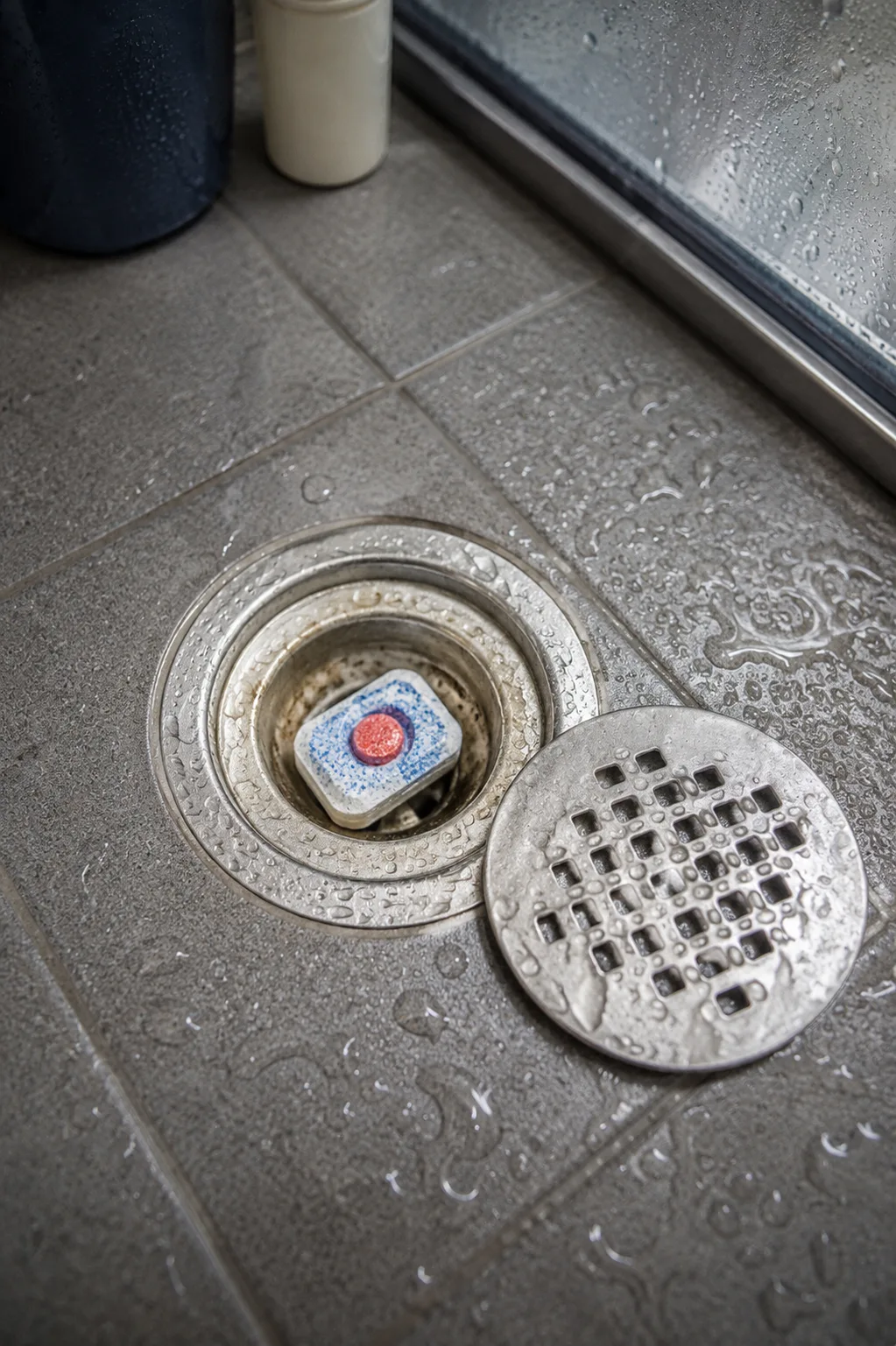
One popular idea is surprisingly simple: put a dishwasher tablet in the shower drain, add hot water, and let those powerful cleaning ingredients work on soap scum, grease, and grime.
Sounds brilliant, right?
Well… not so fast.
Dishwasher tablets are made for dishwashers. They’re not designed as drain cleaners, and a slow shower drain is usually caused by something a dishwasher tablet isn’t particularly good at removing: hair.
So what might happen if you put one down the shower drain every week for a month?
Here’s the interesting part.
Why People Put Dishwasher Tablets in Shower Drains
The idea actually sounds pretty logical at first.
Dishwasher tablets are designed to deal with stubborn food residue and greasy messes.
Shower drains collect soap residue, body oils, shampoo, conditioner, skin cells, hair, and minerals.
So people make a pretty understandable connection:
Powerful dishwasher detergent + dirty drain = cleaner drain.
Unfortunately, plumbing doesn’t work quite that neatly.
A dishwasher provides controlled water temperatures, water volume, spray action, and a complete rinse cycle.
Your shower drain provides… a pipe.
Those are very different conditions.
What Happens When a Dishwasher Tablet Gets Wet?
Dishwasher tablets contain concentrated cleaning ingredients designed to dissolve during a dishwasher cycle.
When water hits the tablet, its ingredients begin breaking apart and dissolving.
Inside a dishwasher, those ingredients circulate through the appliance before being rinsed away.
Put the same tablet near a shower drain and it doesn’t receive that same controlled washing process.
Depending on the tablet, water temperature, drain design, and amount of water used, it may dissolve gradually or leave residue behind.
That’s one reason I wouldn’t make this a regular plumbing routine.
Week 1: The Drain May Smell Fresher
Imagine trying this experiment once.
You place a dishwasher tablet near or in the drain and introduce water.
Afterward, you might notice something immediately.
The drain smells different.
Dishwasher tablets often contain strong fragrances and cleaning agents, so the area can smell noticeably fresher after treatment.
Some surface residue around the drain opening may also loosen.
You look at the shower and think:
“Okay… maybe this actually works.”
And that’s how cleaning hacks get us.
Week 2: Surface Grime May Look Better
After another treatment, the visible drain area might appear cleaner.
Soap residue around the opening can make a drain look dingy even when the real problem is farther down the pipe.
Cleaning agents may help remove some accessible grime.
The drain cover may look brighter.
The immediate area may smell cleaner.
But here’s the catch.
A prettier drain opening doesn’t necessarily mean a cleaner drainpipe.
That’s a pretty important difference.
Week 3: The Slow Drain May Still Be Slow
This is where expectations can crash into reality.
If the drain was slow because of hair, the dishwasher tablet probably hasn’t removed the main blockage.
Hair tends to collect beneath shower drains.
Then soap, conditioner, oils, and other residue cling to that hair.
Over time, everything forms one unpleasant little bundle.
Dishwasher detergent may affect some greasy or soapy material around the clog, but it doesn’t magically pull out a wad of tangled hair.
If the physical blockage remains, the drainage problem can remain too.
Week 4: You May Realize the Tablet Isn’t Fixing the Real Problem
After four weekly treatments, you may have a drain that smells somewhat cleaner while still draining poorly.
That’s the big lesson behind this experiment.
Cleaning a drain and clearing a clog aren’t necessarily the same job.
A product can remove some residue without removing the physical material restricting water flow.
And if the drain is already working normally?
Using a dishwasher tablet every week probably isn’t necessary.
Routine prevention can be much simpler.
Why Shower Drains Get Clogged
Hair is the obvious culprit, but it rarely works alone.
A typical shower drain can collect a lovely little mixture of:
Hair
Soap residue
Body oils
Conditioner
Shampoo residue
Dead skin
Mineral deposits
Dirt
Pet hair
Yeah, I know.
You probably weren’t planning to think this deeply about what lives inside your shower drain today.
But understanding the buildup makes the solution much easier.
Hair Is Usually the First Thing I’d Check
If your shower suddenly starts draining slowly, check for accessible hair around the drain opening.
You may be surprised by how much collects just below the cover.
Some drain covers can be removed for cleaning, while others have different designs.
Check how yours works before forcing anything.
If accessible hair is the problem, physically removing it can provide a much more direct solution than repeatedly pouring cleaning products into the pipe.
It’s gross.
But wow, is it satisfying when the water suddenly drains normally again.
Use a Drain Hair Tool for Accessible Clogs
Simple plastic drain-cleaning tools can sometimes grab hair sitting near the top of the drain.
Insert the tool only as intended and follow its directions.
Pull out the trapped material.
Dispose of it in the trash.
Don’t push the blockage farther into the plumbing.
And prepare yourself emotionally.
What comes out may look like something from a low-budget horror movie.
Still, removing the actual obstruction makes sense.
Clean the Drain Cover Separately
Sometimes the grossest-looking part isn’t deep inside the pipe.
It’s the cover.
Remove the drain cover if your setup allows it.
Clean away hair and soap residue using a method suitable for its material and finish.
Rinse it.
Then reinstall it correctly.
This simple job can make the whole shower look cleaner without sending unnecessary chemicals through your plumbing.
What About Very Hot Water?
Hot water can help move some soap and oily residue, but don’t assume boiling water is safe for every plumbing system.
Extremely hot water can be inappropriate for certain pipe materials, fittings, seals, or fixtures.
If you’re flushing a drain, use a temperature suitable for your plumbing and follow any manufacturer or professional guidance that applies.
Don’t stand over the drain pouring a giant pot of violently boiling water because somebody online promised instant results.
Burns are a much bigger problem than soap scum.
Why Dishwasher Tablets Aren’t Drain Cleaners
This is really the heart of it.
Products are formulated for specific jobs.
Dishwasher tablets are designed to clean dishes inside dishwashing machines.
Drain products are designed around plumbing applications.
The ingredients, concentrations, directions, contact times, and intended surfaces can be different.
A dishwasher tablet might appear to clean some drain residue.
That doesn’t make it an approved weekly drain-maintenance product.
The label matters.
If a product doesn’t say it’s intended for drains, I wouldn’t automatically turn it into drain cleaner.
Could Dishwasher Tablets Leave Residue in a Drain?
Potentially.
Dishwasher tablets are intended to dissolve under the conditions provided by a dishwasher cycle.
A shower drain doesn’t necessarily recreate those conditions.
If a tablet doesn’t dissolve or flush away completely, residue could remain.
That’s particularly unhelpful if you’re already dealing with restricted water flow.
The last thing a partially blocked drain needs is another material introduced into it.
Sometimes the simplest cleaning trick is knowing when not to add something.
Don’t Mix Dishwasher Tablets With Drain Cleaner
This is important.
Never start combining cleaning chemicals because the first product didn’t work fast enough.
If you’ve already put one cleaning product into the drain, don’t casually follow it with bleach, ammonia, acid, commercial drain opener, vinegar, or another cleaner.
Chemical combinations can produce dangerous reactions, fumes, splashing, or heat.
Use products exactly as their labels direct.
More cleaner does not mean more clean.
Sometimes it means more trouble.
Don’t Mix Bleach and Vinegar
This deserves special attention because both products appear constantly in DIY cleaning advice.
Never mix chlorine bleach with vinegar or other acids.
The combination can release dangerous chlorine gas.
Likewise, don’t mix bleach with ammonia-containing products.
And don’t assume two products are compatible simply because both are sold as household cleaners.
If you’re uncertain what’s already been poured into a drain, don’t add another chemical.
What About Baking Soda and Vinegar?
Ah yes.
The internet’s favorite fizzy duo.
Pour baking soda into a drain, add vinegar, watch the bubbles, and suddenly it feels like something major is happening.
The bubbling reaction can loosen some surface material through agitation, but it isn’t a magic solution for a serious hair clog.
A thick wad of hair isn’t going to see some fizz and pack its bags.
For a physical obstruction, physical removal often makes more sense.
What About Chemical Drain Cleaners?
Commercial drain cleaners can contain powerful chemicals.
Some are intended for specific types of clogs and plumbing systems.
If you use one, read the entire label first.
Check whether it’s suitable for your type of drain and pipes.
Follow the amount, contact time, ventilation, protective equipment, and flushing directions exactly.
Never mix different drain cleaners.
And don’t assume adding extra product will work faster.
For recurring or severe blockages, professional plumbing help may be the better move.
A Better Way to Deal With a Slow Shower Drain
I’d start simple.
First, stop adding random cleaning products.
Then inspect the drain opening.
Remove accessible hair and debris.
Clean the drain cover.
If the blockage remains, use an appropriate mechanical drain tool according to its directions.
If that still doesn’t solve the problem, the obstruction may be deeper in the plumbing.
That’s when a plumber can make a lot more sense than your fifth experimental household ingredient.
How to Prevent Hair From Entering the Drain
This is one of those ridiculously simple fixes that can save a lot of hassle.
Use a hair catcher.
Seriously.
A small drain screen can trap hair before it travels into the plumbing.
After showering, remove the collected hair and throw it in the trash.
Not glamorous.
Very effective.
I’d much rather clean a little screen every few days than pull a wet hair creature from the pipe every few months.
Brush Your Hair Before Showering
Here’s another easy habit.
If you have long or thick hair, brushing loose strands out before showering can reduce how much ends up in the drain.
Will it catch everything?
Nope.
Hair apparently has a personal mission to get absolutely everywhere.
But reducing the amount going down the drain can help.
Pair this habit with a hair catcher and you’ve got a pretty solid defense.
Don’t Flush Clumps of Hair Down the Drain
If hair collects around your fingers while shampooing, don’t deliberately rinse the clump away.
Set it aside and put it in the trash after the shower.
Yes, it’s slightly annoying.
But once you’ve seen what several months of hair mixed with conditioner looks like inside a drain, you’ll suddenly become very motivated.
Trust me on this one.
Clean the Drain Area Regularly
You don’t need to wait for standing water.
Periodically check the drain opening.
Remove visible hair.
Clean soap residue around the cover.
Pay attention to how quickly water drains.
If drainage starts slowing, deal with it early.
A small amount of accessible hair is much easier to remove than a deep blockage.
Future you will appreciate it.
Why Your Shower Drain May Smell Even Without a Clog
A bad-smelling drain doesn’t always mean it’s blocked.
Odors can come from organic buildup inside the drain, plumbing issues, or problems involving the drain trap.
A properly functioning trap holds water that helps block sewer gases from entering the home.
If a shower hasn’t been used for a long time, the trap can potentially dry out.
Running water may refill it.
Persistent sewer-like odors deserve more attention.
If the smell continues despite normal cleaning and regular use, a plumber can check for drainage, venting, or trap problems.
Don’t just cover a sewer smell with a lemon-scented tablet.
Your nose is telling you something.
Signs the Problem May Be Deeper
Sometimes a slow shower drain isn’t an isolated shower problem.
Pay attention if:
Several drains are slow at the same time.
The toilet gurgles when water drains.
Water backs up elsewhere.
You hear unusual bubbling sounds.
Sewage odors persist.
Water comes back through another drain.
Those signs can point to a larger drainage problem.
That’s plumber territory.
A dishwasher tablet definitely isn’t fixing that.
Can Weekly Dishwasher Tablets Harm Plumbing?
There’s no good reason to assume that a product designed for dishwashers is suitable for indefinite weekly use in every plumbing system.
Different homes have different pipes, fittings, septic systems, and drainage conditions.
Rather than guessing about repeated exposure, use products according to their intended purpose.
If you’re on a septic system, be especially mindful about what goes down your drains and follow appropriate maintenance guidance.
Weekly experiments add up.
Why “It Worked for Me” Doesn’t Prove Much
This comes up with practically every cleaning hack.
Someone puts a tablet down a drain.
The drain seems better afterward.
Therefore, the tablet gets all the credit.
Maybe it loosened some residue.
Maybe the extra water moved a minor obstruction.
Maybe the clog shifted.
Maybe the problem wasn’t a clog at all.
One successful-looking result doesn’t tell us whether the method is safe, repeatable, or useful for every plumbing system.
That’s why product instructions matter more than viral anecdotes.
A Simple 30-Day Shower Drain Routine That Makes More Sense
Instead of putting a dishwasher tablet into the drain every week, spend the month preventing buildup.
During week one, inspect the drain and remove accessible hair.
Clean the drain cover.
Add a hair catcher if your shower can accommodate one.
During the following weeks, empty the hair catcher regularly and remove visible debris before it enters the drain.
Pay attention to drainage speed.
If water starts slowing despite a clear opening, address the blockage early.
It’s not dramatic.
There’s no foaming tablet.
There’s no viral reveal.
But it’s practical.
When Should You Call a Plumber?
Call for professional help when the drain remains blocked after reasonable mechanical cleaning, several fixtures are draining slowly, sewage odors persist, water backs up, or you suspect a deeper plumbing problem.
Also call someone if you simply aren’t comfortable opening or working around the drain.
There’s nothing wrong with that.
Sometimes paying somebody who knows exactly what they’re looking at is cheaper than accidentally creating a bigger problem.
Frequently Asked Questions
Can you put a dishwasher tablet in a shower drain?
Dishwasher tablets are formulated for dishwashers rather than shower drains. They may loosen some surface residue, but they aren’t a substitute for proper drain cleaning or physical hair removal.
Will a dishwasher tablet unclog a shower drain?
It isn’t a reliable solution for a typical hair clog. Shower blockages often contain tangled hair mixed with soap and conditioner residue, which may require physical removal.
Why is my shower draining slowly?
Hair, soap residue, body oils, conditioner, minerals, and debris can gradually restrict water flow. Deeper plumbing problems can also cause slow drainage.
What’s the easiest way to remove hair from a shower drain?
If the hair is accessible, remove it manually with an appropriate drain hair-removal tool while following the tool’s directions. A hair-catching screen can help prevent future buildup.
Can I put boiling water down my shower drain?
Very hot or boiling water may not be suitable for every plumbing material or fixture. Use methods appropriate for your plumbing rather than assuming extreme heat is safe.
Can I mix a dishwasher tablet with drain cleaner?
No. Don’t casually combine cleaning chemicals. Mixing household cleaners can create dangerous fumes, reactions, splashing, or heat.
Does baking soda and vinegar unclog shower drains?
The fizz may help disturb some loose residue, but it isn’t a dependable answer for a substantial hair blockage.
Why does my shower drain smell bad?
Odors can result from organic buildup, a dry trap, drainage issues, or plumbing problems. Persistent sewer-like odors should be investigated rather than simply covered with fragrance.
How can I prevent shower drain clogs?
Use a hair catcher, remove collected hair regularly, clean visible buildup around the drain, and address slowing drainage before a major blockage forms.
When does a slow shower drain need a plumber?
Get professional help when mechanical cleaning doesn’t solve the problem, multiple drains are slow, sewage odors persist, or water backs up into other fixtures.
Final Thoughts
I’ll admit it.
The dishwasher tablet shower drain hack sounds wonderfully easy.
Drop in a tablet once a week.
Add water.
Wait.
Enjoy a sparkling, fresh-smelling, clog-free drain forever.
If only plumbing were that cooperative.
A dishwasher tablet may loosen some grime or change the smell around a drain, but it isn’t designed to solve the most common shower-drain problem: tangled hair mixed with soap and conditioner residue.
For that, I’d keep things simple.
Remove accessible hair.
Clean the drain cover.
Use a hair catcher.
Pay attention when drainage begins slowing.
And if the blockage keeps returning or several drains start acting strangely, call a plumber.
Save the dishwasher tablets for the dishwasher.
Sometimes the least exciting household trick is the one that saves you the biggest headache later.