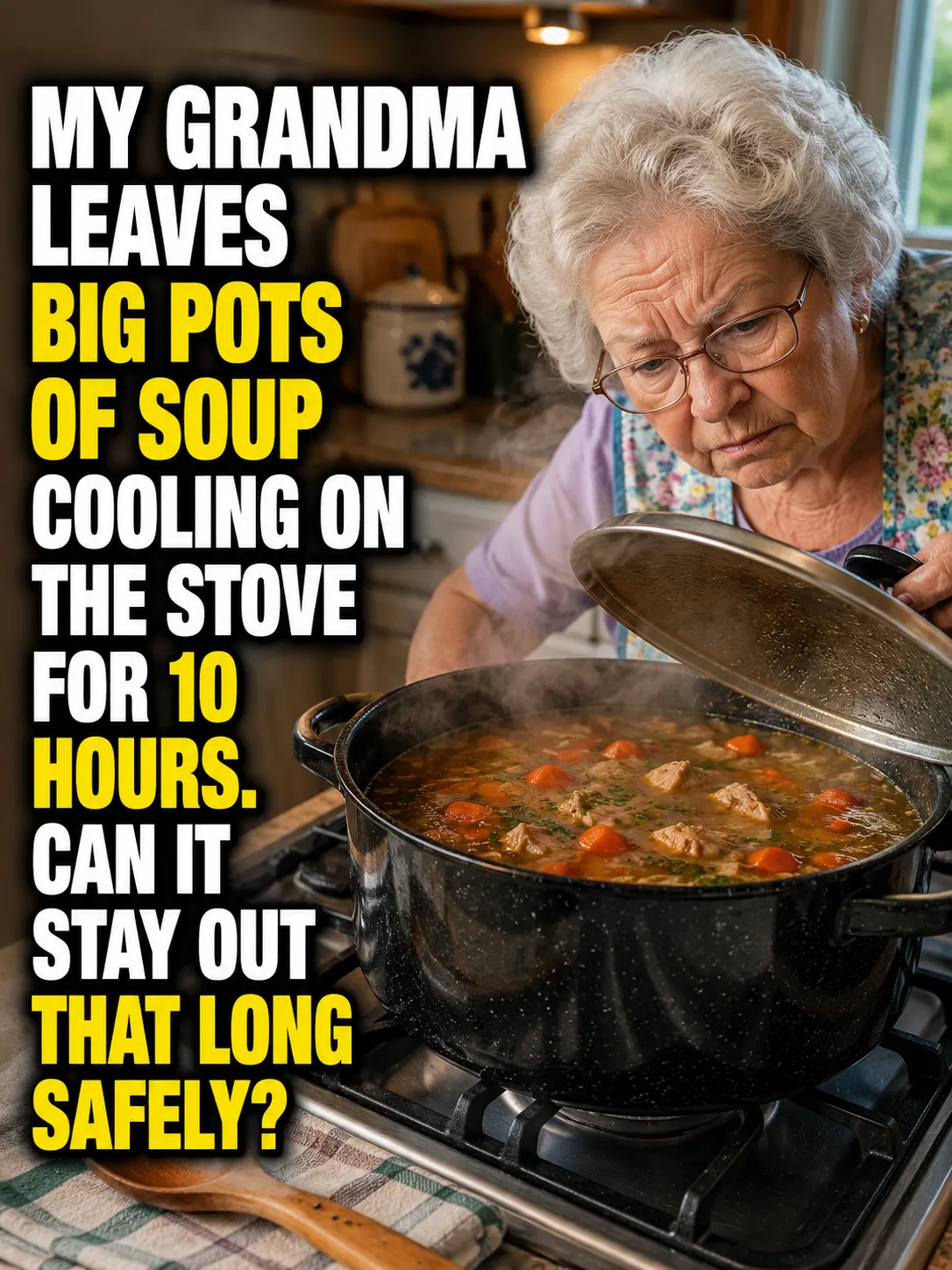
Many families have done it for years. After making a large pot of homemade soup, someone turns off the stove and leaves the pot out to cool until morning. It may seem like a harmless tradition, but is it actually safe?
If a pot of soup has been sitting on the stove for about 10 hours, food safety experts say it’s time to throw it away.
Here’s why leaving soup out overnight can increase the risk of foodborne illness—and the safest way to cool it instead.
Why Is Leaving Soup Out Overnight Risky?
Freshly cooked soup is safe when it’s piping hot, but as it cools, it eventually passes through the temperature danger zone, which ranges from 40°F to 140°F (4°C to 60°C).
Within this range, bacteria can multiply rapidly. The longer soup remains at these temperatures, the greater the risk that harmful bacteria may grow.
Even if the soup still looks and smells normal, it may no longer be safe to eat.
The Two-Hour Rule
Food safety guidelines recommend refrigerating perishable foods within:
- 2 hours at room temperature.
- 1 hour if the room temperature is above 90°F (32°C).
Ten hours on the stove is well beyond these recommended limits.
Reheating the soup the next day does not necessarily make it safe because some bacteria can produce toxins that are not destroyed by normal cooking temperatures.
What’s the Best Way to Cool a Large Pot of Soup?
Instead of leaving the entire pot on the stove overnight, cool it more quickly.
Try these methods:
- Divide the soup into several shallow containers.
- Place the containers in the refrigerator once they’ve stopped steaming heavily.
- Set the pot in a sink or large bowl filled with ice water and stir occasionally.
- Use reusable ice packs or cooling paddles if you make large batches frequently.
Smaller portions cool much faster than one large stockpot.
Can You Put Hot Soup Directly in the Refrigerator?
Yes—with a few precautions.
Modern refrigerators can generally handle warm food.
If the soup is extremely hot, allow it to cool slightly for a short time, then transfer it to shallow containers before refrigerating.
Avoid leaving it out for hours while waiting for it to become completely cool.
How Long Does Homemade Soup Last?
When refrigerated promptly:
- Most homemade soups stay fresh for 3 to 4 days.
- Freeze extra portions if you won’t eat them within that time.
Always reheat leftovers until they’re steaming hot before serving.
Signs Soup Has Spoiled
Discard soup if you notice:
- Mold
- A sour or unusual smell
- Bubbling that isn’t from heating
- Slimy texture
- Unusual discoloration
Remember, harmful bacteria aren’t always visible, so don’t rely on appearance alone after soup has been left out overnight.
Tips for Safe Soup Storage
To keep homemade soup safe:
- Refrigerate leftovers promptly.
- Use shallow storage containers.
- Label containers with the preparation date.
- Freeze portions you won’t use within a few days.
- Reheat only the amount you plan to eat.
These simple habits help reduce food waste while keeping meals safe.
Frequently Asked Questions
Can I reboil soup that sat out overnight?
No. Reboiling may kill some bacteria, but it won’t always destroy toxins that certain bacteria can produce while the soup sits at unsafe temperatures.
Is it safe if the kitchen was cool?
Even in a cool kitchen, soup left out for about 10 hours is generally considered unsafe because it spends too much time in the temperature danger zone.
Can I cool soup in the pot?
Yes, but cooling is much faster if you place the pot in an ice-water bath or divide the soup into shallow containers before refrigerating.
Can homemade soup be frozen?
Absolutely. Freezing is an excellent way to extend the shelf life of homemade soup. Cool it safely first, then freeze it in airtight containers.
Final Thoughts
Leaving a large pot of soup on the stove overnight may be a long-standing family habit, but it’s not considered a safe food storage practice. After about 10 hours at room temperature, the safest choice is to discard the soup, even if it looks and smells perfectly fine.
By cooling soup quickly and refrigerating it within the recommended time, you can enjoy delicious leftovers without increasing the risk of foodborne illness.