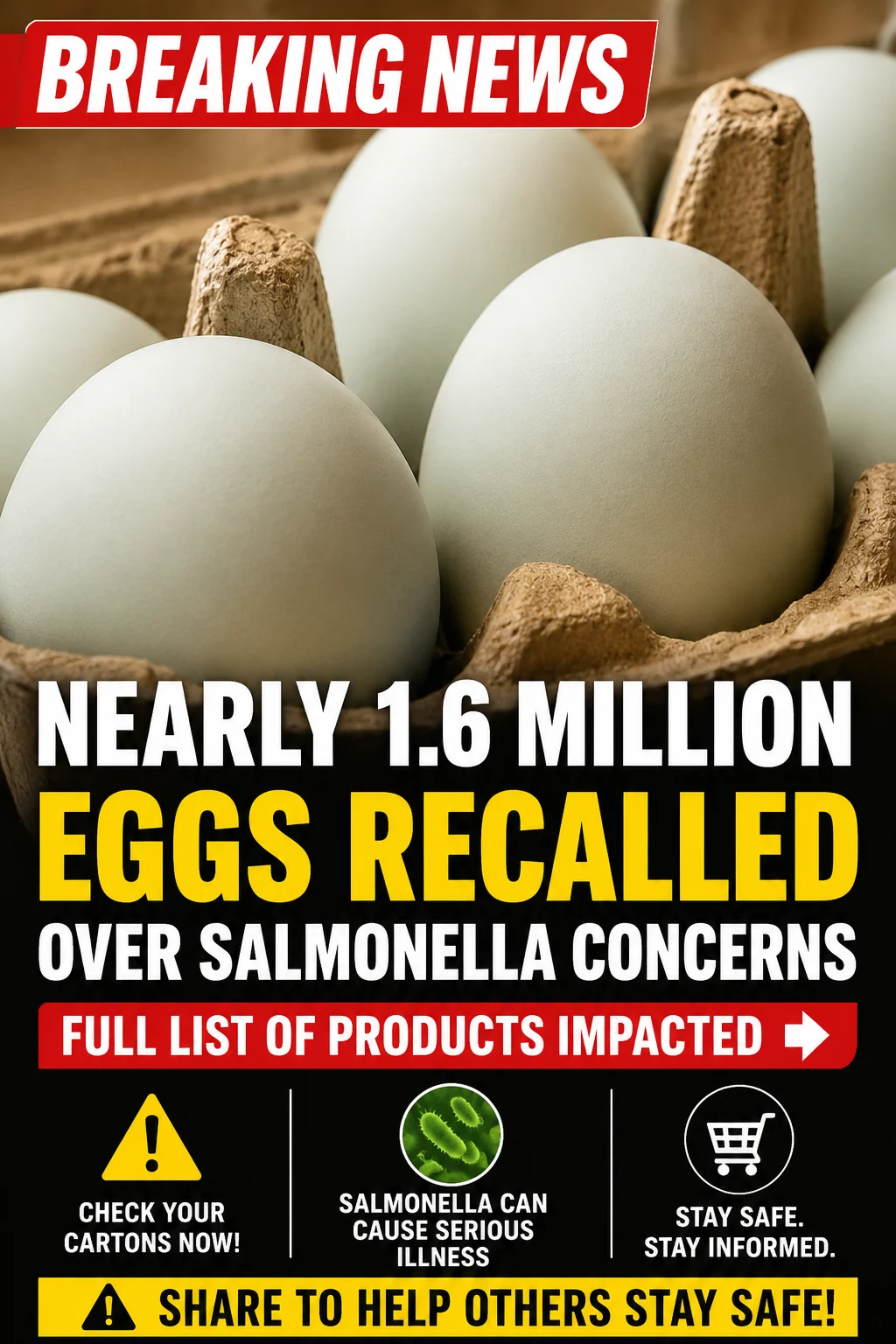
Finding out that eggs in your refrigerator have been recalled can be unsettling. A new voluntary recall has affected nearly 1.6 million cartons of white and brown eggs because they may be contaminated with Salmonella Enteritidis, a bacteria that can cause foodborne illness.
If you’ve recently purchased eggs, now is a good time to check the carton before making your next breakfast.
Why Were the Eggs Recalled?
Midwest Poultry Services has voluntarily recalled 1,589,577 cartons of eggs after concerns that some products may be contaminated with Salmonella Enteritidis.
Salmonella bacteria can sometimes be present inside eggs laid by infected hens. Even if an egg looks perfectly normal, it may still carry harmful bacteria that can cause illness, especially if eaten raw or undercooked.
At this time, no illnesses have been linked to the recalled eggs.
Which Eggs Are Affected?
The recalled eggs include both white eggs and brown cage-free eggs produced between June 6 and July 3, 2026.
The affected cartons have sell-by or best-by dates between July 20, 2026, and August 17, 2026.
These eggs were distributed to:
- Retail stores and foodservice customers in Texas, Oklahoma, and Louisiana
- Kroger stores in Texas and Louisiana
- Brookshire Grocery stores in Texas, Oklahoma, Arkansas, Louisiana, New Mexico, and Mississippi
- Additional smaller grocery retailers
Brands Included in the Recall
The recall covers several popular brands, including:
- Kroger
- Simple Truth
- Brookshire’s
- Country Morning
- Sunups
Bulk eggs supplied to foodservice customers are also included.
How to Check Your Egg Carton
Look on the side of your carton for the identifying information.
The recalled products carry:
- Plant code: P-1950 or 840962 (depending on the product)
- Julian date codes: 157 through 184
- Best-by or sell-by dates: July 20 through August 17, 2026
If your carton matches these codes, it is part of the recall.
What Should You Do If You Have Recalled Eggs?
Do not eat the eggs.
Instead:
- Return them to the store where you purchased them for a full refund.
- Or dispose of them safely.
- Wash your hands after handling the carton.
- Clean and sanitize any refrigerator shelves or containers that came into contact with the eggs.
Even eggs that look fresh may contain harmful bacteria.
What Is Salmonella?
Salmonella is one of the most common causes of foodborne illness.
Symptoms usually include:
- Diarrhea
- Fever
- Stomach cramps
- Nausea
- Vomiting
Symptoms typically begin 6 hours to 6 days after exposure and often last 4 to 7 days.
Most healthy people recover without medical treatment, but serious illness is more likely in:
- Young children
- Older adults
- Pregnant women
- People with weakened immune systems
In severe cases, Salmonella infection can spread beyond the intestines and require hospitalization.
How to Reduce Your Risk
Food safety experts recommend:
- Refrigerating eggs at 40°F (4°C) or below.
- Cooking eggs thoroughly until both the whites and yolks are firm.
- Washing hands after handling raw eggs.
- Cleaning surfaces and utensils that come into contact with raw eggs.
- Avoiding foods made with raw or lightly cooked eggs unless pasteurized eggs are used.
Frequently Asked Questions
Can I eat the recalled eggs if I cook them thoroughly?
Health officials recommend not consuming recalled eggs. The safest option is to return or discard them.
Have people gotten sick?
As of the recall announcement, no illnesses had been reported in connection with these eggs.
Where can I find the code?
The identifying plant code and Julian date are printed on the side of the egg carton.
Should I clean my refrigerator?
Yes. If recalled eggs were stored in your refrigerator, clean and sanitize any surfaces they touched.
Final Thoughts
Egg recalls are issued as a precaution to help protect consumers from foodborne illness. If you’ve recently purchased eggs from one of the affected retailers, take a few moments to check the carton’s plant code, Julian date, and best-by date.
If your eggs match the recall information, don’t take chances. Return them for a refund or throw them away, then clean any surfaces they may have contacted. A quick inspection today can help keep your kitchen and your family safe.
:::