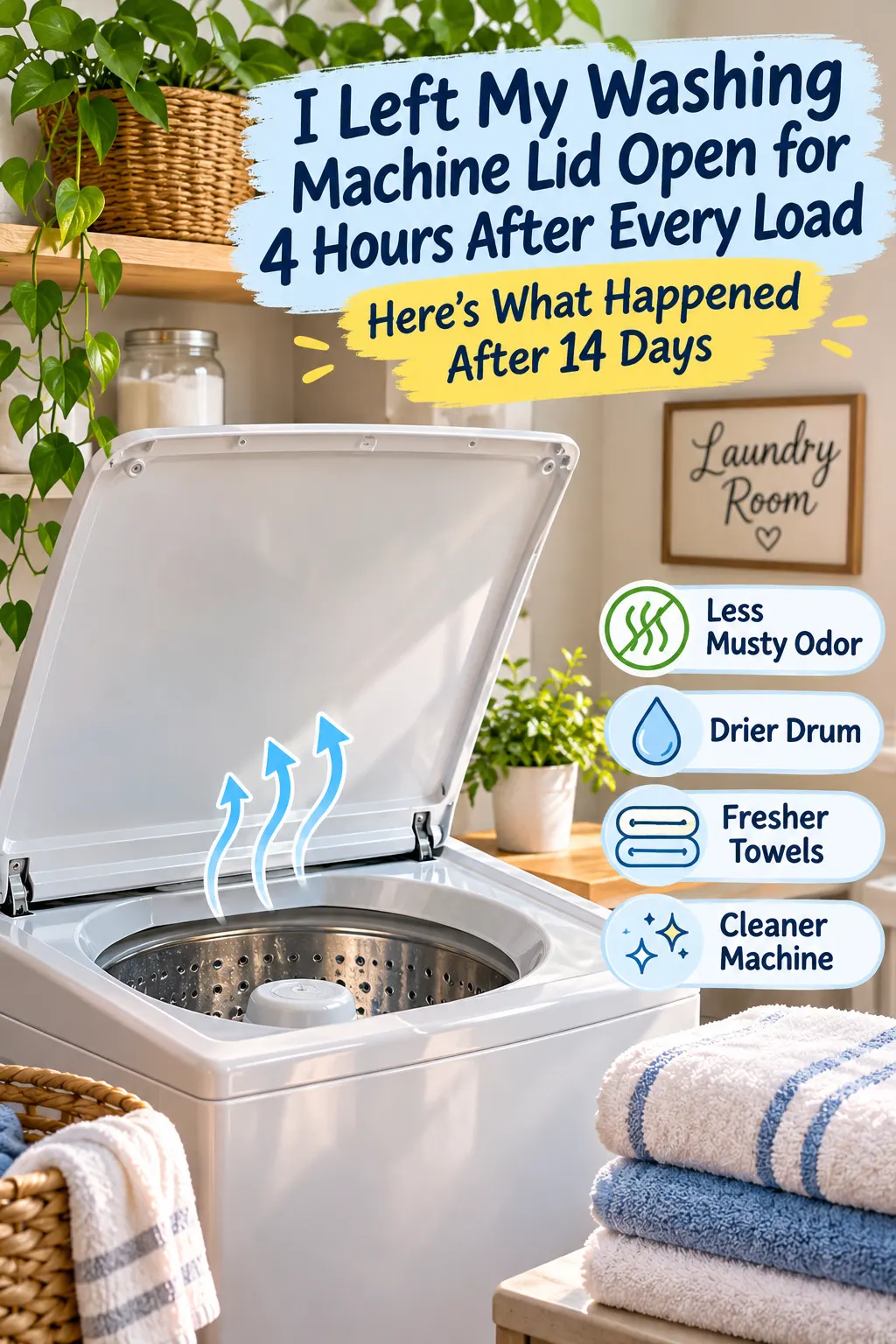
In August, I tried a little laundry experiment that sounds almost too simple to matter: after every load, I left my washing machine lid open for 4 hours so the drum could air dry. I did it consistently for 14 days, and because I’m the kind of person who notices when towels smell a little off or when the laundry room starts feeling stuffy, I paid close attention. What surprised me wasn’t that it helped a little. It was how many small, practical differences I noticed by the end of those two weeks.
We’re a busy household in a small Midwestern town, so our washer gets a real workout: school clothes, work jeans, dog blankets, kitchen towels, bedding, and the occasional mystery pile someone “forgot” to mention. In this article, I’ll walk you through exactly what I did, what changed, what didn’t, and a few lessons I learned along the way if you want to try the same thing in your own home.
1. Why I decided to try it in the first place
My main reason was odor. Nothing dramatic, but enough to bug me. Every now and then, when I lifted the lid, I’d catch that faint damp, sour smell that says moisture has been hanging around too long. Clean laundry still smelled mostly fine, but some loads of bath towels and athletic clothes didn’t have that fresh, crisp scent I wanted.
August seemed like a good test month because it was warm and humid here, with several days in the low to mid-80s and plenty of sticky air. If leaving the lid open would make a difference, I figured I’d notice it during the kind of weather that tends to make laundry rooms feel muggy.
2. My exact 14-day method
I kept the routine simple on purpose. After each load finished, I transferred the clothes right away and then left the washer lid open for 4 hours. I used my phone timer so I wouldn’t have to guess. If I had back-to-back loads, I still gave the machine an open-lid period after the final load of that stretch.
Over the 14 days, I ran 18 total loads. That included 4 towel loads, 3 bedding loads, 5 clothing loads, 2 small loads of delicates, 2 cleaning-rag loads, and 2 mixed family loads. I didn’t change detergent, softener, or wash settings during the test because I wanted the lid-open habit to be the only major variable.
3. What my washer was like before the test
I have a top-load washing machine, and like many family machines, it isn’t babied. It gets used regularly, sometimes twice in one day. Before I started this, I’d usually close the lid out of habit as soon as I emptied it. The drum often still had visible droplets along the sides, especially after hot or warm cycles.
The laundry room itself is small, with no fancy ventilation setup. There’s a standard ceiling light, one door, and not much cross-breeze unless I leave the door open. So this wasn’t a perfect lab test. It was a normal, lived-in home setup, which honestly is what makes the results useful.
4. The first thing I noticed: less moisture inside the drum
By the end of the first few days, the most obvious change was simple: the inside of the drum dried faster and more thoroughly than I expected. At the 4-hour mark, the metal sides felt dry to the touch most of the time, not slick or beaded with moisture. The underside of the lid still occasionally held a little dampness early on, but much less than when I used to close it right away.
On two especially humid days, there was still a trace of moisture around the rim after 4 hours, but the drum was nowhere near as damp as it would have been with the lid shut. That told me air circulation was doing real work, even in less-than-ideal weather.
5. The odor change was gradual, not instant
I want to be honest here: this was not a miracle overnight fix. After the first load, I didn’t throw open the lid and think, “Well, that solved everything.” The smell improved gradually. Around day 5 or 6, I realized I was no longer getting that stale, trapped-moisture whiff when I started a new load.
By the end of the full 14 days, the washer smelled noticeably more neutral. Not perfumed, not “chemically clean,” just fresh and plain. For me, that was a win. The biggest difference showed up with towels, which came out smelling cleaner and stayed fresher longer when folded and stacked in the linen closet.
6. Towels and workout clothes gave me the clearest proof
If you really want to know whether a laundry change is working, wash towels and anything synthetic. Those are the loads that tell on you. My bath towels usually reveal problems first because they hold moisture and can pick up musty notes fast. During this 14-day stretch, I noticed the towels smelled cleaner even 2 or 3 days after washing.
My family’s activewear also came out better. Not perfect in the way a brand-new machine might perform, but definitely improved. The usual lingering “washed but not truly fresh” smell was reduced. That alone made the experiment worth it to me.
7. The laundry room felt less stuffy
This was one of the more unexpected changes. The room itself seemed less heavy and damp, especially after multiple loads. It makes sense when you think about it: if moisture can escape instead of being trapped in the machine, some of that stale dampness doesn’t build up in the same way inside the washer.
I still had humid August air to contend with, so I wouldn’t say the room became airy like a sunroom. But it did feel less muggy after laundry day. That small comfort matters when you’re folding fitted sheets in a warm room and trying not to get cranky.
8. I saw fewer residue spots around the rim
One small housekeeping detail I noticed was around the top rim and under the lid. Before this habit, I sometimes found a little film or grime collecting where moisture tended to sit. During the 14 days, that buildup seemed slower to return.
It didn’t eliminate cleaning needs entirely. I still believe in wiping down the rim and checking detergent residue regularly. But because the machine wasn’t staying closed and damp after every cycle, the surfaces seemed less inviting to that sticky, dull-looking residue.
9. What did not happen
My washer did not transform into a magical self-cleaning machine. Leaving the lid open did not remove old buildup, deep-clean hidden parts, or replace a monthly cleaning cycle. If your machine already has significant mildew, visible grime, or a strong smell, this habit alone probably won’t fix the whole problem.
I also didn’t notice any major change in wash performance itself, like brighter whites or softer clothes just from the lid being open afterward. This is really a maintenance habit, not a washing-power upgrade.
10. The biggest downside: you have to remember to do it
The hardest part was consistency. Four hours is long enough that you can absolutely forget. A couple of times I walked by and thought, “Oh right, I never came back to close that.” If you have little ones, pets, or a narrow laundry area, an open lid may also feel inconvenient depending on your setup.
In my house, I solved that by setting a timer immediately when I moved the clothes to the dryer or hamper. Without the timer, I know myself well enough to admit I’d have been uneven about it, and then I wouldn’t really know whether the routine helped.
11. Safety and practicality matter more than perfection
If you’re going to try this, make sure the open lid won’t create a problem. In some homes, the laundry area is in a hallway, near a door, or within easy reach of toddlers. In that case, even a helpful habit needs to be adjusted for safety and convenience.
If 4 full hours doesn’t fit your day, even 1 to 2 hours is probably better than snapping the lid shut immediately. The real goal is to let trapped moisture escape. You don’t need a perfect system to get at least some benefit.
12. I paired it with one extra step that helped even more
About halfway through the test, I started doing one additional thing: after the final load of the day, I wiped the rubber and rim areas with a dry cloth for about 20 to 30 seconds before leaving the lid open. That sped things up and reduced little droplets hiding in creases and edges.
If you have a front-load machine, this same idea is even more important around the gasket. In a top-loader like mine, there are fewer folds to worry about, but moisture still likes to linger in seams and around the top edge.
13. My honest verdict after 14 days
Yes, it helped, and enough that I’ve kept doing it. The change wasn’t flashy, but it was practical. The drum dried better, the washer smelled fresher, towels improved, and the laundry room felt less stale. For a habit that costs $0 and takes almost no effort beyond remembering, that’s a pretty nice return.
As a mom who’s always trying to keep the house running without adding one more complicated chore, I appreciate simple fixes. This one falls into that wonderful category of “small thing, noticeable result.”
14. Who should try this and when to do more
If your washer sometimes smells musty, if you wash lots of towels or sports clothes, or if your laundry area tends to hold humidity, I think this is absolutely worth trying for 2 weeks. It’s especially smart during summer or any damp season when moisture hangs around longer.
If your machine has a strong mildew odor, visible black spots, or residue that keeps coming back, I’d treat the open-lid habit as a follow-up step, not the whole solution. In that case, do a proper cleaning cycle first, check the detergent tray or rim, and then use air drying to help prevent the problem from returning.
15. The simple routine I’m sticking with now
Going forward, my plan is straightforward: after the last load of the day, I’ll leave the lid open for at least 4 hours, and if I’m home, often longer. Once a week, I’ll give the rim and lid underside a quick wipe. Once a month, I’ll run a washer-cleaning cycle.
That’s manageable for real family life. It doesn’t require buying a gadget, changing detergents, or overthinking laundry. And if there’s one thing I’ve learned after years of feeding people, washing endless socks, and trying to keep a home cozy, it’s this: the little habits are often the ones that save you the most trouble later.