
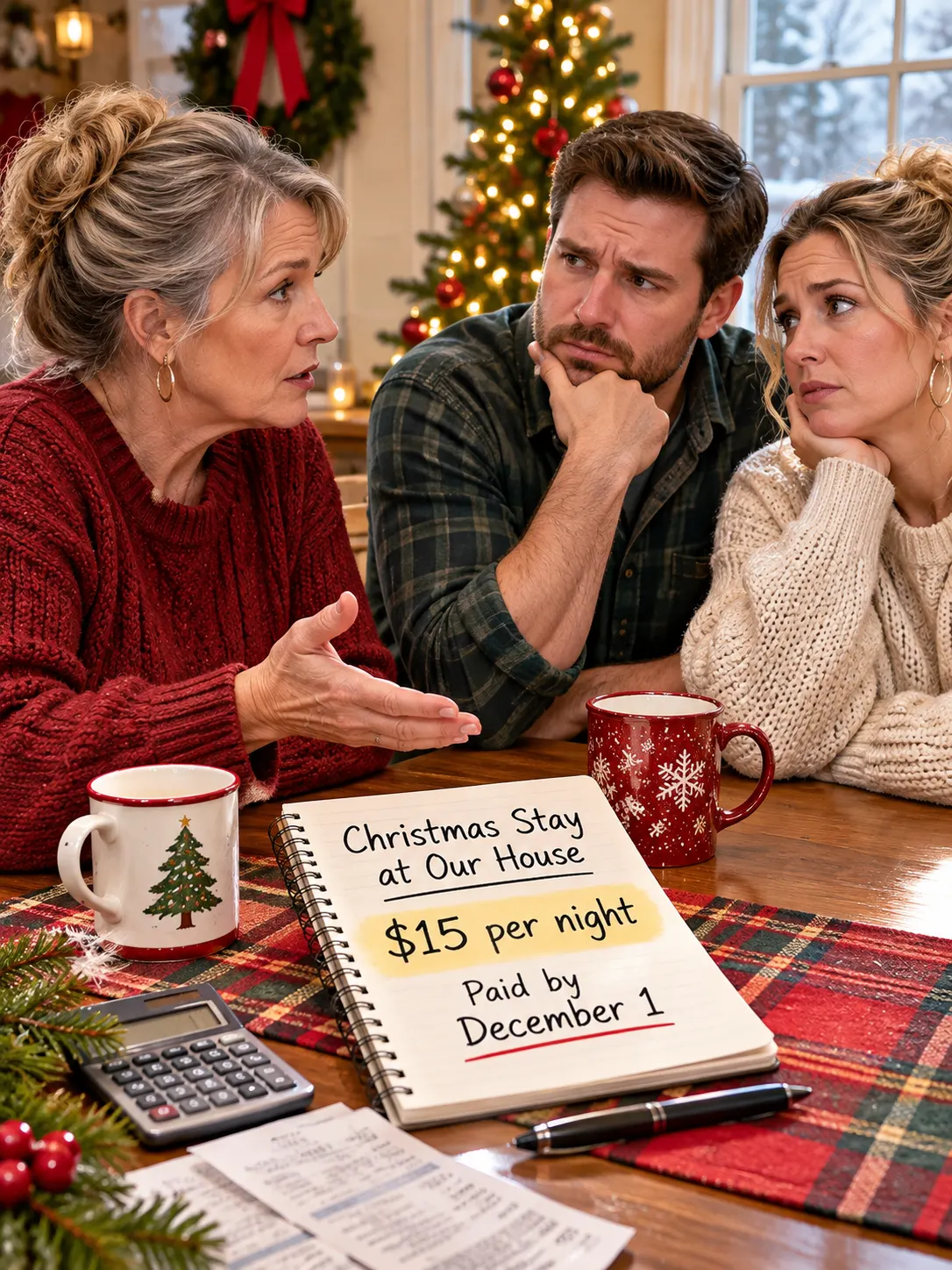
Every family has one holiday topic that can clear a kitchen faster than a smoke alarm. In my house, it is not politics, and it is not whether canned cranberry sauce belongs on the table. It is where everyone sleeps, who buys what, and how long “just a few days” actually means once luggage starts piling up in the hallway and somebody is looking for an outlet at 6:30 in the morning.
I learned, a little later in life than I care to admit, that Christmas hospitality and Christmas resentment can live in the same guest room. What started as a practical decision in my home turned into one of the more uncomfortable family conversations I have ever had, but it also forced all of us to be more honest about money, effort, and expectations. If you have adult children, a full house in December, and a budget that is not made of magic, you may recognize more of this story than you expect.
1. The setup: how Christmas at our house had grown bigger every year
I live in a Midwestern metro area, and for years my house became the default Christmas house. Part of that is geography. We have the most central location, the easiest airport access, and enough square footage to make people think we have more room than we actually do. On paper, three bedrooms and a finished basement sound generous. In reality, once you add suitcases, winter coats, extra groceries, wrapping paper, and a dog crate, it starts to feel like a train station with casserole dishes.
My son and his wife usually stayed 4 to 6 nights. Other relatives came for dinner, brunch, or an overnight. I was buying an extra 2 dozen eggs, another 3 pounds of bacon, more coffee, more cream, more toilet paper, and enough ingredients for two big dinners, a breakfast casserole, cookies, snacks, and the “fun” grocery items people assume simply appear. One year I sat down with receipts and realized I had spent a little over $420 extra just feeding and hosting Christmas houseguests, and that did not include utilities.
2. The hidden math that finally pushed me over the edge
I am an experienced cook, so I can stretch a meal, repurpose leftovers, and feed people well without being extravagant. But holiday hosting has a way of piling on invisible costs. The furnace runs more because exterior doors open every 20 minutes. The hot water heater works overtime. Sheets and towels mean 3 to 5 extra laundry loads. If I put together a Christmas Eve dinner, Christmas breakfast, Christmas dinner, and a day-after soup-and-sandwich spread, I can easily spend another $150 to $200 beyond my regular weekly groceries.
When I looked at one particular season, I estimated the practical cost of hosting my son and his wife at around $28 to $35 per day between food, utilities, and household supplies. I was not trying to turn my home into a bed-and-breakfast. I simply did not want to quietly subsidize every adult holiday visit while pretending it was effortless. The number I landed on was modest on purpose: $15 a night.
3. Why I chose a nightly rate instead of saying nothing and stewing
Some people would have preferred that I say, “Please chip in for groceries.” Others might have asked them to bring breakfast items or take us all out to dinner one night. Those are reasonable options. I chose a set nightly amount because it was concrete. There was no vague promise to “help out,” no awkward guessing, and no mental tallying of who bought one bag of salad and thought that covered a five-night stay.
$15 a night for two adults is not hotel pricing. It is barely parking-garage pricing in my city. My thinking was simple: if they stayed 5 nights, that was $75 total. It would not cover the entire cost, but it would signal that this was an adult arrangement, not an automatic reversion to childhood where Mom absorbed every expense and labor cost because it was Christmas.
4. The December 1 deadline and why I included it
The deadline was the part that made it feel firm, and I knew that. I said it needed to be paid by December 1 or they should book a hotel. I did that because holiday logistics become much harder after the first week of December. Grocery planning starts. Sleeping arrangements get locked in. I decide whether I need an air mattress, whether I am washing guest blankets, and how much food I should prepare.
I have learned that “we’re probably coming” is one of the most expensive phrases in family life. It leads to overbuying, underplanning, and then irritation on both sides. A deadline was not meant as punishment. It was a way to make the visit real enough that I could plan around it.
5. How I actually told them
I did not announce it over turkey or in the middle of a family group text. I called my son directly in early November. I told him I wanted to sort out Christmas plans while hotels were still reasonably priced. I explained that if they wanted to stay at the house, it would be $15 a night, paid by December 1. Otherwise, no hard feelings, but they should reserve a hotel.
I tried to keep my tone practical, not emotional. In hindsight, my wording was probably too businesslike. When people hear “paid by December 1” from their mother, they do not always hear “I am trying to budget.” They hear “invoice.” That distinction matters more than I appreciated in the moment.
6. His first reaction was not anger. It was disbelief.
My son did not yell. He went quiet, which in my experience is often the warning sign that a conversation is about to go sideways. Then he said, “You’re charging us to stay for Christmas?” Not “How much?” Not “Why?” That one sentence told me he had immediately understood this not as logistics but as symbolism.
To him, staying at home for Christmas still represented belonging, family continuity, and the comfort of not having to be a guest in the formal sense. To me, they were two married adults in their own household, both employed, choosing to travel during the most expensive and labor-intensive week of the year. We were talking about the same visit and assigning it two completely different meanings.
7. My daughter-in-law had the sharper objection
Later that evening my daughter-in-law called me, and I will give her this: she was direct. She said the amount was not really the issue. In her words, it made them feel “charged admission” to family Christmas. That stung, because I had not meant it that way.
But she also pointed out something worth hearing. She said if I needed help with costs, I could have said so plainly and asked them to contribute to groceries, bring a dish, or host one of the outings. By setting a nightly fee, I had turned a family stay into a transaction, and transactions tend to flatten nuance. She was not entirely wrong.
8. What I was really charging for, whether I admitted it or not
As I sat with it, I realized the $15 was only partly about money. It was also about labor. Holiday hosting is not just the water bill. It is changing sheets, cleaning bathrooms, planning breakfasts, keeping enough half-and-half in the fridge, adjusting meal times, and being “on” as a host from the minute people wake up until the last mug is rinsed at night.
Anyone who cooks seriously knows that labor is often the most undervalued ingredient. A braise might use $22 worth of meat and vegetables, but the true cost includes 3 hours of planning, chopping, searing, simmering, and cleaning. Family hospitality works the same way. I think, in my own clumsy way, I was trying to put a value on that labor because nobody else was naming it.
9. What happened next: they booked a hotel
They did not pay by December 1. Instead, they reserved a hotel about 12 minutes from my house, near a freeway exit with a chain coffee shop in the lobby and free breakfast. I found this out through a text from my son that said, “We decided hotel is best this year. We’ll come by Christmas Eve afternoon.” Short, polite, chilly.
My first reaction was indignation. My second was hurt. If I am being honest, there was also a third reaction: relief. Relief that I would not be making coffee for extra people at 6:00 a.m. Relief that I would not be tiptoeing around schedules. Relief that I could cook Christmas morning breakfast for the people physically in my house and not feel obligated to produce a full brunch spread by 9:30 because overnight guests were hungry.
10. Christmas looked different, and that difference taught me something
They came over on Christmas Eve around 3:00 p.m. We had dinner at 6:30. I served a beef braise with red wine, roasted carrots, buttered noodles, and a shaved Brussels sprouts salad with lemon and pecorino. Christmas morning they arrived closer to 10:00, after eating at the hotel. Instead of cooking a giant breakfast casserole and standing over a skillet for an hour, I put out cinnamon rolls, fruit, and coffee cake.
The day was lighter. We still opened gifts. We still talked, laughed, and ate too many cookies. But the emotional temperature was cooler than usual, probably by about 10 degrees if I had to measure it. Not hostile, just careful. Everyone was polite. Nobody settled in. It felt less like one household for two days and more like scheduled holiday visiting.
11. The conversation we finally had after the holiday
In January, after enough time had passed for everyone to stop bristling, my son and I talked more honestly. I told him I had been feeling financially and physically stretched by holiday hosting. I gave actual numbers: roughly $300 to $400 in added food and household costs, at least 6 extra laundry loads, and 2 full days of prep and cleanup. He admitted he had never thought about any of that in concrete terms.
He told me what bothered him most was not the amount but the framing. In his mind, a hotel was for outsiders and home was for family. By attaching a nightly price to staying at home, I had blurred that line in a way he found painful. I told him that adulthood blurs lines too. At 28 or 32 or 38, coming home is still coming home emotionally, but practically, it creates real costs that do not vanish because we are related.
12. What I would do differently if I had it to do over again
I would not open with a nightly fee. I would open with the problem. “I love having you here, but I need help making Christmas workable.” That would have been the more human sentence. Then I would have offered options: contribute $100 toward groceries for a 5-night stay, choose a hotel and join us during the day, or stay fewer nights.
Options preserve dignity. In cooking terms, this is the difference between dictating a menu and asking whether your guests have allergies before you start. The end result may look similar, but the experience is kinder. My mistake was giving structure before giving context.
13. Was I wrong to ask adult children to contribute?
No, I do not think I was wrong to expect contribution. Adult children with jobs are not college freshmen coming home with laundry and a hollow leg. If two grown people can spend $180 on gas, gifts, or restaurant meals during a holiday week, they can also contribute to the household hosting them.
Where I think I misstepped was in choosing a landlord-style mechanism for a family issue. A nightly fee sounds tidy, measurable, and fair. It also sounds impersonal. Fairness and warmth do not always arrive in the same package, and Christmas is one of those times when people care very much about the wrapping.
14. Better ways families can handle holiday hosting costs
After this, I started asking friends how they manage adult children at the holidays, and the answers were surprisingly practical. Some divide meals: the hosting parent does Christmas dinner, and the visiting kids cover one restaurant meal and one grocery run. Some use a flat household contribution, usually $75 to $150 for a long weekend, framed as shared holiday expenses rather than rent. Others rotate hosting every other year.
One friend in Chicago has all visiting adults each bring one assigned category: breakfast foods, drinks, desserts, or paper goods. Another family keeps overnight stays to 3 nights max unless there is a special reason. These systems work because expectations are named in advance. Unspoken generosity is lovely until it becomes unspoken resentment.
15. The practical questions worth asking before anyone arrives
If your family is heading into this same territory, ask the unglamorous questions early, ideally by mid-November. How many nights? What meals will actually be eaten at the house? Will anyone need airport pickup? Who is buying breakfast staples? Is there one evening when the younger adults take over dinner, whether that means cooking or paying for takeout?
Put real numbers to it. Four overnight guests for 4 nights can mean 16 guest-breakfasts, 16 showers, 8 to 12 towel uses, and a grocery increase of $100 to $250 depending on your habits. Once you see the arithmetic, the conversation becomes less accusatory and more logistical. Numbers can depersonalize the problem in a useful way.
16. Where things stand now
We recovered, which is what families generally do if everyone is willing to be a little less proud. The next Christmas, we handled it differently. My son and his wife stayed 3 nights instead of 5 and brought a grocery-store order worth about $120: eggs, bacon, fruit, coffee beans, sparkling water, and ingredients for the charcuterie board my daughter-in-law likes to assemble with military precision.
They also took us all out for lunch one day. Nobody paid me $15 a night. Nobody booked a hotel in protest. Was it perfectly smooth? No. Family systems rarely are. But it felt collaborative instead of transactional, and that was the difference.
17. What I ultimately learned about money, hospitality, and grown children
Christmas has a way of exposing old roles that no longer fit. Parents still feel responsible. Adult children still feel entitled to certain comforts without meaning to. Then everyone gets offended when reality arrives with a receipt. What happened in my house was not really about $15. It was about the awkward transition from “my child visiting home” to “another adult joining a household that has limits.”
I still believe holiday hosting has value, and I no longer think it is noble to pretend otherwise. But I also believe that the language we use matters. If I want family to feel welcome, I need to talk about shared effort, not admission price. And if grown children want the warmth of home at Christmas, they should remember that warmth comes from somebody paying the heating bill, planning the menu, and standing at the sink after everyone else has gone to bed.