For two weeks, I paid much closer attention to something I’d honestly done here and there for years without thinking too hard about it. In our little Midwestern house, winter has a way of settling into the floors, the countertops, and especially that stretch of kitchen tile that feels chilly even through socks. I bake often—cornbread, sheet-pan suppers, casseroles, a pan of brownies if the week has been especially long—so I started wondering whether one small after-dinner habit could make the room feel more comfortable without nudging the thermostat up another degree.
I kept notes for 14 days and looked at what actually changed: how warm the kitchen felt, how far that warmth traveled, how long it lasted, whether the furnace ran less, and what trade-offs showed up in real family life. I also paid attention to the practical side—safety, energy use, and whether this was genuinely helpful or just one of those cozy ideas that sounds better than it works. Here’s exactly what happened in my house.
1. The setup I used for the 14-day test
I didn’t want to rely on a vague “it feels warmer” impression, so I kept it simple but consistent. For 14 days in January, I used our electric oven the way I normally would for family meals and baking. Our outdoor temperatures ranged from 19°F to 36°F, and the thermostat stayed set at 68°F during the day and 66°F overnight. We have a 1,650-square-foot house with a kitchen that opens into the dining area and partly into the living room.
I used two basic thermometers: one on the kitchen counter away from the oven and one on the dining room sideboard about 14 feet away. I wrote down the temperature before baking, when the oven was turned off, 15 minutes later, 30 minutes later, and 60 minutes later. I also noted what I cooked, because a casserole baked at 375°F for 45 minutes gives off a different amount of residual heat than cookies baked at 350°F for 12 minutes.
2. What I was baking and how often the oven was used
This was not a special “use the oven every day no matter what” experiment. I cooked like I normally do for my family. Over the 14 days, I used the oven 11 times: three casseroles at 375°F for 40 to 50 minutes, two sheet-pan dinners at 425°F for about 30 minutes, one lasagna at 400°F for 55 minutes, one batch of muffins at 375°F for 22 minutes, two pans of cookies at 350°F, one baked potato tray at 425°F for 1 hour, and one pan of brownies at 350°F for 32 minutes.
That matters, because the results depend a lot on duration and temperature. A hot oven with a cast-iron pan inside holds warmth longer than a quick bake on a thin cookie sheet. On the nights I made a heavier meal, the kitchen definitely got more of a lingering benefit afterward.
3. The biggest immediate change was how the kitchen felt in the first 20 minutes
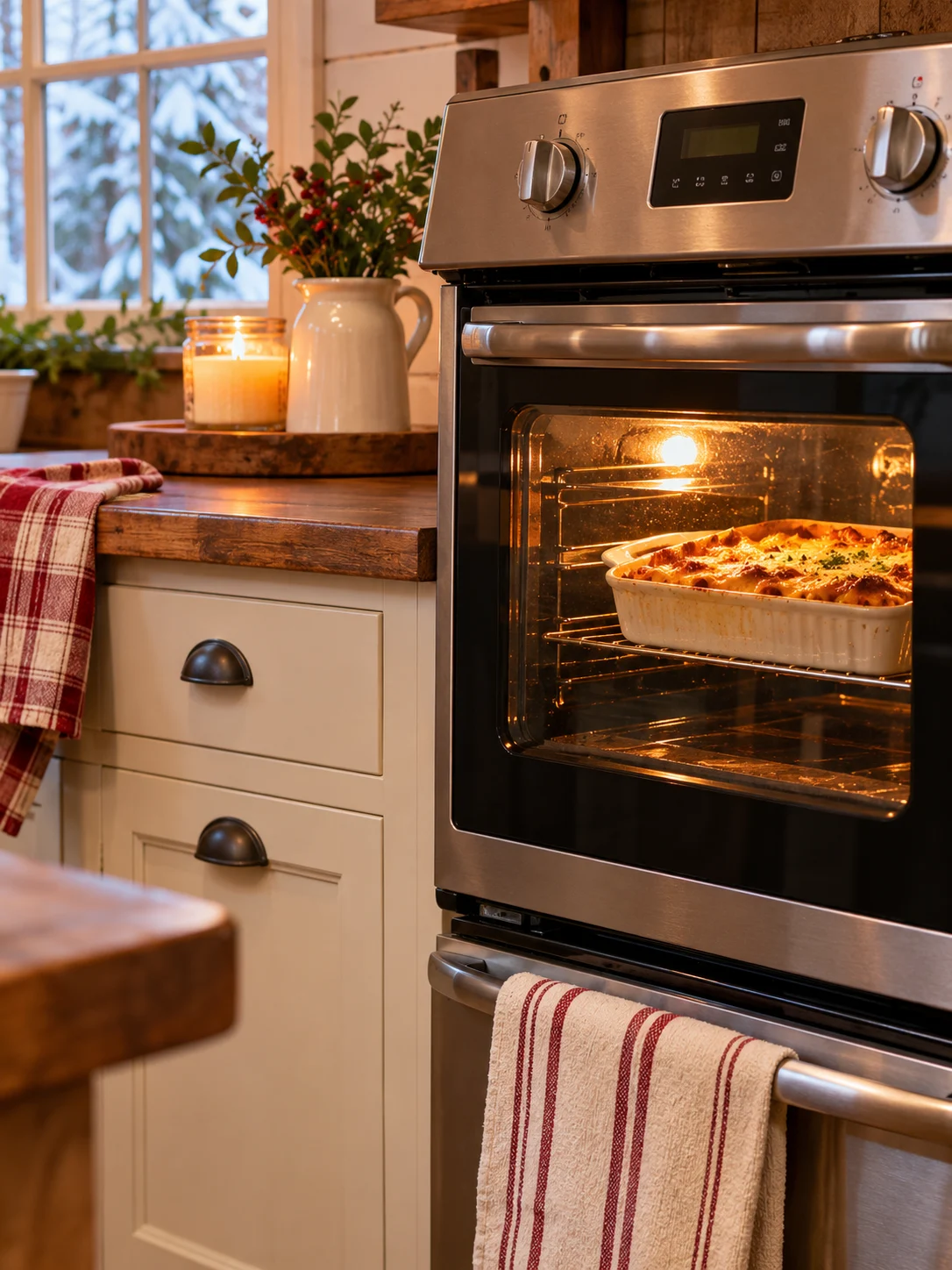
The fastest and most noticeable difference was right in the kitchen itself. On most baking days, the kitchen thermometer rose by 2°F to 4°F within 15 to 20 minutes after the oven was shut off and the door was left open. If the room started at 67°F, it often climbed to 70°F or 71°F. After the lasagna night, it reached 72°F. That doesn’t sound dramatic on paper, but in a room where people are unloading dishes, packing lunches, and wiping counters, it felt genuinely pleasant.
What struck me most was not just the number on the thermometer but the comfort factor. The room lost that “cold edges” feeling. Standing at the sink no longer felt drafty, and the tile floor seemed less biting. If you spend a lot of time in your kitchen the way I do, that localized comfort counts for quite a bit.
4. The warmth did not spread evenly through the whole house
This is where expectations need to stay realistic. The extra warmth mostly stayed in the kitchen and dining area. The thermometer 14 feet away usually rose by 1°F, sometimes 2°F on longer bakes, but the living room at the far end of the house didn’t change enough to notice. Bedrooms absolutely did not benefit.
In other words, this was never a whole-house heating solution in my home. It behaved more like a temporary comfort boost in the room closest to the oven. If your kitchen is closed off with a doorway, I suspect the effect would stay even more concentrated. If you have a very open floor plan, it may drift farther, but it will also dilute faster.
5. The effect usually lasted 30 to 60 minutes, not all evening
On average, the kitchen stayed noticeably warmer for about half an hour. After 45 minutes, the thermometer often began sliding back toward its starting point. By the 60-minute mark, most of the temperature bump was gone unless I had baked something for a long time at 400°F or above.
That was one of the clearest lessons of the 14 days: this is a short-lived source of warmth. It’s useful when everyone is gathered in or near the kitchen after dinner, but it doesn’t replace regular heat over the course of a cold night. By bedtime, the effect was completely over.
6. It helped me resist touching the thermostat, which was the real savings
If I’m being honest, the most meaningful outcome may have been behavioral rather than technical. On cold evenings, I’m very tempted to bump the furnace from 68°F to 70°F, especially if I’m cleaning up after dinner and the kids are lingering at the table. During this experiment, I didn’t do that on baking nights, because the kitchen already felt comfortable enough.
In our house, that mattered. Even avoiding a 1°F to 2°F thermostat increase for an hour or two felt like a small win. I can’t claim some huge reduction in our heating bill from this habit alone, but I can say it reduced the urge to call for more furnace heat in the busiest room of the house.
7. I did not see a dramatic drop in furnace use
I want to be fair and practical here. Our furnace still cycled on. The house still needed heat. On the colder days—especially when it was below 25°F outside—the system ran much as it usually does. The kitchen’s temporary warmth did not somehow keep the rest of the house at temperature.
If someone is hoping this trick will noticeably replace central heat for long stretches, that was not my experience. At best, it slightly reduced how uncomfortable the kitchen felt between furnace cycles. It was a supplement to comfort, not a substitute for heating.
8. Safety became the most important part of the experiment
This is the section I would never skip, especially as a parent. An electric oven does not create the carbon monoxide concern that comes with a gas oven, but an open hot oven is still a burn hazard. The door, racks, and interior stay dangerously hot for quite a while. In a busy family kitchen, that matters more than any extra bit of warmth.
I only did this under controlled conditions: after cooking was finished, while I was still in the kitchen, with no toddlers in the house and no pets wandering underfoot. I never left the room for long, never went upstairs, and never did it right before bed. If young children are around, if anyone in the home has balance issues, or if the oven door opens into a high-traffic path, I would skip this entirely. A warm kitchen is not worth an emergency room visit.
9. There was a big difference between using leftover heat and using the oven as a heater
For me, this was the line that made the practice feel reasonable. I was not turning on the oven just to heat the room. I was using the residual warmth that was already there after making dinner or dessert. That is a very different situation from running an oven for space heating, which is inefficient and can be unsafe.
I would not recommend heating a kitchen by turning on the oven with no food inside, and I especially would not recommend doing that with a gas oven. In my test, the only “extra” action was what happened after the baking was done. That distinction matters.
10. Some meals produced much better results than others
The best-performing nights were the long, hotter bakes: lasagna at 400°F for 55 minutes, baked potatoes at 425°F for 1 hour, and casseroles around 375°F for 45 minutes. Those seemed to load the oven walls, racks, and cookware with enough stored heat to make a noticeable difference afterward.
The least impressive nights were cookies and muffins. They smelled wonderful, and I’m never going to complain about that, but a couple trays at 350°F just didn’t create the same lingering warmth. If someone tries this after a quick batch of cookies and thinks, “That barely changed anything,” I completely understand.
11. It paired best with a couple of simple heat-holding habits
The evenings that felt coziest were not just about the oven. They were the nights I also did a few very ordinary things: closed the back entry door firmly, pulled the kitchen curtains before sunset, and kept the exhaust fan off once cooking smells were under control. On one especially cold evening, I also put a washable runner rug down near the sink, and that made the room feel warmer in a surprisingly big way.
That’s the practical parent in me talking: comfort usually comes from layers of small choices. Warm food, closed curtains, socks, slippers, and a kitchen that’s already been heated by cooking all work together better than any one trick does by itself.
12. Picky-eater nights changed how useful this was
One thing I noticed as a family cook is that meal style affects the outcome. On casserole nights—chicken and rice, baked ziti, enchiladas—the oven was on long enough to create noticeable leftover warmth, and everybody ate in the kitchen or dining area. On pickier nights, when I made one child a quick backup like frozen fries or garlic toast after the main meal, the oven sometimes ended up being used in shorter bursts rather than one long bake.
That meant less residual heat all at once. So if your family meals involve lots of small, separate oven uses instead of one longer bake, you may not see the same effect. Still, even then, the kitchen felt friendlier than on stovetop-only nights.
13. The kitchen felt more inviting, which changed family time more than I expected
This may sound small, but it was my favorite part. When the kitchen was a touch warmer after dinner, people lingered. Homework got spread across the table. Somebody cut up apples. Someone else wrapped leftovers. We weren’t rushing away from a chilly room.
As a mom, I notice those moments. A warm, well-used kitchen becomes the heart of the house in winter. That doesn’t show up neatly on a thermometer or utility bill, but it absolutely showed up in our evenings.
14. Here’s my honest verdict after 14 days
After two weeks, I’d say this habit was modestly helpful, very situational, and only worth doing if it’s done safely. In my home, it raised the kitchen temperature by a few degrees for 30 to 60 minutes, made post-dinner cleanup more comfortable, and helped me avoid bumping up the thermostat on baking nights. It did not heat the whole house, and it did not meaningfully replace the furnace.
If you already bake often in an electric oven, there is some practical comfort in letting the stored heat drift into the kitchen for a little while afterward—as long as you are present, attentive, and your household setup makes it safe. I’d call it a cozy bonus, not a heating strategy. And honestly, that’s enough for me. In the middle of a Midwestern winter, sometimes a cozy bonus is exactly what a family kitchen needs.