There’s something seriously satisfying about opening your pantry and knowing you can make dinner without running to the grocery store. Pasta? Check. Rice? Yep. Canned beans? Sitting right there waiting for taco night.
That’s why I’m a big fan of keeping long shelf life foods around.
These pantry staples can stick around for months, years, and, in some cases, much longer when stored correctly. They’re handy for busy weeks, last-minute meals, unexpected guests, tight grocery budgets, and those nights when leaving the house sounds like way too much work.
And no, your pantry doesn’t need to look like an emergency bunker.
A smart stash of rice, beans, pasta, canned foods, baking staples, seasonings, and a few treats can give you plenty of meal options without filling every cabinet in the kitchen.
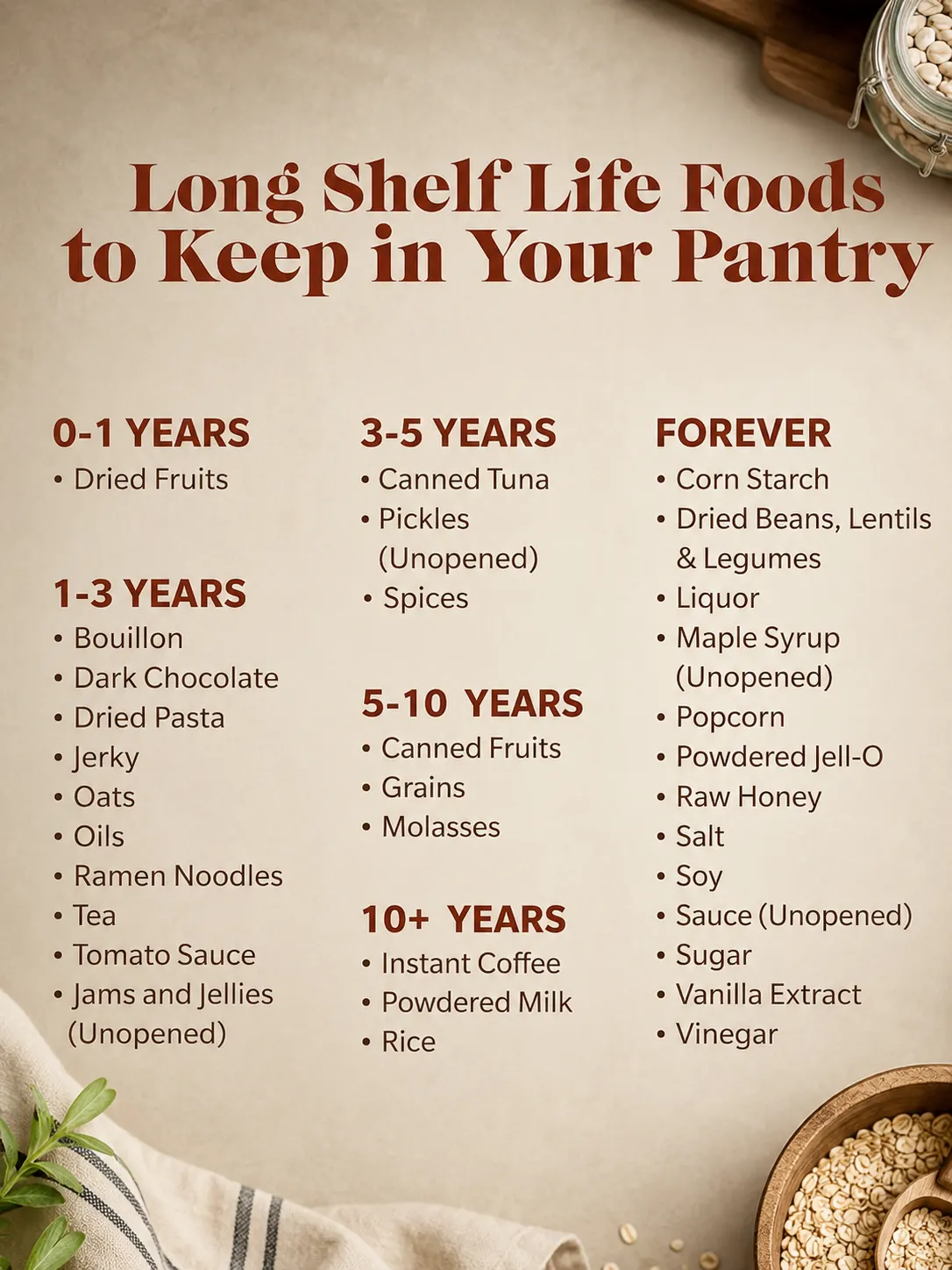
Here are 32 long shelf life foods to keep in your pantry, plus practical storage tips to help them stay fresh and useful.
What Foods Have a Long Shelf Life?
Foods with a long shelf life usually contain little moisture or come in packaging that protects them from air, moisture, pests, and microorganisms.
That’s why dried foods such as rice, beans, pasta, oats, and sugar can hang around much longer than fresh ingredients.
Canning and pickling can also extend storage time. Foods such as canned vegetables, tuna, tomato sauce, and pickles can remain pantry-friendly for years while unopened.
Still, storage matters—a lot.
Heat, humidity, sunlight, air, and pests can shorten the life of pantry foods. I like airtight containers for dry staples because they keep the pantry tidy while giving ingredients another layer of protection.
One more thing: “best by” and “unsafe to eat” aren’t automatically the same thing. Dates often relate to expected quality rather than an exact moment when food becomes dangerous. Always check the package instructions and inspect older foods before eating them.
Now, onto the good stuff.
1. Bouillon
Shelf life: About 2 years
Best storage: A cool, dark, dry pantry
Bouillon cubes or granules are tiny pantry heroes. Add water and you’ve got a quick broth base for soups, stews, rice, sauces, and gravy.
I especially like bouillon when cabinet space is tight. Several cartons of broth can take over a shelf surprisingly fast, while one little jar of bouillon barely asks for any room.
Keep the container tightly closed and away from humidity.
Quick tip: Add a little bouillon to the cooking water for rice or grains when dinner needs more flavor without extra work.
2. Canned Fruits, Vegetables, and Beans
Shelf life: Up to about 6 years
Best storage: A cool, dry cupboard
Canned foods are some of the most practical foods that last a long time without refrigeration.
Beans can become chili, tacos, soups, dips, or quick grain bowls. Canned tomatoes can start pasta sauce. Canned peaches or pineapple can cover dessert when the fruit bowl is looking pretty sad.
Keep cans away from excessive heat and moisture.
And please check the container before opening it. A badly swollen, leaking, heavily rusted, or seriously damaged can belongs in the trash.
Pantry shortcut: Keep several types of beans around. Black beans, chickpeas, kidney beans, and cannellini beans can turn the same basic pantry into completely different meals.
3. Cornstarch
Shelf life: Indefinite when properly stored
Best storage: Sealed and completely dry
Cornstarch may not be exciting on its own, but goodness, it earns its cabinet space.
It thickens sauces, gravies, pie fillings, soups, and stir-fry sauces. It can also play a role in baking and give certain fried foods a crisp texture.
Moisture is the big enemy here. Keep cornstarch dry and tightly sealed.
If you bake or make homemade sauces often, this is one pantry basic worth keeping around.
4. Dark Chocolate
Shelf life: About 2 years
Best storage: Cool room temperature, tightly wrapped
Finally, a survival pantry item I can get genuinely excited about.
Dark chocolate generally keeps longer than milk or white chocolate. Store it away from heat, direct sunlight, moisture, and strong-smelling foods.
Chocolate can sometimes develop a pale coating known as bloom. That can affect its appearance and texture without necessarily meaning the chocolate has spoiled.
Use dark chocolate in cookies, brownies, oatmeal, homemade trail mix—or, you know, eat a square while standing in front of the pantry. Been there.
5. Dried Beans, Lentils, and Legumes
Shelf life: Very long when kept dry
Best storage: Airtight containers in a cool pantry
If I had to choose a handful of best foods for long-term storage, dried beans and lentils would absolutely make my list.
They’re affordable, filling, versatile, and packed with possibilities.
Use them for:
- Soups
- Chili
- Curries
- Bean burgers
- Salads
- Rice bowls
- Tacos
- Dips
Older dried beans may take longer to soften during cooking. That’s normal.
Lentils are particularly handy because many varieties cook faster than dried beans and don’t require the same lengthy soaking routine.
6. Dried Fruit
Shelf life: About 1 year or longer
Best storage: Tightly sealed packaging or airtight containers
Raisins, dried cranberries, dates, apricots, and other dried fruits give you concentrated sweetness without the short life of fresh fruit.
Toss them into oatmeal, granola, muffins, rice dishes, salads, or trail mix.
They’re also ridiculously easy to snack on.
For longer storage, some dried fruits can be kept in the freezer.
Quick snack idea: Mix dried cranberries, nuts, dark chocolate pieces, and cereal for a five-minute pantry trail mix.
7. Dried Pasta
Shelf life: Up to about 3 years
Best storage: An airtight container
Pasta is the pantry equivalent of that dependable friend who always shows up.
Spaghetti plus tomato sauce? Dinner.
Penne plus canned beans and seasonings? Dinner.
Macaroni plus cheese? Definitely dinner.
Unopened pasta in sturdy sealed packaging can stay in its package. Once opened—or when pasta comes in a flimsy cardboard box—I prefer transferring it into an airtight container.
It also makes seeing how much pasta you actually have much easier. No more discovering three nearly empty spaghetti boxes on the same shelf.
8. Grains
Shelf life: Some properly stored grains can last for years
Best storage: Sealed containers in a cool, dry pantry
Quinoa, barley, millet, rye, and other grains deserve more attention in a long-term pantry.
They can serve as the foundation for breakfast bowls, side dishes, salads, soups, and hearty dinners.
Different grains contain different amounts of natural oils, so their storage lives aren’t identical. Whole grains with more natural oils can lose quality faster than highly refined grains.
Buy quantities that match how frequently your household actually eats them.
That giant bargain bag isn’t much of a bargain if nobody wants it.
9. Instant Coffee
Shelf life: Potentially decades under suitable storage conditions
Best storage: Dry and airtight
Coffee lovers, relax. We remembered you.
Instant coffee has an impressively long storage life compared with many everyday foods. It’s lightweight, compact, and ridiculously easy to prepare.
Besides making a quick cup of coffee, instant coffee can add deep flavor to chocolate cake, brownies, frosting, smoothies, and homemade coffee drinks.
Keep moisture out of the container.
Because soggy instant coffee? Yeah, nobody asked for that.
10. Jams and Jellies
Shelf life: Around 2 years unopened; shorter after opening
Best storage: Pantry unopened, refrigerator after opening
Jams and jellies bring fruit flavor to the pantry without requiring a basket of fresh berries every week.
Spread them on toast, swirl them into oatmeal, spoon them over pancakes, or use them in sauces and baked treats.
Once you open a jar, refrigerate it and follow the manufacturer’s storage guidance.
Also, always use a clean utensil. Repeatedly dipping a buttery toast knife into the jar isn’t doing your strawberry jam any favors.
11. Jerky
Shelf life: Up to about 2 years for some unopened commercial products
Best storage: Sealed in a cool, dark pantry
Commercially packaged jerky can be a useful shelf-stable protein source.
It’s portable, requires no cooking, and works well for road trips, hiking bags, work snacks, and emergency food supplies.
Homemade jerky is different and generally has a much shorter storage period, so don’t assume the same shelf life applies.
Check the package instructions for storage requirements.
12. Liquor
Shelf life: Indefinite for many unopened distilled spirits
Best storage: Room temperature away from heat and direct sunlight
High-proof distilled spirits such as vodka, whiskey, rum, gin, and tequila can remain stable for an extremely long time when properly stored.
Once opened, quality may gradually change because of oxidation and evaporation.
Not every alcoholic drink follows this rule. Cream liqueurs, vermouth, wine, and lower-alcohol products have different storage needs.
So don’t treat the entire liquor cabinet like it’s immortal.
13. Maple Syrup
Shelf life: Very long unopened; roughly a year after opening when refrigerated
Best storage: Pantry before opening, refrigerator afterward
Pure maple syrup is one of those ingredients that makes an ordinary breakfast feel like Saturday morning.
Keep unopened bottles in a cool cupboard. After opening, move the syrup to the refrigerator.
Besides pancakes and waffles, maple syrup works beautifully in oatmeal, baked goods, glazes, marinades, roasted vegetables, and homemade salad dressings.
Basically, don’t let the pancake stack have all the fun.
14. Molasses
Shelf life: Several years when properly stored
Best storage: Cool pantry with the lid tightly closed
Molasses is dark, rich, sweet, and incredibly handy for baking.
It gives gingerbread, baked beans, barbecue sauce, cookies, and marinades their distinctive depth.
Because you usually need only a small amount per recipe, one bottle can hang around for quite a while.
Wipe sticky residue from the rim before closing the bottle. Future-you will appreciate not having to wrestle with a glued-on cap.
15. Oats
Shelf life: Up to about 2 years
Best storage: Airtight container for longer storage
Oats are cheap, filling, and ridiculously flexible.
Of course, you can make oatmeal. But oats also work in cookies, granola, muffins, crisps, snack bars, meatloaf, and homemade bread.
For longer pantry storage, move oats from cardboard packaging into a properly sealed food container.
Busy-morning trick: Portion oats with cinnamon and dried fruit into containers ahead of time. Breakfast suddenly requires almost zero thought.
16. Cooking Oils
Shelf life: Up to around 2 years unopened for some oils
Best storage: Cool, dark pantry away from the stove
Olive, vegetable, peanut, and canola oils are everyday kitchen basics, but oils don’t last forever after opening.
Light, oxygen, and heat can cause oils to become rancid.
Keep bottles away from sunny windows and hot appliances. And yes, that cabinet directly above the stove might be convenient, but it isn’t always the friendliest place for long-term oil storage.
Buy bottle sizes that fit your cooking habits.
17. Packaged Tuna
Shelf life: Up to about 5 years for canned tuna
Best storage: Cool pantry or cupboard
Canned tuna is compact, protein-rich, and ready to eat.
That’s a pretty nice combination when the refrigerator is empty.
Make tuna salad, pasta, casseroles, sandwiches, wraps, patties, or rice bowls. Add crackers and you’ve got a quick lunch without turning on the stove.
Shelf-stable tuna pouches can also last for years, although their expected storage period may differ from cans.
Always follow the package date and storage directions.
18. Pickles and Pickled Vegetables
Shelf life: Several years unopened for some commercially canned products
Best storage: Pantry unopened, refrigerator after opening
Pickling gives vegetables a much longer life while adding that salty, tangy crunch I absolutely love.
Pickles are obvious burger companions, but don’t stop there. Add pickled onions, peppers, carrots, or cucumbers to sandwiches, grain bowls, salads, tacos, and snack plates.
Commercial shelf-stable pickles and quick refrigerator pickles are not the same thing.
Once a shelf-stable jar is opened, refrigerate it.
19. Popcorn Kernels
Shelf life: Very long when kept properly sealed
Best storage: Airtight container in a cool cupboard
Whole popcorn kernels are one of my favorite pantry snacks because a small container makes a lot of food.
All you need is a pot, a little oil, and a few minutes.
Then comes the fun part.
Go classic with butter and salt, make it spicy with chili powder, add Parmesan, sprinkle cinnamon sugar on top, or toss in some dark chocolate after the popcorn cools.
Movie night handled.
20. Powdered Gelatin Dessert Mix
Shelf life: Very long when unopened and kept dry
Best storage: Cool, dry pantry
Boxes of powdered gelatin dessert mix take up almost no room and can remain usable for a long time when protected from moisture.
Besides classic gelatin desserts, these mixes can appear in layered desserts, fruit salads, no-bake treats, and plenty of retro recipes Grandma probably remembers better than the rest of us.
Humidity is the main thing to avoid.
Keep the packaging dry and intact.
21. Powdered Milk
Shelf life: Potentially up to 20 years under suitable storage conditions
Best storage: Airtight, cool, dark, and dry
Powdered milk deserves a spot in more pantries.
You can reconstitute it when fresh milk isn’t available or add the powder directly to certain bread, cookie, and dessert recipes.
For extended storage, protection from moisture, heat, light, and air matters.
The exact storage life varies by product and packaging, so check manufacturer guidance before treating a package as a decades-long food supply.
22. Ramen Noodles
Shelf life: Around 2 years
Best storage: Original sealed packaging at room temperature
Ramen is cheap, fast, and almost impossible to overthink.
Sure, you can prepare it straight from the package. But with an egg, frozen vegetables, canned corn, leftover chicken, hot sauce, or green onions, basic ramen becomes a much more satisfying meal.
Because the noodle blocks may contain fat, they don’t have the nearly indefinite storage life of plain dried rice or sugar.
Rotate them through your pantry rather than forgetting about them for ten years.
23. Raw Honey
Shelf life: Indefinite under proper conditions
Best storage: Tightly sealed at room temperature
Honey is famous for its exceptionally long storage life.
Its low moisture and acidic nature create conditions that make microbial growth difficult when honey remains properly stored.
Over time, honey may crystallize. Crystallization doesn’t automatically mean it has spoiled.
Set the closed container in warm water and the crystals can gradually soften.
Honey works in tea, oatmeal, marinades, baked goods, salad dressing, yogurt, and about a million quick snacks.
Okay, maybe not literally a million—but you get me.
24. Rice
Shelf life: White rice can remain usable for decades under controlled storage conditions
Best storage: Airtight container in a cool, dry location
Rice is one of the true champions among long shelf life pantry foods.
White rice, jasmine rice, basmati rice, and similar varieties contain relatively little oil and can remain stable for a very long time when protected from heat, moisture, oxygen, and pests.
Brown rice is different.
Because its bran layer contains natural oils, brown rice has a much shorter shelf life.
Rice is also incredibly practical. Pair it with beans, canned vegetables, tuna, curry, soup, or almost any protein and dinner starts coming together.
25. Salt
Shelf life: Indefinite
Best storage: Cool, dark, and dry
Plain salt doesn’t spoil in the traditional sense.
Moisture can cause clumping, though, so keep it somewhere dry and preferably in a sealed container.
Salt also earns points for versatility. Obviously it seasons food, but it’s also important for baking, brining, pickling, and food preservation.
If you’re building an emergency pantry food list, basic salt deserves a place near the top.
26. Soy Sauce
Shelf life: Extremely long unopened
Best storage: Cool pantry unopened; refrigeration can help maintain quality after opening
Soy sauce contains a high concentration of salt, which contributes to its long storage life.
A bottle can add major savory flavor to rice, noodles, marinades, soups, stir-fries, dipping sauces, and vegetables with practically no effort.
After opening, follow the label’s directions. Refrigeration can help maintain flavor and quality for a longer period.
For me, rice plus soy sauce plus a fried egg is one of those “there’s nothing to eat” meals that proves there was, in fact, something to eat.
27. Whole Spices and Dried Herbs
Shelf life: Whole spices up to about 4 years; ground spices and dried herbs generally less
Best storage: Airtight containers away from heat and sunlight
Spices usually lose their punch before they become unsafe.
Whole spices such as peppercorns, cloves, cinnamon sticks, coriander seeds, and cardamom generally retain their character longer than ground versions.
Dried herbs also gradually lose aroma and flavor.
Keep everything away from heat, moisture, and direct sunlight.
And maybe don’t buy that warehouse-size container of cumin unless your household cooks like a taco truck.
28. Sugar
Shelf life: Indefinite when properly stored
Best storage: Airtight container in a cool, dry place
White granulated sugar can keep for an extremely long time because microorganisms struggle to grow in its low-moisture environment.
The biggest problems are usually moisture, clumping, odors, and pests.
Brown sugar also keeps well but tends to harden.
If that happens, don’t immediately throw it away. Moisture-restoring methods can often soften it again.
Sugar isn’t only for desserts, either. Small amounts appear in sauces, marinades, bread, pickles, and homemade dressings.
29. Tea
Shelf life: Around 2 years for best quality
Best storage: Airtight container away from heat, light, and moisture
Tea bags and loose-leaf tea can stay pantry-friendly for a good while.
The leaves generally lose aroma and flavor as they age rather than suddenly becoming unusable on one specific day.
Store tea away from strong odors because dry tea can absorb surrounding aromas.
Nobody wants Earl Grey with a mysterious hint of taco seasoning.
Keep different varieties around and you’ve got hot drinks, iced tea, sweet tea, and flavored drinks covered year-round.
30. Canned or Jarred Tomato Sauce
Shelf life: Up to about 2 years unopened
Best storage: Cool cupboard
Tomato sauce might be one of the easiest answers to “What the heck am I making for dinner?”
Add pasta and Parmesan and you’re basically there.
But tomato sauce can also become pizza sauce, soup, shakshuka-style eggs, casseroles, chili, or the base for a quick braised dish.
Keep unopened cans and shelf-stable jars in a cool, dry cupboard.
After opening, transfer leftovers to appropriate refrigerated storage and use them within the recommended period.
31. Pure Vanilla Extract
Shelf life: Indefinite when stored correctly
Best storage: Tightly closed in a cool, dark cupboard
Pure vanilla extract gets its impressive storage stability from alcohol.
Keep the bottle away from heat and sunlight, and close it tightly after each use.
Vanilla is useful far beyond birthday cake. Add it to pancakes, French toast, oatmeal, coffee, whipped cream, cookies, brownies, and homemade granola.
Pure and imitation vanilla aren’t identical when it comes to storage life, so check what you’ve actually got in the cabinet.
32. Vinegar
Shelf life: Indefinite for many types
Best storage: Original tightly closed container in a cool, dry cupboard
Vinegar is another pantry heavyweight.
Its acidity gives it remarkable stability, and it has dozens of kitchen uses.
Use vinegar in salad dressings, marinades, sauces, pickles, slaws, and countless savory dishes.
Distilled white vinegar is particularly stable. Other vinegars can experience harmless changes in appearance or sediment over time.
Keep bottles tightly closed and away from excessive heat.
And there you have it—32 pantry staples that won’t demand a frantic “eat me today!” every time you open the cabinet.
How to Store Long Shelf Life Foods Properly
Buying foods with a long shelf life is only half the job. Where and how you store them makes a major difference.
Aim for a pantry that stays cool, dry, dark, and clean.
Heat speeds up quality loss. Moisture encourages mold and damages dry ingredients. Sunlight can affect color and flavor. Open packaging gives insects and other pests an easy invitation.
For dry staples such as rice, pasta, sugar, oats, beans, and grains, food-safe airtight containers are especially handy.
Label containers with the product name and purchase or opening date, too.
I know, labeling rice doesn’t sound thrilling. But six months later, when you’re staring at three mystery containers filled with suspiciously similar white grains, you’ll be glad you did it.
Use the First In, First Out Pantry Method
Here’s one ridiculously simple habit that can cut down on food waste: first in, first out, often called FIFO.
Put newly purchased food behind older packages.
Then use the older items first.
That’s it.
When you bring home another can of beans, slide it behind the cans already sitting there. Do the same with pasta, tomato sauce, tuna, oats, and other shelf-stable foods.
This keeps older products moving toward the dinner table instead of slowly becoming pantry archaeology.
Which Foods Last the Longest?
Several everyday pantry foods stand out for their exceptionally long storage potential.
Properly stored salt, sugar, honey, cornstarch, vinegar, and pure vanilla extract can remain stable for an extremely long time.
White rice can also last for decades under controlled long-term storage conditions, while powdered milk and instant coffee can have surprisingly lengthy storage lives in suitable packaging.
But here’s the important part: don’t focus only on the biggest number.
The best long-term food storage foods are foods your family will actually eat.
A 20-year supply of something everyone hates isn’t particularly useful.
Build your pantry around normal meals first, then think about storage time.
Best Long Shelf Life Foods for Emergency Storage
If you’re putting together an emergency food supply, prioritize foods that provide calories, protein, variety, and simple preparation.
Rice and dried beans make a classic combination. Canned beans save cooking time and water. Tuna gives you ready-to-eat protein. Oats handle breakfast. Dried fruit adds sweetness and variety. Bouillon brings flavor to plain grains and soups.
Peanut butter is another common emergency pantry choice, although its storage life is shorter than many foods on this list because its oils eventually become rancid.
Also think about water and cooking requirements.
Dried beans may last a very long time, but they require water and cooking. Canned beans are heavier and take more storage room, yet they’re ready to eat.
A practical pantry usually contains a mix of both.
Long Shelf Life Foods FAQ
What food can last for years without refrigeration?
Rice, dried beans, pasta, canned foods, sugar, salt, honey, vinegar, instant coffee, powdered milk, oats, spices, and several other dry or preserved foods can last for years without refrigeration when stored correctly.
Exact shelf life depends on the food, packaging, temperature, humidity, and whether the package has been opened.
What food has the longest shelf life?
Salt, sugar, honey, cornstarch, vinegar, and certain other shelf-stable products can have indefinite or extremely long storage lives under suitable conditions.
White rice can also last for decades when packaged specifically for long-term storage.
What canned foods have a long shelf life?
Commercially canned beans, vegetables, fruit, tuna, meats, soups, and sauces can have long shelf lives.
Always inspect cans before eating the contents. Discard containers that are bulging, leaking, badly rusted, or otherwise seriously damaged.
Does rice really last 30 years?
Certain types of white rice can remain usable for decades when stored under controlled conditions with protection from oxygen, moisture, heat, and pests.
That does not mean every bag of rice sitting in a regular kitchen cabinet will automatically stay fresh for 30 years.
Brown rice also has a considerably shorter storage life because it contains more natural oils.
Does honey expire?
Pure honey can remain stable for an exceptionally long time when properly sealed and protected from contamination and excess moisture.
Honey commonly crystallizes as it sits. Crystallization alone isn’t a sign that it has gone bad.
What pantry foods should I always keep stocked?
For an everyday household, I like keeping rice, pasta, canned beans, canned tomatoes, oats, flour, sugar, salt, cooking oil, vinegar, spices, tuna, bouillon, and a few favorite snacks available.
Those basics give you enough flexibility to make plenty of meals without needing a grocery run every other day.
Final Thoughts on Long Shelf Life Foods
A well-stocked pantry doesn’t need hundreds of cans or giant buckets of emergency food.
Start with long shelf life foods you already eat.
Grab an extra bag of rice. Keep a couple cans of beans and tomatoes around. Store pasta in a sealed container. Add oats, tuna, dried fruit, honey, spices, and bouillon as your space and budget allow.
Then rotate everything through your normal meals.
That’s the part people sometimes forget. Your pantry should be useful, not a museum.
And honestly, there are few better kitchen feelings than realizing it’s 6:30 p.m., everybody’s hungry, you skipped the grocery store—and you’ve still got everything you need to pull dinner together.