
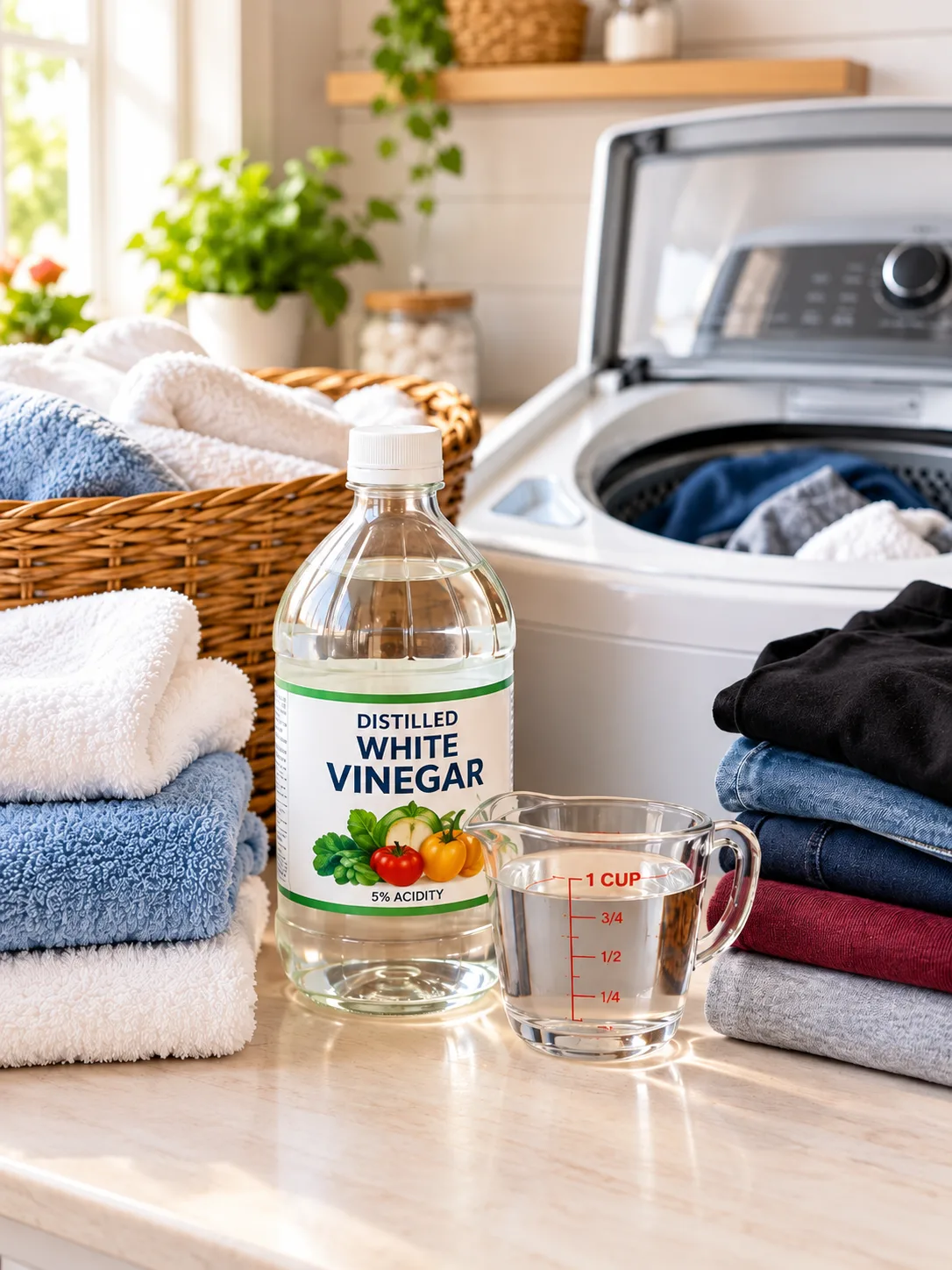
October is when laundry gets real at my house. The garden is winding down, the grandkids are in and out with hoodies and soccer socks, and every towel in the place seems to come in from the line carrying a little extra dampness from cool autumn air. This year, after hearing so many folks swear by white vinegar in the rinse, I decided to stop guessing and actually test it. For 21 loads over the course of one month, I ran my washing machine with an extra rinse cycle and added white vinegar to see whether it truly made a difference or whether it was just one of those handed-down housekeeping tales that sounds better than it performs.
I kept notes the way I keep notes on canning tomatoes and baking bread: simple, practical, and honest. I paid attention to odor, softness, lingering detergent, static, towels, dark clothes, pet bedding, and even what happened to my machine itself. What I found was a mix of real benefits, a few disappointments, and several lessons I wish somebody had spelled out plainly years ago. If you’ve been wondering whether vinegar belongs in the laundry room, here’s exactly what happened in mine.
1. How I set up the test
I used plain distilled white vinegar, the regular 5% acidity kind you can buy by the gallon at the grocery store. Around here, a gallon runs between $3 and $4. I did not use cleaning vinegar, which is stronger and not what I’d recommend for laundry. For each of the 21 loads, I added 1/2 cup of white vinegar to the fabric softener dispenser or directly into the rinse portion if I was timing it by hand.
The machine is a fairly standard top-load washer, not brand-new but dependable, with an optional extra rinse setting. For this test, I kept my detergent amount consistent: about 2 tablespoons of concentrated liquid detergent for average loads and 3 tablespoons for extra-dirty items like work jeans or dog blankets. That mattered, because I wanted to see what vinegar did, not what overusing detergent does.
2. The 21 loads I washed
I didn’t just wash one kind of laundry over and over. The month included 4 loads of bath towels, 3 loads of bed linens, 5 mixed everyday clothing loads, 2 loads of darks, 2 loads of kitchen towels and cleaning cloths, 2 loads of pet bedding, 2 loads of sweatshirts and heavier fall layers, and 1 load of delicate blouses and knit tops on a gentler cycle.
That range turned out to be important. Vinegar behaved one way on thick cotton towels and another on synthetic activewear. On the dog bedding, for instance, odor mattered most. On dark T-shirts, I was watching for detergent film. On sheets, I was mostly interested in softness and freshness. A trick like this has to prove itself across real household laundry, not just one picture-perfect load.
3. The very first thing I noticed: less leftover detergent smell
By load number 3, I could tell the rinse was coming cleaner. Not “vinegary,” which some people worry about, but cleaner in the sense that clothes smelled more neutral when they came out. A lot of detergent today has a strong perfume, and sometimes that perfume hangs on even when the fabric itself doesn’t feel truly rinsed. With the extra rinse and vinegar, that heavy soapy smell backed off.
This was especially noticeable in pillowcases, flannel sheets, and T-shirts worn under sweatshirts. Instead of that coated, perfumed scent, they smelled like plain clean fabric. Once dry, there was no vinegar odor left behind on any of the 21 loads. Not one. That surprised my daughter, who had fully expected the towels to smell like pickle brine. They did not.
4. Towels improved the most
If I had to name one category that benefited most, it was bath towels. By October, our towels have usually gone through a long summer of sunscreen, hard water, and hurried washes. Even freshly laundered, they can start to feel a bit stiff or draggy, especially if too much detergent has built up over time.
After 4 vinegar-and-extra-rinse towel loads, the difference was plain. The towels felt less waxy and more absorbent. Not miracle-soft like something from a department store display, but more like towels should feel: fluffy enough, thirsty, and not coated. I tested this the old practical way by drying my hands and face after washing up. The towels absorbed water faster instead of pushing it around. For me, that alone made the experiment worth doing.
5. Pet bedding came out fresher, but not magically stain-free
Now, I love a good frugal shortcut, but I don’t trust miracle claims, especially when dogs are involved. We have two dog blankets and one crate pad that can smell a little ripe by the end of the week, particularly after rainy walks. On those 2 pet-bedding loads, the vinegar rinse did help with odor. The blankets came out noticeably less musty and less “doggy” than usual.
What it did not do was erase every stain or deep-set smell on its own. For one blanket that had an old muddy patch and a lingering earthy smell, I still needed a proper pre-treatment and a warm wash. Vinegar helped in the rinse stage, but it wasn’t a substitute for cleaning heavily soiled items correctly. I think that’s an important distinction. It’s a finisher, not a rescuer.
6. Dark clothes looked a touch clearer
I watched my dark loads closely because detergent residue shows there faster than anywhere else. Black leggings, navy sweatshirts, charcoal T-shirts, and dark socks can all come out with that dull, dusty cast if too much soap hangs on in the fibers. On my 2 dark loads, the extra rinse with 1/2 cup vinegar seemed to reduce that film.
I don’t mean the clothes looked newly dyed or dramatically richer. But they did look cleaner and less cloudy, especially around seams and folded spots where detergent sometimes settles. A black cotton T-shirt I wear for yard work felt less crunchy too. That told me the rinse was helping remove buildup, even if the change was subtle rather than dramatic.
7. It helped with stiffness in line-dried laundry
In rural places, a clothesline is still a perfectly good piece of equipment, and I use mine whenever the weather cooperates. October can be tricky, though. Cool air and slower drying can leave jeans, towels, and sweatshirts feeling board-like. During this experiment, several loads went from washer to line and then finished indoors on a rack.
The vinegar rinse did seem to cut down on some of that stiffness, particularly in cotton items. A pair of heavyweight jeans and three dish towels dried with less of that sharp, crackly feel they sometimes get. I wouldn’t say they came off the line soft as a cloud, because autumn air is autumn air, but they were easier to fold and more comfortable to use right away.
8. Static was reduced, but only somewhat
A good many people claim vinegar replaces fabric softener entirely. In my house, I’d say that is partly true and partly wishful thinking. On cottons and blended basics, static was reduced a bit, especially in T-shirts and pillowcases. But on full synthetic items, especially a couple of activewear tops and one fleece throw, I still had some cling after drying.
So if your main concern is winter static from synthetic fabrics, vinegar may help but probably won’t solve it completely. It performed better as a residue remover than as a full answer to static. That was one of my clearest findings. Useful? Yes. Magical? No.
9. The extra rinse mattered just as much as the vinegar
This was one of the biggest lessons from the whole month. I suspect many people give all the credit to the vinegar when some of the improvement really comes from that extra rinse cycle. When you wash with concentrated detergent, heavy fabrics, or a packed load, one rinse often isn’t enough to get everything out cleanly.
Several of the benefits I noticed—less odor, less film, better towel absorbency—likely came from the combination of vinegar and more water moving through the load. If someone asked me whether vinegar alone works, I’d say yes, somewhat. But vinegar plus an extra rinse worked better than either idea probably would have on its own. The trade-off, of course, is more water and a little more time per load, usually 10 to 20 extra minutes depending on the machine.
10. There were loads where I noticed almost no difference
I think honest housekeeping advice should include the boring truth. Not every load came out transformed. My delicates load, for example, showed very little change. A few knit tops and lightweight blouses already washed well with a small amount of detergent, and they were not carrying much residue to begin with. The vinegar rinse didn’t hurt them, but it didn’t make me gasp either.
The same was true for one mixed clothing load that was lightly soiled and washed promptly. If your laundry habits are already fairly moderate—small detergent amounts, not stuffing the drum, prompt drying—you may see only modest gains. This trick shines brightest where there is buildup, odor, stiffness, or over-soaping.
11. My washing machine didn’t smell better overnight, but it stayed fresher
Some people use vinegar in hopes of cleaning the machine itself every time they do laundry. I wouldn’t count on that. After 21 loads, my washer did seem to stay fresher between uses, especially around the tub, but this was not the same as doing a proper machine-cleaning cycle. For that, I still believe in following the manufacturer’s instructions and cleaning the washer intentionally.
What I did notice was less of that faint sour-detergent smell that can build up when fall humidity lingers and laundry piles stack high. The inside of the machine did not develop any odd odor from the vinegar. I left the lid open between washes, which helps enormously no matter what you use.
12. The cost was small, but the time added up
Using 1/2 cup per load for 21 loads came to about 10 1/2 cups of vinegar, or a little over 2/3 of a gallon. At local prices, that cost me roughly $2 to $3 for the month. Financially, that’s quite reasonable, especially compared with many scented laundry additives.
The greater cost was time and utility use. An extra rinse on 21 loads adds up. If each cycle adds 15 minutes, that’s more than 5 extra hours of machine time in a month. Water use also rises. For me, that was acceptable during a test month, but I wouldn’t necessarily choose the extra rinse for every single load forever. I’d save it for towels, bedding, gym clothes, darks, pet items, and any laundry that feels or smells like it needs a more thorough rinse.
13. A few things I would not do again
I would not pour vinegar in carelessly without measuring. More is not always better, and 1/2 cup was plenty for my loads. I also would not combine vinegar with bleach in any way, at any stage, for obvious safety reasons. Those products should be kept separate and used according to label directions.
I also would not assume vinegar can replace good washing habits. If you overload the machine, use 4 times too much detergent, let wet laundry sit for 12 hours, or skip proper cleaning for your washer, vinegar won’t save the day. It works best as one sensible tool among others, not as a cure-all.
14. Who I think should try this
If your towels repel water, your dark clothes come out with streaky residue, your sheets feel a little coated, or your laundry has a stubborn musty note even after washing, I think this method is worth trying for 3 to 5 loads. That’s enough to see whether your fabrics improve without committing to a whole month the way I did.
It may also help if you have hard water, use concentrated detergent, or tend to line-dry heavier items. Households with pets, teenagers, or lots of sports laundry may find the extra rinse especially helpful. In my experience, the people most likely to appreciate it are those dealing with buildup rather than plain dirt.
15. My final verdict after 21 loads
After a full month, I came away thinking the vinegar rinse is a useful old-fashioned trick, but one that works best when you understand what it can and cannot do. It did improve towel absorbency, cut detergent residue, reduce some odor, and soften the feel of certain cotton items. It did not perform miracles on stains, completely eliminate static, or make every load dramatically better.
Will I keep doing it? Yes, but selectively. I’ll use 1/2 cup of white vinegar with an extra rinse for towels, bed linens, dog bedding, and any load that seems prone to buildup or mustiness. For lightly soiled everyday clothes, I’ll probably skip it most of the time. That feels like the sensible middle road, and at my age I’ve come to trust those. The best laundry routines, much like the best Midwestern suppers, don’t need to be fancy. They just need to work, steadily and honestly, week after week.