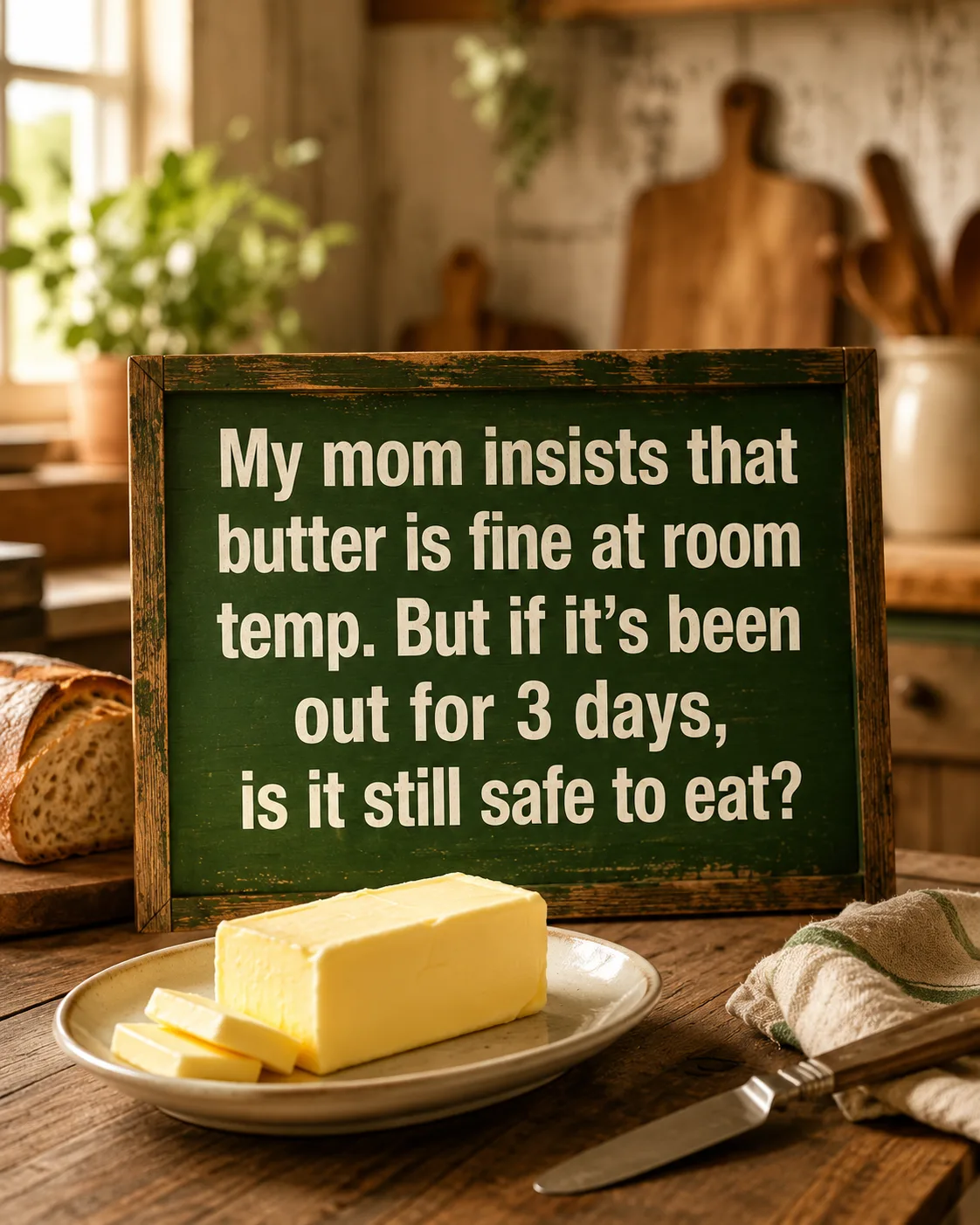
Growing up, there was almost always a butter dish sitting on the kitchen counter. My mom insisted butter spread better at room temperature and said refrigeration wasn’t necessary for everyday use. I never questioned it until I noticed the same stick had been sitting there for three days.
That got me wondering: Is butter still safe to eat after being left out for several days, or should it be thrown away?
The answer depends on the type of butter, your kitchen environment, and how it’s stored. Here’s what you should know before spreading that next slice of toast.
Can Butter Be Left at Room Temperature?
Yes, butter can safely sit at room temperature for a limited time.
Because butter is mostly fat and contains relatively little water, it’s less likely to support rapid bacterial growth than many other dairy products.
Many people keep a small amount of butter in a covered butter dish for daily use while storing the rest in the refrigerator.
Is Butter Safe After Three Days?
In many cases, salted butter that has been kept in a covered butter dish at normal room temperature can still be safe after three days.
Salt acts as a preservative and helps slow spoilage.
However, several factors affect how long butter stays fresh, including:
- The temperature in your kitchen
- Whether the butter is salted or unsalted
- Exposure to air, light, and moisture
- Whether clean utensils are used each time
While it may still be safe, the quality can begin to decline if butter sits out too long.
Salted vs. Unsalted Butter
Not all butter has the same shelf life.
Salted Butter
Salted butter generally stays fresh longer at room temperature because the salt helps slow the growth of bacteria.
Unsalted Butter
Unsalted butter has a shorter room-temperature shelf life and is usually best kept refrigerated unless you’ll use it within a day or two.
If you’re unsure which type you have, check the label before deciding to leave it out.
How to Tell If Butter Has Gone Bad
Before using butter that’s been sitting out, look for signs of spoilage.
Throw it away if you notice:
- A sour or rancid smell
- Mold
- Dark or discolored spots
- An unusual or bitter taste
- A greasy appearance that’s different from normal softening
Fresh butter should have a clean, mild aroma.
The Best Way to Store Butter
A few simple habits can help butter stay fresh.
- Keep only a small amount on the counter.
- Store it in a covered butter dish.
- Keep it away from direct sunlight and heat.
- Refrigerate extra butter.
- Freeze unopened butter if you won’t use it for several months.
Proper storage helps preserve both flavor and texture.
What About Hot Weather?
Warm kitchens change everything.
If your home regularly stays above 70°F (21°C), butter may soften too much and spoil more quickly.
During hot summer months, refrigeration is often the safest option, especially if your kitchen doesn’t have air conditioning.
Frequently Asked Questions
How long can butter stay on the counter?
Salted butter can often remain at room temperature for several days when stored properly, while unsalted butter is better refrigerated after a day or two.
Does butter have to be refrigerated?
No. Many people keep a small amount of butter at room temperature for convenience while storing the rest in the refrigerator.
Is it safe to eat butter left out overnight?
Yes. Butter is generally safe after being left out overnight if it has been protected from heat and contamination.
Can butter become rancid?
Yes. Over time, exposure to air, heat, and light can cause the fats in butter to become rancid, affecting its smell and taste.
Final Thoughts
Keeping a butter dish on the kitchen counter is a tradition in many homes, and when done properly, it can be a safe and convenient way to enjoy soft, spreadable butter.
If the butter has been stored in a covered dish, kept away from heat, and still smells and looks fresh, it’s often fine to use after a few days. However, if you notice any signs of spoilage or your kitchen is especially warm, it’s better to replace it with a fresh stick.
A little common sense and proper storage go a long way in keeping butter both safe and delicious.