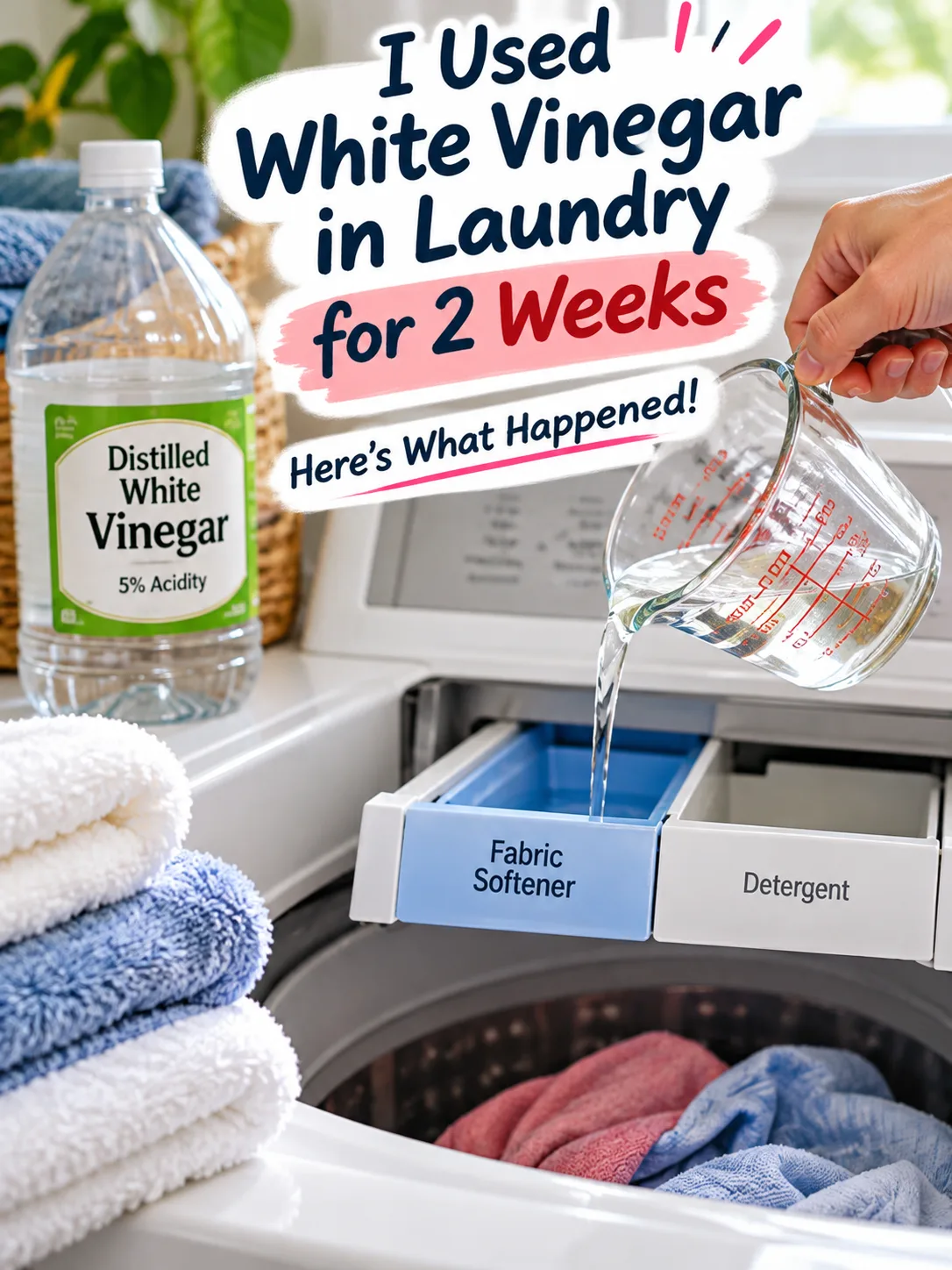
In the middle of a sticky August, when my laundry room already felt like a sauna and the hamper somehow filled up twice as fast as usual, I decided to try a little experiment: for two full weeks, I poured 1 cup of plain white vinegar into the fabric softener dispenser of my washing machine for every single load. I had heard all the claims before—softer towels, less odor, fewer detergent residues, brighter clothes—and honestly, I was equal parts curious and skeptical. I’m the kind of person who wants clean gym clothes, fluffy bath towels, and a washer that doesn’t start smelling weird by the end of summer, so it felt worth testing in real life instead of just reading about it.
Over those 14 days, I washed towels, kids’ sports clothes from visiting family, my work blouses, dark jeans, bedsheets, dish towels, and one very questionable load of sweaty weekend yardwork clothes. I kept the rest of my routine pretty consistent so I could actually tell what changed. Here’s exactly what happened, what improved, what didn’t wow me, and what I’d tell a friend before they try the same vinegar-in-the-softener-dispenser trick at home.
1. Why I tried vinegar in the first place
I didn’t start this because I wanted a trendy laundry hack. I started because August laundry in my house gets rough. Between sweat, sunscreen, kitchen towels, and heavier use of bath towels, everything seems to hold onto odor a little more than usual. On top of that, my towels had started feeling stiff even though I wasn’t over-drying them.
I also realized I was using fabric softener less and less. I don’t love buildup on towels or activewear, and I’d read that white vinegar can help rinse away leftover detergent and minerals without leaving that coated feeling. Since distilled white vinegar is inexpensive—usually around $2 to $4 a gallon where I live—it felt like a low-risk test.
2. The exact setup I used for the 2-week experiment
I used standard distilled white vinegar at 5% acidity, not cleaning vinegar and not apple cider vinegar. That distinction matters. Cleaning vinegar is often stronger and isn’t what most laundry advice refers to, while apple cider vinegar can leave residue or color behind.
I measured 1 cup per load and poured it into the fabric softener dispenser only, never directly over dry clothing. My washer releases the dispenser during the rinse cycle, which is exactly when I wanted the vinegar to go in. I washed 11 total loads over 14 days: 3 loads of towels, 2 loads of bedding, 2 loads of everyday clothing, 2 loads of activewear and socks, 1 load of dark denim, and 1 load of cleaning rags and kitchen towels.
I kept my detergent amount the same for most loads: about 2 tablespoons of liquid detergent for regular loads and 3 tablespoons for the particularly grimy ones. I skipped fabric softener entirely during the experiment.
3. The first thing I noticed: less lingering odor
The biggest change showed up in my towels and workout clothes. Not “perfume fresh,” but actually clean-smelling. That’s an important difference. Vinegar didn’t add fragrance. What it seemed to do was remove that faint sour, trapped-moisture smell that sometimes clings to towels even straight out of the dryer.
My gym tops were the clearest example. Normally, I can wash activewear and still catch a little leftover odor once the fabric warms up on my body. During this test, that happened less. By the second week, I noticed I was no longer doing the awkward pre-wear sniff test on a couple of my synthetic tops.
4. Towels felt softer, but in a different way than fabric softener
If you’re expecting the slippery, coated softness of liquid softener, vinegar doesn’t do that. What I got instead was a more natural softness. My bath towels felt less crunchy and more absorbent. That was actually better for me, because I want towels to dry me, not just feel plush for five minutes.
I think the improvement came from cutting through detergent residue. I have moderately hard water, and that can leave fabrics feeling rough over time. After about the third towel load, the difference was noticeable enough that my husband asked if I had bought new towels. Same towels, same dryer, just less buildup.
5. It helped with buildup on athletic wear and leggings
Activewear is where I’m most careful, because fabric softener can reduce moisture-wicking performance. I washed leggings, sports bras, running shorts, and synthetic tops with my usual detergent and the 1 cup vinegar rinse. They came out feeling cleaner and less filmy.
One pair of black leggings had that slightly waxy feel that happens after too many washes with too much detergent. After two rounds in the vinegar routine, they felt more breathable. Not brand-new, but definitely improved. If you wear a lot of polyester blends, nylon, or spandex, this was one of the more convincing benefits I saw.
6. My washer itself smelled better by the end of week one
This was one of the more surprising results. My washer wasn’t awful before, but if I opened it on a humid day, there was sometimes a faint stale smell. By the end of the first week, that smell was reduced. Not gone forever, but noticeably better.
Now, I don’t think vinegar in the dispenser replaces actual washer cleaning. I still believe in running a cleaning cycle and wiping seals, dispensers, and the drum. But using vinegar during the rinse seemed to help keep laundry from contributing as much odor back into the machine.
7. What happened with whites and colors
I did not see dramatic whitening, and I think that’s worth saying clearly. My white sheets and white T-shirts looked clean, but vinegar did not suddenly make them brilliantly brighter. If you have yellowing, dinginess, or stains, vinegar alone is not some miracle bleach substitute.
What I did notice was that colors rinsed cleanly and dark items didn’t come out with detergent streaks. My dark denim load and navy work pants looked normal, maybe a touch fresher, but not visibly richer or more saturated. So for color care, I’d call the effect subtle but positive.
8. The smell question everyone asks
Yes, vinegar smells strong when you pour it. My laundry room definitely had that sharp salad-dressing moment for a minute or two while I was filling the dispenser. But once the wash cycle finished and the clothes dried, the vinegar smell was gone.
I tested this on towels, sheets, and a cotton T-shirt by smelling them right out of the washer, then again after drying. There was maybe the faintest acidic scent while the load was still wet, but after drying, nothing. If anything, the clothes just smelled neutral. For me, that was a plus, because I’m not trying to layer heavy scent on bath towels and pajamas.
9. It did not fix every laundry problem
This is where I think people oversell vinegar. It did not remove set-in stains from an older kitchen towel. It did not rescue a grass-stained cotton tee on its own. It did not magically make cheap, worn-out towels fluffy like hotel towels.
It also didn’t replace proper laundry basics. You still need the right water temperature, the right detergent amount, and enough room in the drum for clothes to move. If a load was overloaded, vinegar didn’t save it. If something needed pretreatment, it still needed pretreatment.
10. A few loads where vinegar worked especially well
The best-performing loads were bath towels, bedsheets, and activewear. On towels, I saw softer texture and less stale odor. On sheets, especially pillowcases, I noticed they rinsed cleaner and felt crisp without being stiff. On activewear, the odor reduction was the most useful benefit.
Kitchen towels also did well, particularly the ones that usually hold onto food and moisture smells. After a vinegar-rinse load, they smelled more genuinely clean. That said, heavily greasy rags still needed hot water and a stronger wash approach first.
11. A few cases where I’d be more cautious
I would not use this automatically on every fabric without checking care labels and washer guidance. Delicate items, specialty finishes, and certain performance textiles may have manufacturer-specific instructions. I also wouldn’t combine vinegar casually with bleach in any way. Those products should never be mixed.
I’d also be careful if your machine manual explicitly warns against vinegar use. Some appliance manufacturers discourage repeated use of acidic products because of potential wear on rubber seals or internal components over time. I only tested this for 2 weeks, so I can speak to short-term results, not what happens after 2 years of daily use.
12. How it compared to regular fabric softener
For me, vinegar outperformed fabric softener on towels and workout clothes, because both of those are items I don’t want coated. My towels were more absorbent, and my activewear felt cleaner. Fabric softener usually wins only if you want a stronger scent and that slick, ultra-soft finish on everyday cotton items.
On the other hand, vinegar won’t give you fragrance beads-level scent, and it won’t make laundry smell like “mountain breeze” for a week. If that’s your favorite part of doing laundry, vinegar may feel underwhelming. This was more about function than fragrance.
13. The cost breakdown was surprisingly good
Using 1 cup per load, I went through a noticeable amount of vinegar in 2 weeks. Since there are 16 cups in a gallon, 11 loads used a little under 3 quarts total. If a gallon cost $3, that works out to roughly 19 cents per load.
That’s competitive with many laundry additives, especially if you’re replacing a separate softener product. From a budget standpoint, I thought it was reasonable. I wouldn’t call it free, but for under 20 cents a load, the payoff on towels and odor-prone clothes felt worth it.
14. My practical tips if you want to try it yourself
If you want to test this, I’d start with 4 to 6 loads, not a six-month commitment. Use plain distilled white vinegar. Measure it instead of eyeballing. Add it to the fabric softener dispenser so it releases at the rinse stage. Keep your detergent amount sensible—too much detergent creates the very buildup you’re trying to reduce.
I’d begin with towels, sheets, and activewear, because those are the categories where I saw the clearest difference. I’d skip experimenting first on silk, wool blends, embellished items, or anything with special care instructions. And if your goal is stain removal, pair vinegar with realistic expectations and proper pretreatment.
15. My honest final verdict after 2 weeks
After two weeks, I can say this wasn’t a miracle hack, but it also wasn’t internet nonsense. The results were real enough that I’ll keep using white vinegar selectively, especially for towels, sheets, and sweaty synthetic clothes. The biggest wins were reduced odor, better towel feel, and less residue on activewear.
I’m not planning to use it blindly for every single load forever, mostly because I like to balance laundry shortcuts with what’s best for my machine and fabrics long-term. But as a practical, low-cost rinse alternative during the sweatiest part of summer? I’d absolutely do it again. In fact, I already set a fresh gallon on the laundry shelf for next month.