
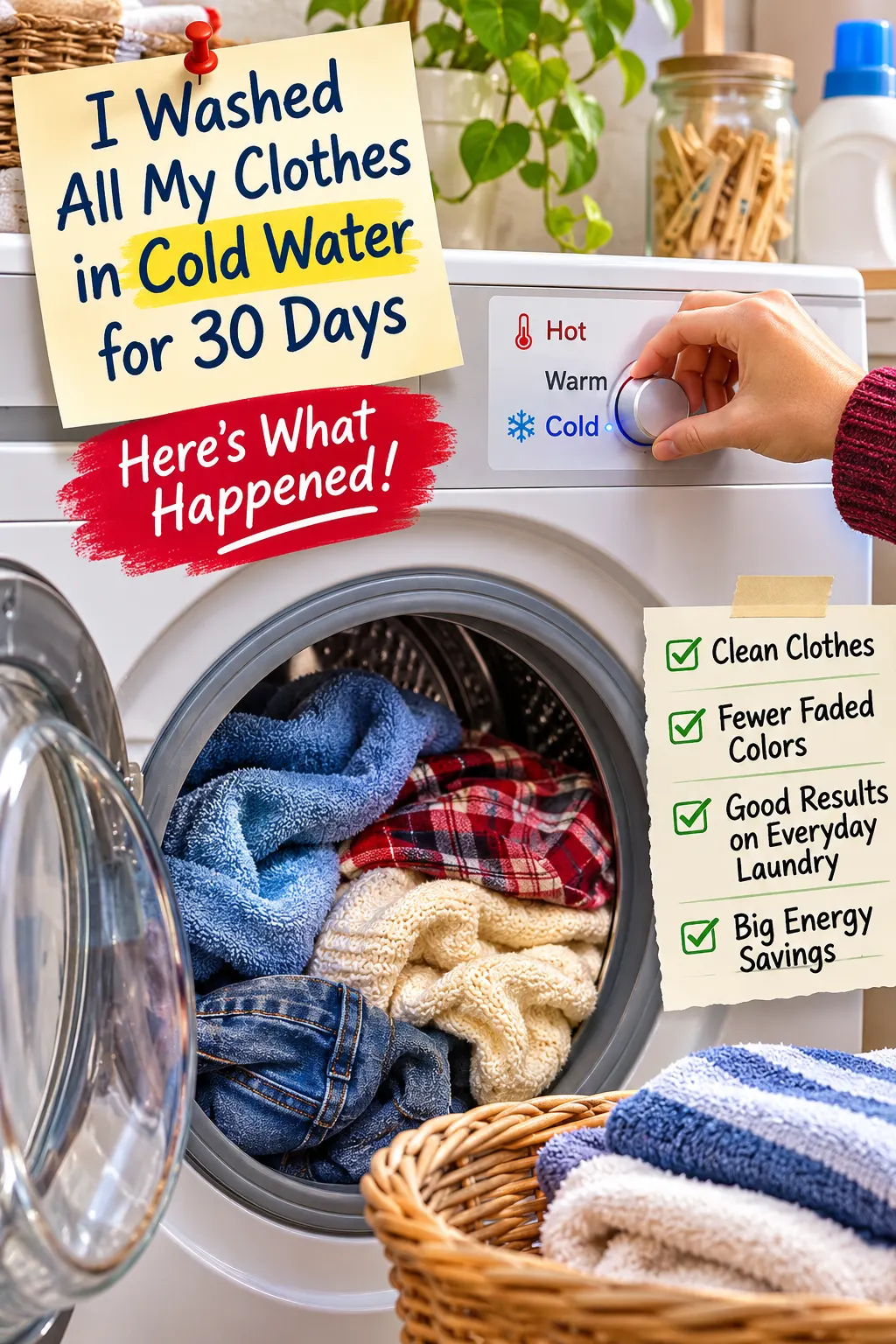
By the time November rolls around out here, I’ve already hauled in the last of the porch cushions, stacked the pie tins for holiday baking, and started paying much closer attention to the utility bills. So when I decided to wash every single load of laundry in cold water for 30 days, it wasn’t because I’d suddenly become trendy. It was because I wanted to know, in a plainspoken, practical way, whether cold water could really clean farm socks, flannel sheets, kitchen towels, and my husband’s work shirts without leaving me with dingy laundry and regrets.
For a full month, I washed everything in cold water only: clothing, sheets, bath towels, dog blankets, and those mystery rags that seem to breed under the laundry sink. I kept notes like I was putting up preserves, and by the end of the month I had a clear picture of what changed, what didn’t, and what I’d keep doing from here on out. Some of the results surprised me, and a few confirmed what my mother used to say long before “energy efficiency” became a phrase people printed on appliance stickers.
1. I started with a simple set of ground rules
I didn’t want this to be one of those experiments where you change five things at once and then can’t tell what made the difference. So for 30 days, from November 1 through November 30, I changed only one variable: water temperature. Every load went through on the cold setting.
I kept the same detergent, the same washing machine, and mostly the same laundry habits. I use a standard top-load washer that’s about 4.5 cubic feet, not fancy but dependable, and a liquid detergent marked for use in both high-efficiency and standard machines. I measured detergent instead of sloshing it in by feel: 2 tablespoons for regular loads, 3 tablespoons for heavily soiled ones. That one little habit, I’ll tell you now, matters more than many folks realize.
2. November turned out to be a very fair month to test it
Because I live in a rural Midwestern area, November gives laundry a real workout. We had muddy chore clothes, heavier sweatshirts, extra blankets coming out of storage, and plenty of kitchen linens thanks to soup pots and pie baking. It wasn’t a gentle month of a few office blouses and exercise leggings. It was real-life laundry.
Over the 30 days, I washed 23 loads total. That included 8 clothing loads, 4 towel loads, 3 bed-linen loads, 2 dog-blanket loads, 3 mixed household-linen loads, and 3 smaller loads for delicates or dark colors. Load weights ranged from about 6 pounds for delicates up to roughly 14 pounds for towels. In other words, cold water got tested on everything from knit tops to crusty washcloths.
3. The biggest surprise was that everyday clothes came out just as clean
This was the part I doubted most. I had it in my mind that cold water might be “fine” for lightly worn clothes but no match for actual living. Yet jeans, long-sleeve T-shirts, sweatshirts, pajamas, and underthings all came out looking and smelling clean. There was no lingering sour smell, no cloudy residue, and no sense that I was merely rinsing instead of washing.
I paid special attention to collars, cuffs, and the front of aprons, where flour, grease, and gravy like to land. On normal soil, cold water handled them well. I’d say 85% to 90% of my regular family laundry looked no different than when I used warm. That alone was enough to make me sit down at the kitchen table and say, “Well, I’ll be.”
4. Stains were more complicated, and cold water was not magic
Now, I’m not going to dress this up prettier than it was. Cold water did not erase set-in stains by sheer virtue. Grease spatters on a kitchen towel, mud on pant hems, and an old yellowish spot on a pillowcase still needed attention. But the truth is, those stains needed attention before this experiment too.
What changed was my approach. Instead of relying on warm water to do the heavy lifting, I pretreated more faithfully. I used about 1 teaspoon of liquid detergent directly on food and body-oil stains and let it sit 10 to 15 minutes before washing. For mud, I let it dry, brushed off the excess outdoors, and then washed. For greasy dish towels, I added a small scoop of oxygen bleach to the drum. Once I did that, the results were nearly identical to my old warm-water routine.
5. Towels felt a little different, though not in a bad way
Bath towels were where I noticed the clearest texture change. Washed in cold, they came out clean but a touch less “puffed up” than when I’d washed them warm. Not stiff, exactly, just a little flatter in the fibers. After 2 or 3 towel loads, I realized the problem wasn’t the water temperature so much as buildup.
I cut back the detergent by half a tablespoon and stopped using fabric softener entirely for the month. That helped right away. The towels smelled fresher and absorbed better. If I wanted extra fluff, the dryer took care of most of it. My mother always swore softener made towels “pretty but useless,” and once again, the woman was right.
6. My dark clothes looked better at the end of the month
This was one of the easiest benefits to see with my own eyes. Black leggings, navy sweatshirts, dark plaid flannels, and deep green cardigans kept their color better in cold water. Warm water, over time, can fade dyes and rough up fibers a bit more, especially on clothes you wash often.
By the end of November, my darks looked less tired. Black knit pants still looked black instead of that washed-out charcoal they get after too many cycles. A burgundy long-sleeve top I wear often held onto its richness too. If you’ve got clothes you want to keep looking decent for more than one season, cold water is gentler, and I saw proof of it.
7. My sheets and blankets came out fresh, but I had to avoid overloading
Sheets did beautifully in cold water as long as I gave them room to move. One queen sheet set with two pillowcases was fine in a single load. Add a blanket that was too heavy, and the washer struggled to circulate well enough for my liking. Cold water still needs good agitation and rinsing to clean properly.
Flannel sheets, in particular, benefited from the gentler temperature. They came out soft and didn’t shed as much lint as they sometimes do early in the season. A medium-weight fleece blanket for the guest room also washed well in cold, with no loss of softness. For heavier bedding, I learned that smaller loads beat trying to stuff everything in at once.
8. Kitchen towels and cleaning rags needed the most strategy
If there’s one category that challenged cold water, it was kitchen linens. Dish towels, bar mops, hand towels, and cleaning rags collect grease, tomato splashes, coffee drips, and all manner of honest household grime. Cold water cleaned them, but only if I sorted them a little more carefully.
I started separating lightly used hand towels from greasy kitchen towels. The greasy ones got a cold wash with detergent plus oxygen bleach, and I chose the machine’s heavy-duty setting for longer agitation, about 45 to 55 minutes total. That made a noticeable difference. I still wouldn’t toss a week’s worth of bacon-splattered towels into a quick cold wash and expect miracles, but with the right cycle, they came out respectably clean.
9. The utility savings were modest per load but meaningful over time
I can’t claim some dramatic, trumpet-blaring reduction after one month, but I did see enough to pay attention. Heating water is one of the more energy-hungry parts of laundry. By switching to cold for 23 loads, I reduced how often the water heater had to work, and in November, when the groundwater is already chilly, that matters.
Based on average estimates for a standard washer, using cold instead of warm can save somewhere around 0.3 to 0.6 kilowatt-hours per load, depending on the machine and water heater setup. Over 23 loads, that could amount to roughly 7 to 14 kilowatt-hours saved in a month. At an electricity rate of about $0.14 per kilowatt-hour, that’s only around $1 to $2 for the month on paper, but over a year, especially in a larger household doing 250 to 300 loads, the savings add up more quietly than dramatically. Around here, I’ve learned not to scoff at quiet savings.
10. I also noticed less wear on several favorite items
Warm water isn’t harsh in every case, but over time it can be harder on elastic, knit fibers, and printed fabrics. During this month, I paid attention to waistbands, cuffs, and the general feel of garments after drying. My everyday cotton tops held their shape better, and a couple of older sweaters that I normally baby seemed less stressed by the cold wash.
I had one pair of knit lounge pants that usually come out a bit twisted at the seams after a warm wash. In cold, they lay flatter and looked less worn. It’s not that cold water turned back the clock, but it didn’t push clothes toward old age as quickly. For anybody trying to stretch a clothing budget, that matters just as much as the utility bill.
11. Odor was the issue I watched most closely, and it stayed under control
People often worry that cold water means clothes won’t smell truly clean. I watched for that carefully, especially with exercise tops, socks, and the dog blankets. Most items came through just fine, provided I didn’t leave them sitting in the washer. That’s a habit worth correcting no matter what temperature you use.
I found that moving loads to the dryer or drying rack within 15 to 20 minutes of the cycle ending prevented that musty note some people blame on cold water. For one load of towels I forgot overnight, the smell was stale by morning, but that was my fault, not the water’s. I rewashed them in cold with oxygen bleach, and they were fine.
12. Detergent choice mattered more than I expected
Not all detergents perform equally well in cold water. Mine was already labeled for cold use, which helped, but I still noticed that proper measuring was key. Too much detergent in cold water can leave residue more easily, especially on towels and thicker fabrics. Too little, and heavily soiled items won’t come clean.
If somebody told me they tried cold water once and hated it, the first thing I’d ask would be: how much detergent did you use, and what kind? Modern enzyme-based detergents do much of their best work in cold or cool water, but they need enough time and the right dosage. This experiment made me more careful, and that care paid off.
13. There were still a few times I understood why people stick with warm
I’m not a zealot about it now, and I wasn’t by the end of the month. If I were dealing with cloth diapers, a stomach bug in the house, or deeply soiled workwear with heavy oil, I would absolutely consider a warmer or even hot wash according to fabric care labels and sanitation needs. Cold water is excellent for routine laundry, but routine is the important word there.
For my ordinary household, though, those situations are occasional, not daily. That means the old habit of automatically turning the dial to warm for everything simply doesn’t make much sense anymore. Habit is powerful, especially in a laundry room where we all like to work on autopilot, but not every old routine deserves to stay.
14. The real lesson was that laundry success came down to sorting and load size
If you had asked me before this month what made the most difference in laundry, I might have said water temperature. Now I’d say it’s sorting properly, not overfilling the machine, pretreating stains, and using the right amount of detergent. Cold water worked well because I gave it the conditions to work well.
Loads of about two-thirds full cleaned better than stuffed loads. Heavily soiled kitchen towels needed their own cycle. Dark clothes benefited from being grouped together. Bedding needed room to circulate. Those aren’t glamorous insights, but they’re useful ones, and useful has always been my favorite kind of wisdom.
15. After 30 days, here’s what I’m keeping and what I’m changing
At the end of November, I decided cold water would become my default for most laundry: everyday clothing, darks, sheets, pajamas, delicates, and lightly to moderately soiled towels. That covers the bulk of what I wash week to week. I’ll still use special treatment for truly dirty rags, greasy linens, or anything that calls for sanitizing.
If I had to put it plainly, here’s what happened: my clothes got clean, my dark fabrics stayed nicer, my laundry habits improved, and I spent less energy heating water I didn’t really need to heat in the first place. It wasn’t dramatic. It was better than that. It was practical, steady, and sensible, the kind of result that reminds me of so much good Midwestern housekeeping: do the simple thing well, and over time it will serve you kindly.