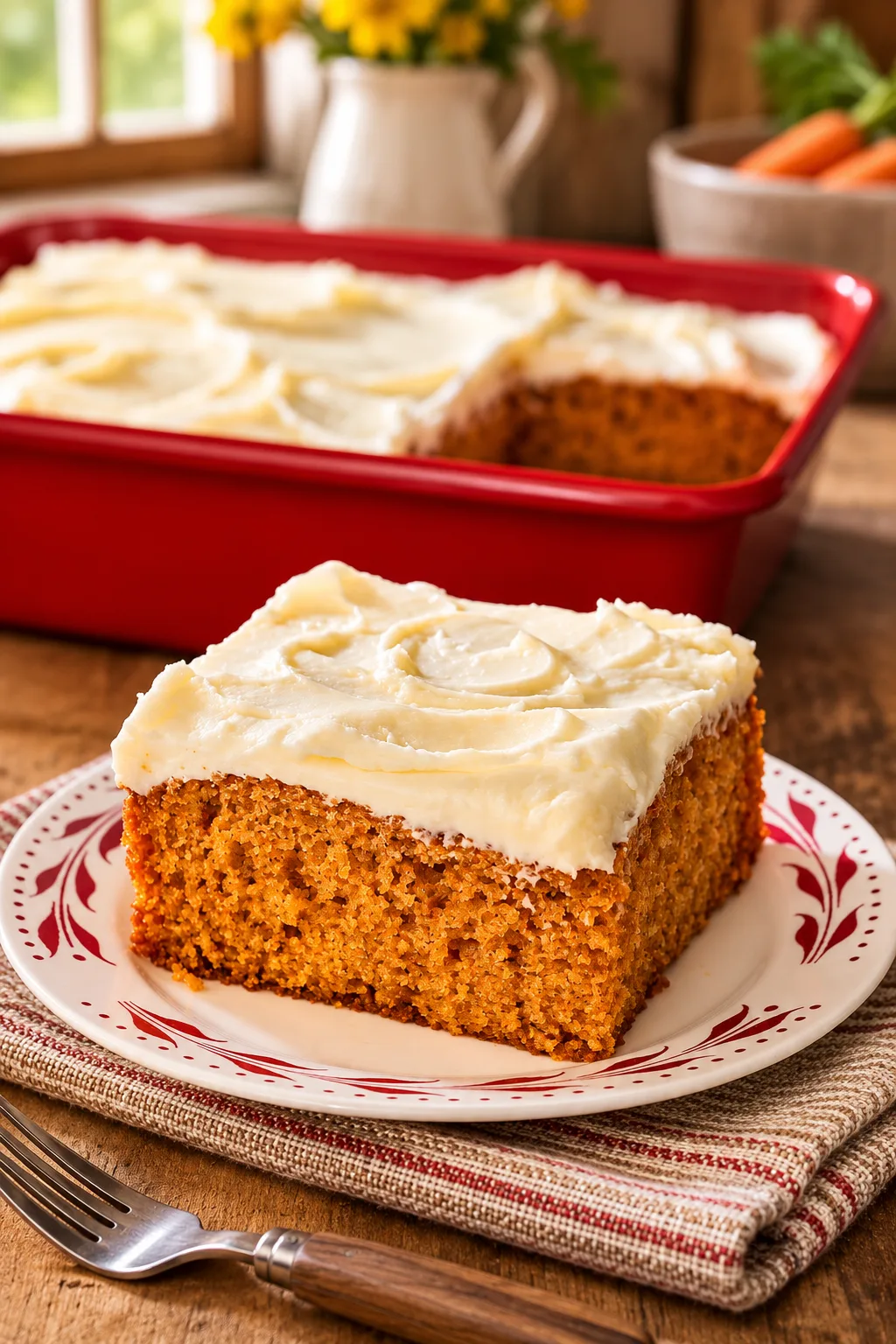
I have baked long enough to know that the line between “that’s clever” and “that’s a disaster” can be one oddly specific pantry decision wide. So when I decided to swap the water in a boxed cake mix for canned soup, I fully expected one of two outcomes: either a strangely genius shortcut or a pan of sweet, spiced regret. Forty-five minutes later, I had my answer, and I’ll say this right up front: the result was far more interesting—and far more edible—than most people would guess.
If you are imagining tomato soup cake, you are on exactly the right track. This old-fashioned style of baking has been around for decades, but it still surprises modern cooks because it sounds wrong before it sounds delicious. In this piece, I’ll walk you through exactly what I used, how the batter behaved, what the cake looked and tasted like after baking, why the soup works from a baking science standpoint, and how I’d tweak it if I made it again in my Midwest kitchen on a busy weeknight.
1. The pantry experiment that started it
The version I made was built on a standard 15.25-ounce boxed spice cake mix and one 10.75-ounce can of condensed tomato soup. Instead of adding the amount of water listed on the box, I used the soup as the liquid base. I still included 3 large eggs and 1/2 cup neutral oil, because fat and eggs do a lot of structural work in a cake, and I was not interested in sabotaging the entire formula just for drama.
I whisked the soup in a bowl first to loosen it, because condensed soup straight from the can is thick—closer to a pourable puree than water. Then I mixed it with the cake mix, eggs, and oil for about 90 seconds with a hand mixer on medium speed. The batter came together surprisingly smoothly, with a warm rust-colored tone and a faint aroma of cinnamon, cloves, and tomato.
2. Why tomato soup and spice cake make sense together
This combination sounds like a dare until you think about flavor families. Tomato has natural sweetness and acidity. Condensed tomato soup also contains sugar, salt, and concentrated tomato solids, all of which can deepen flavor in a spiced cake. When paired with cinnamon, nutmeg, ginger, and cloves, the soup stops tasting “soupy” and starts acting more like a moist fruit puree or applesauce substitute.
It reminds me a little of the first time I baked with zucchini in chocolate cake years ago. No one wanted to believe it would work until they tasted the finished product. In this case, the tomato does not shout. It supports. The spices lead, the cake reads as warmly autumnal, and the soup mostly contributes moisture, color, and tenderness.
3. The exact ingredients I used
For anyone who likes precise details, here is the formula that gave me the best result on the first try:
1 box spice cake mix, 15.25 ounces
1 can condensed tomato soup, 10.75 ounces
3 large eggs
1/2 cup canola oil
I baked it in a greased 9-by-13-inch metal pan. If you only have a glass pan, I would reduce the oven temperature by 25 degrees Fahrenheit or begin checking 5 minutes earlier, because glass retains heat differently and can overbrown the edges before the center is set.
4. What the batter looked like before baking
The batter was thicker than a standard boxed cake batter made with water. Not brownie-thick, but definitely more substantial. When I lifted the beaters, it fell in broad ribbons instead of flowing quickly. That told me the soup was adding both body and dissolved solids, which usually translates to a slightly denser crumb.
The color was a reddish caramel, deeper than pumpkin cake batter but lighter than gingerbread. If you are worried that it will smell like lunch, it really does not. I could detect the tomato faintly at close range, but once the spice mix and eggs were blended in, the dominant aroma was unmistakably cake.
5. The 45-minute mark: what happened in the oven
I baked the cake at 350 degrees Fahrenheit for 43 to 45 minutes. At around the 30-minute mark, the top had already taken on a rich golden-brown color with slightly darker edges. By 45 minutes, the center sprang back when lightly pressed, and a toothpick inserted in the middle came out with a few moist crumbs but no wet batter.
The most noticeable difference from a typical boxed cake was the rise. It rose well, but not dramatically. The finished cake sat a bit lower and flatter across the top than a standard water-based mix would. That is not a flaw. In fact, for frosting, it was convenient. No domed top to level, and the surface held beautifully.
6. The texture after cooling
Once cooled for about 1 hour, the cake sliced cleanly and had a tight, even crumb. It was moist in a way that held for days, which is one of the biggest benefits of using an ingredient like condensed soup. The crumb was tender but slightly more substantial than a fluffy birthday cake. Think snack cake meets old-fashioned spice cake.
I would compare it to a good carrot cake without the shredded carrots or a depression-era style cake with a practical pantry sensibility. It did not crumble apart, and it did not feel gummy. That balance matters. Too much extra liquid can make a boxed mix collapse, but in this ratio, it held together very nicely.
7. The flavor surprise everyone asks about
Here is the honest answer: yes, you can detect something deeper than a standard spice cake, but no, it does not taste like tomato soup in the way most people fear. It tastes warmly spiced, lightly caramelized, and just a touch tangy. That little edge of acidity actually keeps the sweetness in check.
I served slices to a few family members without announcing the secret ingredient first, and the guesses were all over the place—applesauce, pumpkin, maybe sweet potato. No one said tomato. Once I told them, everybody immediately wanted a second bite to “find it,” which is usually the sign of a successful kitchen experiment.
8. Why the soup works from a baking science perspective
Condensed tomato soup contributes several things at once: water, sugar, acidity, pectin-like body from cooked tomato solids, and dissolved seasoning. Boxed cake mixes are engineered to be fairly forgiving, so they can tolerate some variation in the liquid component, especially when the replacement ingredient is still mostly moisture.
The acidity can also complement the leavening in the mix, depending on the formula. Meanwhile, the extra dissolved solids reduce the perception of blandness that boxed cakes sometimes have. In practical terms, that means more flavor per bite and a cake that stays soft longer. I always tell home bakers that understanding “why” makes these odd little recipes much less mysterious.
9. The frosting that suited it best
I tried this cake with classic cream cheese frosting, and it was easily the best pairing. The slight tang in the frosting echoed the subtle tang in the cake, and the richness balanced the spice. My go-to ratio for a 9-by-13 cake is 8 ounces cream cheese, 1/2 cup unsalted butter, 3 to 3 1/2 cups powdered sugar, 1 teaspoon vanilla extract, and a pinch of salt.
If you want something less rich, a simple vanilla glaze also works: 1 cup powdered sugar, 2 to 3 tablespoons milk, and 1/2 teaspoon vanilla. I would skip chocolate frosting here. It is not that it would be terrible, but it would mask the warm spice character that makes this cake interesting in the first place.
10. Mistakes to avoid if you try it yourself
The first mistake would be using an overly thin soup. This trick works best with condensed tomato soup, not ready-to-eat tomato soup from a carton. The condensed version has concentration and body. A thin soup could throw off the moisture balance and leave you with a weaker structure.
The second mistake is overmixing. Boxed cake batter is forgiving, but once the wet and dry ingredients are combined, 1 to 2 minutes is plenty. Overbeating can toughen the crumb. The third mistake is underbaking. Because the batter is a little denser, the center needs time. Start checking at 40 minutes, but do not panic if it needs the full 45.
11. Variations I would actually recommend
If I were making this again for a fall gathering, I would add 1/2 cup chopped toasted walnuts or pecans and 1/2 cup raisins. Both fit naturally with the spice-cake profile. I would also consider adding 1 teaspoon extra cinnamon if using a plain yellow or white cake mix instead of spice cake.
Another smart variation is baking the batter as cupcakes. In a standard 12-cup muffin tin lined with paper liners, I would fill each cup about two-thirds full and bake at 350 degrees Fahrenheit for 18 to 22 minutes. That gives you built-in portioning and makes the idea easier to share with skeptical friends.
12. What this recipe reminds me of historically
This kind of cake has deep roots in practical home baking. Tomato soup cake became popular in the 20th century partly because cooks were resourceful, especially during leaner years when fresh ingredients were not always plentiful and shelf-stable pantry goods mattered. That spirit still resonates with me. Midwestern kitchens, in particular, have long had a talent for making something unexpectedly good from what is already in the cupboard.
I love recipes like this because they tell a story about thrift, creativity, and trust in process. They also remind us that “vintage” recipes are often less quirky than they seem. Many of them were solutions—smart ones—to cost, season, and availability.
13. Is it worth making again?
Absolutely, with the right expectations. If you want a featherlight bakery-style layer cake, this is not that. If you want a moist, flavorful, old-fashioned spice cake with a pantry-friendly twist, it is a winner. I would happily make it for a church potluck, a neighborhood coffee hour, or a cold Sunday when I want dessert without an extra grocery run.
It is also one of those recipes that invites conversation. People love a surprise ingredient, especially when it turns out better than common sense says it should. And to me, that is part of the fun of cooking after all these years—there is always one more humble trick waiting in the cupboard.
14. My final verdict after 45 minutes
What happened 45 minutes later was not a kitchen fiasco. It was a deeply moist, warmly spiced, pleasantly tangy cake with a soft crumb and just enough mystery to keep everyone talking. The canned soup did not ruin the mix. It improved it in a very specific, old-school way.
Would I replace water with soup in every cake recipe? Certainly not. But in a spice cake, with condensed tomato soup, eggs, and oil, the idea works. Sometimes the oddest substitutions are really just forgotten techniques in disguise. This one earned a permanent little spot in my recipe file.