
You know that moment when you’re taking a shower and suddenly realize the water around your feet isn’t going anywhere?
At first, it’s barely noticeable.
Then the next shower leaves a little puddle.
A few days later, you’re standing ankle-deep in cloudy water thinking, “Okay… something is definitely living down there.”
That was exactly the kind of situation that made me look into how to snake a shower drain myself.
And, honestly, the most surprising part wasn’t getting the water moving again.
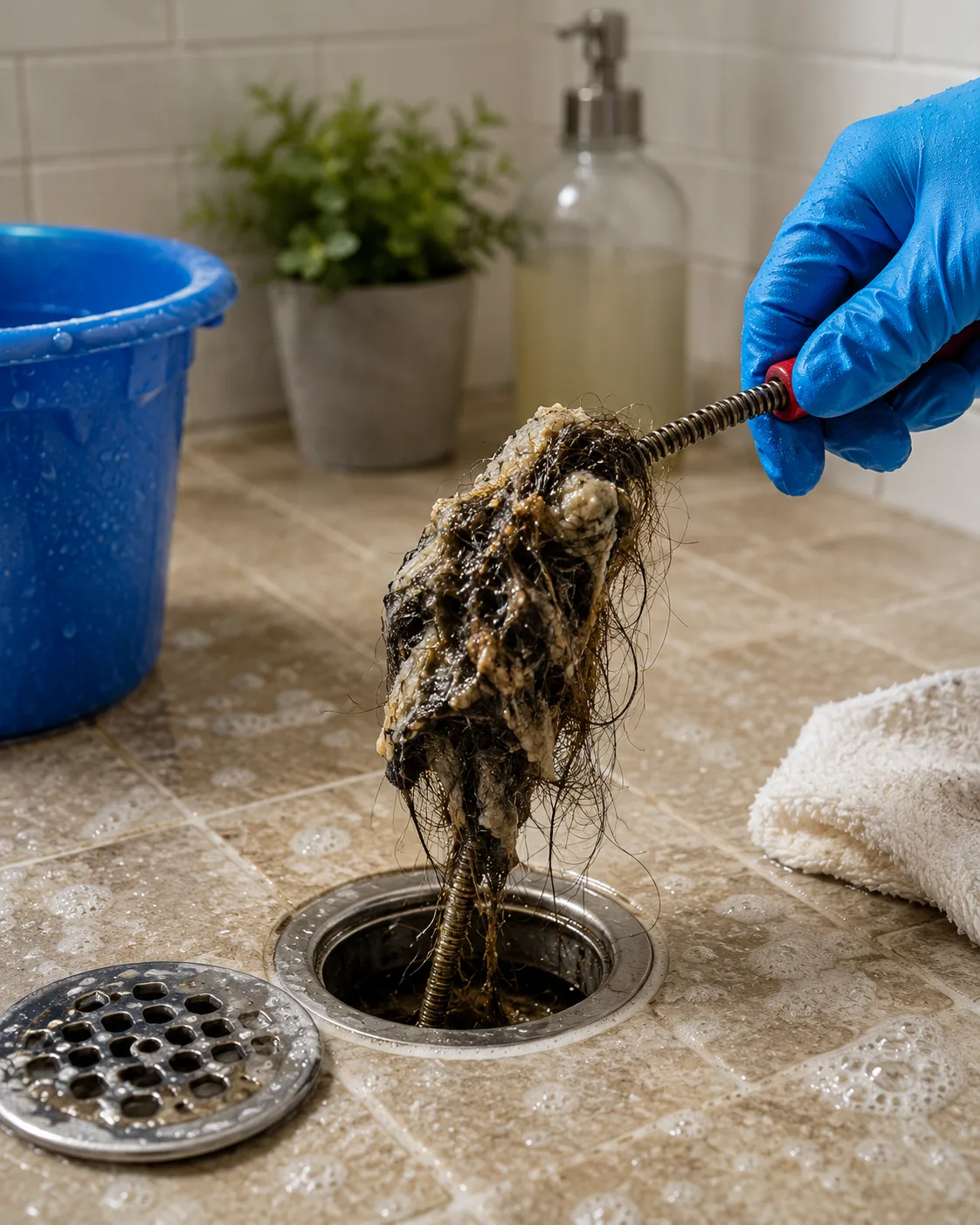
It was seeing what had actually been hiding inside that pipe.
Hair.
Soap residue.
Conditioner buildup.
A slimy mess that looked like it had been quietly growing for months.
Gross?
Absolutely.
But pulling out the clog also made one thing clear: a slow shower drain doesn’t always need an expensive solution. When the blockage is close enough to reach and the plumbing problem is straightforward, a simple drain snake or hair-removal tool can sometimes handle the job.
The key is knowing how to do it carefully—and knowing when to stop and call a plumber.
Here’s the full process.
Why Shower Drains Get Clogged So Easily
Showers create almost perfect conditions for drain buildup.
Every time you shower, loose hair moves toward the drain.
Then you add shampoo.
Conditioner.
Soap.
Body oils.
Skin cells.
Minerals from water.
Maybe shaving cream.
Maybe pet hair if you wash the dog in there.
One strand of hair isn’t a big deal.
The problem starts when multiple strands tangle together inside the drain.
Soap and conditioner residue can stick to that hair.
Then more hair sticks to the residue.
Then more gunk sticks to that.
Eventually, you’ve basically created a tiny gross fishing net inside the pipe.
Water can still squeeze through at first.
Then the passage gets narrower.
That’s why shower drains often slow gradually instead of suddenly stopping overnight.
The First Sign: Water Starts Draining More Slowly
Slow drainage is usually the first clue.
The shower still works.
The water eventually disappears.
But it takes longer than it used to.
That’s the ideal time to pay attention.
If you wait until the drain becomes completely blocked, the clog may become harder to remove.
I like to think of it this way:
A slow drain is your plumbing whispering.
Standing water is your plumbing yelling.
Listen during the whispering stage.
Other Signs of a Shower Drain Clog
Besides slow water flow, you may notice:
- Water pooling around your feet
- Gurgling sounds
- Unpleasant drain odors
- Visible hair near the opening
- Soap residue around the drain cover
- Water backing up briefly before draining
- A drain that improves temporarily and then slows again
A recurring blockage can mean the clog is deeper than the material you can see.
That’s when a basic hair-removal tool may not be enough.
What I’d Try Before Using a Drain Snake
Before feeding anything deep into the plumbing, I’d check the obvious stuff.
Remove visible hair from the drain opening.
Clean the cover.
Look just beneath the opening with a flashlight.
Sometimes the entire problem is sitting right there.
A little hair wrapped around the drain crossbars can create surprisingly slow flow.
If you can safely remove the obstruction without pushing it farther down the pipe, do that first.
It’s easier.
It’s quicker.
And it’s considerably less gross than whatever the snake might bring back.
Tools You’ll Need
For a basic DIY shower-drain cleaning job, I’d gather:
- Rubber or nitrile gloves
- Flashlight
- Bucket
- Trash bag
- Old towels
- Screwdriver if the drain cover uses screws
- Plastic hair-removal tool for shallow clogs
- Manual drain snake or hand auger for deeper clogs
- Paper towels
- Appropriate bathroom cleaner for the surrounding surface
Keep everything beside you before starting.
Once you’ve pulled a dripping hair monster out of the drain, you don’t want to wander across the bathroom looking for a trash bag.
Trust me on that one.
What Kind of Drain Snake Should You Use?
For an ordinary household shower clog, a manual hand snake can be enough.
These tools use a flexible cable that travels into the drainpipe.
You feed the cable forward.
When it reaches resistance, you rotate or work the cable gently.
The tip can break through debris or catch material so you can pull it back out.
There are also inexpensive plastic barbed drain tools made specifically for hair near the opening.
Those are great for shallow clogs.
I usually start with the simplest tool that can reach the problem.
No need to bring industrial plumbing equipment into the bathroom because three hairs are stuck under the drain cover.
Step 1: Stop Using Chemical Drain Cleaners Before Snaking
This is an important safety point.
If you’ve recently poured a chemical drain opener into the shower, don’t immediately start reaching into the drain or feeding tools into it.
Strong drain chemicals can remain in standing water and inside the pipe.
A drain snake can splash that material back toward your skin or eyes.
Follow the product label.
If you’re unsure what chemicals are inside the drain, I’d avoid DIY snaking until you know how to proceed safely.
Never casually mix different drain cleaners either.
More chemicals can mean dangerous reactions—not a cleaner drain.
Step 2: Put On Gloves
You are going to want gloves.
Not because we’re being fancy.
Because shower clogs are disgusting.
Hair mixed with soap residue creates a wet, slippery mass.
There may also be sharp bits of debris inside the drain.
Wear gloves that give you enough grip to handle the tool safely.
Have the trash bag open nearby.
Once the clog comes out, it should go directly into the bag.
Not the sink.
Not the toilet.
And definitely not back down the shower drain.
That would be a painfully short-lived victory.
Step 3: Remove the Drain Cover
Drain covers vary.
Some lift out.
Some twist.
Others use screws.
If yours has screws, use the correct screwdriver and place the screws somewhere safe.
A little bowl works well.
Nothing ruins a successful drain cleaning quite like finishing the job and discovering one tiny screw has disappeared forever.
Once the cover is removed, clean visible hair from it.
Sometimes you’ll immediately find a decent portion of the clog attached underneath.
Yep.
Welcome to homeownership.
Step 4: Shine a Flashlight Into the Drain
Look before you start poking.
You may be able to see hair just below the opening.
If it’s close enough, use a suitable hair-removal tool first.
Avoid sticking your bare fingers deep into a drain where you can’t see what you’re touching.
Plumbing can contain sharp edges, debris, and things I’d rather not become personally acquainted with.
If the visible section looks clear but the drain remains slow, the blockage may be farther down.
That’s when the snake comes in.
Step 5: Feed the Drain Snake Slowly
Insert the snake cable into the opening.
Feed it slowly.
Don’t force it.
The cable needs to follow the bends in the plumbing.
When you encounter resistance, pause.
Resistance doesn’t always mean you’ve hit the clog.
You could be feeling a bend in the pipe.
Move gently and rotate the snake according to the tool’s instructions.
If the cable keeps advancing, continue gradually.
This is not a strength contest.
Plumbing doesn’t care how many push-ups you can do.
Step 6: What It Feels Like When You Reach the Clog
A soft hair clog can feel different from a solid pipe bend.
You may notice resistance that feels springy or uneven.
The cable may stop advancing easily.
Rotate the snake gently.
Push slightly.
Pull back slightly.
Repeat.
The goal is either to catch the clog or break a pathway through it.
Don’t aggressively ram the cable forward.
If you encounter hard resistance that doesn’t change with gentle movement, stop.
You don’t want to damage a fitting or push into something that wasn’t meant to be forced.
Step 7: Pull the Snake Back Slowly
This is the moment.
Retract the snake gradually.
Keep the bucket or trash bag nearby.
If the tool has caught the blockage, you’ll often notice extra resistance while pulling it back.
Then…
There it is.
The thing that has been turning your shower into a kiddie pool.
The clog can look much larger than you’d expect.
Hair compresses tightly inside plumbing.
Once it comes out, it expands into a truly impressive lump.
And yes, “impressive” is doing a lot of work in that sentence.
What You May Pull Out
A typical shower clog can contain a mixture of:
Hair.
Soap residue.
Conditioner.
Body oils.
Skin cells.
Mineral deposits.
Lint.
Small pieces of packaging.
Tiny plastic fragments.
Pet hair.
The hair often acts as the framework.
Everything else sticks to it.
That’s why the final result can look like a slimy rope rather than loose strands.
It’s also why simply pouring hot water into the drain doesn’t necessarily solve the problem.
Hair doesn’t just politely dissolve because you asked nicely.
Why the Clog Smells So Bad
Once the blockage emerges, you may immediately notice an odor.
Water and organic residue can remain trapped around the clog.
Soap.
Hair.
Body oils.
Skin material.
All of that can sit inside a warm, damp drain.
Not exactly a recipe for spring-fresh fragrance.
Once you’ve removed the clog, dispose of it promptly.
Seal the bag.
Then clean the drain opening.
Don’t leave the extracted mess sitting in the bathroom while you admire your plumbing skills.
Your nose has been through enough.
Step 8: Run Water and Test the Drain
After removing the clog, run water.
Start with a moderate flow.
Watch how quickly it disappears.
If water drains normally, great.
Let it run for a little while to confirm the improvement continues.
If the drain remains slow, there may be additional material deeper inside.
You can try another careful pass with the snake.
But if repeated attempts don’t improve the flow, I’d stop rather than forcing the tool farther and farther into plumbing you can’t see.
That’s where professional equipment may make more sense.
That Instant Drainage Difference Is Weirdly Satisfying
I’m not going to pretend pulling hair from a drain is glamorous.
It isn’t.
But watching the water suddenly disappear at normal speed?
Extremely satisfying.
You turn on the shower.
Water hits the floor.
And instead of forming a depressing little lake around the drain, it vanishes.
Home maintenance doesn’t always give immediate results.
This one can.
That’s probably why drain-cleaning videos are oddly addictive.
Gross.
But satisfying.
Very weird combination.
Step 9: Clean the Drain Cover
Before reinstalling the cover, clean it.
Hair and soap residue often collect underneath.
Use a method appropriate for the drain-cover material.
A small brush can help around openings.
Rinse away loosened residue.
Then dry or reinstall the cover as appropriate.
If the screws are corroded or damaged, replace them with suitable hardware rather than forcing them back into place.
The cover should sit securely when you’re finished.
Should You Pour Baking Soda and Vinegar Down the Drain?
You’ll see this combination everywhere.
Baking soda.
Vinegar.
Fizz.
Very dramatic.
The bubbling reaction can help disturb some loose surface residue, but it isn’t a replacement for physically removing a serious hair clog.
The dramatic foam doesn’t mean it’s chewing through a dense ball of hair.
And don’t use homemade mixtures when chemical drain products may already be present.
Never combine cleaners unless their labels specifically say it’s safe.
For a hair blockage, removing the actual hair usually makes far more sense.
What About Boiling Water?
I wouldn’t automatically pour boiling water down a shower drain.
Plumbing materials vary.
Extremely hot water may not be appropriate for every pipe, seal, fixture, or drain assembly.
Normal hot tap water may help rinse away loose soap residue after the obstruction has been removed, but follow guidance suitable for your plumbing.
Also consider your own safety.
Carrying a pot of boiling water across a bathroom is a great way to turn a drain problem into a burn problem.
That’s a terrible trade.
Why Chemical Drain Cleaners Aren’t Always My First Choice
Chemical drain openers can be appropriate for certain situations when used exactly according to their labels.
But for an accessible hair clog, physical removal is wonderfully direct.
Hair is in the pipe.
You pull hair out.
Problem removed.
Chemical products can also complicate later plumbing work because someone opening or snaking the drain may encounter corrosive material.
If you’re likely to call a plumber after using a drain chemical, tell them what product you used.
That’s useful safety information.
What If the Snake Comes Back Clean?
If you feed the snake in and pull it back with nothing attached, several possibilities exist.
The blockage may be farther away.
The snake may have passed through it without catching much.
The clog may be made from material that doesn’t grab easily.
Or the slow drainage may come from a plumbing problem other than an ordinary hair clog.
Try another careful pass if appropriate.
But don’t spend an entire afternoon forcing a manual snake farther into the system simply because you’re determined not to call anyone.
DIY is great.
Knowing when you’re done DIY-ing is also great.
What If the Drain Still Runs Slowly?
After removing a visible clog, test the drain again.
If it remains noticeably slow, pay attention to whether other fixtures are having similar trouble.
Is the sink draining slowly too?
Does the toilet gurgle?
Does water appear in another fixture when the shower drains?
Do several drains have problems at the same time?
Those clues can point toward a deeper plumbing issue rather than one local shower clog.
That’s when I’d call a plumber.
A little plastic hair tool isn’t fixing a main drainage problem.
When You Should Call a Plumber
I would call a professional when:
- The clog keeps returning
- The snake won’t pass through the line
- Several drains are slow
- Water backs up into another fixture
- Sewage odors persist
- You hear unusual gurgling from multiple drains
- The drain completely stops despite basic cleaning
- You suspect damaged plumbing
- Chemical drain cleaner is present and you’re unsure how to proceed
- You don’t feel comfortable working on the drain
There’s no shame in calling someone.
Plumbers have better tools, more experience, and access to parts of the system you shouldn’t be randomly dismantling.
DIY should save you trouble.
Not create a bigger invoice later.
Why Recurring Shower Clogs Matter
If you clear the drain and it’s badly clogged again two weeks later, something else deserves attention.
Maybe large amounts of hair are entering the drain.
Maybe there’s buildup deeper in the trap or pipe.
Maybe the line has poor flow.
Maybe there’s a plumbing configuration problem.
Repeatedly snaking the same spot without finding the cause gets old quickly.
A simple hair catcher may solve the first problem.
A plumber may be needed for the others.
The Cheapest Prevention Trick: Use a Hair Catcher
If your shower drains directly through an open grate, a hair catcher can save you a truly disgusting future afternoon.
These simple screens or inserts sit over or inside the drain and trap loose hair before it travels into the plumbing.
Then you remove the hair.
Throw it away.
Done.
Is cleaning a hair catcher glamorous?
Absolutely not.
Is it better than extracting six months of compressed shower debris from a pipe?
By approximately one million percent.
Clean the Hair Catcher Often
Don’t install one and forget about it.
Hair catchers can become clogged themselves.
Remove collected hair regularly.
How often depends on how many people use the shower and how much hair gets shed.
For some households, once a week may be plenty.
For homes with multiple people with long hair?
You may be cleaning it every few showers.
The good news is that removing visible hair takes seconds.
You’re catching the problem before it enters the plumbing.
Brush Long Hair Before Showering
This simple habit can help.
Brush loose hair out before getting into the shower.
No, it won’t stop every strand from going down the drain.
Hair apparently has a lifelong commitment to appearing everywhere.
But reducing the amount entering the shower can make a difference over time.
Pair this with a drain catcher and you’re giving your plumbing a pretty decent fighting chance.
Don’t Deliberately Wash Hair Clumps Down the Drain
If loose hair collects on your fingers while shampooing, don’t rinse the clump away.
Put it aside.
Throw it in the trash afterward.
Yes, that’s slightly gross.
You know what’s considerably grosser?
Pulling the same hair back out six months later after it has become friends with soap scum and body oil.
Future you would like a word.
Be Careful With Conditioner
Conditioner itself doesn’t automatically clog a healthy drain, but thick hair products can become part of the residue that collects around trapped hair.
Use products normally.
The bigger goal is preventing large hair masses from entering the pipe.
If a drain starts slowing, clean it before buildup becomes severe.
Don’t respond by pouring six different household ingredients down there.
The simplest fix is often the physical one.
Soap Scum Makes Hair Clogs Worse
Soap residue can create sticky buildup inside showers and drains.
Hard water can add mineral deposits to the mix.
Once hair gets caught, that residue has something to cling to.
That’s why drain clogs become increasingly solid over time.
Regular bathroom cleaning can help keep surface buildup under control.
But again, no cleaning spray replaces removing actual trapped hair from inside a drain.
Sometimes you’ve just got to pull the gross thing out.
Should You Snake Your Shower Drain Regularly?
I wouldn’t snake a perfectly functioning drain simply because the calendar says it’s time.
Instead, focus on prevention.
Use a hair catcher.
Remove visible buildup.
Keep the drain area clean.
Pay attention when water starts slowing.
A snake is a useful tool when there’s a reason to use it.
Repeatedly pushing metal cables through plumbing without a problem isn’t maintenance I’d add to my Sunday routine.
I’ve got laundry already.
That’s enough excitement.
Can a Drain Snake Damage Plumbing?
Used improperly, a drain snake can potentially cause problems.
That’s why gentle technique matters.
Don’t force it.
Don’t aggressively spin it against hard resistance.
Don’t use a powered machine without understanding how to operate it.
Older, fragile, or damaged plumbing deserves extra caution.
A manual household snake is one thing.
A powerful motorized drain machine is another.
If the basic tool won’t solve the clog, I’d rather call a professional than upgrade myself to amateur sewer technician overnight.
Manual Snake vs. Plastic Hair Tool
A plastic hair-removal strip is perfect for shallow clogs.
It’s inexpensive.
It’s easy to use.
And the barbs grab hair close to the opening.
A manual drain snake reaches farther.
It’s better when the obstruction sits deeper in the line.
My approach?
Start shallow.
If that doesn’t work, go deeper.
The simplest tool that solves the problem is usually the tool I want.
Drain Snake vs. Plunger
A plunger may help move some shower blockages, depending on the drain and plumbing configuration.
However, plunging doesn’t necessarily remove the clog.
It may simply move it.
For a hair mass near the drain opening, I’d rather physically pull it out.
If using a plunger, make sure you’re using an appropriate technique for the fixture.
And never plunge a drain containing strong chemical drain cleaner because splashing can be dangerous.
What About Drain Odors After the Clog Is Gone?
Once the hair and buildup are removed, odors often improve.
Clean the drain opening and cover.
Run water normally.
If the shower hasn’t been used for a long time, make sure the drain trap contains water.
Persistent sewer-like odor deserves more attention.
A plumbing trap or venting problem can allow sewer gas into the room.
Don’t keep dumping fragrance down the drain to cover it.
A persistent sewer smell is something I’d investigate.
What I Would Never Pull From a Drain With Bare Hands
Pretty much anything.
Wear gloves.
Hair clogs may contain:
Sharp plastic.
Broken pieces from containers.
Jewelry.
Metal fragments.
Razors or grooming debris.
Unknown residue.
And bacteria from all the lovely material that’s been sitting down there.
The gloves aren’t only because the clog looks gross.
They’re basic protection.
Use tools where possible.
What If You Pull Out Jewelry?
Stop before throwing the entire disgusting mess directly into the trash.
If you know a ring, earring, chain, or another small object disappeared near the shower, inspect the retrieved debris carefully while wearing gloves.
Small jewelry can become tangled in hair.
Just don’t reach deeper into the plumbing blindly looking for lost valuables.
If something valuable may be inside the trap and isn’t accessible, a plumber may be able to retrieve it more safely.
Your wedding ring deserves better than exploratory drain surgery with a coat hanger.
Please Don’t Use a Coat Hanger as a Drain Snake
Speaking of coat hangers…
I’d skip that one.
A bent metal hanger can scratch surfaces, get stuck, push debris deeper, or damage plumbing components.
Use a tool made for drains.
Basic plastic hair tools are cheap.
Manual snakes are widely available.
There’s no reason to sacrifice a perfectly innocent coat hanger and your plumbing at the same time.
What I Learned From Seeing the Clog
The biggest lesson isn’t that drain snakes are magical.
It’s how much material can build around ordinary hair.
You look at a few loose strands after a shower and think:
“No big deal.”
Multiply that by hundreds of showers.
Add soap.
Add conditioner.
Add body oils.
Give everything time.
Suddenly, you’ve created something that looks like it belongs in a low-budget horror movie.
Prevention starts looking very attractive after that.
A Simple Monthly Shower Drain Routine
I wouldn’t perform major plumbing maintenance every month.
I’d keep it easy.
Check the drain cover.
Remove visible hair.
Clean the hair catcher.
Wipe away soap buildup.
Run the shower and pay attention to drainage speed.
If water is suddenly taking longer than normal, deal with it early.
That’s it.
Two minutes now can save you from putting on gloves and meeting The Creature From the Drain Lagoon later.
Common Mistakes to Avoid
Don’t force a drain snake through hard resistance.
Don’t snake a drain carelessly after using strong drain chemicals.
Don’t mix different drain cleaners.
Don’t reach blindly into plumbing with bare hands.
Don’t pour boiling water down unknown plumbing systems without considering the materials.
Don’t keep feeding a snake deeper when you’re unsure where it’s going.
Don’t ignore several slow drains occurring at once.
Don’t repeatedly treat a recurring clog without finding the cause.
Don’t push extracted hair back down the toilet or another drain.
And don’t wait until water completely stops moving if you’ve already noticed the shower getting slower.
Small clogs are usually nicer than big ones.
Relatively speaking.
Frequently Asked Questions
How do you snake a shower drain?
Remove the drain cover when appropriate, insert a suitable manual drain snake slowly, feed it into the pipe, gently rotate it when you encounter a soft obstruction, and retract it carefully to remove captured debris. Follow the tool instructions and stop if you encounter unexplained hard resistance.
What usually clogs a shower drain?
Hair is one of the most common causes. Soap residue, conditioner, body oils, minerals, skin cells, and other debris can cling to trapped hair and create a dense blockage.
How do I know if my shower drain is clogged?
Slow drainage, standing water, gurgling, unpleasant odors, and recurring water backup can all suggest a clog.
What’s the easiest way to remove hair from a shower drain?
For hair close to the opening, a simple plastic barbed hair-removal tool can work well. A manual snake can reach deeper blockages.
Can I snake a shower drain myself?
Simple accessible clogs can sometimes be handled with a manual household drain tool. Call a plumber if the blockage is stubborn, several fixtures are affected, or you’re uncomfortable with the work.
How far should I push a drain snake?
Only feed the tool according to its instructions and as far as needed to address the obstruction. Don’t force it through hard resistance.
Why is my shower still draining slowly after I removed hair?
Additional debris may remain deeper in the pipe, or another plumbing issue may be affecting drainage. Repeated problems may need professional inspection.
Does baking soda and vinegar unclog hair?
The fizz may loosen some surface residue, but it isn’t a dependable replacement for physically removing a dense hair clog.
Can I use drain cleaner before snaking?
Be very careful. Chemical drain cleaner remaining in the pipe can splash during mechanical cleaning. Follow the product label and avoid DIY snaking when hazardous chemicals may still be present.
Should I pour boiling water down my shower drain?
I wouldn’t automatically use boiling water because plumbing materials and fittings vary. Use methods appropriate for your specific plumbing system.
How can I stop shower hair clogs?
Use a drain hair catcher, remove collected hair frequently, brush loose hair before showering, and deal with slow drainage early.
When should I call a plumber for a slow shower drain?
Call when DIY removal doesn’t restore normal flow, the clog repeatedly returns, several drains are slow, water backs up elsewhere, sewer odors persist, or you suspect a deeper plumbing problem.
Final Thoughts
So, what happens when you snake a shower drain yourself?
Sometimes you pull out something you really, really wish you’d never seen.
But you also learn exactly why the shower stopped draining properly.
Hair tends to be the star of the show.
Then soap, conditioner, body oils, and other residue turn that hair into a thick blockage that gradually restricts water flow.
For a simple clog close enough to reach, a manual drain snake or hair-removal tool can be incredibly useful.
Go slowly.
Wear gloves.
Don’t force anything.
Keep chemicals out of the equation unless you’re following their exact directions.
And stop when the problem clearly moves beyond basic DIY territory.
Once the drain is clear, add a hair catcher and clean it regularly.
Because after you’ve personally pulled one giant slimy hair rope out of your shower drain?
Trust me.
You suddenly become very motivated to keep the next one from forming.