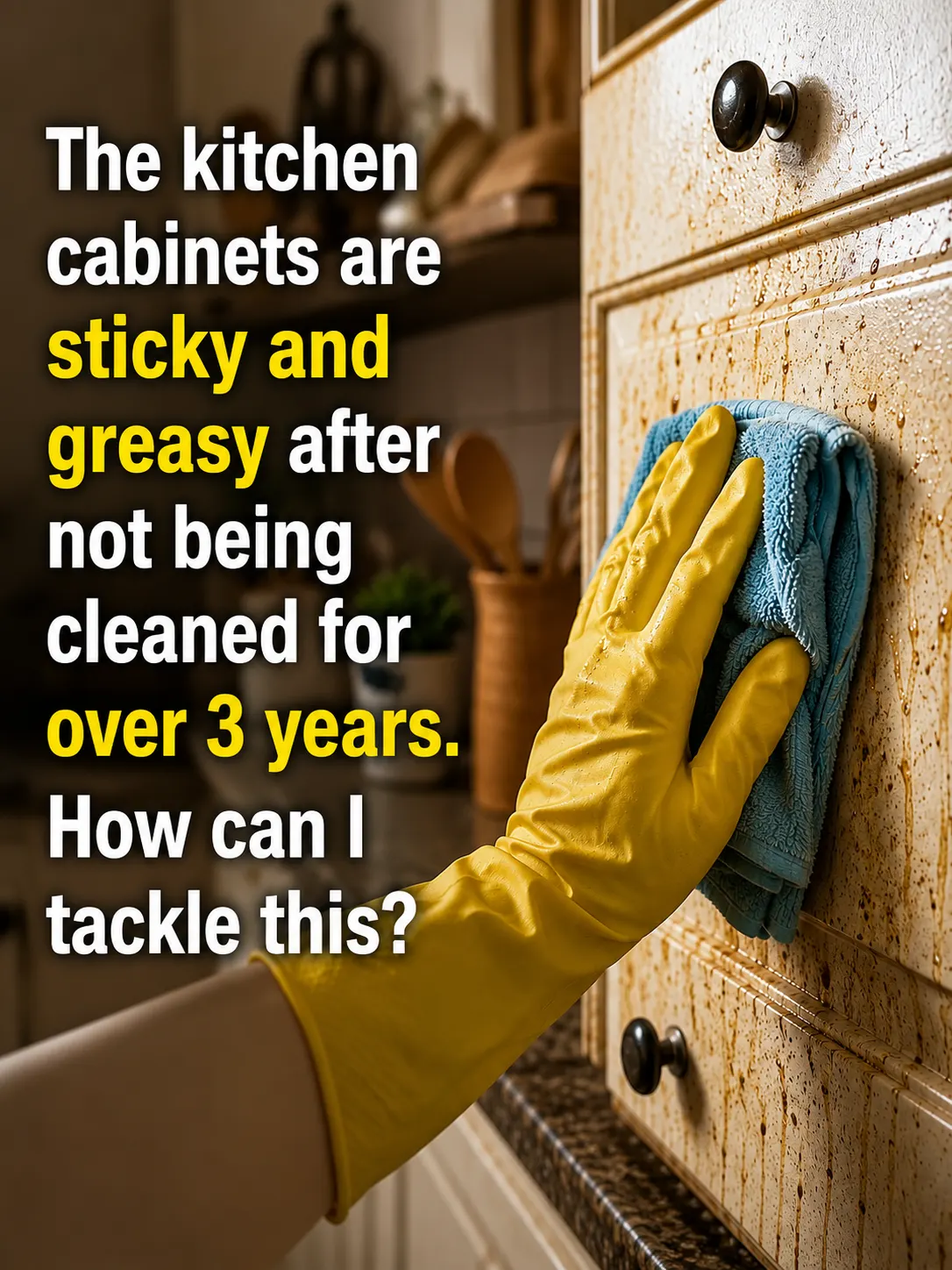
Have you ever run your hand across a kitchen cabinet and felt a sticky layer that just won’t come off? It happens more often than you’d think. Over time, cooking grease, dust, and everyday grime combine into a stubborn film that’s difficult to remove.
If your cabinets haven’t had a deep cleaning in several years, don’t worry. With the right approach, you can restore them without damaging the finish.
Why Do Kitchen Cabinets Become Sticky?
Every time you cook, tiny grease particles float through the air. They eventually settle on cabinet doors, especially those near the stove.
As grease mixes with:
- Dust
- Smoke
- Food residue
- Moisture
…it creates a thick, sticky coating that becomes harder to remove the longer it sits.
Start With a Gentle Cleaning Solution
Before reaching for harsh chemicals, try a mild cleaner.
Mix:
- Warm water
- A few drops of grease-cutting dish soap
Dip a soft microfiber cloth into the solution, wring it out well, and wipe one cabinet at a time.
Avoid soaking the cabinets, especially if they’re made of wood.
For Heavy Grease, Try White Vinegar
If dish soap isn’t enough, white vinegar may help break down greasy buildup.
Mix equal parts:
- White vinegar
- Warm water
Spray the solution onto a cloth—not directly onto the cabinets—and gently wipe the surface.
Always test the mixture on a small hidden area first to make sure it doesn’t affect the finish.
Baking Soda for Stubborn Spots
Some sticky areas need a little extra attention.
Make a paste using:
- Baking soda
- A small amount of water
Apply it gently to stubborn spots with a soft cloth or sponge. Rub lightly, then wipe clean with a damp cloth.
Avoid scrubbing aggressively, which can damage painted or wood finishes.
Don’t Forget the Cabinet Hardware
Handles and knobs collect grease from your hands every day.
Wipe them thoroughly with warm, soapy water or a gentle household cleaner.
If possible, remove heavily soiled hardware for easier cleaning.
Dry the Cabinets Completely
After cleaning, wipe every surface with a dry microfiber cloth.
Leaving moisture on wood cabinets can damage the finish over time.
Drying also helps prevent streaks.
How to Keep Cabinets Cleaner
Once they’re clean, regular maintenance is much easier.
Try these habits:
- Wipe cabinets once a week with a damp microfiber cloth.
- Clean spills and splatters as soon as they happen.
- Use your range hood while cooking to reduce airborne grease.
- Deep clean cabinets every few months.
A little routine care helps prevent heavy buildup from returning.
Frequently Asked Questions
Can I use vinegar on all cabinets?
Vinegar is safe for many sealed cabinet finishes, but it may damage some natural wood or waxed surfaces. Always test a hidden area first.
Is baking soda safe for painted cabinets?
Yes, if used gently. Avoid heavy scrubbing that could dull or scratch the paint.
Can I use a magic eraser?
Use caution. Magic erasers are mildly abrasive and may remove or dull certain cabinet finishes.
What’s the best cloth for cleaning cabinets?
A soft microfiber cloth works well because it lifts grease without scratching most surfaces.
Final Thoughts
Sticky kitchen cabinets may look impossible to clean, but patience and the right cleaning method can make a big difference. Starting with warm, soapy water and moving to stronger solutions only when needed helps protect the cabinet finish while removing years of grease and grime.
Once your cabinets are clean, a quick wipe every week can keep them looking fresh and make future deep cleaning much easier.
:::