I’ve baked enough cakes over the years to know that a box mix can be a wonderful shortcut, but I’m also old enough to remember the era of “secret ingredient” cakes passed around on handwritten recipe cards. So when I heard about using canned soup in place of the milk in cake mix, I was equal parts skeptical and curious. It sounded like one of those Midwestern potluck tricks that shouldn’t work, yet somehow does.
What happened 45 minutes later was surprisingly impressive: a moist, tender cake with deeper flavor, a soft crumb, and absolutely no obvious “soup” taste. In this article, I’m walking through exactly what I used, how I mixed it, what the batter looked like, how the cake baked up, which soups work best, what can go wrong, and whether this is a gimmick or a genuinely useful baking method.
1. Why I even tried soup in cake mix
The idea isn’t as strange as it sounds once you break it down. Canned condensed soup contains liquid, starch, salt, and often a bit of fat or dairy. In baking, those are all functional ingredients. Milk adds moisture, protein, and a little richness; soup can do some of that too, while also bringing body and seasoning.
I was especially interested in whether soup would change texture more than flavor. Many pantry cakes rely on unconventional ingredients like mayonnaise, sour cream, pudding mix, or soda. From a baking standpoint, condensed soup fits right into that family of “odd but useful” additions.
2. The exact cake mix and soup I used
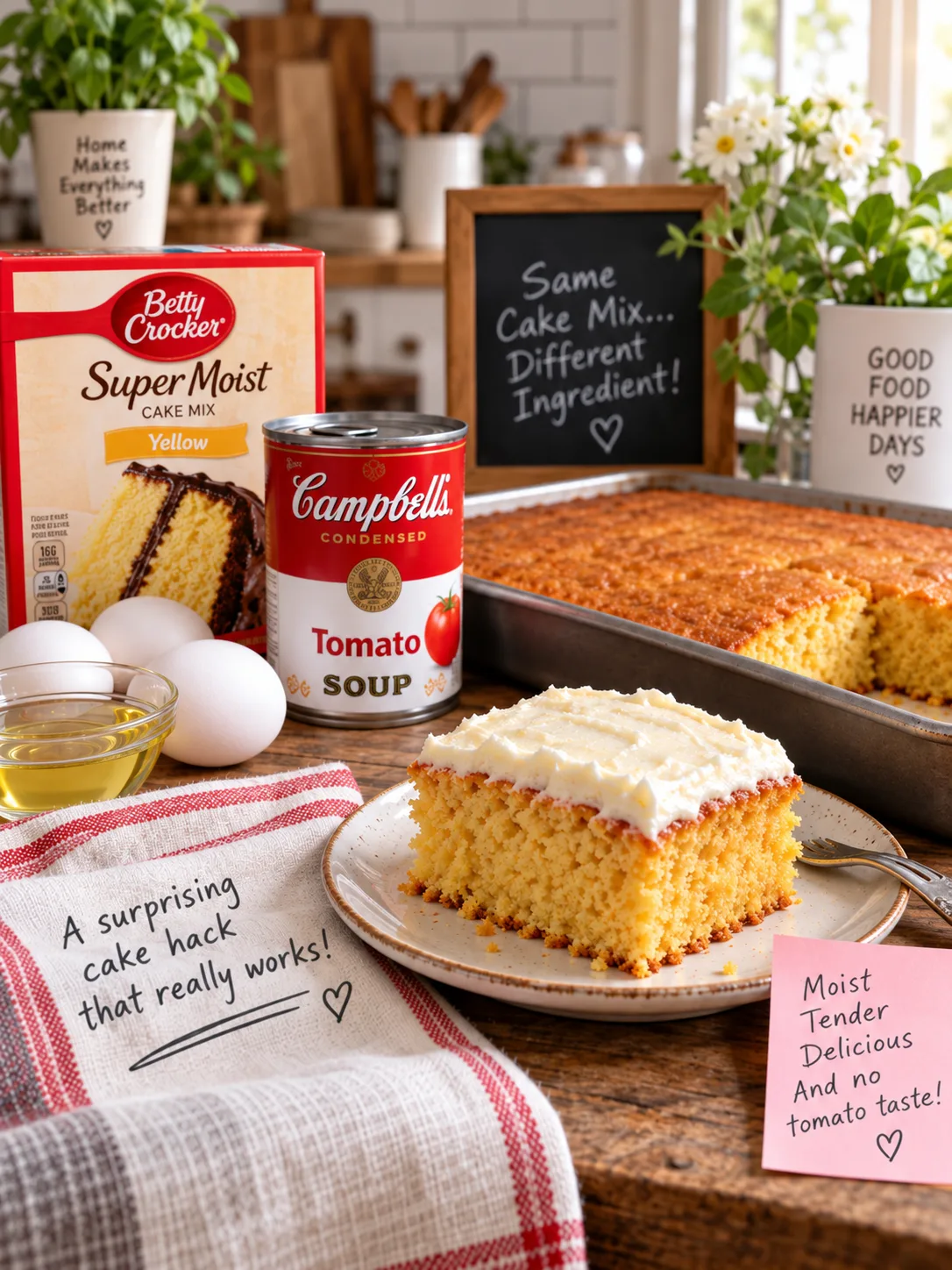
For this test, I used one standard 15.25-ounce box of yellow cake mix and one 10.5-ounce can of condensed tomato soup. I chose yellow cake because it has a neutral, buttery base that lets you notice textural changes easily. I also wanted a soup with enough body to make a real difference, and tomato soup is the classic version in old-fashioned cake recipes.
I did not use prepared soup. That point matters. I used condensed soup straight from the can, without adding water. If you dilute it first, you change the moisture level too much and lose the concentrated starches and solids that help the cake structure.
3. What I replaced and what I kept the same
Instead of following the milk or water suggestion on the back of the box, I swapped in the can of soup as the main liquid component. I still used 3 large eggs and 1/3 cup vegetable oil, because I wanted the test to stay close to a standard box-cake formula. That gave me a batter with enough fat and protein to bake predictably.
So the final ingredient list was simple: 1 box yellow cake mix, 1 can condensed tomato soup, 3 eggs, and 1/3 cup oil. No extra sugar, no spices, and no milk at all. I baked it in a greased 9-by-13-inch metal pan.
4. What the batter looked like in the bowl
The first surprise came immediately. The batter was thicker than a typical box mix made with water, but smoother than I expected. It had a pale orange-gold tint, which makes sense given the soup, and it smelled faintly savory for the first minute or two of mixing.
Once everything was combined and beaten for about 2 minutes with a hand mixer on medium speed, the aroma shifted. The cake mix’s vanilla notes came forward, and the soup smell mostly disappeared. The batter ended up glossy, cohesive, and just slightly denser than standard yellow cake batter.
5. The 45-minute bake and what happened in the oven
I baked the cake at 350°F. At the 30-minute mark, it had already risen evenly across the pan, with a light golden surface and only a little extra color around the edges. By 40 minutes, the center was nearly set. At 45 minutes, a toothpick inserted in the middle came out with a few moist crumbs but no wet batter.
That timing is worth noting because denser batters can sometimes need an extra 5 to 10 minutes. In my oven, 45 minutes was exactly right. The cake didn’t collapse, didn’t dome excessively, and didn’t develop the rubbery center that sometimes happens when an experimental substitution throws off the liquid ratio.
6. The finished texture was the real surprise
Once cooled for about 25 minutes in the pan, the cake cut cleanly and held together beautifully. The crumb was fine and even, not coarse or gummy. It felt soft under the knife, almost like a cake made with buttermilk or sour cream rather than plain milk.
The moisture level was the biggest success. This was not a dry box-mix cake. It stayed plush and tender, especially in the center. The edges had a slight caramelized chew, which I like in a sheet cake, but the interior remained delicate. If you’ve ever been disappointed by a box mix that turned out fluffy but bland and dry by the next day, this method solves a lot of that.
7. How it tasted, honestly
Let me answer the question everyone asks first: no, it did not taste like a bowl of tomato soup. Not even close. The soup added a subtle depth, a little warmth, and the kind of hard-to-identify background note that makes people say, “What is that? This tastes really good.”
What I noticed most was balance. The cake had a more rounded flavor than a basic yellow cake. It tasted less sugary in a one-note way and more developed, almost as if I had added a small amount of spice or brown sugar. If you served it plain, most people would never guess soup was involved.
8. Why this works from a baking standpoint
Condensed soup brings more to the bowl than liquid. It contains thickening starches, which help hold moisture. It often contains some sugar, salt, and flavor compounds that deepen the finished taste. Tomato soup in particular also brings acidity, and acidity can help create a softer crumb in cakes when it interacts with leavening already present in the mix.
There’s also the simple matter of solids. Milk is relatively thin. Condensed soup is not. That extra body can create a batter that bakes up with a richer mouthfeel. It’s not unlike adding canned pumpkin, applesauce, or pudding mix, though each changes texture in its own way.
9. The best soups to use if you want to try it
Tomato is still my first recommendation because it has enough sweetness and acidity to make sense in a cake. It pairs especially well with spice cake, chocolate cake, and yellow cake. A 10.5-ounce can is the sweet spot for one standard boxed mix.
Beyond tomato, pumpkin soup or a mildly sweet squash soup could work nicely with spice or carrot-style cake bases, though you’d want condensed versions rather than brothy ones. Cream-based soups are trickier. Something like condensed cream of coconut-style dessert soup, if available, could be interesting, but standard cream of mushroom or cream of chicken is not where I’d begin unless you are intentionally making a savory bake.
10. The soup and cake combinations I’d actually recommend
If you want combinations with a high chance of success, start here: tomato soup with spice cake, tomato soup with chocolate cake, or tomato soup with yellow cake. Chocolate and tomato are a particularly old-school pairing because tomato adds moisture and brightness without shouting its name.
I’d also consider condensed pumpkin soup with spice cake, or a sweet potato puree soup with vanilla cake if the soup is smooth and not heavily seasoned. What I would avoid are soups with obvious onion, garlic, pepper, or herb profiles. Even if the texture works, those savory seasonings can linger in ways that fight frosting.
11. Mistakes that can ruin the experiment
The biggest mistake is using ready-to-serve soup instead of condensed. Ready-to-serve soup has too much liquid and not enough concentrated starch, so your batter can turn thin and bake up flat or gummy. Check the label carefully. You want the kind that normally requires added water or milk.
Another mistake is overmixing. Because the soup makes the batter thicker, it can be tempting to keep beating until it looks ultra-smooth. Stop once the batter is well combined, about 2 minutes with a hand mixer or 50 to 60 strokes by hand. Too much mixing can toughen the crumb.
A third common issue is choosing the wrong pan. If the batter seems heavy, don’t pour it into a very deep small pan unless you’re ready to extend baking time significantly. A 9-by-13 pan, two 8-inch rounds, or a Bundt pan with careful greasing are safer choices than a loaf pan for your first try.
12. Frosting choices that make the cake shine
I found that a simple cream cheese frosting worked beautifully. I used 8 ounces cream cheese, 4 tablespoons unsalted butter, 2 cups powdered sugar, and 1 teaspoon vanilla, whipped until smooth. The slight tang echoed the cake’s deeper flavor and gave it a balanced finish.
If you go with chocolate cake and tomato soup, a chocolate buttercream is the obvious choice. For yellow cake, I also like a light cinnamon glaze made from 1 cup powdered sugar, 1 to 2 tablespoons milk, and 1/2 teaspoon cinnamon. You do not need a heavy, ultra-sweet frosting here; the cake has enough personality on its own.
13. How it held up the next day
Some cake experiments are thrilling for an hour and disappointing by morning. This one held extremely well. I covered the pan and left it at room temperature overnight, and the cake was still moist the next day, maybe even more cohesive and flavorful after resting.
That’s a practical benefit I appreciate. If you’re baking for a church supper, office gathering, or family birthday and need something dependable 12 to 24 hours ahead, this method is worth remembering. The soup seems to help the cake retain moisture better than some basic box-mix versions.
14. Is this cheaper or just clever?
In pure cost terms, it depends on what’s in your pantry. A box cake mix might run $1.50 to $3.00, and a can of condensed soup might be $1.25 to $2.50 depending on brand and sales. Milk for one cake is usually cheaper if you already have it open in the refrigerator.
But thrift in a home kitchen isn’t always about the absolute lowest price per cup. Sometimes it’s about using what you already have, avoiding a trip to the store, or turning shelf-stable ingredients into something unexpectedly good. From that angle, soup cake is not just clever; it’s practical.
15. My final verdict after 45 minutes
What happened 45 minutes later was not a disaster, not a joke, and not one of those “technically edible” internet stunts. It was a genuinely good cake: moist, tender, flavorful, and a little more interesting than a standard box mix made the usual way.
Would I do it again? Absolutely, especially with tomato soup and either yellow, spice, or chocolate cake mix. It’s the kind of kitchen trick I love most: slightly odd, rooted in older home baking traditions, and backed up by results you can actually taste. If you enjoy experimenting but still want dessert you’d proudly set on the table, this one is worth your 45 minutes.