I’ll be honest: the first time I poured cola over a raw ham, I did it with equal parts curiosity and hope. Around here in the Midwest, ham shows up for Easter, Christmas, potlucks, Sunday dinners, and just those cold weekends when you want the house to smell like something warm and welcoming. I’d heard for years that cola could turn an ordinary ham into something tender, glossy, and just a little bit unforgettable, so one afternoon I decided to test it for myself with a bone-in ham, a roasting pan, and a can of regular cola.
Two hours later, what came out of my oven was a beautifully bronzed ham with a caramelized outer layer, deep savory-sweet flavor, and pan juices that smelled so good my family wandered into the kitchen before I even called them. If you’ve ever wondered whether pouring cola over ham is just an old-fashioned kitchen trick or actually worth doing, I’m going to walk you through exactly what happened, why it works, how I made it, what I’d change next time, and how to make it family-friendly even for picky eaters.
1. The ham I started with
I used one fully cooked, bone-in half ham that weighed a little over 8 pounds. That size is perfect for feeding 10 to 12 people with enough left over for sandwiches, scrambled eggs, or ham and bean soup the next day. If your ham is labeled “fully cooked” or “ready to eat,” you’re really reheating it and adding flavor, not cooking raw pork all the way through.
The headline says “raw ham,” and I know that’s how a lot of us casually describe an unbaked ham before it goes into the oven, but it matters to read the package. A fresh uncured raw ham needs a different method and must be cooked to a safe internal temperature. For this test, mine was a cured, fully cooked ham, which is the type most families use for holiday meals.
2. Why cola is such a smart ingredient
Cola does three useful things in a ham pan. First, it brings sweetness from the sugar, which helps the outside caramelize. Second, it adds acidity, which gently balances the saltiness of the ham. Third, the liquid in the pan creates a moist oven environment, helping keep the ham from drying out over a long bake.
I used 1 full 12-ounce can of regular cola, not diet. Regular cola contains enough sugar to build that sticky, shiny finish people love. Diet cola can still add flavor, but it won’t give you the same rich glaze or browning. The little hint of spice in cola also plays nicely with classic ham seasonings like cloves, brown sugar, mustard, and pineapple.
3. How I prepped the ham before the cola went on
I set the oven to 325°F and pulled the ham out of the refrigerator about 30 minutes ahead so it could lose a little of that chill. Then I placed it cut-side down in a sturdy roasting pan. Keeping the cut side down helps protect the sliced face of the ham from drying out while the rounded top gets all the color.
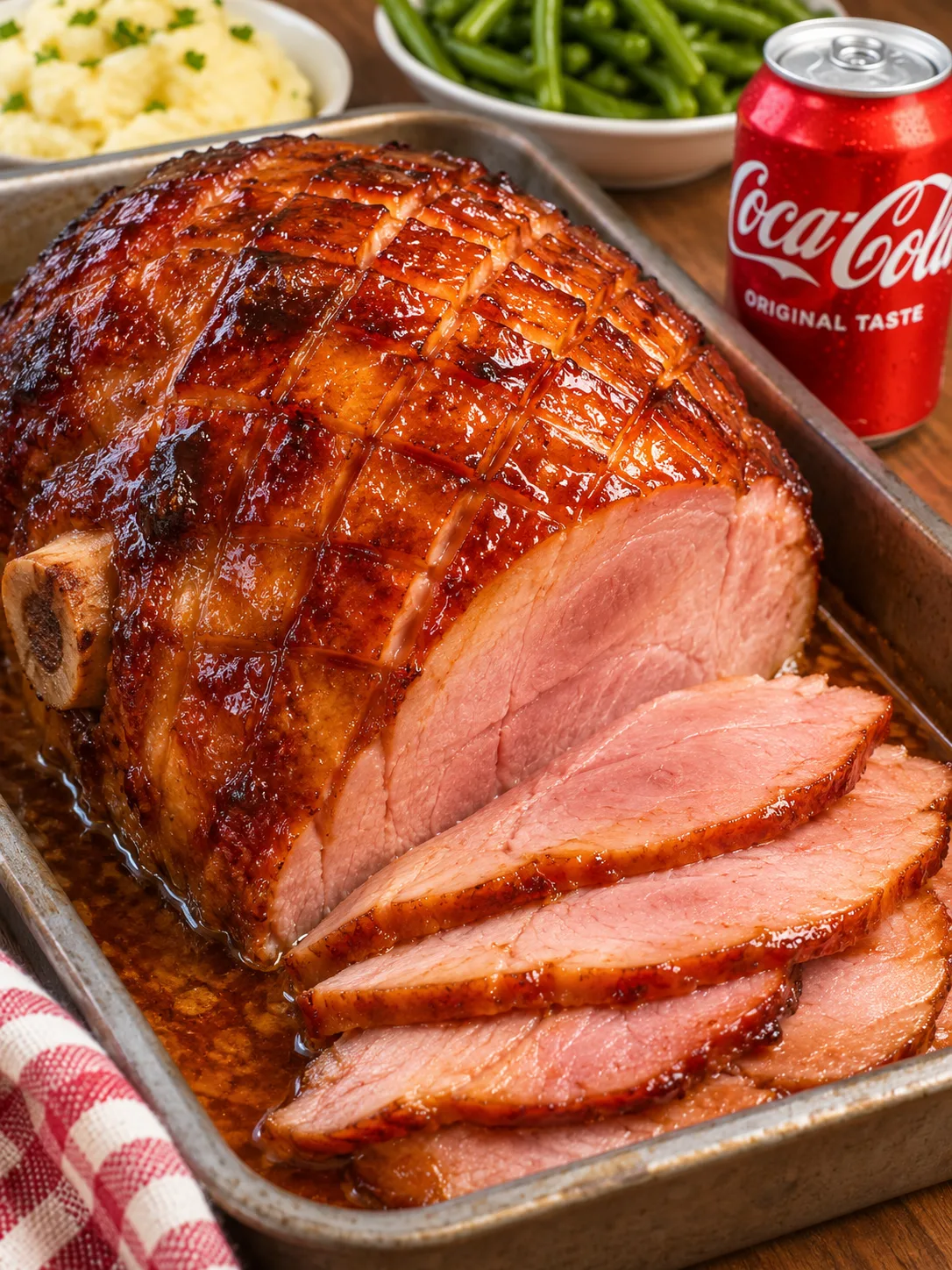
I scored the surface in a shallow diamond pattern, making cuts about 1/4 inch deep and roughly 1 inch apart. This step is worth the extra 3 or 4 minutes because it gives the cola and any glaze a place to settle. If you like cloves, you can tuck one whole clove into the points of several diamonds, but I keep it light because strong clove flavor can be a hard sell for kids.
4. Exactly how I poured the cola over it
I poured the 12 ounces of cola slowly over the top and around the base of the ham so some ran into the score marks and the rest collected in the pan. Then I covered the roasting pan tightly with foil. That foil is important in the first stage because it traps steam and prevents the sugars from darkening too quickly.
If you want even more flavor, you can add 1/2 cup packed brown sugar and 2 tablespoons Dijon mustard before covering the ham, but for this first test I kept it simple. I wanted to see what the cola alone would do over a 2-hour bake. Sometimes the simplest version tells you the most.
5. What happened during the first hour in the oven
At the 1-hour mark, the kitchen smelled sweet, savory, and a little toasted, almost like the beginning of a holiday meal before the side dishes even get going. When I carefully lifted one corner of the foil, I could see the cola had mixed with the ham’s juices and turned into a deeper amber liquid in the pan.
The ham itself was still pale at that point, but it was already looking plumper and more moist. I spooned some of the pan liquid over the top, put the foil back on, and let it keep going. If you’ve ever reheated ham and worried it would come out dry, this is where the cola starts earning its keep.
6. What happened after 2 hours
Two hours later, the change was obvious. The ham was glossy and lightly browned, especially along the ridges of the score marks. The outside had taken on a beautiful mahogany tint, and the pan juices had reduced enough to smell almost syrupy without becoming burnt.
I checked the internal temperature with a meat thermometer and it had reached 138°F in the thickest part, which is right where I wanted it before the final uncovered finish. For a fully cooked ham, I usually aim for 140°F after reheating. The texture felt juicy, and when I pressed gently with the back of a spoon, the surface had that tender, lacquered look that makes a ham feel special on the table.
7. The final uncovered finish made the biggest difference
After those first 2 hours, I removed the foil and spooned more of the pan liquid over the top. Then I returned the ham to the oven uncovered for 15 to 20 minutes. That short uncovered time is what gave me the best color and helped the sugary cola coating cling to the surface instead of just pooling below.
If you want it more like a holiday glaze, this is the moment to brush on a mixture of 1/2 cup brown sugar, 1 tablespoon mustard, and 2 tablespoons of the hot pan juices. I’ve done that on later versions, and it creates a prettier, shinier crust. But even without the extra glaze, the cola alone gave me a noticeable finish.
8. The flavor was sweeter, but not sugary
This was the surprise I think most people wonder about. No, the ham did not taste like soda. It didn’t come out with a fizzy or candy-like flavor at all. Instead, the cola softened the sharp saltiness and gave the ham a rounder, slightly richer taste, almost the way a little brown sugar does in baked beans.
The best bites were the outer slices, where the score marks had caught some of the reduced cola and turned just a little sticky at the edges. The inside stayed classically ham-like: savory, smoky, and hearty. My husband said it tasted “like the good holiday ham,” which in our house is high praise.
9. The texture stayed moist instead of drying out
One of the biggest pitfalls with ham is overbaking it. Since it’s usually already cooked, too much oven time can make it dry, tight, and almost stringy around the edges. The cola in the covered pan helped create steam, and that extra moisture really did seem to protect the meat.
When I sliced into the thick center, the meat was juicy enough that the slices held together but still bent easily on the serving fork. That’s the sweet spot I’m always after. Dry ham gets left on plates; moist ham gets turned into second helpings.
10. My family’s reaction at the table
I served it with mashed potatoes, green beans, and buttery dinner rolls, and not one person asked what was “different” in a suspicious way. That’s always my test when I’m cooking for a mix of adventurous eaters and kids who like familiar flavors. The ham just tasted better, fuller, and more tender.
For picky eaters, I sliced some of the center pieces without any of the darker outer glaze-heavy edges. For the adults, I offered the browned outside slices first. That little trick works more often than you’d think. Everyone gets the version they like best, and dinner feels easy instead of like a negotiation.
11. A few mistakes to avoid if you try it
The first thing I’d caution is not to use too much cola. For an 8-pound ham, 12 ounces was enough. If you pour in 24 ounces or more, the ham can sit in too much liquid and the pan juices may stay thin instead of reducing into something flavorful. You want moisture, not a sweet soup.
Second, don’t bake it uncovered the whole time. Because cola contains sugar, it can scorch if exposed to dry heat for too long. Keep the ham tightly covered for most of the cooking, then uncover near the end. Third, keep an eye on the bottom of the pan. If the liquid reduces too much, add 1/2 cup water so the sugars don’t burn.
12. Easy variations I’ve tested since then
After that first success, I tried a few small twists. My favorite version uses 1 can of cola, 1/2 cup brown sugar, and 2 tablespoons Dijon mustard. For a fruitier option, I add 1 cup pineapple juice and a few pineapple rings during the last 30 minutes. If I’m serving a crowd at Christmas, I sometimes tuck in 10 to 12 whole cloves for that old-fashioned holiday aroma.
For families who prefer a less sweet finish, you can swap in 1/2 cup apple cider vinegar mixed into the cola or use only 8 ounces of cola instead of the full can. And if someone at your table doesn’t like glaze at all, reserve a few plain center slices before spooning extra pan syrup over the rest.
13. How long to bake ham with cola based on size
For a fully cooked bone-in ham, I generally follow 12 to 15 minutes per pound at 325°F. That means a 6-pound ham may take about 1 hour 15 minutes to 1 hour 30 minutes, while an 8-pound ham can take close to 1 hour 40 minutes to 2 hours. A 10-pound ham may run 2 to 2 1/2 hours. The thermometer matters more than the clock, though.
I pull mine when it reaches 140°F internally after reheating. Insert the thermometer into the thickest part without touching bone. If you’re working with a spiral ham, check it a little early because those sliced hams can dry out faster than an unsliced half ham.
14. What I’d serve with it to make the meal feel complete
Cola ham pairs best with simple, comforting sides that balance its sweetness. I love it with mashed potatoes, roasted carrots, baked macaroni and cheese, green bean casserole, or a crisp salad with a tangy dressing. If I’m feeding 10 people, I usually plan on 3 sides, a bread basket, and one bright item like deviled eggs or a relish tray.
For leftovers, this ham shines in biscuit sandwiches with a swipe of mustard, chopped into scalloped potatoes, or folded into omelets. I also save the bone for bean soup with navy beans, onion, celery, and a bay leaf. Around my house, a good ham dinner really stretches into two or three easy meals, and that always feels like a win.
15. So, was pouring cola over the ham worth it?
Absolutely, yes. Two hours after pouring cola over that ham, what happened was simple but impressive: the meat stayed moist, the surface turned beautifully glossy, the salty flavor mellowed out, and the whole roast tasted more special than a plain reheated ham. It wasn’t gimmicky. It was practical, easy, and genuinely delicious.
If you’ve got a ham in the fridge and want a low-effort way to make it taste like you fussed much more than you did, this is a trick I’d gladly recommend. In my kitchen, the best recipes are the ones that make people drift toward the table early, ask for seconds, and smile over leftovers the next day. This one did all three.