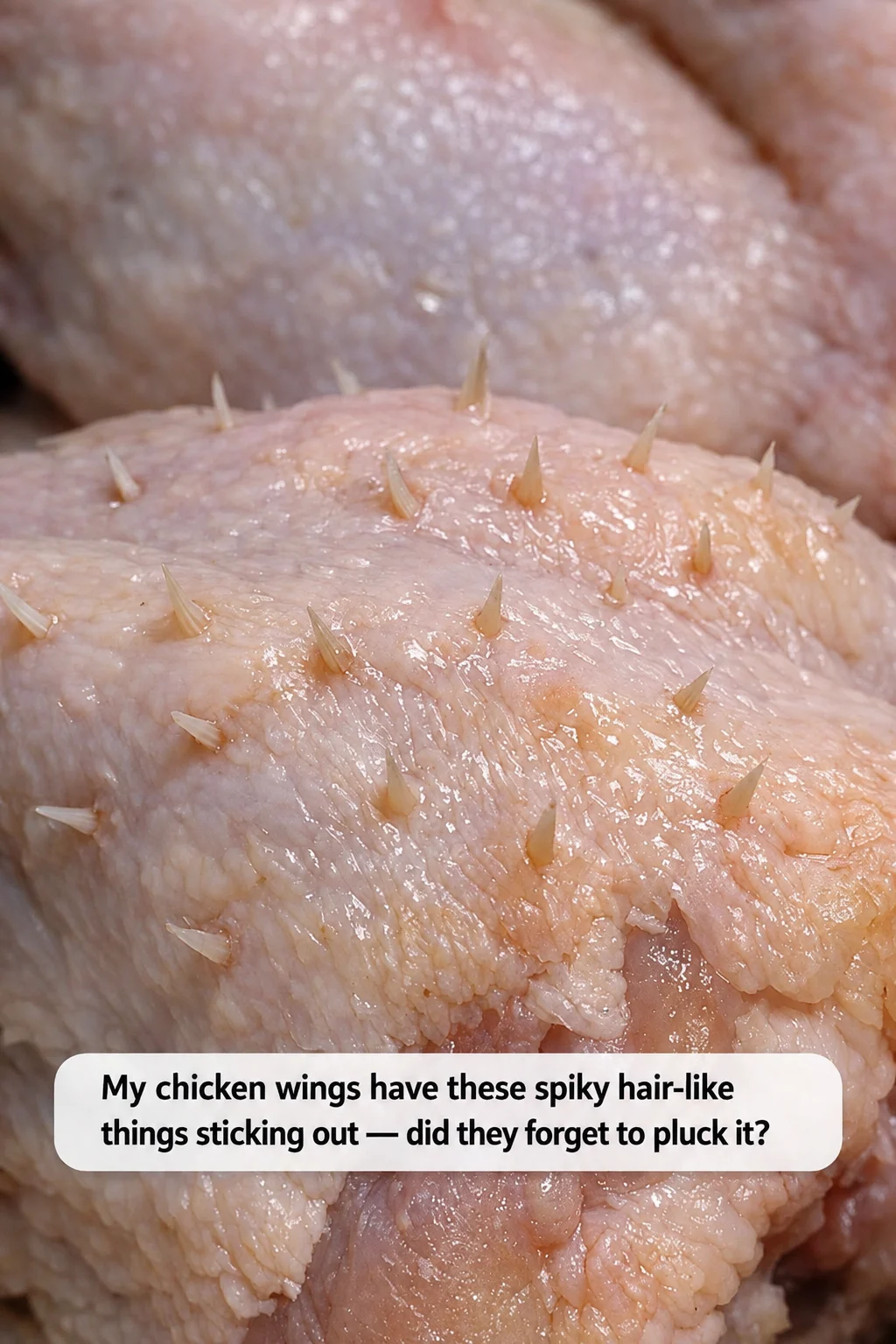
You open a package of chicken wings, and right away something catches your eye. Tiny black or hair-like spikes are sticking out of the skin, making the wings look less than appetizing. Your first thought might be, “Did they forget to pluck the chicken?”
The good news is that this is a fairly common sight on raw poultry and usually isn’t a sign that the chicken is unsafe to eat.
Here’s what those little spikes are and what you can do about them.
What Are the Hair-Like Spikes?
Those tiny strands are usually pin feathers.
Pin feathers are small feather shafts left behind after the chicken has been processed. While most feathers are removed during commercial processing, a few tiny ones can occasionally remain attached to the skin.
They’re harmless, but they certainly don’t look very appealing.
Why Are They Still There?
Modern poultry processing removes the vast majority of feathers automatically.
However, because chickens have thousands of tiny feather follicles, a few pin feathers can sometimes escape the process, especially around:
- Wings
- Drumsticks
- Thighs
- Neck area
Finding a few isn’t considered unusual.
Are Pin Feathers Safe?
Yes.
Pin feathers themselves don’t make the chicken unsafe to eat.
As long as the chicken has been:
- Properly refrigerated
- Cooked to a safe internal temperature of 165°F (74°C)
the presence of a few remaining feather shafts isn’t a food safety concern.
How Do You Remove Them?
They’re easy to remove before cooking.
You can use:
- Kitchen tweezers
- Clean needle-nose pliers reserved for kitchen use
- Your fingers if the feather is loose
Grip the feather close to the skin and pull it out in the direction it naturally grows.
After removing the feathers, continue preparing the chicken as usual.
Should You Wash the Chicken?
No.
Food safety experts recommend not rinsing raw chicken.
Washing poultry can splash bacteria onto sinks, countertops, utensils, and nearby food without making the chicken safer.
Cooking the chicken to the proper internal temperature is what destroys harmful bacteria.
When Should You Throw Chicken Away?
Pin feathers alone aren’t a reason to discard chicken.
Instead, watch for signs such as:
- Sour or unpleasant odor
- Slimy texture
- Sticky surface
- Gray, green, or unusual discoloration
- Torn packaging with signs of spoilage
If any of these are present, the chicken should be discarded.
Tips for Preparing Chicken Wings
Before cooking:
- Remove any visible pin feathers.
- Pat the wings dry with paper towels.
- Season generously.
- Cook to an internal temperature of 165°F (74°C) using a food thermometer.
Dry skin also helps create crispier baked or air-fried wings.
Frequently Asked Questions
Are feathers on chicken normal?
Yes. A few small pin feathers may occasionally remain after commercial processing.
Can I cook chicken with pin feathers still attached?
Yes, although most people prefer to remove them for appearance and texture before cooking.
Do pin feathers mean the chicken is poor quality?
Not necessarily. Even well-processed poultry may occasionally have a few remaining feather shafts.
Should I return the package?
If the chicken is otherwise fresh and only has a few pin feathers, there’s usually no need to return it. If you notice signs of spoilage or poor packaging, contact the retailer.
Final Thoughts
Finding tiny hair-like spikes on chicken wings can be surprising, but they’re usually just leftover pin feathers from the processing stage. They’re common, harmless, and easy to remove with a pair of kitchen tweezers.
Rather than worrying about the feathers themselves, focus on proper food safety: keep the chicken refrigerated, avoid washing it, and cook it to 165°F (74°C). Once it’s fully cooked, those wings are ready to enjoy.