There comes a point every winter when a body starts noticing every little thing the house is doing. The furnace kicks on, the floorboards creak, the bedroom feels a touch stuffy by midnight and downright dry by morning, and the utility bill sitting on the counter seems to glare at you while you pour your coffee. After living through more Midwestern winters than I care to count, I’ve learned that a home has its own habits just like a family does. But this time, I decided to change one of ours and pay close attention to what followed.
For 14 nights, I tested a different bedtime heating routine and kept notes the way I used to jot down canning times and first frost dates on a calendar by the pantry door. I tracked how the bedrooms felt, whether anybody slept better, how often the furnace ran, what happened in the morning when it was time to warm the place back up, and what the experiment seemed to mean for comfort and cost. Some of what happened was exactly what I expected. A few things surprised me.
1. Why I decided to try it for two full weeks
I didn’t want to make a judgment after one chilly night and call it science. Around here, one evening might be 34 degrees and damp, and the next might dip to 19 with a sharp north wind that finds every old seam in a farmhouse. So I gave myself 14 days, long enough to catch a mix of weather and settle into a real pattern.
During the test, our overnight outdoor temperatures ranged from 21 to 39 degrees, with daytime highs between 36 and 52. The house is older, a little drafty around two windows, with decent attic insulation and a gas furnace that’s reliable if not exactly young. I kept the daytime setting at 68 degrees and only changed the nighttime routine. That mattered, because it let me compare apples to apples instead of changing three things at once.
2. The nighttime setting I switched to
Before this little experiment, the thermostat sat at 68 degrees around the clock. That’s a common “set it and forget it” number, and I understand why people do it. It keeps the house predictable. Nobody has to fuss with blankets, and the bathroom floor in the morning doesn’t feel quite so rude.
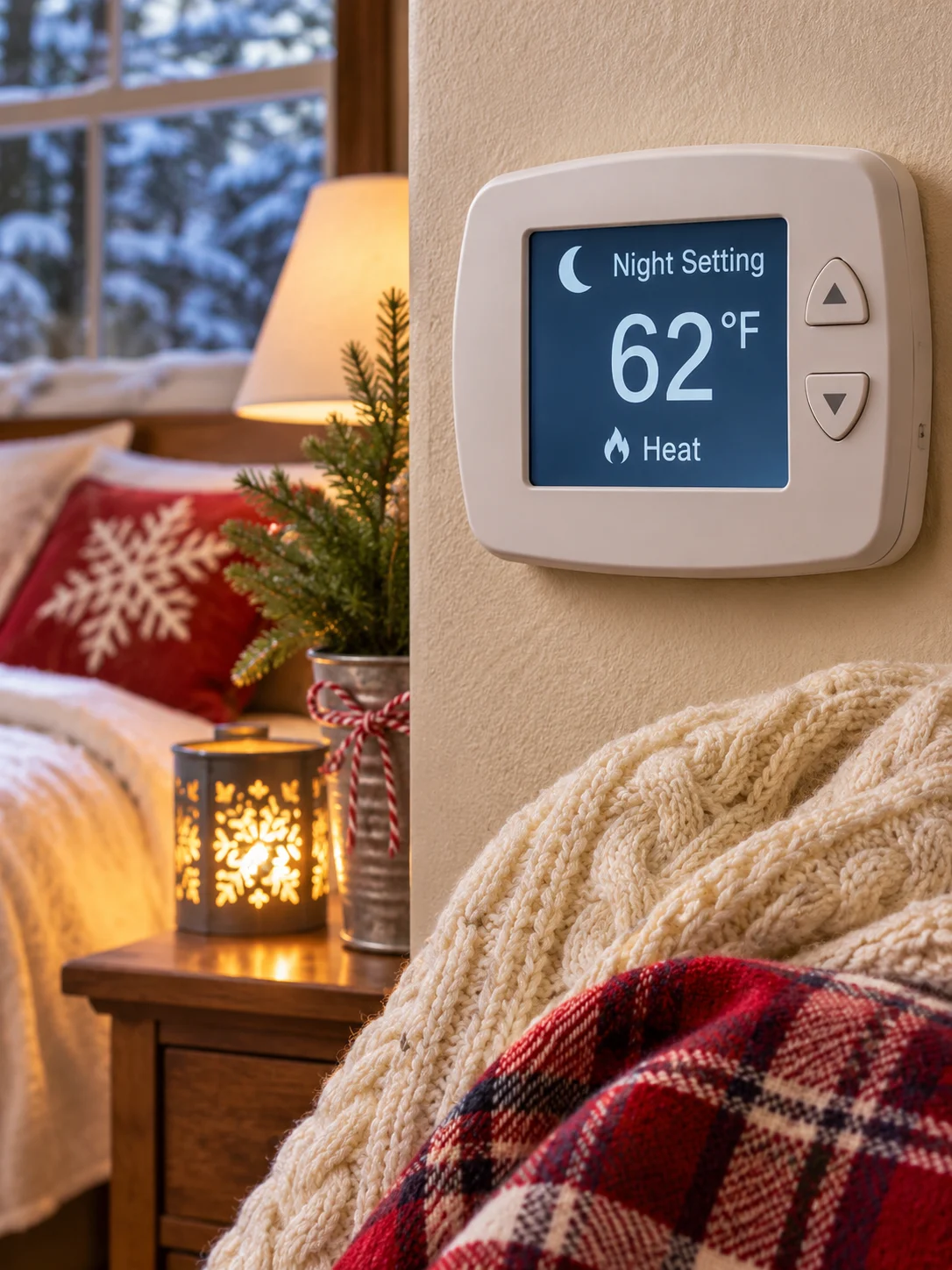
For the trial, I programmed the thermostat to drop to 62 degrees at 10:00 p.m. and return to 68 degrees at 6:00 a.m. I chose those hours because they match our household rhythm pretty closely. We’re usually winding down by 9:30, and by 6:00 I want the kitchen warming while the coffee starts. A 6-degree setback isn’t extreme, but it’s enough to notice.
3. The first night felt colder than the rest
I’ll tell you the truth: the first night, I was certain I’d made a mistake. By 10:30, the bedroom felt cooler in a way I wasn’t used to, especially on my shoulders and hands. It wasn’t unbearable, but it was different enough that my mind kept checking in on it. Sometimes the hardest part of any household change is simply that it’s new.
I added one extra layer to the bed: a medium-weight cotton blanket between the sheet and the quilt. That simple adjustment made more difference than I expected. Once I was under the covers for 15 or 20 minutes, I was comfortable. By night three, the cooler room didn’t feel odd anymore. It felt crisp.
4. I slept better than I expected
This was the biggest surprise. Cooler sleeping conditions suited me better than the constant warmth. I fell asleep faster on most nights, and I woke up less with that dry, overheated feeling that sometimes has me reaching for water at 2:00 a.m.
I’m not pretending I ran a sleep laboratory, but I did keep notes. Out of the 14 nights, I wrote “slept well” or “very well” on 10 of them. On the prior week, before the experiment, I’d noted restless sleep on 4 nights out of 7. The cooler room seemed to help, especially with heavy quilts. If you grew up in the Midwest the way I did, under good blankets with cold air nipping at the window glass, you know there’s a particular comfort in that.
5. The furnace ran less overnight
This part was easy to hear and feel. With the lower nighttime setting, the furnace cycled less often during the late-night hours. The house was still protected from getting too cold, but that near-constant maintenance of 68 degrees overnight stopped.
I timed several cycles out of curiosity. On colder nights when the thermostat stayed at 68 in the past, the furnace might kick on every 35 to 50 minutes overnight, depending on wind and outdoor temperature. During the experiment, after the house settled into the lower temperature, the cycles were less frequent. I heard longer quiet stretches, particularly between midnight and 4:00 a.m. It made the whole house feel calmer somehow.
6. Morning comfort depended on timing
The biggest drawback showed up before breakfast. If I got up before the programmed warm-up finished, the kitchen and bathroom definitely felt cooler. Not dangerously cold, just enough to make tile floors and countertop tasks less pleasant. On two mornings when I was up around 5:30, I wished I’d told the thermostat to start recovering earlier.
By the second week, I made a small adjustment and moved the morning warm-up from 6:00 a.m. to 5:40 a.m. That gave the furnace 20 extra minutes to nudge the house back toward 68 before anybody was standing in the kitchen in socks. If your house is larger than mine, has higher ceilings, or loses heat quickly, you may need 30 to 45 minutes of lead time.
7. Bedding made or broke the experience
I don’t think this experiment would have gone well if I’d stubbornly kept the exact same bedding and expected the room to do all the work. In winter, a bed ought to be dressed for winter. I used cotton sheets, one blanket, and a quilt most nights. On the two coldest nights, when the outdoor temperature dropped near 21 degrees, I added a second quilt folded across the foot of the bed.
If somebody tries this and says it was miserable, my first question would be: what was on the bed? A room at 62 degrees can feel just fine for sleeping if your bedding is working with you. It’s much like dressing for the weather outdoors. You don’t blame January because you forgot your coat.
8. Humidity and dryness improved a little
One thing I notice every winter is dry skin, a scratchy throat, and that parched feeling in the nose that comes with forced-air heat running often. During the two weeks, the house still had winter dryness, of course, but the bedrooms felt a little less baked overnight.
I keep a small indoor thermometer with a humidity reading on the dresser. Overnight relative humidity still hovered in the dry range, generally between 31% and 36%, but the room felt less stuffy by morning. Because the furnace wasn’t chasing 68 degrees through every hour of the night, the air simply seemed less worked over. It wasn’t a miracle cure, but it was noticeable.
9. The savings were real, though not dramatic overnight
Everybody wants a tidy number, and I understand that. But with home heating, savings depend on fuel type, insulation, outdoor weather, furnace efficiency, and the size of the house. Over just 14 days, I could only estimate based on furnace run time, weather, and normal usage patterns. Still, the reduction appeared meaningful.
For a house of this size with a gas furnace, I’d estimate the nighttime setback trimmed heating use by roughly 5% to 10% over those two weeks compared with maintaining 68 degrees all night. In dollar terms, that won’t make you faint dead away with joy in a single pay period, but over a full heating season it adds up. Even saving $15 to $40 a month during the coldest months can cover groceries, dog food, or a couple tanks of gas for town trips. Around here, that counts.
10. Not everyone in the house felt the same way
This is where every home becomes its own little democracy. I liked the cooler sleeping conditions more than I thought I would. Someone else in the family liked the savings but not the first step out of bed in the morning. That is a very real objection, and I won’t dismiss it. Comfort isn’t a moral issue; it’s comfort.
We compromised with thicker socks by the bed, a robe within reach, and that earlier morning warm-up time. If you’re sharing a room with someone who “sleeps cold,” a lower nighttime setting may require a heated mattress pad on low, a warmer comforter, or a less aggressive setback. The best thermostat setting is the one people can actually live with for more than two nights.
11. The house itself handled the change just fine
Some folks worry that lowering the temperature overnight will somehow strain the heating system or make the house damp. In this case, neither happened. The furnace wasn’t overworked by bringing the home back from 62 to 68 in the morning. It simply ran a longer recovery cycle after wake-up instead of many shorter cycles overnight.
I also kept an eye on the windows for heavy condensation because old houses like to tell on themselves. I didn’t see any unusual moisture buildup beyond what we’d normally get from cooking or showers. Indoor temperatures stayed well within a safe and sensible range, and the house never felt clammy.
12. I learned that room temperature feels different at night than during the day
This may sound obvious, but living it was a useful reminder. Sixty-two degrees while sitting still in the living room reading at 8:00 p.m. would feel chilly to me. Sixty-two degrees while tucked under blankets at 1:00 a.m. felt entirely different. Activity level, clothing, bedding, and expectation all change how a temperature lands on the body.
That’s why round-the-clock settings can be wasteful in the first place. A house doesn’t need to feel the same at 2:00 in the afternoon as it does at 2:00 in the morning. We don’t live the same way in those hours, so there’s no reason the heating schedule has to pretend we do.
13. A few practical tweaks made the experiment work better
I closed the bedroom curtains at dusk to cut down on heat loss through the glass. I placed a draft blocker along the bottom of the back entry door. I made sure the furnace filter was clean before the test began. None of these jobs cost much, and they helped the house hold onto heat more sensibly.
If you’re trying something similar, I’d also suggest checking that supply vents aren’t blocked by furniture and that your thermostat schedule matches your actual routine. A setback only helps if it’s timed properly. If you stay up until midnight but your thermostat drops at 9:30, you’ll just be annoyed.
14. Who will like this change and who probably won’t
If you sleep hot, enjoy piling on blankets, or dislike paying to heat an empty-feeling house while everyone is asleep, you may take to this very quickly. It also suits households that already keep robes, slippers, and extra bedding on hand through winter. Older homes can do well with it too, provided the heating system is sound and pipes aren’t at risk.
On the other hand, if someone in the house is very sensitive to cold, if you have a poorly insulated home that takes forever to recover, or if your mornings are chaotic and nobody can tolerate a cool bathroom for even 10 minutes, then a smaller setback might be wiser. There’s no prize for suffering. Try 65 degrees first, then 64, then lower if it still feels comfortable.
15. My honest verdict after 14 days
At the end of the two weeks, I didn’t go back to keeping the house at 68 degrees all night. The experiment won me over. Sleep was better, the furnace had more quiet time, the air felt less dry, and the likely savings were enough to make the change worthwhile. The only real nuisance was the cooler morning window, and that was mostly solved by starting the warm-up a little earlier.
If I had to sum it up plainly, I’d say this: the house felt cooler at bedtime, cozier once I was under the covers, and smarter by morning. That’s not a bad trade in winter.
16. What I’d recommend if you want to try it yourself
Start with a 3- to 4-degree drop for three nights before making a full 6-degree change. For example, if you usually keep your home at 68, try 65 overnight from 10:00 p.m. to 6:00 a.m. Then adjust lower if everyone sleeps comfortably. Use proper bedding, keep slippers by the bed, and give the morning recovery enough lead time for your house.
Most of all, pay attention to how your home actually behaves. Every furnace, every bedroom, every old window and hallway tells its own story. Mine told me that a cooler night suits us just fine. And after all these years of Midwestern winters, I’ve learned to trust a house when it finally settles into a rhythm that feels both thrifty and kind.