Baking has always been a big deal in my family. Give us a birthday, holiday, potluck, or random Sunday afternoon, and somebody is probably pulling out a mixing bowl.
My nana, especially, can make cookies that disappear before they’ve had time to cool. You know the kind—soft centers, slightly crisp edges, and that buttery smell that somehow brings everybody into the kitchen at once.
So when she started baking for a family party recently, nobody thought twice about it.
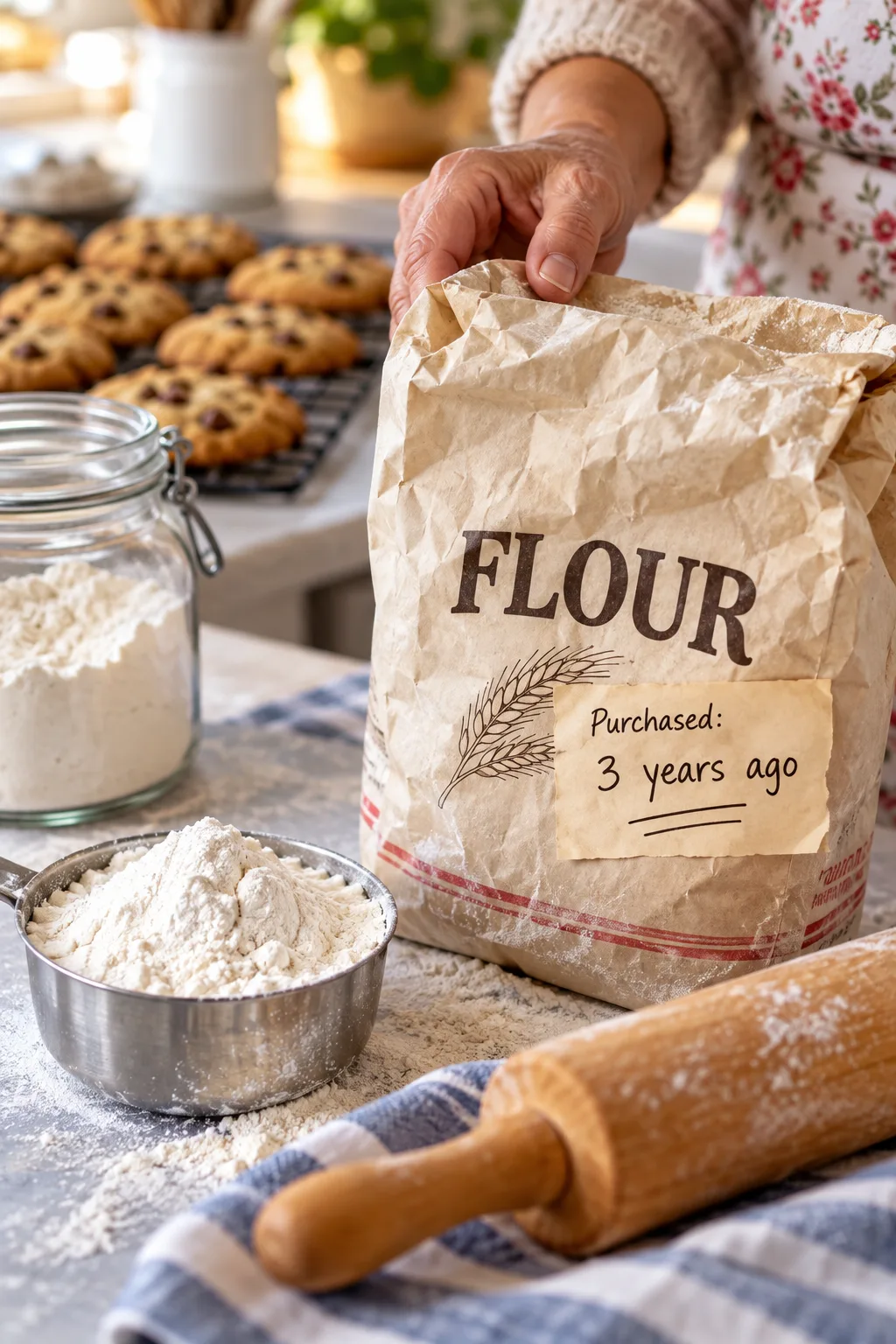
Then Nana reached into the back of her cupboard and pulled out a bag of flour.
Nothing strange there.
Until she casually mentioned that the flour was three years old.
Three. Years.
I looked at the bag. Then I looked at Nana. Then back at the bag.
That little moment sent me straight into a question I probably should have asked years ago:
How long does flour last, anyway?
Can flour really sit in the pantry for years and still be good? Does flour expire? And what actually happens when you bake with old flour?
Turns out, flour lasts longer than many fresh foods, but it definitely doesn’t stay perfect forever.
How Long Does Flour Last?
The shelf life of flour depends on the type of flour, its packaging, where you store it, and how much heat, air, moisture, and light reach it.
Refined white flours, such as all-purpose flour and bread flour, generally stay fresh longer than whole grain or nut flours. That’s because whole grain and nut flours contain more natural oils. Those oils can oxidize over time and develop an unpleasant rancid flavor.
A printed “best by” or “best if used by” date isn’t automatically a safety deadline. USDA explains that “Best if Used By” refers primarily to quality. Food that has passed that date may still be usable when it has been stored correctly and shows no signs of spoilage.
Still, that doesn’t mean I’d grab any ancient bag from the back of the cabinet and start making brownies.
Age is only part of the story. Storage conditions matter—a lot.
Does Flour Expire?
Technically, flour can deteriorate and eventually become unsuitable for baking.
What makes this confusing is the word “expire.”
When people see an old date on a flour bag, they often assume the flour suddenly became dangerous the following morning. That’s not how a best-by date works.
The date is mainly about when the manufacturer expects the flour to deliver its intended flavor and baking quality.
After that point, its quality may gradually decline.
King Arthur Baking notes that refined flour stored well may sometimes remain usable after its best-by date, while whole grain flour is more sensitive because of its natural oil content.
So an old date alone doesn’t tell the whole story.
Your nose, eyes, and knowledge of how the flour was stored matter too.
Would I Use Flour That’s Been in the Cupboard for Three Years?
Here’s where Nana’s mystery flour comes back into the picture.
Would I personally make party cookies with white flour that had been sitting in an ordinary kitchen cupboard for three years?
Nope.
Especially if I couldn’t say for certain that it had stayed sealed, dry, cool, pest-free, and protected from kitchen heat the entire time.
Could a very old refined flour stored under controlled conditions still appear normal? Possibly.
But a forgotten three-year-old pantry bag isn’t the place I’d gamble on saving a couple bucks—especially when I’m baking something I actually want people to enjoy.
If you’re looking at very old flour and thinking, Well… maybe?, replacing it is usually the simpler call.
Cookies deserve better.
How Long Does All-Purpose Flour Last?
All-purpose flour has a relatively long shelf life because much of the oil-containing portion of the wheat kernel is removed during milling.
That makes it more stable than whole wheat flour.
Still, room-temperature storage slowly affects its flavor and freshness.
King Arthur Baking recommends keeping white flour airtight in a cool, dark location and using refrigeration or freezing when it will be stored for a longer period.
Rather than relying on one universal number, check the date printed on your particular package and pay attention to storage conditions.
A bag opened six months ago and kept tightly sealed in a cool pantry is a very different situation from a bag left half-open beside a warm oven.
Same flour. Very different life.
How Long Does Whole Wheat Flour Last?
Whole wheat flour deserves more attention because it contains the bran and germ of the wheat kernel.
The germ contains natural oils.
Those oils are great for flavor, but they also make whole grain flour more prone to oxidation and rancidity.
King Arthur Baking recommends storing whole grain flour airtight and keeping it cold when possible. Its baking guidance says whole grain flour stored at cool room temperature may retain good quality for roughly one to three months, while freezer storage can extend its freshness considerably. Actual storage life can vary according to milling date and previous storage conditions.
If you don’t bake whole wheat bread every week, keeping that flour in the freezer makes a lot of sense.
I know, freezer space is precious territory. There’s always a mystery container of soup fighting for room in there.
But whole grain flour benefits from the colder environment.
What About Almond Flour and Other Nut Flours?
Nut flours are another story.
Almond flour and similar products contain much more fat than standard white wheat flour. More fat means more opportunity for those oils to oxidize.
That can produce a stale or rancid smell surprisingly fast compared with white flour.
King Arthur recommends freezer storage for nut flours because their higher oil content makes them particularly sensitive at room temperature.
So if you bought almond flour for one batch of macarons and haven’t touched the rest since Christmas… yep, check that bag before using it.
And for future storage, the freezer is your friend.
How Can You Tell If Flour Has Gone Bad?
Thankfully, bad flour usually gives you clues.
Before adding flour to a recipe, especially an older bag, take a few seconds to check it.
1. Smell the Flour
Fresh white flour usually has very little smell. You might notice a faint, clean wheat aroma, but nothing strong.
Old flour may smell:
- Sour
- Musty
- Stale
- Rancid
- Oddly chemical or waxy
Whole grain flour can develop a particularly obvious unpleasant odor when its oils become rancid.
If you open the container and immediately think, Whoa, that’s weird, don’t talk yourself into using it.
Fresh flour shouldn’t make you recoil.
2. Look for Bugs
Pantry pests love dry foods.
Look closely for insects, larvae, web-like material, dark specks, or other signs of pest activity.
If you find them, throw the flour away and inspect nearby dry goods such as rice, pasta, cereal, cornmeal, and baking mixes.
Those little guys do not respect property lines.
3. Check for Moisture or Mold
Flour should remain dry and loose.
Hard damp clumps, visible mold, or other signs that moisture entered the package mean the flour should go in the trash.
Moisture can create conditions where spoilage becomes a bigger concern.
4. Check the Color
Different flours naturally have different colors, so compare the flour with what it normally looks like rather than expecting every variety to be bright white.
An unusual color change combined with an odd smell or moisture is a good reason to discard it.
King Arthur recommends throwing flour away when it shows mold, insect activity, hard moisture lumps, unusual discoloration, or an unpleasant smell.
Can Expired Flour Make You Sick?
There’s an important distinction here.
Old flour and raw flour are two separate food-safety issues.
Age isn’t the only concern with flour.
The FDA classifies flour as a raw food. Wheat grows outdoors, and harmful bacteria such as certain strains of E. coli or Salmonella can contaminate grain before it becomes flour. Milling does not necessarily kill those bacteria.
That’s why eating raw cookie dough isn’t recommended—even when you’re using a brand-new bag of flour.
Yes, I know. Raw cookie dough has a loyal fan club.
But the flour itself, not just raw eggs, can be part of the food-safety concern.
The FDA advises against eating raw flour, dough, or batter. Proper cooking or baking is the step that kills harmful bacteria that may be present.
So don’t taste raw flour to decide whether it’s still good.
Use your eyes and nose instead.
Can You Heat-Treat Flour at Home to Make It Safe?
This is another common baking tip floating around online, especially in edible cookie dough recipes.
The FDA specifically advises consumers not to rely on home heat treatment of flour as a way to make raw flour safe because a home process may not reliably kill all harmful bacteria.
If you’re making something designed to be eaten without baking, use ingredients made for that purpose and follow tested food-safety instructions.
That spoonful of raw brownie batter may look mighty tempting, but licking the spatula isn’t worth turning dessert night into stomach-trouble night.
Does Old Flour Affect the Taste of Cookies and Cakes?
Oh, absolutely.
This is the part bakers notice even when food safety isn’t an issue.
Old flour can affect flavor.
If the flour’s oils have started turning rancid, that unpleasant taste can follow it straight into your muffins, pancakes, cookies, pie crust, or bread.
And once you’ve mixed in butter, sugar, eggs, chocolate chips, vanilla, and everything else, tossing the finished batch hurts a whole lot more than tossing one questionable bag of flour.
Old ingredients may also produce results that don’t taste as fresh as you expected.
This matters even more with whole grain and nut flours, where the natural oils contribute a lot to the finished flavor.
Fresh ingredients won’t magically fix a bad recipe, but stale ingredients sure can ruin a good one.
What About Self-Rising Flour?
Self-rising flour deserves its own little side note.
It contains flour plus leavening ingredients, typically baking powder and salt.
Even when the flour itself still appears usable, the leavening agent can lose strength with time. That means an old bag of self-rising flour might give you sad biscuits, dense pancakes, or baked goods that simply don’t rise the way they should.
King Arthur notes that this loss of leavening power can happen after the product’s best-by date.
Nobody wants hockey-puck biscuits at Sunday breakfast.
For recipes where rise matters, fresh self-rising flour is the safer bet for good results.
The Best Way to Store Flour
If you want flour to stay fresh, your storage setup doesn’t need to be fancy.
The basic rule is simple:
Keep flour airtight, cool, dry, and away from light.
Use an Airtight Container
The paper bag flour comes in isn’t great protection once you get it home.
You can place the whole bag inside a large resealable bag or transfer the flour into a food-safe airtight container.
This helps protect it from moisture, pantry odors, and pests.
King Arthur specifically recommends adding airtight protection rather than relying only on the original paper package.
Pick a Cool, Dark Spot
Don’t store your flour beside the stove if you can avoid it.
Heat and light speed up changes in flour, particularly oxidation.
A cool pantry or cabinet away from the oven works much better.
Refrigerate or Freeze Flour for Longer Storage
If you’re an occasional baker, refrigerator or freezer storage can make sense.
This is especially helpful for:
- Whole wheat flour
- Rye flour
- Other whole grain flours
- Almond flour
- Nut flours
- Flour purchased in bulk
Keep the flour tightly sealed so it doesn’t absorb moisture or odors from other food.
Because nobody wants chocolate chip cookies with a mysterious hint of frozen garlic bread.
Can You Freeze Flour?
Yep.
Freezing flour is one of the easiest ways to protect its quality during longer storage.
Put it in an airtight, freezer-safe bag or container first. Mark the package with the flour type and the date you stored it.
That last part saves you from playing the classic freezer game six months later:
“Is this bread flour… or powdered sugar?”
For most everyday baking, chilled flour can often be used without much trouble. Some recipes involving yeast may behave a little differently when very cold flour lowers the dough temperature, so letting it warm slightly can be helpful when temperature matters.
Should You Throw Flour Away After the Best-By Date?
Not automatically.
USDA guidance states that a “Best if Used By” date relates to quality rather than functioning as a universal safety cutoff. Properly handled foods may remain usable after that date when they show no signs of spoilage.
For flour, think about the whole picture:
How old is it?
What type of flour is it?
Was it opened?
Was it stored airtight?
Did it spend two summers in a hot kitchen cabinet?
Does it smell normal?
Are there pests?
Is there any moisture?
Those questions tell you more than the printed date alone.
Still, there’s a point where practicality kicks in.
If you’re staring at a mystery bag from several years ago and can’t remember when you opened it or how it has been stored, replacing it is a pretty reasonable move.
Flour is usually cheaper than ruining a whole batch of homemade cinnamon rolls.
My Easy Flour Storage Trick
I’ve started doing one ridiculously simple thing whenever I open a fresh bag.
I write the opening date on it.
That’s it.
Nothing fancy.
If I transfer the flour into another container, I stick a small label on the container with:
Flour type + best-by date + date opened.
That tiny habit solves the whole “Wait, when did I buy this?” problem.
For flour I rarely use, I move it to the freezer.
It takes maybe 20 seconds, and future-me appreciates it.
Frequently Asked Questions About Flour Shelf Life
Can I use flour two years out of date?
It depends on the flour and how it was stored. A best-by date refers largely to product quality, but flour can lose freshness and develop rancid flavors over time. Carefully inspect and smell older flour. When its storage history is questionable or it shows signs of spoilage, discard it.
Does unopened flour go bad?
Yes. An unopened package can still lose quality over time. Packaging slows exposure to outside contaminants, but it doesn’t stop natural oxidation forever.
What does rancid flour smell like?
Rancid flour can have a strong stale, sour, musty, waxy, or otherwise unpleasant smell. Whole grain and nut flours tend to show rancid aromas more readily because they contain more natural oils.
Should flour be stored in the refrigerator?
It doesn’t always need refrigeration, but cold storage can help flour stay fresh longer. Refrigeration or freezing is particularly useful for whole grain and nut flours.
Can you freeze all-purpose flour?
Yes. Store all-purpose flour in a tightly sealed freezer-safe container or bag to protect it from moisture and odors.
Is flour safe to eat raw?
No. The FDA warns that flour is a raw food and may contain harmful bacteria. Don’t eat raw flour, batter, or dough. Cook or bake foods containing raw flour according to proper directions.
So, How Long Does Flour Last?
So, back to Nana and her three-year-old bag.
Could I give every bag of flour one magical expiration number?
No.
How long flour lasts depends on the flour itself and how you’ve stored it.
White all-purpose flour tends to stay fresh longer than whole grain or nut flour. Airtight, cool storage helps. Refrigeration and freezing can protect flour quality for longer periods. A best-by date is useful guidance, but smell, appearance, moisture, pests, and storage history matter too.
And that three-year-old bag hiding behind the pancake mix?
Personally, I’d thank it for its service and let it go.
Fresh flour costs a whole lot less than butter, eggs, chocolate chips, and the disappointment of biting into a cookie that tastes like the back of the pantry.
Before your next baking session, take ten seconds to check your flour.
Give it a sniff. Look for bugs or moisture. Check the date. Think about where it’s been stored.
Then bake those cookies.
Because when dessert is involved, I’d rather spend my time wondering whether I should eat a second cookie—not whether the flour in the first one belonged to another era.