I’m the kind of person who buys a loaf of bread with the best intentions, makes two or three sandwiches, and then somehow finds the rest of it shoved behind yogurt cups by midweek. A few months ago, after throwing out yet another half loaf that had gone stale and then spotty with mold, I tried a trick I kept hearing about: put a plain paper towel in the bread bag and leave it there. Since I’m naturally skeptical and also tired of wasting groceries, I decided to treat it like a little kitchen experiment and see what actually happened after 7 days.
The short version is that the paper towel did make a noticeable difference, but not in a magical, forever-fresh kind of way. What I found was that the bread stayed in better shape for longer because the towel helped manage excess moisture inside the bag. Over the week, I paid attention to texture, smell, condensation, and mold, and I compared what happened to what I usually see with sandwich bread sitting on my counter. If you’re wondering whether this trick is worth the 3 seconds it takes, here’s exactly what happened and what I’d do again.
1. Why I tried the paper towel trick in the first place
My main issue with bread isn’t that we never eat it; it’s that we eat it unevenly. On busy workweeks, I’ll use 4 slices on Monday, none on Tuesday, 2 on Wednesday, and then suddenly we’re making pasta or takeout for the next two nights. That means a standard 20- to 24-ounce loaf can sit around for 5 to 7 days after opening.
What usually ruins it first in my house is moisture buildup inside the plastic bag. If the loaf is extra fresh from the store, or if the kitchen is humid, I’ll sometimes notice tiny droplets clinging to the inside of the bag by day 2 or 3. That trapped moisture is exactly the kind of thing that makes bread turn gummy in spots and mold faster, so the paper towel trick made enough sense for me to test.
2. The exact setup I used
I used one standard loaf of soft sandwich bread in its original plastic bag, the kind you’d grab at a regular grocery store. I opened it the first evening, made sandwiches, and then placed 1 plain, white, unscented paper towel inside the bag on top of the bread before re-closing it with the original twist tie.
I didn’t wrap each slice or do anything fancy. I also didn’t refrigerate it. The loaf stayed on my kitchen counter, away from the stove and out of direct sunlight, in a room that was roughly 70 to 72 degrees Fahrenheit during the day. That mattered, because bread stored in a cool, dry room behaves very differently than bread left next to a warm toaster oven.
3. What the paper towel is supposed to do
The idea is pretty simple: the paper towel absorbs excess moisture inside the bag before that moisture settles on the bread. Bread naturally releases a bit of moisture over time, and in a sealed plastic bag, that dampness has nowhere to go.
When too much humidity lingers around the slices, the bread can become sticky or develop wet spots, especially near the top or sides of the loaf. A paper towel acts like a moisture buffer. It doesn’t “preserve” bread in the way a preservative does, but it can reduce the damp conditions that speed up mold growth.
4. What I noticed on day 1
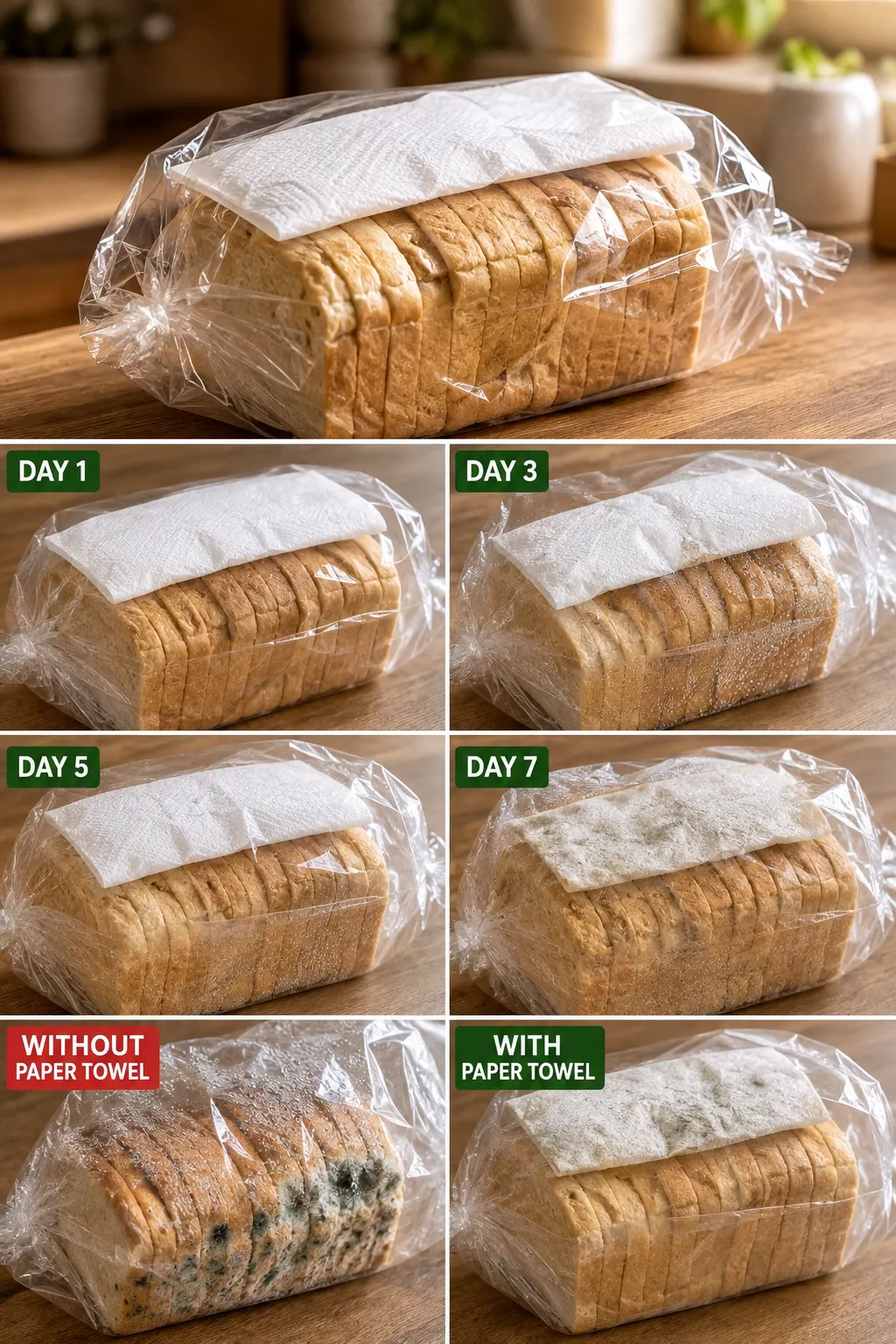
On the first day, there wasn’t much drama. The bread felt soft and springy, just like it had when I bought it. The paper towel stayed almost completely dry to the touch.
I will say this: I made sure the towel wasn’t pressed tightly against the cut face of the loaf. I laid it loosely across the top interior of the bag. If you wad it up or cram it into one corner, it won’t do much. If you press it directly into the bread, it can stick a little, especially with very soft sandwich loaves.
5. What changed by day 3
By day 3, I usually start to notice that bread loses that fresh, fluffy feel. This time, the slices were still soft, and more importantly, the inside of the bag didn’t have the same humid feel I often notice when I reach in for a slice.
The paper towel was no longer crisp-dry. It had a faint softness to it, almost like it had absorbed steam from the air, but it wasn’t soaked. There was no visible condensation in the bag, which was the first sign to me that the trick was doing something useful.
6. What happened on day 5
Day 5 is usually the turning point in my kitchen. Normally, this is when I start inspecting every slice under the light before making toast. With the paper towel in the bag, the loaf was still usable and smelled normal.
The outer slices had started to dry just a little around the edges, but they were not stiff or brittle. The middle slices were still soft enough for sandwiches. I didn’t see any blue, green, or white fuzzy spots, and there was no sour smell, which is one of the first clues bread is heading downhill.
7. The 7-day result
Seven days later, the bread definitely wasn’t bakery-fresh, but it was in better condition than I expected. The biggest difference was that it had aged more evenly. Instead of getting a couple of damp, suspicious slices and then sudden mold, the loaf gradually became a bit drier while still staying edible.
I did not find mold on day 7. For me, that was the biggest win. The paper towel had become noticeably damp compared with day 1, which told me it really had been pulling moisture out of the air inside the bag. I swapped it out at that point, and if I’d needed another 2 or 3 days, I probably would have frozen the remaining slices rather than push my luck.
8. What the bread looked and felt like compared with usual
Without the paper towel, my bread often gets patchy in texture. A few slices feel slightly tacky, another few seem too airy and dry, and the bag itself can feel clammy. With the towel, the loaf felt more consistent from top to bottom.
The crust, such as it was on standard sandwich bread, stayed soft rather than leathery. The slices also separated more easily. If you’ve ever tried to peel apart bread that’s gotten just a little damp inside the bag, you know how annoying that is. I didn’t have that issue nearly as much.
9. What this trick does not do
This is not a miracle method, and I think that’s important to say clearly. A paper towel won’t rescue bread that’s already turning moldy, and it won’t keep bread fresh indefinitely. If the loaf has already been exposed to a lot of moisture, heat, or contamination from hands grabbing slices constantly, a paper towel can only help so much.
It also won’t stop staling forever. Bread naturally goes stale as starches change over time, especially after 4 to 6 days. The towel mainly helps with moisture management, not with reversing the basic science of bread aging.
10. The kind of bread this works best with
In my experience, this trick makes the most sense for soft sandwich bread, burger buns, hot dog buns, and other breads sold in plastic bags. Those are the products most likely to trap humidity.
I would be more cautious with crusty artisan bread, sourdough boules, or bakery loaves stored in paper. Those breads are a different story. They need airflow to keep the crust from going rubbery, so adding a paper towel inside a plastic bag may not improve the texture much. For those, I usually use a bread box, a paper bag, or I slice and freeze what I won’t eat within 2 days.
11. How to do it the right way
If you want to try this yourself, keep it simple. Use 1 clean, dry, unscented paper towel for a standard loaf. Place it loosely inside the bread bag, ideally along the top or side where it can absorb moisture without sticking to every slice.
Then reseal the bag tightly with a clip or twist tie. Store the loaf in a cool, dry spot, around 68 to 72 degrees Fahrenheit if possible. If your kitchen gets humid, check the towel after 2 to 3 days and replace it if it feels noticeably damp. A fresh towel works better than leaving one in there until it’s limp.
12. Mistakes that can ruin the results
The biggest mistake is storing the bread somewhere warm. If the bag sits above the dishwasher, beside the coffee maker, or near a sunny window, moisture and warmth together can still encourage mold quickly. A paper towel can’t outwork a bad storage spot.
Another mistake is handling the bread with wet or recently washed hands. I know this sounds picky, but extra moisture introduced slice after slice really adds up. I’ve also found that leaving the bag open for several minutes while making lunches dries some parts out and lets kitchen humidity into others. Small habits matter more than people think.
13. When refrigeration and freezing make more sense
If you know you won’t finish a loaf within 5 to 7 days, freezing is still my favorite option. I’ll often divide the loaf in half, keep half out, and freeze half right away. Frozen sandwich bread thaws surprisingly well in 20 to 30 minutes on the counter, and individual slices can go straight into the toaster.
Refrigeration is more controversial because it can make bread stale faster in texture, even if it slows mold. I only refrigerate bread if the weather is especially hot and humid, like those sticky Midwest summer weeks when the kitchen feels warm no matter what. Even then, I prefer freezing over refrigerating for anything I’m not going to use within 2 or 3 days.
14. My honest verdict after 7 days
Yes, I’d use the paper towel trick again. It’s cheap, easy, and genuinely helpful for extending the usable life of a loaf by reducing excess moisture inside the bag. In my weeklong test, it didn’t turn old bread into new bread, but it did help the loaf stay softer, less clammy, and mold-free through day 7.
For a busy household like mine, that’s enough to make it worth doing. If I can save even half a loaf once or twice a month, that cuts down on waste and on those annoying last-minute grocery runs. My takeaway is pretty practical: use the paper towel, replace it if it gets damp, and still have a backup plan to freeze extra bread. That combination has worked much better for me than just hoping the loaf survives the week.