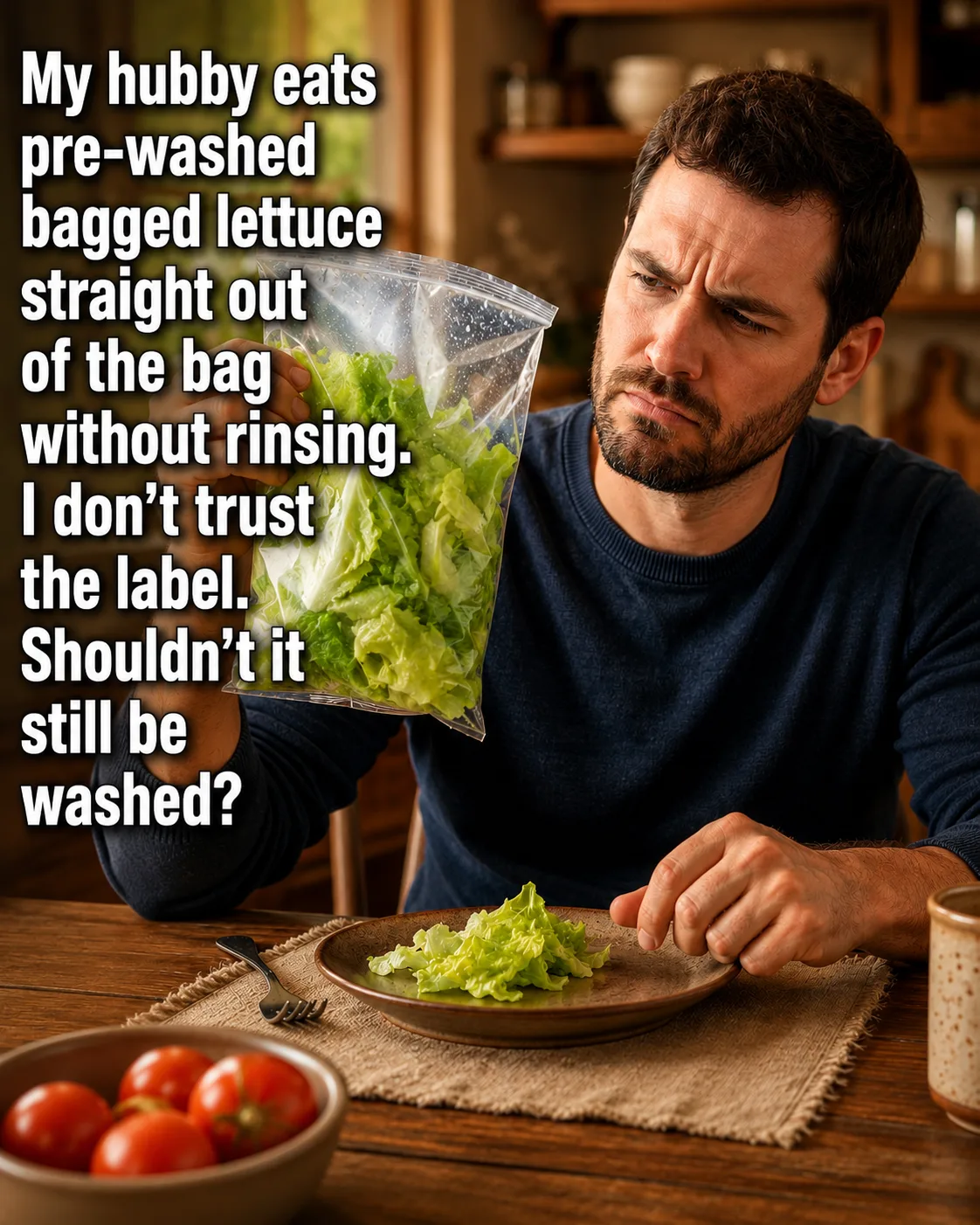
My husband has a simple rule when making salads: if the bag says “pre-washed” or “triple-washed,” it’s ready to eat. He opens it, tosses it into a bowl, and dinner is served. I, on the other hand, always wonder if it should get one more rinse before anyone takes a bite.
If you’ve ever had the same debate in your kitchen, you’re not alone. Bagged lettuce is convenient, but many people question whether it’s truly safe to eat straight from the package.
Here’s what food safety experts recommend and what you should know before making your next salad.
What Does “Pre-Washed” Mean?
When lettuce is labeled “pre-washed,” “triple-washed,” or “ready to eat,” it has already been cleaned during processing before it’s packaged.
The washing process removes dirt and reduces bacteria before the lettuce is sealed in a sanitary environment.
For commercially packaged lettuce labeled “ready to eat,” additional washing is generally not required.
Should You Wash Bagged Lettuce Again?
Surprisingly, the answer is usually no.
Many food safety organizations advise that bagged lettuce labeled “ready to eat” does not need another rinse at home.
In fact, washing it again may actually increase the chance of contamination if your sink, hands, colander, or countertop aren’t completely clean.
Why Some People Still Choose to Rinse It
Even though it’s not necessary, some people still prefer to rinse bagged lettuce.
Common reasons include:
- Personal preference
- Added peace of mind
- Removing any small pieces of debris
- Habit from washing fresh produce
If you decide to rinse it, make sure your sink and utensils are thoroughly cleaned first.
What About Whole Heads of Lettuce?
Whole heads of lettuce are different.
Fresh romaine, iceberg, leaf lettuce, and other whole varieties should be washed under cool running water before eating because they haven’t gone through the same commercial washing process.
Remove damaged outer leaves and gently rinse each remaining leaf before drying.
Store Bagged Lettuce Properly
Proper storage helps maintain both freshness and food safety.
For best results:
- Refrigerate immediately after purchase.
- Keep the bag sealed until you’re ready to use it.
- Store it at 40°F (4°C) or below.
- Follow the “use by” date on the package.
- Discard lettuce that becomes slimy or develops an unpleasant odor.
Keeping lettuce cold helps slow bacterial growth.
Signs Bagged Lettuce Has Gone Bad
Throw the lettuce away if you notice:
- Slimy leaves
- A sour or unpleasant smell
- Brown or black spots covering much of the lettuce
- Excess liquid inside the bag
- Mold
Fresh lettuce should look crisp and smell clean.
Frequently Asked Questions
Is pre-washed lettuce really clean?
Yes. Commercially processed lettuce labeled “ready to eat” is washed before packaging and is generally considered safe to eat without additional washing.
Can washing pre-washed lettuce make it safer?
Not necessarily. Washing it again usually doesn’t improve food safety and may introduce bacteria from your kitchen environment.
Should you wash organic bagged lettuce?
If it’s labeled “ready to eat” or “triple-washed,” the recommendation is generally the same—it does not need additional washing.
How long does opened bagged lettuce last?
Once opened, bagged lettuce is usually best eaten within 3 to 5 days, depending on its freshness and storage conditions.
Final Thoughts
It’s easy to question whether pre-washed bagged lettuce needs one more rinse before serving, but in most cases, the answer is no.
If the package clearly states that the lettuce is “ready to eat,” it’s already been washed during processing and is intended to be eaten without additional rinsing. The most important steps are storing it properly, keeping it refrigerated, and discarding it if it develops signs of spoilage.
Whether you choose to rinse it or not, handling lettuce safely from the grocery store to your table is the best way to enjoy a fresh and delicious salad.