
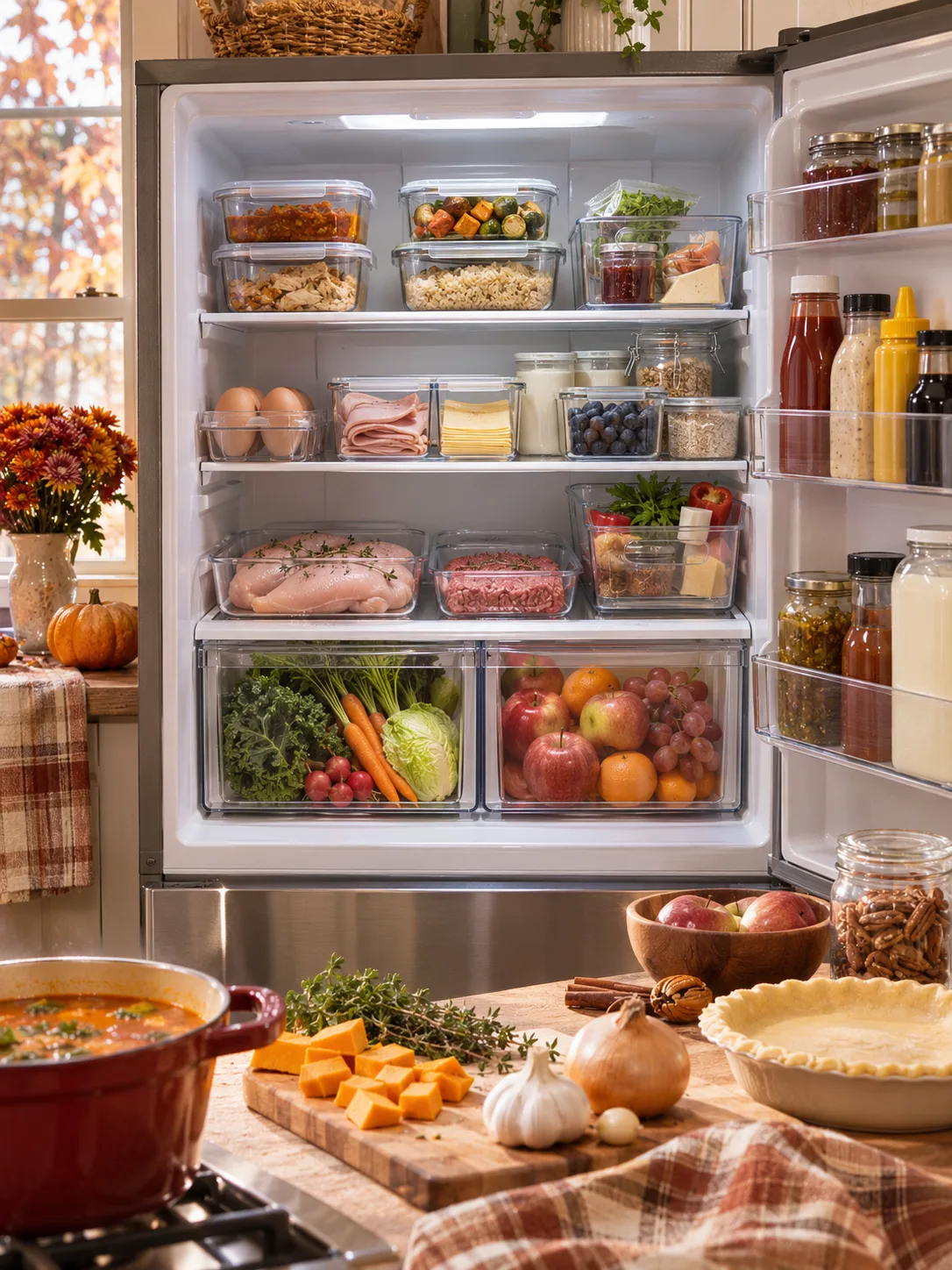
By the time November rolls around where I live, the frost is silvering the porch steps before breakfast and I start paying closer attention to the refrigerator. It works harder in holiday season than any other stretch of the year, holding stockpots of soup, half a ham, pie dough, jars of relishes, and all the odds and ends that seem to multiply between the first pan of dressing and the last turkey sandwich. This year, I decided to do something that sounded a little fussy at first and a little foolish to my husband: I let my refrigerator run nearly empty for 24 hours, cleaned it top to bottom, and then restocked it by zones for 30 days to see whether it would save money, cut waste, and make everyday cooking easier.
I’ll tell you plain: it changed more than I expected. Some of what happened was practical—fewer spoiled greens, better leftovers, less duplicate buying—and some of it was the kind of quiet household relief you only notice when it arrives. I wasn’t standing in front of an open refrigerator door wondering where the sour cream got to or whether that package of bacon had gone off. I had a place for everything, and for one November, that old fridge behaved almost like a good pantry ledger. Here’s exactly how I did it, what I stocked in each zone, what worked, what didn’t, and whether I’d keep doing it now that the month is over.
1. Why I emptied the refrigerator in the first place
The idea came after I threw out three things in one afternoon: a bag of slimy celery, a half jar of cranberry sauce I forgot I’d opened, and a wedge of cheddar that had dried so hard around the edges it could have patched a fence post. None of those were expensive on their own, but together they told a familiar story. I had food in the house, but not a system.
November felt like the right month to test it. It’s a busy cooking month in my kitchen, with more leftovers, more baking ingredients, and more people stopping by. If a zoned refrigerator could survive roast chicken night, soup stock day, and Thanksgiving prep, it could survive anything. So on November 1, I used up perishables for supper, unplugged the mental clutter if not the appliance itself, and gave myself 24 hours of near-empty shelves.
2. What “running it empty” actually meant
I did not turn the refrigerator off, and I didn’t leave milk spoiling on the counter. “Empty” meant I used, moved, or discarded nearly everything except a few essentials that had to stay cold: 1 half gallon of milk, 1 stick of butter, a jar of mayonnaise, and my husband’s insulin supplies in their proper bin. Everything else was cooked, frozen, donated to a supper, or tossed if it was past saving.
That left me with one crisper holding only the butter dish for convenience and one shelf with the milk and medicine. For a full 24 hours, the refrigerator stayed sparse while I wiped every surface with hot, soapy water, then a vinegar rinse of about 1 cup white vinegar to 3 cups warm water. I pulled the drawers out, washed the sticky shelf lips, and even vacuumed the condenser area underneath. The inside smelled clean instead of vaguely onion-like, and that alone felt worth doing.
3. The zones I set up and why
I divided the refrigerator into six working zones based on how I actually cook, not how a showroom refrigerator is styled in a catalog. The top shelf became ready-to-eat foods: leftovers, yogurt, cottage cheese, and anything that could be eaten straight away. The middle shelf became breakfast and lunch items: deli turkey, sliced cheese, hard-boiled eggs, and sandwich fixings. The bottom shelf, the coldest spot in my refrigerator, was for raw meat and fish, always set on a rimmed tray to catch drips.
The upper door shelves held condiments used several times a week—mustard, pickles, jam, ketchup, hot sauce. The lower door held less sensitive items such as soft drinks, bottled juice, and relishes. The two crispers were split by purpose: one high-humidity drawer for leafy greens, carrots, celery, and herbs; one lower-humidity drawer for fruit. Then I gave one small bin on the top shelf a special job: “eat first.” Anything opened, ripening fast, or nearing its date went there.
4. What I bought for the first zoned restock
I kept the first restock modest on purpose. My grocery total was $96.42, and I wanted enough food for 5 to 6 days, not a refrigerator stuffed to the point of losing track. I bought 1 gallon of milk, 2 dozen eggs, 2 heads of romaine, 1 bag spinach, 1 bunch celery, 2 pounds carrots, 3 pounds apples, 2 pounds oranges, 1 pack bacon, 1 whole chicken, 1 pound deli turkey, 8 ounces cheddar, 32 ounces plain yogurt, cottage cheese, mayonnaise, sour cream, and a handful of condiments I was low on.
I also cooked before loading. I roasted the chicken, boiled 8 eggs, washed and dried the romaine, and cut celery and carrot sticks. That step matters more than folks think. A zoned refrigerator is only as useful as the condition of what goes into it. If I put in a muddy bunch of celery and a leaky package of chicken thighs, no amount of organization will fix that by Friday.
5. The top shelf became my leftovers headquarters
This was the single biggest improvement in day-to-day life. I put all leftovers on the top shelf in clear containers, with the oldest in front and newest in back. On the very first week, that shelf held chicken noodle soup in a 2-quart container, half a meatloaf, mashed potatoes, and a bowl of cooked green beans. Because they all lived in one spot, I could see supper possibilities in 5 seconds.
Our leftover use improved almost immediately. In a usual week, I might lose 1 or 2 portions of food to forgetfulness. During this 30-day test, I only threw away one small container of cooked rice after 6 days because I simply didn’t get to it. Everything else got repurposed: meatloaf became sandwiches, mashed potatoes became potato cakes in a cast-iron skillet, and soup became lunch twice. I’d estimate I saved at least $20 to $30 over the month just by seeing what I already had.
6. The meat zone on the bottom shelf prevented the mess I used to dread
I have been keeping meat low in the refrigerator for years, but not with any discipline. This month, every raw protein item went onto one quarter-sheet pan with a lip, roughly 9 by 13 inches. That included 2 packs of chicken thighs one week, a 1.8-pound pork roast another week, and later a package of breakfast sausage for Thanksgiving dressing.
There were two benefits. First, no leaks reached a shelf or drawer. Second, I stopped forgetting what meat needed to be cooked next. If there were chicken thighs on that tray, I knew what supper should probably be. It trimmed decision-making, and for a busy month, that was a blessing. Food safety improved too. Raw meat stayed separated from produce, and I wasn’t tucking a package of hamburger behind a bowl of grapes where it had no business being.
7. The crisper drawers worked better once I stopped mixing fruit and vegetables
This may sound simple, but it made a marked difference. Apples, pears, and some other fruits give off ethylene gas, which can speed the spoilage of certain vegetables. I’d heard that for years but never gave it much practical attention. In November, I put fruit in one drawer and vegetables in the other without exception.
My lettuce lasted 6 full days in good shape, and the spinach went 5 days before softening. Carrot sticks stayed crisp more than a week. Celery, wrapped in foil after trimming, stayed usable almost 2 weeks. Meanwhile, apples in the fruit drawer remained firm and cold, and oranges didn’t disappear under bunches of parsley. Before this experiment, I often lost at least one produce item a week. This month, produce waste dropped to almost nothing except a few herb stems gone limp at the end of week three.
8. The door was my weak spot before, and zoning fixed that too
Refrigerator doors are where small jars go to be forgotten. At least that’s how it had been in my kitchen. I found two open mustard jars when I cleaned out—one nearly empty and one unopened but started. During the zone month, I grouped door items by use. Everyday condiments went at eye level. Holiday and occasional sauces—steak sauce, horseradish, a cranberry chutney jar—went together on the lower shelf. Salad dressings lived in one narrow row.
That tiny bit of order kept me from buying doubles. I skipped an extra pickle relish and a second bottle of ranch because I could plainly see what I had. Not exciting, perhaps, but over 30 days these little non-purchases add up. I’d guess I avoided $12 to $18 of duplicate condiment spending just by keeping the door visible and sorted.
9. The “eat first” bin was the smartest part of the whole setup
If I recommend only one thing from this experiment, it’s this little bin. Mine was a clear plastic shoebox-sized container, about 13 inches long and 5 inches high. Into it went half an onion wrapped tight, the last 6 ounces of turkey, yogurt with 3 days left, a dab of sour cream, 2 bruised pears, and the open jar of pimento cheese my sister brought over.
Every afternoon when I thought about supper, I looked there first. The bin encouraged creativity without waste. Bruised pears became a skillet compote for oatmeal. The turkey became a quick casserole with noodles and peas. Sour cream went into cornbread. Instead of food waiting quietly to be forgotten, it announced itself. That one bin probably saved more edible food than any other part of the system.
10. Meal planning became simpler, not stricter
I want to be clear about one thing: this system did not turn me into a rigid meal planner with Monday written for pork chops and Tuesday assigned to chili. I’m still the same cook I’ve always been. I look at the weather, the clock, and who might be dropping by. But zoning gave me better information.
Because similar foods stayed together, I could see patterns. One glance told me if I had enough breakfast food for two more mornings, whether lunch meat was running low, or whether raw chicken needed cooking within 24 hours. That meant my shopping list was more accurate. I made 5 grocery trips in November, and each one was shorter than usual. I spent less time opening and closing the refrigerator and more time actually cooking.
11. Thanksgiving week was the real test
I worried the system would collapse as soon as holiday cooking began, but with a little adjustment, it held. Two days before Thanksgiving, I temporarily shifted zones. The top shelf still held leftovers, but only one row’s worth. The middle shelf became pie dough, whipping cream, celery, parsley, and a bowl of bread cubes for dressing that needed a cool home overnight. The bottom shelf stayed the raw turkey zone, with a large rimmed tray beneath a 14-pound bird.
I also used masking tape labels with dates that week, especially for make-ahead items. “Gravy base—Nov 26,” “cranberry sauce—Nov 25,” “dressing veg—Nov 26.” After the meal, the zone system really earned its keep. Leftover turkey, stuffing, mashed potatoes, and green bean casserole all went to the top shelf in shallow containers. We ate safely and efficiently for 4 days after without mystery bowls piling up in corners.
12. There were a few inconveniences, and they’re worth mentioning
This was not magic. There were days the refrigerator looked less neat than I’d planned, especially after a long church supper or when the grandchildren came by and put things back wherever their hands landed. I had to reset it every couple of days, which took maybe 3 to 5 minutes. If you expect a one-time organizing session to hold forever without maintenance, you’ll be disappointed.
The other inconvenience was container discipline. To make a zoned refrigerator work well, I needed containers that stacked and showed their contents. My old collection of mismatched tubs with cloudy lids was not ideal. I made do, but if someone wanted to try this seriously, I’d suggest 6 to 8 clear containers in 2-cup and 4-cup sizes, plus one or two shallow rectangular ones for leftovers. You don’t need fancy, but you do need visible.
13. The numbers: what I think I saved in food and time
I didn’t keep a banker’s ledger, but I tracked enough to give an honest estimate. In a typical month, I probably throw away $25 to $40 worth of food once all the small losses are added together—greens, leftovers, dairy, forgotten jars, limp herbs. This November, I threw away maybe $8 to $10 total, and most of that was minor: wilted parsley, the rice I mentioned, and one spoonful of old sauce.
Time savings showed up too. I shaved at least 10 minutes off each grocery-list session because inventory was visible. I spent less time hunting, less time wiping surprise spills, and less time wondering whether I had enough eggs for baking. Over a month, that may have amounted to 2 or 3 hours. At my age, I value that kind of household calm more than any label-maker perfection.
14. What I’d do differently next time
If I repeat this, I’ll make one dedicated dairy breakfast bin instead of scattering yogurt, cream cheese, and butter alternatives in two places. I’d also prep herbs better from the start. Parsley and dill keep longer for me when trimmed and stood in a jar with a little water, loosely covered, rather than tossed into the crisper as-is. And I’d leave a little more open shelf space than I did in week two, because air circulation matters.
I would also plan one “use-it-up supper” every Sunday night. That could be vegetable soup, frittata, toasted sandwiches, or a casserole built from odds and ends. Even with zoning, a refrigerator benefits from a weekly reset. That old farm wisdom still applies: what you use, you value; what you ignore, you waste.
15. So, what happened after 30 days?
After 30 days, my refrigerator was cleaner, my grocery spending felt sharper, and my cooking ran smoother. I wasted less food, I bought fewer duplicates, and I felt more in command of the kitchen without feeling fussy about it. The biggest surprise was not the money, though I do believe I saved some. It was the relief of opening the refrigerator and finding order instead of low-grade confusion.
I’m keeping the zones. Not in a strict, scolding way, but in the practical way country women keep habits that prove themselves useful. A refrigerator, like a pantry or a recipe box, works best when it reflects the rhythms of the household using it. For one cold November, I gave mine some structure, and it answered back with less waste, easier meals, and a little more peace at the end of the day. That’s a result I’ll gladly carry into December.