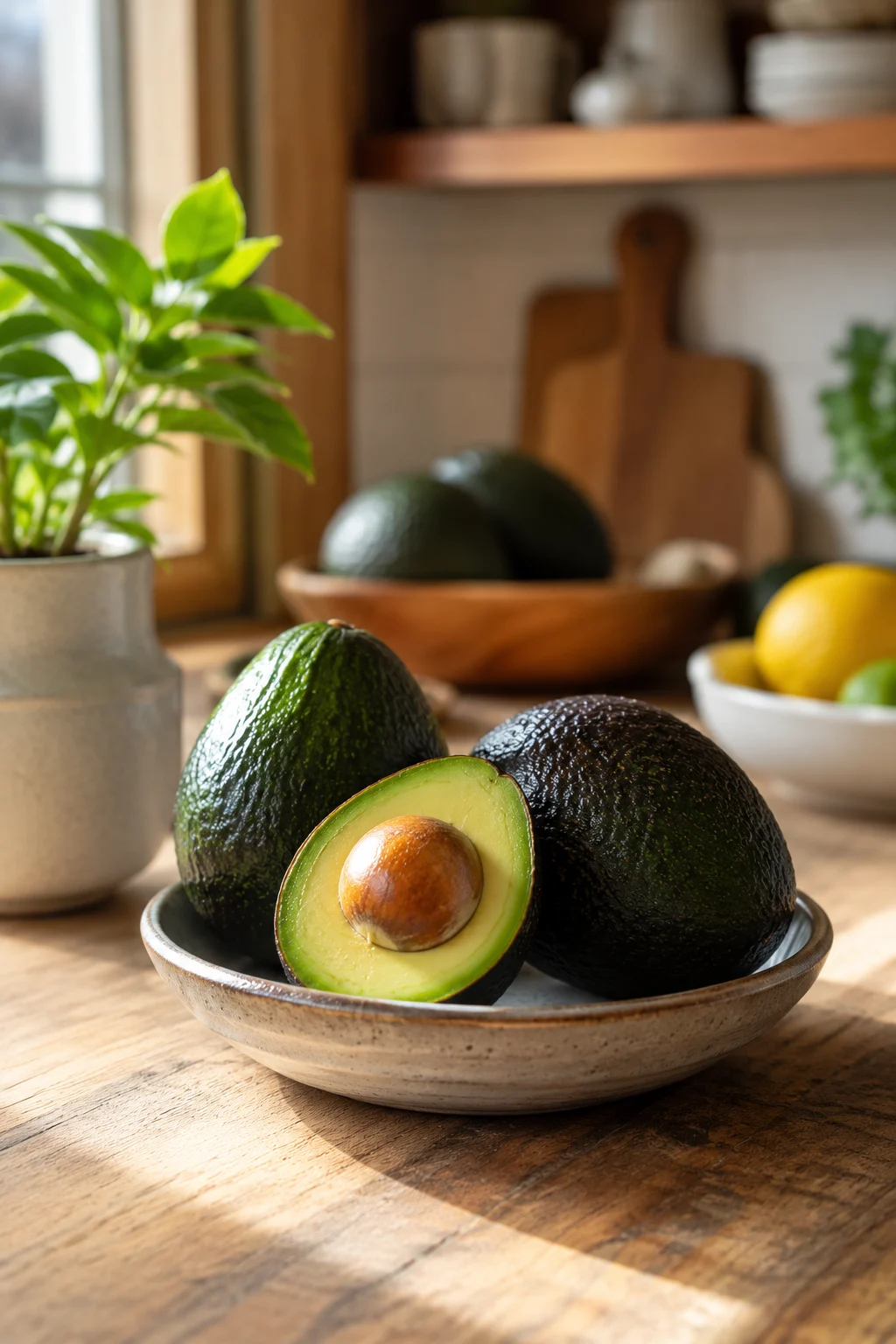
You know how avocados work.
You buy five rock-hard avocados at the grocery store on Monday.
You check them Tuesday.
Still rocks.
Wednesday?
Nothing.
Then Thursday morning rolls around and apparently every avocado in the house has decided, “Today is the day!”
Suddenly you’ve got several perfectly ripe avocados sitting on the kitchen counter, and now the clock is ticking.
That raises an important question: how long can avocados stay out safely?
Whole, uncut avocados are normally kept at room temperature while they ripen. Once they’re ripe, moving them to the refrigerator can slow further ripening and buy you a little extra time.
Cut avocados are a different story. Once an avocado has been sliced, mashed, or turned into guacamole, it should be treated as a perishable refrigerated food rather than something you casually leave on the counter all afternoon.
So if your roommate always leaves whole avocados on the counter for several days, that alone isn’t necessarily a problem.
The important questions are whether they’re whole, how ripe they are, what the room conditions are like, and whether there are signs of spoilage.
Here’s what I look for.
How Long Can Whole Avocados Stay on the Counter?
A firm, uncut avocado can normally sit at room temperature while it ripens.
Depending on how firm it was when purchased, ripening can take roughly a few days.
Some avocados soften quickly.
Others seem personally committed to remaining hard forever.
Rather than judging a whole avocado only by the number of days it has been sitting out, check its ripeness and condition.
A firm avocado that has been on the counter for three days may still need more time.
A very ripe avocado that’s already soft should usually head to the refrigerator if you’re not eating it right away.
Why Avocados Are Usually Ripened at Room Temperature
Avocados continue ripening after they’re harvested.
Room temperature allows that process to happen naturally.
As the fruit ripens, the flesh softens and develops the creamy texture we want for toast, sandwiches, salads, tacos, and guacamole.
Refrigeration slows that process.
That’s why putting a hard avocado straight into the refrigerator can leave you waiting much longer for it to soften.
My basic rule is pretty simple:
Counter for ripening. Refrigerator for slowing things down.
That little routine prevents a lot of wasted avocados.
How Long Does an Avocado Take to Ripen?
A hard avocado may need around 4 to 7 days at room temperature, though the exact timing varies.
An avocado that’s already starting to soften may be ready in a day or two.
Temperature matters too.
A warmer kitchen may speed ripening.
A cooler room can slow it down.
That’s why I don’t love rigid statements like “an avocado is good for exactly four days.”
Fruit doesn’t own a calendar.
Check the avocado itself.
How to Tell When an Avocado Is Ripe
The easiest test is gentle pressure.
Hold the avocado in your palm.
Press very gently.
Don’t dig your fingertips into it.
A ripe avocado should yield slightly without feeling mushy.
If it feels extremely hard, it probably needs more time.
If it feels soft enough that your fingers easily sink into it, it may be overripe.
There’s a sweet spot between baseball and water balloon.
That’s the avocado you’re looking for.
Don’t Keep Squeezing Avocados
We’ve all seen it happen in the grocery store.
Someone picks up an avocado and practically gives it a stress test.
Please don’t.
Repeated hard squeezing bruises the flesh.
Use gentle pressure with your palm instead of poking individual spots with your fingertips.
This gives you a better sense of overall firmness without damaging the fruit.
Your future guacamole will appreciate the kindness.
Does Avocado Skin Color Tell You If It’s Ripe?
Sometimes, but don’t depend on color alone.
Certain avocado varieties become darker as they ripen.
Hass avocados, for example, commonly change from green toward darker shades as they mature.
Other varieties may stay relatively green even when ripe.
So use color as one clue.
Firmness is usually more useful.
If you’re unfamiliar with the variety, don’t reject an avocado simply because it doesn’t match the dark-skinned avocado you normally buy.
What About the Stem Trick?
You’ve probably seen this one.
Remove the little stem cap and look underneath.
Green underneath supposedly means good.
Brown means overripe.
Sounds convenient.
But I wouldn’t keep popping stems off avocados just to test them.
Removing the cap can expose the flesh beneath.
Gentle pressure is usually enough.
If the stem cap has already fallen away naturally, you can certainly inspect that area as another clue.
Just don’t treat it like an infallible avocado fortune teller.
When Should a Ripe Avocado Go Into the Refrigerator?
Once an avocado reaches the ripeness you like, refrigerate it if you aren’t planning to eat it soon.
Cold temperatures slow further ripening.
That can give you several additional days compared with leaving a fully ripe avocado on a warm counter.
This is the trick that changed my avocado-buying routine.
I used to leave every avocado in the fruit bowl until I needed one.
Bad plan.
They’d all become ripe together.
Now, as each avocado reaches the right softness, it goes into the refrigerator.
Suddenly I’m not making emergency guacamole for six people on a Wednesday night.
How Long Can a Ripe Avocado Last in the Fridge?
A whole ripe avocado can often remain usable for a few additional days under refrigeration.
Quality gradually declines, though.
Eventually the flesh may develop extensive browning, become stringy, or acquire an unpleasant flavor or odor.
The refrigerator slows ripening.
It doesn’t freeze time.
I like checking refrigerated ripe avocados regularly rather than forgetting about them in the produce drawer until next month.
We’ve all opened that drawer before.
It’s where optimism goes to die.
Whole Avocado vs. Cut Avocado
This distinction is really important.
A whole avocado has its protective skin intact.
Once you cut it open, the flesh is exposed to oxygen, hands, utensils, cutting boards, and other sources of contamination.
That changes how you should store it.
A cut avocado belongs in the refrigerator.
Don’t treat half an avocado the same way you’d treat a whole unripe fruit sitting in the fruit bowl.
How Long Can a Cut Avocado Sit Out?
Use the standard food-safety rule for perishable prepared foods.
Don’t leave a cut avocado at room temperature for more than about 2 hours.
If the surrounding temperature is above 90°F, that window drops to about 1 hour.
After that, the safest move is to discard it.
That applies whether you’re dealing with:
A sliced avocado.
Half an avocado.
Mashed avocado.
Avocado toast.
Guacamole.
A salad containing avocado.
The clock matters once the fruit has been cut and handled.
Why Two Hours Matters
Bacteria can grow quickly in perishable foods held within warm temperature ranges.
You can’t reliably determine that growth by looking at the food.
That’s why “it smells fine” isn’t a dependable safety test for food that has spent too long at room temperature.
This matters especially with prepared avocado dishes that contain other perishable ingredients.
Guacamole may include ingredients such as chopped tomatoes, onions, dairy products, or other foods.
Once prepared, keep it refrigerated and limit room-temperature exposure.
What If a Cut Avocado Turns Brown?
Here’s where people often confuse quality with safety.
Avocado flesh naturally browns after exposure to oxygen.
That’s oxidation.
A little surface browning does not automatically mean the avocado has spoiled.
If a refrigerated avocado half develops a thin brown layer, you may be able to remove that surface and find green flesh underneath.
However, browning isn’t the only thing you should check.
Odor, texture, storage time, and handling conditions matter too.
Brown Doesn’t Always Mean Bad
An avocado can be brown because it oxidized.
It can also become brown because it’s overripe or deteriorating.
Look at the whole picture.
A little brown surface discoloration?
Not necessarily alarming.
An avocado that’s brown throughout, mushy, watery, oddly stringy, and smells unpleasant?
Yeah, I’m not putting that on toast.
When in doubt, throw it out.
An avocado costs less than a miserable night caused by questionable food.
Signs an Avocado May Have Gone Bad
Pay attention to several warning signs:
- Extremely mushy texture
- Large areas of dark or blackened flesh
- Sour or rancid odor
- Visible mold
- Unusual liquid or sliminess
- Major internal deterioration
- Strange or unpleasant flavor
Don’t taste obviously spoiled food to determine whether it’s safe.
If the avocado has visible mold or a clearly bad smell, discard it.
There’s no culinary rescue mission needed.
What If the Avocado Has Brown Spots Inside?
A few localized brown spots can happen from bruising or overripeness.
You may decide to cut away a small damaged section if the remaining fruit looks, smells, and feels normal.
Extensive discoloration is different.
If most of the flesh is dark, stringy, watery, or unpleasant-looking, I’d toss it.
There’s a point where saving 12 cents worth of avocado flesh becomes more work than it’s worth.
What Are Those Brown Strings Inside an Avocado?
Sometimes an avocado develops fibrous brown strands.
These can become more noticeable as fruit matures or experiences certain growing and storage conditions.
A small amount isn’t necessarily a food-safety problem.
But the texture can be unpleasant.
If the avocado otherwise looks and smells normal, you may simply decide whether the texture bothers you.
If the strings appear alongside extensive browning, mushiness, or an unpleasant odor, I’d discard the fruit.
Can You Eat an Overripe Avocado?
Overripe and spoiled aren’t exactly the same thing.
An avocado that’s softer than you’d prefer may still be usable.
That’s the avocado I might turn into:
Guacamole.
Avocado dressing.
A smoothie.
A creamy sauce.
Mashed avocado toast.
But once you notice signs of actual spoilage, don’t try to hide them in a recipe.
Garlic and lime juice are wonderful.
They’re not time machines.
How to Store an Unripe Avocado
Keep a firm whole avocado at room temperature.
A countertop away from excessive heat and direct sunlight works well.
Don’t place it next to a hot stove.
Don’t leave it baking in a sunny window.
Normal indoor room temperature is what you’re after.
Check it daily once it starts softening.
That prevents the classic avocado situation where “not ready yet” somehow becomes “way too late” overnight.
How to Ripen Avocados Faster
Want guacamole sooner?
Place the whole avocado in a paper bag.
You can add a banana or apple.
These fruits release ethylene, a natural plant hormone involved in ripening.
Loosely close the paper bag and leave it at room temperature.
Check the avocado daily.
This can speed the process compared with leaving it alone on the counter.
Why a Paper Bag Works
The paper bag helps concentrate ethylene around the fruit while still allowing some airflow.
Adding another ethylene-producing fruit can speed things further.
Don’t use an airtight plastic bag for this job.
A paper bag is simple.
Cheap.
And weirdly effective.
It also gives you an excuse to write “GUAC EMERGENCY” across the front.
Not required.
But encouraged.
Don’t Try to “Ripen” an Avocado in the Microwave
Yes, you can heat a hard avocado.
No, that doesn’t truly ripen it the same way natural ripening does.
Heat can soften the flesh, but it won’t create the same flavor and creamy texture as an avocado that ripened naturally.
The result can taste disappointing.
If dinner absolutely depends on ripe avocado tonight, I’d rather buy a ripe one than microwave a hard one and hope for a miracle.
Sometimes patience wins.
Sometimes the grocery store wins.
What About the Oven Trick?
Same basic problem.
Heating an unripe avocado can soften it.
But softening isn’t identical to biological ripening.
Flavor development takes time.
So while oven tricks may change texture, don’t expect them to turn a rock-hard avocado into a beautifully ripe Hass avocado.
I’d use the paper-bag method when I have a little time.
How to Slow Avocado Ripening
This one is easy.
Once the avocado reaches the firmness you like, put it in the refrigerator.
That’s it.
You don’t need an elaborate storage gadget.
Cold temperatures slow the process considerably.
If you’ve bought several avocados, move them into the fridge one at a time as they ripen.
This gives you a rolling supply instead of an avocado apocalypse.
How to Store Half an Avocado
If you’ve used only half, refrigerate the remaining portion promptly.
Cover the exposed flesh tightly or place it in an airtight food-storage container.
Some people leave the pit in the unused half.
That’s fine, but the pit only protects the flesh it physically covers.
It doesn’t magically protect the entire exposed surface.
Limiting contact with air is more useful for slowing visible browning.
Does Lemon Juice Keep Avocados Green?
Acidic citrus juice can slow browning on the surface.
Brush or squeeze a small amount of lemon or lime juice over exposed avocado flesh.
Then cover it tightly and refrigerate.
This is particularly useful for guacamole.
Lime also tastes great with avocado, so that’s a pretty convenient little partnership.
Just remember:
Slowing browning isn’t the same as making food safe indefinitely.
The refrigerator clock is still ticking.
Does Olive Oil Prevent Browning?
A thin layer of oil can reduce some contact between avocado flesh and oxygen.
It may help slow visible browning.
However, it also changes the surface texture and flavor slightly.
For me, lime juice and tight storage are usually easier.
But if you’re using the avocado in a savory dish anyway, a little oil may not bother you.
Again, refrigerate it promptly.
Does Keeping the Pit in Guacamole Stop Browning?
Not really—not across the entire bowl.
The pit can block oxygen from reaching the tiny area directly underneath it.
That’s about it.
If you’ve got a whole bowl of guacamole, the exposed surface can still oxidize.
Covering the surface well and refrigerating it is more useful.
The avocado pit has many talents.
Creating an invisible anti-oxygen force field isn’t one of them.
How to Store Guacamole
Transfer guacamole to a clean airtight container.
Smooth the top.
Add a little lime or lemon juice if you like.
Cover tightly.
Refrigerate promptly.
Some people press food-safe wrap directly against the surface to limit air contact.
That can help with browning.
Use the guacamole within a short refrigerated storage period and discard it if it has been sitting at room temperature beyond safe limits.
Can You Freeze Avocados?
Yes, although the texture may change.
Frozen avocado works better for recipes where perfectly firm slices aren’t important.
Think:
Smoothies.
Sauces.
Dressings.
Mashed avocado.
Guacamole.
You can freeze avocado halves or mashed avocado in suitable freezer containers.
Adding a little citrus juice can help with color.
Once thawed, don’t expect the exact texture of a freshly cut avocado.
For avocado toast?
Maybe.
For beautiful salad slices?
I’d choose fresh.
Can You Refrigerate Unripe Avocados?
You can, but refrigeration slows ripening.
If the avocado is rock hard and you want to eat it soon, leaving it at room temperature usually makes more sense.
If you’re deliberately trying to delay ripening, refrigeration can help.
Once you’re ready to continue the ripening process, move it back to room temperature.
Just expect things to take longer.
Should You Wash Avocados Before Cutting Them?
Yes, washing produce before cutting is a good habit.
Even though you don’t eat the avocado skin, your knife passes through that outer surface before reaching the flesh.
Wash the avocado under clean running water and dry it before cutting.
You don’t need soap.
You definitely don’t need bleach.
It’s an avocado.
Not a bathroom floor.
Don’t Wash Avocados With Dish Soap
Produce can absorb residues, and household dish detergent isn’t intended for washing fresh fruits and vegetables.
Use running water.
Rub the surface gently with clean hands.
Dry it.
Then use a clean knife and cutting board.
Simple works.
Why Clean Cutting Boards Matter
Avocado often goes into foods that won’t receive additional cooking.
That means basic kitchen hygiene matters.
Don’t cut your avocado on a board that just held raw chicken.
Wash your hands.
Use clean utensils.
Keep raw meat separate from ready-to-eat foods.
Honestly, the avocado sitting whole on the counter is usually not the interesting food-safety issue.
What happens after you cut it matters much more.
What If the Avocado Has Been on the Counter for a Week?
Don’t panic just because seven days passed.
If it started extremely firm, it may have needed much of that time to ripen.
Check it.
Is it whole?
Is the skin intact?
Does it feel appropriately ripe rather than collapsed and mushy?
When opened, does the flesh look normal?
Does it smell fresh?
If everything looks normal, the number of days alone doesn’t automatically make an intact whole avocado unsafe.
But if it’s extremely soft, leaking, moldy, or smells bad, discard it.
What If It’s Been Sitting Out for Two Weeks?
At that point, I’d be expecting an extremely ripe or deteriorated avocado unless your kitchen is unusually cool and the fruit started very hard.
Inspect it carefully.
If the fruit is collapsed, moldy, leaking, or clearly spoiled, throw it away.
Don’t keep questionable produce simply because you hate wasting food.
I hate food waste too.
I hate eating rotten avocado considerably more.
What If the Skin Is Wrinkled?
Some wrinkling can happen as an avocado ages and loses moisture.
Wrinkled skin doesn’t automatically tell you what’s happening inside.
Cut it open if there are no obvious external spoilage signs.
If the flesh is still acceptable, you may be able to use it.
If it’s dried out, heavily browned, stringy, or unpleasant, discard it.
What If There’s Mold on the Outside?
Visible mold is a reason to be cautious.
Avocados are soft fruits once ripe, and mold can extend beyond what you can easily see.
I wouldn’t simply cut a tiny patch off a moldy ripe avocado and eat the rest.
Discarding it is the safer choice.
One avocado isn’t worth gambling over.
Should Avocados Be Stored Beside Bananas?
Only if you want them to ripen faster.
Bananas produce ethylene.
That can speed avocado ripening.
So if your avocados are hard and taco night is approaching, great.
If they’re already perfectly ripe and you’re desperately trying to slow them down?
Move them away and refrigerate them.
The banana is not helping anymore.
Can Avocados Stay in a Fruit Bowl?
Absolutely while they’re ripening.
Just remember that other fruits in the bowl may affect how quickly they ripen.
Apples and bananas can speed things along.
Check the bowl daily.
Fruit bowls are lovely.
They’re also tiny ripening conventions where everybody influences everybody else.
Counter vs. Refrigerator: The Simple Rule
Here’s the easiest way I remember it.
Hard avocado: Counter.
Almost ripe avocado: Counter, but check frequently.
Ripe avocado you’re eating today: Counter is fine until you’re ready to prepare it.
Ripe avocado you’re saving: Refrigerator.
Cut avocado: Refrigerator promptly.
Guacamole: Refrigerator promptly.
That’s really the whole avocado-storage strategy.
No complicated kitchen system required.
Common Avocado Storage Mistakes
Refrigerating Every Avocado Immediately
This can slow the ripening of hard fruit when you actually want it to soften.
Leaving Perfectly Ripe Avocados on the Counter for Days
Once they’re ripe, refrigeration can slow further deterioration.
Assuming Brown Means Dangerous
Surface oxidation can cause harmless browning.
Assuming Green Means Safe
Food can have safety problems without dramatic color changes, especially after preparation and improper room-temperature storage.
Leaving Cut Avocado Out All Afternoon
Treat cut avocado as a perishable food.
Storing Avocados Beside Bananas When They’re Already Ripe
That may encourage faster ripening.
Microwaving Hard Avocados and Calling Them Ripe
Soft isn’t necessarily ripe.
Using the Smell Test Alone
Storage conditions and time matter too.
Eating Moldy Avocado to Avoid Waste
Throw it away.
Forgetting About Ripe Avocados in the Fridge
Cold slows the process.
It doesn’t grant immortality.
Frequently Asked Questions
How long can avocados stay out?
Whole uncut avocados can stay at room temperature while they ripen, often for several days. The exact time depends on their starting ripeness and room conditions.
How long does an avocado take to ripen on the counter?
A firm avocado may take roughly 4 to 7 days, though some ripen sooner depending on maturity and temperature.
Should avocados be refrigerated?
Let firm avocados ripen at room temperature. Once ripe, refrigerating them can slow further ripening.
How long can a cut avocado sit at room temperature?
As a general food-safety rule, don’t leave cut avocado out for more than about two hours, or one hour when temperatures exceed 90°F.
How do you know when an avocado is ripe?
A ripe avocado generally yields slightly to gentle pressure without feeling mushy.
Is a brown avocado bad?
Not necessarily. Exposed avocado flesh naturally browns through oxidation. Extensive internal browning combined with poor texture or an unpleasant odor can indicate deterioration.
Can you eat an avocado after it has been on the counter for a week?
A whole avocado may still be usable depending on how firm it was initially and how it has ripened. Check the fruit’s firmness and condition rather than relying only on the calendar.
How do you make an avocado ripen faster?
Put it in a paper bag at room temperature. Adding a banana or apple can speed ripening.
How do you stop avocados from ripening too quickly?
Move ripe avocados into the refrigerator.
How should half an avocado be stored?
Cover it tightly or place it in an airtight container and refrigerate promptly. A little lemon or lime juice can help slow browning.
Can avocados be frozen?
Yes. Frozen avocado works best for mashed dishes, sauces, dressings, smoothies, and guacamole because freezing can change the texture.
Should you wash an avocado before cutting it?
Yes. Rinse the outside under clean running water and dry it before cutting.
Final Thoughts
So, how long can avocados stay out safely?
For whole avocados, several days on the counter can be completely normal because that’s where we usually want them to ripen.
The better question isn’t simply, “How many days has this avocado been sitting there?”
Ask:
Is it whole?
Is it still firm?
Is it ripe?
Is it overripe?
Does it have mold, leakage, or an unpleasant odor?
Once the avocado reaches perfect ripeness, move it into the refrigerator if you’re not eating it right away.
And once you cut it, the rules change.
Refrigerate cut avocado promptly and follow the standard two-hour room-temperature limit for perishable prepared foods, reduced to one hour in temperatures above 90°F.
My favorite system is ridiculously simple.
I buy several firm avocados.
I leave them on the counter.
I check them every day.
And as soon as each one reaches that perfect gentle softness, into the refrigerator it goes.
No avocado emergency.
No five-avocado guacamole marathon.
And, hopefully, no mysterious black avocado hiding behind the bananas.